


From refugee to footballer, Khalida Popal’s story of resilience


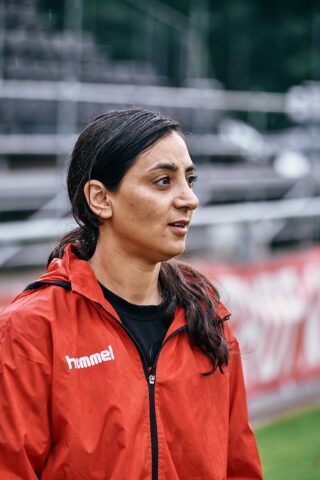
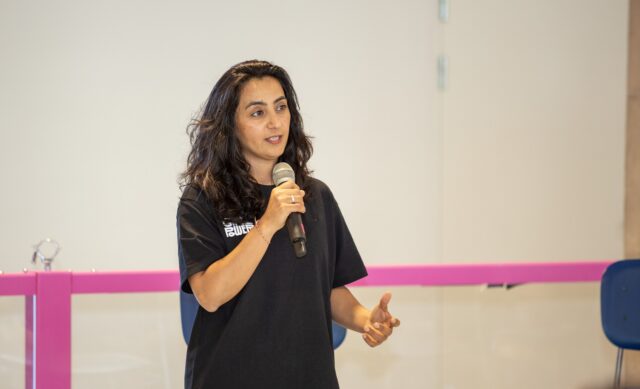
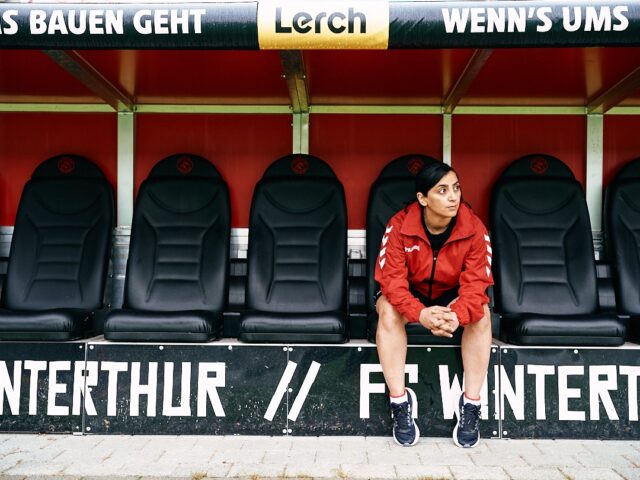
Former Afghan women’s national football team captain Khalida Popal has shared her story in her memoir My Beautiful Sisters, which she will be presenting at this year’s Gibunco Gibraltar Literary Festival. Ms Popal spoke to reporter Manar Ben Tahayekt about the challenges of “not belonging” that stemmed from from being a woman, an Afghan and a refugee.
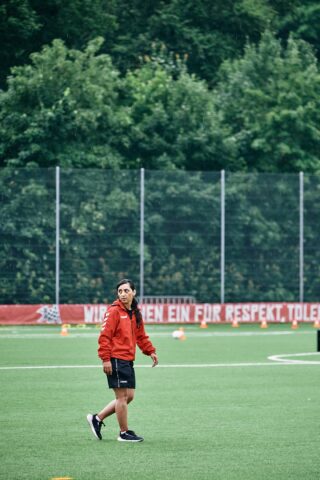
For former Afghan women’s team captain Khalida Popal, playing football was a life-threatening exercise, highlighted most when a man stabbed the ball as she played as a young girl.
After fleeing the period of Taliban rule between 1996 and 2001, Ms Popal grew up with her family in a refugee camp in Pakistan.
She returned to Afghanistan years later and played football with school friends, but despite the country no longer being under Taliban rule, its ideology on women remained.
In the moment when he walked onto the pitch and stabbed the schoolgirls’ football, Ms Popal said, he was sending a message: “You do not belong here. This space is not for you.”
Ms Popal will be sharing her story, as told in her memoir, My Beautiful Sisters, in this year’s Gibraltar Literary Festival on November 13 where she will be interviewed by Gibraltar women’s football team captain, Shania Robba.
She remembered how the incident scared her, but it also strengthened her resilience and determination.
“Courage does not mean you are not afraid,” she said.
“For me, courage was deciding that fear would not make the decision for me.”
That knife was not the only attempt to push her out of the game as, throughout her career, that same message was repeated, just in different forms.
“One of my biggest challenges was constantly being told that I did not belong, because I was a girl, because I was Afghan, because I was a refugee, and later because I was a woman trying to challenge powerful systems,” she said.
“There were moments when I felt alone and moments when the pressure, threats and responsibility felt enormous. I had to leave my country and rebuild my life as a refugee while continuing to fight for the women and girls I had left behind.”
Ms Popal said that if could speak to her younger self, she would tell her: “Keep going.”
“Your difference is not your weakness. Your voice matters, even when people try to make you believe it doesn't.”
“I would also tell her that she will not always have to fight alone,” she said.
“She will meet incredible women and allies around the world who will stand beside her, and together they will turn many of those barriers into opportunities for the next generation.”
Ms Popal founded the Afghan national women’s football team in 2007 and, after being shot at in a car, fled to Denmark as a refugee in 2011.
The Taliban took back control of Afghanistan in 2021 and she has helped dozens of players escape.
For Ms Popal, those scary moments turned into a lifelong fight for equality and that was when her idea to write an inspiring memoir sparked.
She is founder and director of the Girl Power organisation, which works with women and girls from refugee, migrant and underserved communities in different parts of the world.
“We kept playing because giving up would have meant accepting that they had the right to decide what our lives could look like.”
Writing My Beautiful Sisters was one of the hardest things she ever done.
It meant returning to the memories she spent years avoiding and “opening those doors again”, to feel the fear, anger, pain as well as the joy, friendship and sisterhood that existed with them.
“The book was never only about me,” she said.
"It was important to me that people could see the women behind the headlines, my teammates, my sisters, the girls who risked so much simply because they wanted to play football and live with freedom and dignity.”
“For many years, other people told our story. Writing the book gave me the opportunity to take ownership of that narrative and tell it from inside, with all its complexity, pain, humour, love and hope.
“I wanted the women in our story to be remembered, not simply for what happened to them, but for what they did: how they fought, organised, supported one another and refused to disappear”
"I am really looking forward to meeting the people of Gibraltar and learning from the community as much as sharing my own story," she said.
As someone who lived as a refugee in Europe, Ms Popal is interested how communities hold on their identity while being connected to “different cultures and influences.”
During the festival, she hopes that the audiences will take away more than a story about Afghanistan or football, but a much more universal story about “belonging, courage, community and what can happen when people create space for one another.”
Her message to the Gibraltar women’s footballers is clear: “never underestimate the importance of taking up space.”
“Women’s football has never grown because women waited for somebody to give them permission. Women played, organised, coached, led and kept showing up, often long before the investment, recognition or structures were there,” she said.
“But resilience should not mean women simply becoming better at surviving inequality. We also have to challenge the systems creating those barriers.”
“So support one another. Build your community. Celebrate each other's successes. Speak up when something is not right. And when you reach a position of influence, make sure you hold the door open for another woman or girl to come through.”
“You may think you are simply playing football, but a young girl watching you may be seeing a possibility for herself that she has never seen before.”
Most Read
Gibraltarian AI student brings professional youth perspective to UNESCO forum
Mon 19th Oct, 2026
CM pitches Gibraltar’s ‘next phase of growth’ in final Guildhall address
Mon 19th Oct, 2026
Revolut says Rock's ‘clear and stringent’ regulatory framework offers solid base for crypto innovation
Mon 19th Oct, 2026

Today's Paper
20th October 2026
Read our latest newspaper by downloading our app from the link below.


