


Gibraltar 100 years ago: Local services, statistics and more


I was going to do something very different this week and chat about music, and present to you one of our most active musicians of the moment. But then several of you stopped me on the Main Street and mentioned how much you had enjoyed last week’s column as we stepped into 2026 and asked if I could expand on what I wrote. Well, last week we looked back 100 years ago, 90 and 60 years ago and opened the pages of some of the Colonial Reports which were compiled annually. As we learnt back then these reports were not just carried out about Gibraltar but were compiled across the British Empire and had been in circulation since the 1800s… and some even further back. So, my friendly musician will sit at our table next week – well worth waiting for, I may add - so we can bring to our table another part of history (nostalgia seems to be in demand) and so reopen the pages this week of some more interesting facts about our past. So, let us look back and begin like we did last week – a century ago.
POPULATION AND HEALTH
The Gibraltar Report for 1926 – the Colonial Annual Report – informed that the estimated total civilian population of Gibraltar at the close of 1926 was 17, 163 – of those 16,150 were fixed residents and represented the population between sunset and sunrise. Some 4,500 ‘aliens’ and 1,500 British subjects were also resident in La Linea and would make their way into Gibraltar daily to work. 2026 saw a total of
428 of which 218 were boys and 210 were girls – the birth rate then was registered at 25.2 per one thousand. And it must be noted that the birth rate only related to the ‘fixed’ population at the time. The report interestingly highlights that under the Alien Order in Council no ‘alien could give birth in the colony’.
In 1926 – the report further highlights that the health of Gibraltar continued to be good. In all 323 deaths were registered during the year – now cancer is a word we often hear these days, and thankfully the survival rate is greater than ever because of early diagnosis and the major campaigns on awareness that continue ongoing. That year –
1926 - Gibraltar saw a total of 22 people registered who had died of cancer.
Infantile mortality 100 years ago was 107 in every one thousand, and deaths from pulmonary tuberculosis registered as 1.6 per one thousand.
The ‘crude’ death rate overall that year was registered as 17.42 per one thousand.
The report states the following – “the vital statistics are considered satisfactory and with regard to infectious disease there is nothing of outstanding importance to report”. One can only assume, that when compared to more threatening diseases -such as an outbreak of cholera which was common in the past – the sanitation of Gibraltar (city centre especially) had been greatly improved when taking into account the sanitary work carried out by the City Council at the time – and which would have been in charge of the roads, lighting, water supply, and hygiene measures in dwellings – but where overcrowding still remained a concern.
TRADE
As we learnt last week Gibraltar then was deep into the coaling trade and supplying steamers calling at the port. In fact, the staple trade was in the supply of coal as Gibraltar was ‘pre-eminently a coaling station’ – but there was also fuel oil, stores and fresh water to shipping. And the era also provided for a fair amount of business carried out in connection with transit cargo to Morocco and Spain. It goes without saying that the only industries in Gibraltar at the time were connected both to shipping and the manufacture of tobacco from the factories along the Irish Town.
It is at times hard to imagine the foundries and yards which then would have existed on the North Front – some of our beautifully designed balconies were created and built in the foundries. I have not said it for a while – but on a walk down Main Street, and some of the back streets in Governor’s Street or along the Irish Town; just take some time to look up as some still survive to this day. Along the North Front were the foundries and yards – the boats, lighters, and steam launches – which were built and repaired. Extensive repairs were often also carried out to both hulls and machinery of the vessels that called into the Rock throughout the year.
The number of steamers which called into the port in 1926 was 3,745.
Sailing vessels amounted to 582. The total tonnage reached 6,121,288 – that is a total of 4,327 for the whole year.
The principal lines which called in at the port 100 years on a weekly basis were the Peninsular, and Oriental Steam Navigation Company.
Fortnightly, they were the Orient Line, Anchor Line, Moss Line, Ellerman Line, Westcott and Laurence, Power Steamship Company, MacAndrew’s Hall Lines, Nippon Yusen Kaisha Line, Lloyd Sabauda Line, Oldenburgh – Portugiesische, the American Levant Line, and the Royal Netherland Steamship Company.
Monthly we find the Cunard Line, France Amerique Company, and Societa Anonima di Navigazione Neptunia.
Then occasionally, the port welcomed the White Star Line, Union-Castle Line, British India Steam Navigation Company, New Zealand Steamship Company, and Elder Dempster Line.
All this meant that the port of Gibraltar was in use and extensively so, by vessels of all sizes and of every nationality.
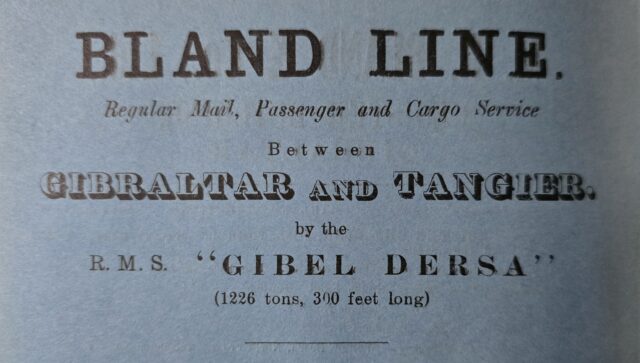
And now add to all this the Bland’s local line of steamers which made frequent sailings to and from Moroccan, Algerian and Spanish ports.
There was also a daily steam service in the day between Gibraltar and the town of Algeciras on the opposite side of the bay. Bland’s, in order to secure a direct link to the UK – the length of passage from London to Gibraltar was about four and a half days – combined the sailings of the weekly steamers where they were able to work a direct service between the UK and Morocco via Gibraltar.
MAIL OVERLAND
Communication for postal matters remained constant at this time as both British and Continental mail were forwarded and received daily by the overland route – via Spain and France – with a daily steam service in connection with this mail service, between Gibraltar and the town of Algeciras. For this service the Colonial Government paid the Algeciras-Gibraltar Ferry Boats Company, under contract then, an annual subsidy of £500.
Other options, say for correspondence to Egypt and places eastwards of Suez, were provided in connection with the steamer Lines arriving at Gibraltar and which also carried mail to places as far as Australia.
Ships mails to Malta, Algiers, and Oran for instance were despatched by the merchant steamers at every possible opportunity.
Overland mail from Gibraltar to London reached its destination in about three and a half days.
- I wonder what the people providing all these services of our immediate WhatsApp “correspondence” equivalent are, which reaches the other side of the world immediately.
TELEGRAPH CONNECTIONS
A century ago, there were Government land lines connecting Gibraltar with the Spanish towns of San Roque, Cadiz, Malaga and Cordoba. These were run by the Eastern Telegraph Company – it was a special agreement in which the Colonial Government paid the sum of £300. And just to be clear about the very good connections linking Gibraltar to the world then – the Eastern Telegraph Company had a station at Gibraltar from where telegrams were accepted for all parts of the world.
NEW TELEPHONE SERVICE
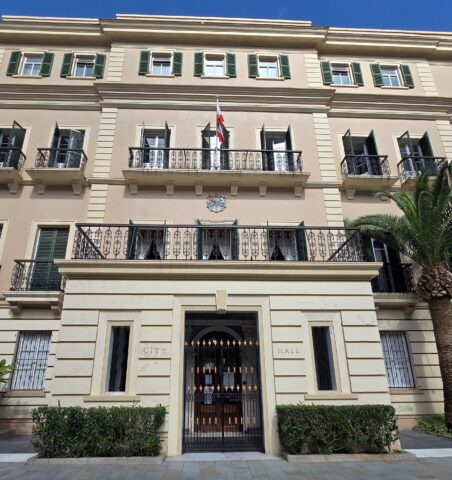
Back in 1926 there were no telephones under the control of the Colonial Government – and that year a new private telephone service was installed by the Strowzer Automatic Telephone Exchange during the year for the City Council of Gibraltar by the Peel Conner Telephone Works of Coventry, of which the General Electric Company were the proprietors. This new service was inaugurated in October that year.
This was to establish telephonic communications with not just the UK but France, Switzerland and Portugal.
The local Naval and Military departments had their own lines which were connected to the City Council Exchange.
The City Council was guaranteed by the Government against loss on working expenses to a limit of £5,000 for a period of five years starting in 1926.
EDUCATION
On education 100 years ago – education was compulsory as specified in the Ordinance of 1917 for children between the ages of five and 14.
Since 1921 the Governor of the day had been advised all educational matters which were handled by the Board of Education which at the time was under the chairmanship of the Colonial Secretary.
In those days books and equipment were issued to pupils free of charge – it was because of this that a special grant was made to the several school committees ‘ranging- according to standard’ from two shillings to six shillings, and that was for each pupil appearing on the ‘roll’
on the last day of the scholastic year. At the end of the year on 31 March 2027 it meant that the total amount paid was £967.
But there was a government ‘grant in aid’ at the time and this meant that per each pupil who were in average attendance during the school year was three pounds and ten shillings. So, by the end of the year which ended 31st March this amounted to £7,769.
Aside from this the Government also paid £504 to the City Council on behalf of the schools for ‘general sanitary purposes’ which included rates and water, and £324 for rent in certain school premises.
Now, grab on to your chair – we know the many thousands spent on education these days – but then the total cost to the Government in respect of education was, £9,564 – this, by the way, was exclusive of the grant of £240 given to handcraft classes. Oh boy, how things have changed.
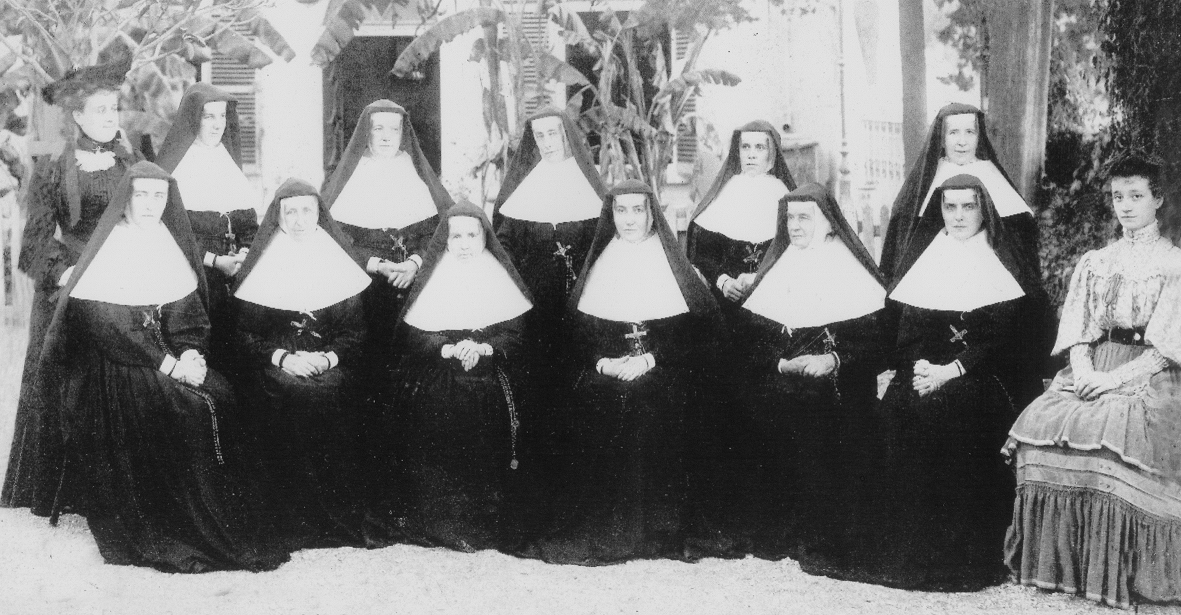
Back then there were nine school buildings – these contained 13 Government aided schools for primary education – 11 Roman Catholic and two Hebrew. The Roman Catholic schools were run by the Christian Brothers and nuns of the Order of Loreto, and the Hebrew schools by lay teachers. It is interesting to note that 100 years ago these were under the direct management of local committees.
So, how many pupils were registered a century ago? Well, the total number of scholars on the register amounted to 2,630 – and just below that number was the average number in attendance at 2,222.
According to the report the woodwork classes at Sacred Heart School (today Prior Park) continued to be very popular among the boys and received an annual grant of £240. But lack of accommodation and classes meant that these were only possible among the pupils in the ‘upper standards’ and not everyone could participate.
Assistant teachers were taken on that year as approved by the Board of Education the previous year, and the first exams were carried out in July 1926. Proof that teaching has always been a popular profession even then was the high number of candidates who carried out the exam –
31 candidates in total – 10 male and 31 female. 24 were successful with four of them obtaining honours. The authorities concluded that these results were “very satisfactory”. There were annual inspections by the Board of Education Inspector. Monthly inspections of the children were also carried out in all schools by the school nurse. One of the staff nurses was attached to the Colonial Hospital, and occasional visits were also carried out by the assistant surgeons. Can you imagine that happening today?
And as to the Secondary Schools at the time – there were five in
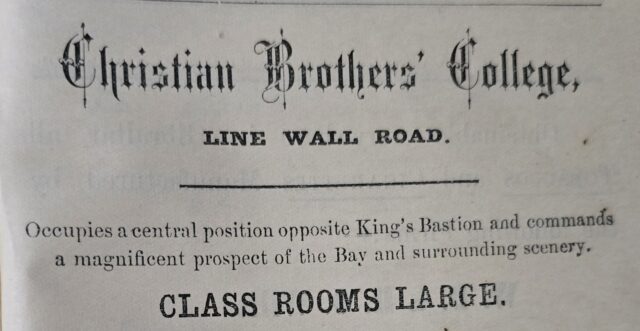
total: Line Wall College for boys run by the Christian Brothers, Brympton – a Church of England school for girls , managed by a local committee and run by the teachers. Bringhurst, for boys, was under the directorship of Mr. E. Martin.
In all these educational establishments the pupils were prepared for the Cambridge Local Examinations.
Gibraltar children also benefited from a number of private schools with some 170 pupils in attendance – but the Report points that in these “the instruction given is mainly of an elementary character”.
THE ROADS
And so to a brief look at the upkeep of the roads in Gibraltar which then were in the hands of the City Council – the actual length of roads open to the traffic then was five and quarter miles in the city, or North District, four miles in the South District, and four and a half miles in the North Front and Catalan Bay District. Back then the roads in the city were described as being narrow - but in all other districts were described as fairly wide. And according to the report all were in excellent condition and suitable for traffic. I wonder what the civil servants of yesterday would have made of the miles and miles of roads inside the Rock today… and as for the large amount of traffic on our roads and extension of roads – I can only but assume they could have not believed or imagined it.
FINANCE
And finally as the Government finances at the time – the revenue in
1926 stood at £158, 636, and expenditure at £147, 942.
The legal tender was of course sterling but Spanish currency then circulated freely.
The rate of conversion of British into Spanish currency was governed by the Spanish Stock Exchange in Madrid and telegraphed daily to the banks in Gibraltar. The average for the year was 32 pesetas and 55 centimos to the pound.
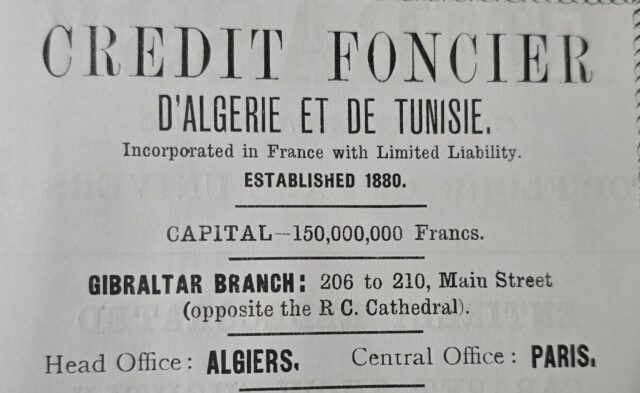
There were four private banks in Gibraltar100 years ago – Barclays Bank, Credit Foncier d'Algerie et de Tunisie (with its head office in Algiers). The A.L. Galliano of Gibraltar and Rugeroni Bros and Co. of Gibraltar.


