


The Cauldron The Palomo Poets


Social media has a lot of good points. It is great for independent creatives to share their work and build an audience, gone are the days that people had to take out expensive adverts in magazines or publications (which may not have reached their target audience). One of my favourite Facebook pages is Gibraltar Writers created by Jackie Anderson and open to all. If you have a Gibraltar connection and like to write and discover new authors, then check it out. It’s an excellent portal into what’s on, writing competitions local and international, book launches, events and any new publications. It is through Gibraltar Writers that I came to read the work of David Chevasco.
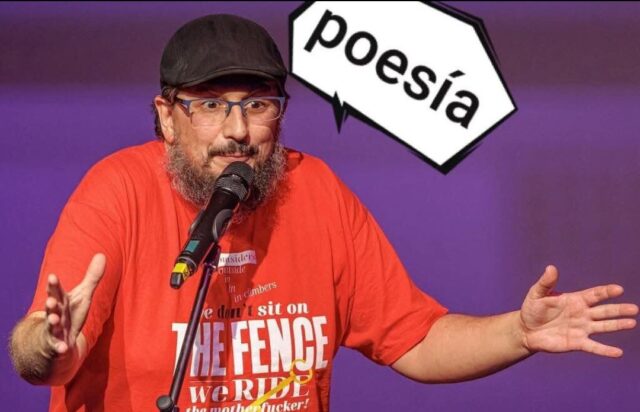
David Chevasco was born in Gibraltar in 1981. He studied English at Reading, attained a teaching certificate in Rome and completed an MA at UCL. He has taught English as a foreign language for over 20 years and is currently a full-time lecturer at Chiba University, Japan. David founded the Gibraltar Study Abroad programme in 2022 and has published academic books and articles, including the first data set of Llanito as a language code in 2019. He has now taken the plunge into creative writing and in February this year had a triple book launch of his short stories and poetry.
I have read David’s contributions in the Patuka Press, but it was on Facebook where I saw a post about his book: Six Memoirs of a Childhood in Gibraltar. One click on the link instantly downloaded it to my Kindle. The first piece is called Shadows of 1986 and immediately I was transported into the mind and eyes of a young schoolboy in Gibraltar.
Now, cast your minds back to those school English classes. Remember the comprehension exercises? Pupils read a short piece then answer questions about the text and notice important details. This task trains skills like finding information, understanding meaning, and thinking about what the author is saying. In Six Memoirs, David Chevasco, in full teacher mode, includes a glossary and comprehension questions after each story. I was fully aware that these exercises were not compulsory yet nevertheless I read each one and made mental answers. Having to go back over the text forced me to delve deep into the story and think far beyond the words on the page. Clever stuff.
There’s something about David Chevasco’s writing which, although beautifully detailed, remains utterly simple and explanatory. Each memoir provides a perfect vignette about a time and place. It’s not a sentimental, niche Gibraltarian journey, as the work has wider appeal and that is down to the writer. I look forward to reading more of David’s stories about the other places he’s lived. His 2008 poem For La Línea gives us a teaser and it also begs the question; would he have published a moving, personal poem about La Línea de la Concepción at the time he wrote it?
Last week a few internet trolls who use fake profiles on X (formerly Twitter) took a shot at our local poets by referring to them as “palomos”. Some people reading this will wonder what the use of that word as an insult means.
"The Doves" was the pseudonym used by a group of six Gibraltarian businessmen and lawyers who published a letter in the Gibraltar Chronicle on March 15, 1968, advocating for a political settlement with Spain. They called themselves The Doves as a symbol of ‘support for peaceful dialogue and a more conciliatory approach toward Spain’. They proposed, among other things, a joint Spanish flag. It was soon made public that this group had secretly met with Spain's Foreign Affairs officials to try to bring about their own proposals.
This provoked widespread public hostility and led to one of Gibraltar’s worst days of civil disorder on April 6, 1968. An estimated crowd of around 1,000 people rioted and attacked the property, businesses, and homes of “los palomos”. Rioting only finished in the afternoon, when Governor Sir Gerald Lathbury called for troops to support the Gibraltar Police. Officers were injured, but none were seriously hurt.
In the context of Gibraltar–Spanish politics, the word palomo has a very specific historical and political origin that’s quite different from its ordinary meaning as a bird. The label became a pejorative term used to describe anyone perceived as too weak, conciliatory, or sympathetic to Spain.
A young Peter Caruana acted as election agent for the PAG (Party for the Autonomy of Gibraltar) in the late 1960s. His opponents often use this youthful association with the ‘Dove Party’ to question his patriotism during his rise to power in the 1990s. “Palomo!” was bandied about left, right and centre during the 1996 General Election yet despite all the white-hot rage the GSD won, and Peter Caruana served as the Chief Minister of Gibraltar for over 15 years. When the Joint Sovereignty proposals loomed large in 2002 the dove-palomo insult was constantly on the lips of certain types who blamed it all on Peter Caruana and were rubbing their hands together at the prospect of him being ‘found out’ as a traitor and ‘selling us down the river’. Caruana famously kicked the proposals, Ruud van Nistelrooy-style, into the long grass.
Fast-forward to 2026 where social media has opened the floodgates to anonymous, angry people venting their spleens. The term palomo is being used derogatorily to refer to individuals who have any leftist tendencies, criticise the government or openly ‘admit’ to liking Spain (unless you are a fervent Real Madrid or Barcelona fan). They must be foaming at the mouth considering the new Brexit Treaty, yet some choose to single out the poor old poets. Throughout history, many poets have been persecuted because their words challenged political systems or expressed revolutionary ideas. On this bird-poetry note I will leave you with the words of Chevasco.
Seagulls
I’m alone on the beach, so I walk.
As I walk, the seagulls fly away.
I’m alone.
But I’m on the beach.
Most Read
RGP records 582 domestic incidents, with women disproportionally affected
Mon 9th Mar, 2026
Notifying Spain over residency permits offers ‘additional layer of protection’
Thu 26th Feb, 2026

Today's Paper
9th March 2026
Read our latest newspaper by downloading our app from the link below.


