


At 210, today the Alameda Garden and Botanic Garden are equally important


The Alameda Gardens or the Botanic Gardens? How do you refer to the gardens which until just a few years back was the only bit of green that we could all escape to for a quiet read or a few moments of tranquillity and contemplation? Last week in Alice’s Table we learnt that the gardens – and I always refer to them as the Alameda Gardens – have existed for over 200 years – reaching 210 years in 2026 – making it a grand old birthday. This week we concentrate on the scientific section of the gardens. It was in 1991 that they became known as the Gibraltar Botanic Gardens when the restoration of the gardens began. Today its director, Dr Keith Bensusan, wears several hats, and is responsible for all aspects of the Alameda and its Botanic Gardens, and the maintenance of some of our more recently created parks such as Commonwealth Park. He is also responsible for Gull Control throughout Gibraltar and is the General Secretary of the Gibraltar Ornithological and Natural History Society.
When I ask him - Is it the Alameda or Botanic Gardens? He quickly replies that he refers to the estate as the Alameda Gardens, and that the actual Gibraltar Botanic Gardens describes the current set-up within the Alameda.
“The Alameda Gardens were always a public park, but they were not always a botanic gardens. A botanic gardens’ mission is to work with plants in a variety of ways. An important part of our mission because the Alameda has always been an ornamental garden is to maintain its aesthetic appeal and enhance it,” he says.
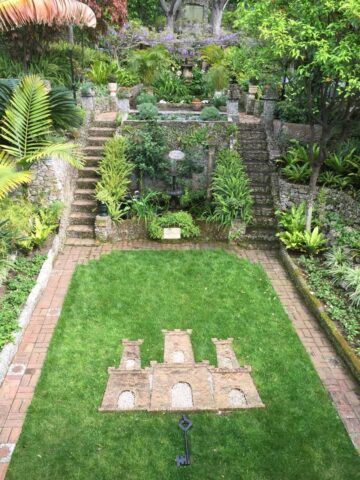
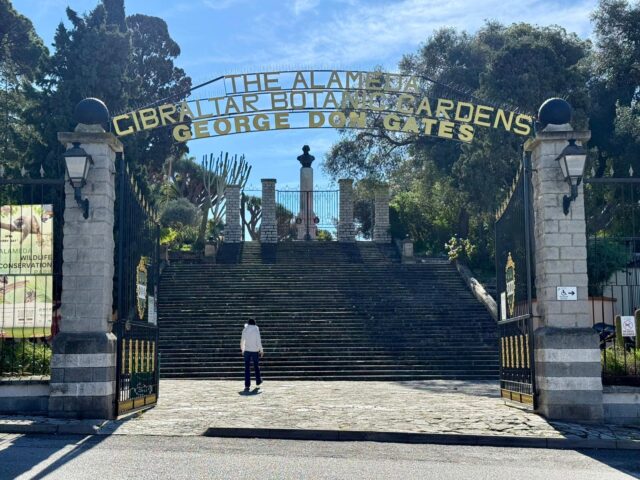
So, before we look at the science let us look back at the history. We learnt last week how the beauty of the Alameda Garden is that it belongs to us all – to you and me – and that it is free entry so we can all make use of it and enjoy its surroundings. And that can only be right because it was Gibraltar who originally paid for the creation of the Alameda through voluntary contributions, including from the Amateur Theatre, and a series of public lotteries held locally in 1814 and 1815. It was Governor Sir George Don who on 14 April 1816 opened the Alameda Gardens as a public promenade for soldiers and civilians alike – hence the original gates to the gardens being called the George Don Gates. Governor Don, who was known for helping to improve the life of Gibraltar’s community, wanted there to be a place of recreation for all – a place they could escape to and enjoy in a better environment in nature. And it worked having survived all these years. The area chosen as we know today was the Grand Parade which then could only be described as a desert of red sand. The layout of the gardens today remains almost the same as when the Alameda first opened with its interconnecting paths, terraced beds, and general use of local limestone. It has always been a place which has featured our military history with monuments and memorials; artillery pieces and howitzers housed throughout the gardens. The Eliott Memorial commissioned in 1815 was installed in 1858. There is the beautiful Dell area - a sunken garden inspired by Italianate design – and which is still one of the favourite features of the Alameda. One of its garden designerS in the late 1800s was Giuseppe Codali.
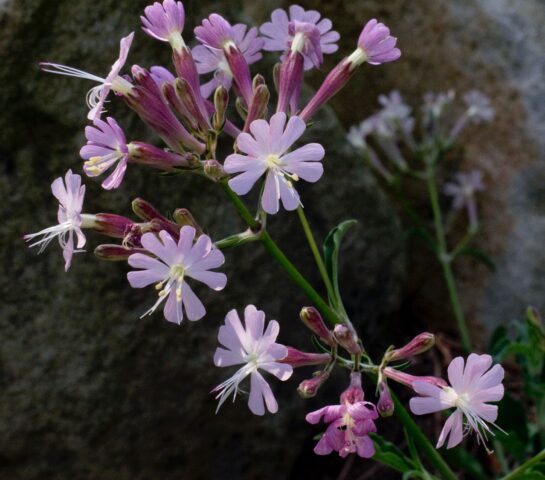
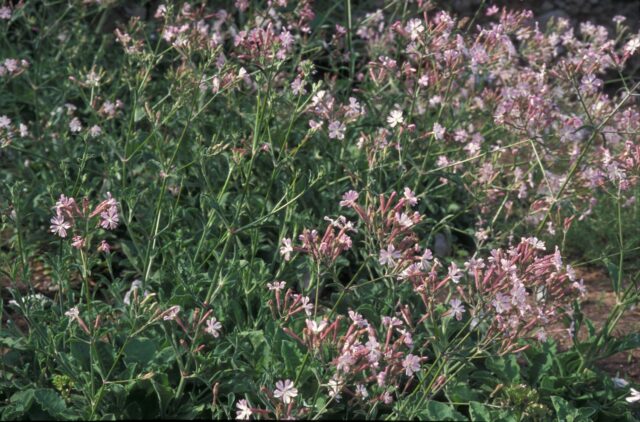
The Gibraltar Botanic Gardens were responsible for bringing back Gibraltar’s indigenous flower – the Gibraltar Campion – which was nearing extinction.
It was 1994 when three plants were discovered in the Upper Rock, jointly by the Botanic Gardens and GONHS. The seeds were collected and the Campion was grown and brought back for us all to enjoy. Ever since – some 100 of these rare flowers are grown every year at the Botanic Gardens. Since 1994 only one plant has been seen in the wild – and that was back in 2008 – and this gives us an indication of how incredibly rare this plant is, Keith explains. Climate Change, he believes, is likely to have a bigger impact on the wild flora than within the gardens – and he suspects that perhaps the reason why the Gibraltar Campion is rare. It is also possible it belongs to a different climate episode and is no longer fully comfortable growing on the Rock.
“We have realised that the seeds have trouble germinating on their own. We need to grow them in a nursery and irrigate them properly for them to then germinate. The Campion belongs to a group of species which come from higher mountains which probably colonised Gibraltar during a cooler episode in our history. Members of this species are found throughout the limestone mountains on either side of the Strait.”
Today, to secure their survival, the Gibraltar Botanical Gardens is involved in the exchange of seeds with other Botanical gardens around the world. The Campion seed is probably the most important seed “we export” for safe keeping. Keith is confident it has a safe and secure future and not just because it is grown in Gibraltar but because seeds are also kept in Kew Gardens, the Botanic Gardens in San Fernando near Cadiz which also grows the Gibraltar Campion, and Millennium Seed Bank in Wakehurst which holds them under storage in very special conditions.
In 2002, Dr Keith Bensusan, was already working in the Alameda on ecological issues (some university studies in-between) and became a full-time employee as Technical Officer in 2007. The gardens are (remain) responsible to the Department of the Environment as consultants on Terrestrial Ecology. It was then that he helped build and document the Botanic Gardens plant collection which created the database in place today.
It is like a living laboratory of collections which is very much at the heart of the scientific mission of the Gibraltar Botanic Gardens – with collections which are curated, documented, and grown from seeds to maximise genetic diversity—all essential for research purposes.
That garden collection remains interesting, he explains, because there are plants from all over the world. Many are grown to aid in education, for their aesthetic appeal, for scientific research and most importantly for conservation reasons. Amazingly, he tells me, the Alameda Gardens hold a great diversity of all flora and not just local (indeed, most species grown are exotic), and altogether a living collection – at any one time – of some 2,000 species of plants. Outside of the Alameda, you may be surprised to read that the diversity of species is not as large with just 760 living in the wild.
Taxonomy and classification of plants – and their terrestrial ecology – dealing with plants and animals in relation to the environment in which they live – is a large part of the work undertaken.
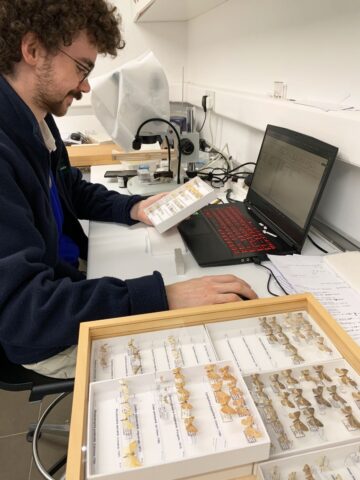
“Producing inventory of species – knowing what our collection houses is vital to us. We have collections of insects – moths and mosquitos working with the Environmental Agency and constantly building and documenting the collection – and finding ways of better understanding the plants and flowers that grow in the gardens.”
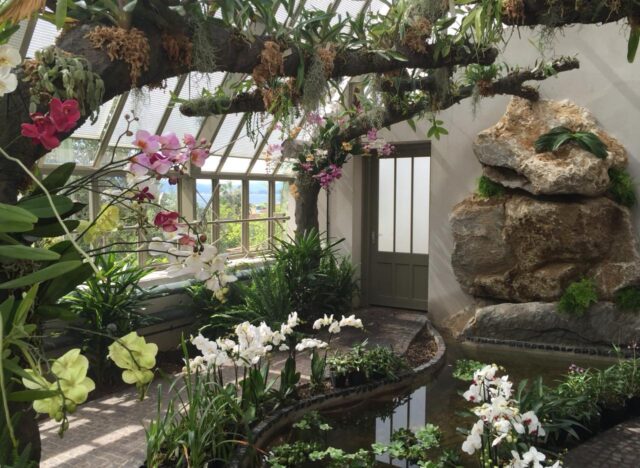
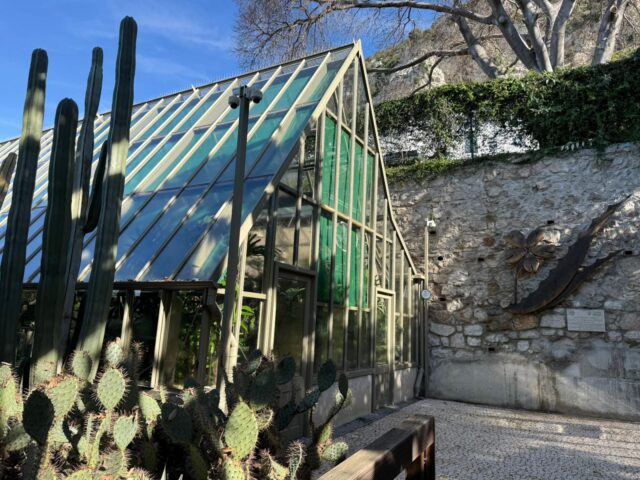
This year the Glass House – or Bicentenary House will be 10 years old. The space is used for educational work and holds a dry environment where they grow desert plants – and also a humid tropical environment where they grow tropical plants. Keith highlights the importance of scientific resources in helping to better understand life around us.
“We carry out biodiversity work – in order to create an accurate picture of the diversity of life in Gibraltar, and this would not exist without our facilities at the Gibraltar Botanic Gardens.”
A long-time ongoing insect project (15 years now) is the constant monitoring of moths which are captured with a light trap in nets every night and counted daily. There is a similar project looking at mosquitoes.
This means that in a world facing accelerating biodiversity loss, the work undertaken by the Gibraltar Botanic Gardens can help identify ongoing environmental changes. Even a place as small as Gibraltar can contribute to the global understanding of change and species. A really important part of their mission is education, Keith points out, is in educating people and especially children about plants in the wider environment.
“We are also involved in research and conservation both of plants and especially Gibraltar’s indigenous flora, and in the research and conservation of Gibraltar’s wider environment and animals too.”
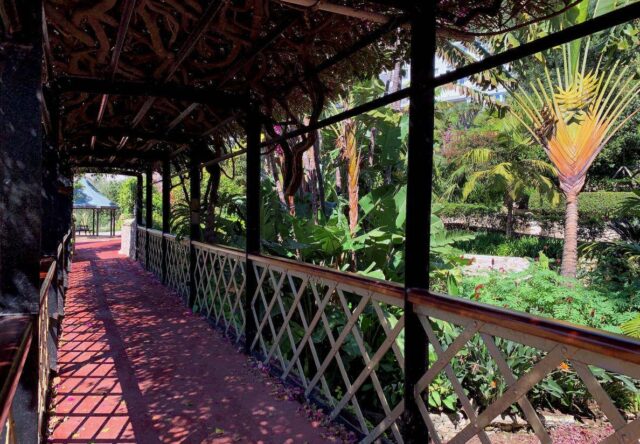
Throughout the year the maintenance of the Alameda is paramount and it follows an annual cycle. The gardens, he agrees, are at their best in the spring but there are also other things happening in the rest of the year, “we try our best that there is something of interest in view all year round”. Most of the beds and most areas in the gardens are themed. The garden house plants come from all over the world. This is largely due to the history of the gardens.
“We continue to grow plants from around the world but although we have areas which are semi-tropical in character – and I would highlight the Dell which is the most beautiful part of the gardens. We place a lot of emphasis on sustainability, and on growing plants that do not require irrigation especially. The reason for this is that in Gibraltar we do not have natural sources of fresh water so we have to rely on the water that we all rely on at home – plants drink the same water we do so at home from the tap. Water is expensive and because it is desalinated it carries a considerable carbon footprint.”
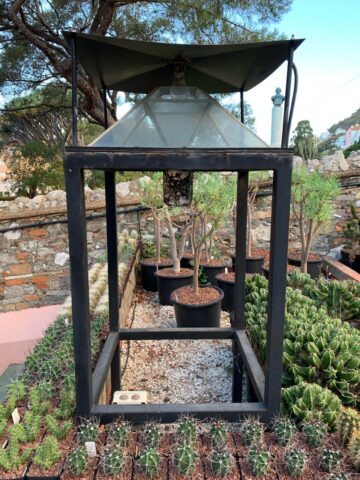
To avoid using too much water the Alameda’s focus is on cacti and other succulent plants from across the world which need very little water.
“Rainfall in Gibraltar is higher than in the environment where most of those plants grow. We also focus on plants which grow in a Mediterranean climate – also South Africa, Australia and California as well. This means we also add interest as people can also learn about plants from other parts of the world. Learn about the similarities and other parts of the world and how plants respond to similar environments.”
Gibraltar – to people outside – can be misunderstood as being dry in the winter. But Keith knows this is not the case and there is plenty of rain in our winters (as we know from this year) to keep the garden growing. In most years the garden relies on very little irrigation during the winter months – but irrigation in the summer can be intense.
“No matter how wet our winters may be, our summers are always very dry and no matter how much rain we have seen by the end of June the garden needs assistance. One positive element is that atmosphere humidity is always high in the summer months and this is helpful.
“We can’t forget that the Strait also has a micro-climate and we are not subject to the extreme weather in both winter and summer just half an hour away that serve as identification hubs for Gibraltar’s flora and fauna.”
The recent rains will allow the gardens to look their best throughout 2026 – and remember we do not have to wait until the spring – the blue skies of winter can guide you through the gardens so you can enjoy their beautiful surroundings. When the sun is shining take a walk I guarantee you will not regret it… just take a ‘paseo’ like so many generations of Gibraltarians have always done.
Most Read
New group to plan healthcare jobs and placements for returning graduates
Tue 13th Oct, 2026
Gibraltar treaty marks ‘new era of cooperation’ with EU and Spain, UK tells UN
Wed 14th Oct, 2026

Today's Paper
12th February 2026
Read our latest newspaper by downloading our app from the link below.


