


Spain ‘very optimistic’ on April 10 treaty deadline, but ‘not entirely in our hands’
Fernando Sampedro, Spain’s state secretary for the EU. Photo via European Commission


The Spanish Government remains “very optimistic” that the UK/EU treaty for Gibraltar can be provisionally implemented from April 10, even while acknowledging “it is not entirely in our hands”.
The comments were made by Fernando Sampedro, Spain’s state secretary for the EU, when quizzed by reporters on whether the April 10 deadline will be met given its proximity.
The Chronicle reported on Monday that, while all sides are still working to the April 10 target, there is now a real possibility the date could slip.
Several well-placed sources told this newspaper that EU internal procedures, coupled to external pressures including the international response to the Middle East crisis and the ongoing Ukraine conflict, alongside the Easter break, could make it difficult to have the agreement signed in time.
Additionally, work is still ongoing on the border infrastructure needed both here and in Spain to put the deal into effect.
April 10 is the date that the EU’s new automated border control system, the Entry/Exit System, is set to come into force across the EU after a year-long phased rollout.
The timing matters because without the treaty in place, the full application of new automated EU border controls including biometric checks could cause serious disruption at the frontier, affecting residents, workers and businesses on both sides.
The treaty can be provisionally implemented once it is signed by the UK Government and the European Commission, even before ratification by the UK Parliament and the European Parliament is complete.
But while the UK Government is understood to be ready to sign, the Commission must first receive clearance from the European Council, the EU’s highest political body comprising the heads of government in the 27 member states.
The Council has met seven times to scrutinise the treaty, most recently on Tuesday, in what one EU official told the Chronicle were “very difficult, complicated and highly technical” discussions.
Quizzed on these matters and the April 10 deadline, Mr Sampedro said: “We are working in that direction.”
“The minister has referred to it.”
“It is not entirely in our hands to guarantee the pace at which the Council’s work will be completed.”
“But we are very optimistic that there will not be any problem.”
“The agreement has been reached, work is under way, and we are also in contact with the European Parliament.”
“The Commission and the Council are working on the texts and, as you know, preparations are also being made on the ground so that all the structures are ready for the 10th.”
The European Commission had previously warned of the “special urgency” to meet that target, adding that without the treaty in place, “fully-fledged border control” would have to be implemented.
That would “significantly disrupt” individuals, businesses and other stakeholders operating in Gibraltar and the area of Campo del Gibraltar “and go against the very purpose of the agreement”.
Even so, several sources close to the treaty process remained confident that if the date was not met, officials on both sides of the border will continue applying a flexible approach to residents and cross-border workers pending the agreement being signed soon after.
Mr Sampedro was pressed as to what would happen if the treaty was not ready for provisional implementation by April 10.
“We are working to ensure that it is ready by April 10 and we do not expect there to be any problem,” he replied.
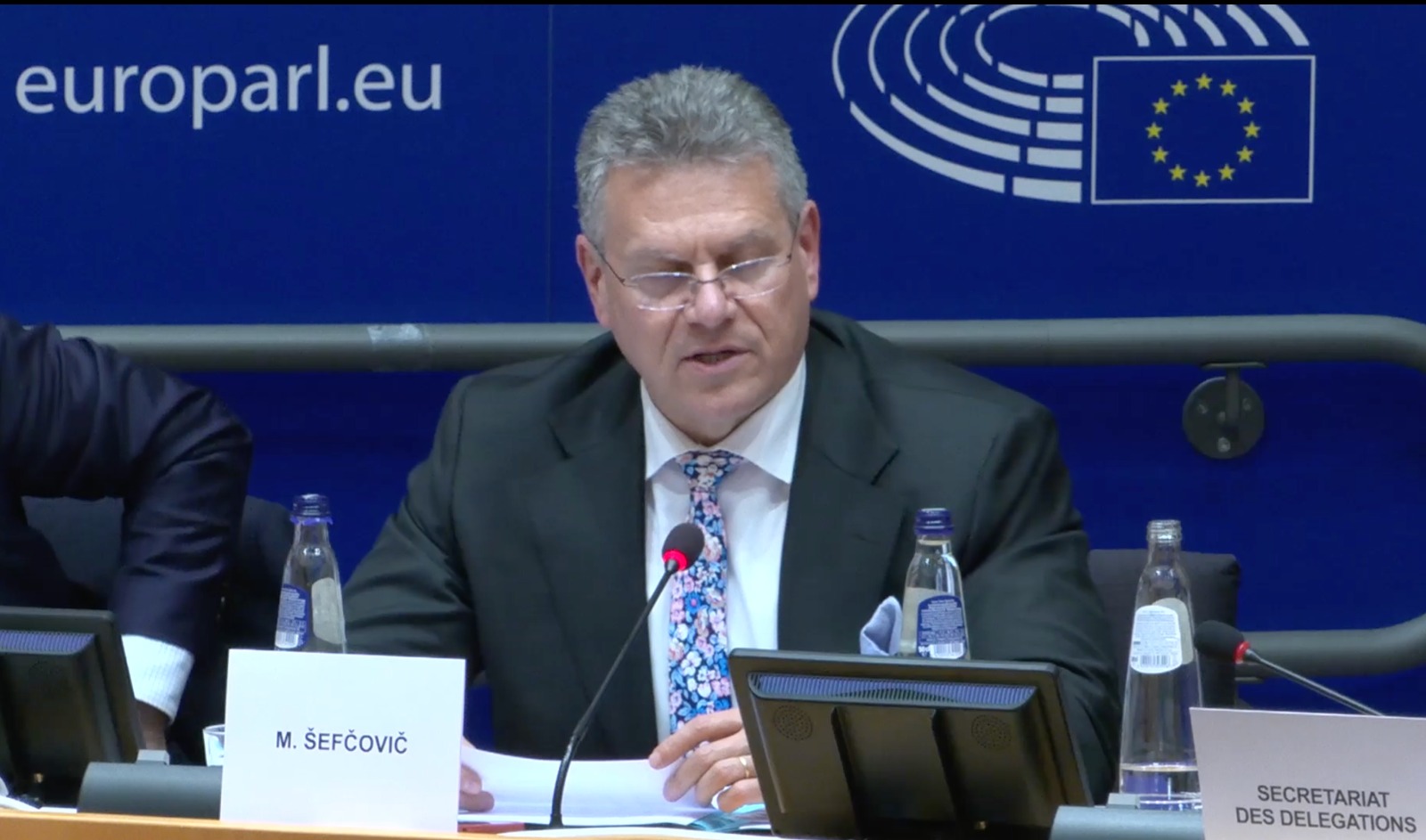
The issue was also raised a day earlier in a meeting of the UK-EU Parliamentary Partnership Assembly, which was established under the terms of the 2021 Trade and Cooperation Agreement and acts as a forum for parliamentarians to exchange views on the implementation and operation of the agreement.
Maros Sefcovic, the EU Commissioner for Trade and Economic Security who has played a key role in the treaty negotiation, reflected on the Gibraltar agreement as he set out different areas in which the UK and the EU had worked to strengthen their cooperation after Brexit.
Mr Sefcovic hailed the importance of the agreement but stressed the need to meet the April 10 deadline, giving no hint as to what approach it would take in the application of the Entry/Exit System should that not be the case.
“It is a key agreement that will secure the future prosperity of the whole region,” Mr Sefcovic told the assembly.
“Also, it will complete the legal framework of the relations between the EU and United Kingdom established by the Trade and Cooperation Agreement.”
“This will be done by removing all physical barriers on persons and goods circulating between Spain and Gibraltar.”
“The fence will disappear to the benefit of many thousands of people that travel across daily in both directions.”
“We are now, together with the UK, focusing our efforts on completing our respective internal procedures to allow provisional application of the agreement in the view of the full deployment of the new entry exit system on 10 April.”
“The provisional application of the agreement is a matter of special urgency as the entry exit system will imply for fully fledged border control in place between Spain and Gibraltar that will significantly disrupt individuals and businesses operating in the area of Campo de Gibraltar and notably the 15,000 frontier workers commuting daily in both directions.”
“In light of these exceptional circumstances, the Commission has proposed to apply the agreement on a provisional basis.”


