


‘Truly historic’ treaty signed in Brussels, marking new reality for Gibraltar and Campo
Photo via EC Audio Visual Service


A “truly historic” UK/EU treaty on Gibraltar was signed in Brussels on Tuesday afternoon, clearing the way for provisional implementation and the removal of immigration controls at the border after five years of intense negotiation.
While its implementation will undoubtedly prove challenging at times, the treaty signals the end of post-Brexit uncertainty for Gibraltar and the beginning of a new relationship with neighbouring Spain and the wider EU.
The agreement parks sovereignty to one side and leaves all respective positions untouched to instead focus on pragmatic solutions to the problems caused by Brexit, including ensuring border fluidity for people with removal of immigration controls at the land border.
Gibraltar voted overwhelmingly for Remain and respected the outcome of the UK referendum but was left out of the UK/EU Trade and Cooperation Agreement.
Geographic reality meant that, alongside the UK, it had to carve out a new position for itself in a post-Brexit world that ensured it could prosper through close links to the EU even while being outside the bloc.
It is that goal, the UK and Gibraltar governments agreed on Tuesday, that the treaty signed in Brussels finally delivered.
The agreement was signed by UK Europe Minister Stephen Doughty and Maros Sefcovic, the EU’s Commissioner for Trade and Economic Security, both of whom were closely involved in its negotiation.
Also present at the signing were Chief Minister Fabian Picardo and Deputy Chief Minister Dr Joseph Garcia, and Spain’s Minister for Foreign Affairs, Jose Manuel Albares, all of whom had also been central to the negotiation.
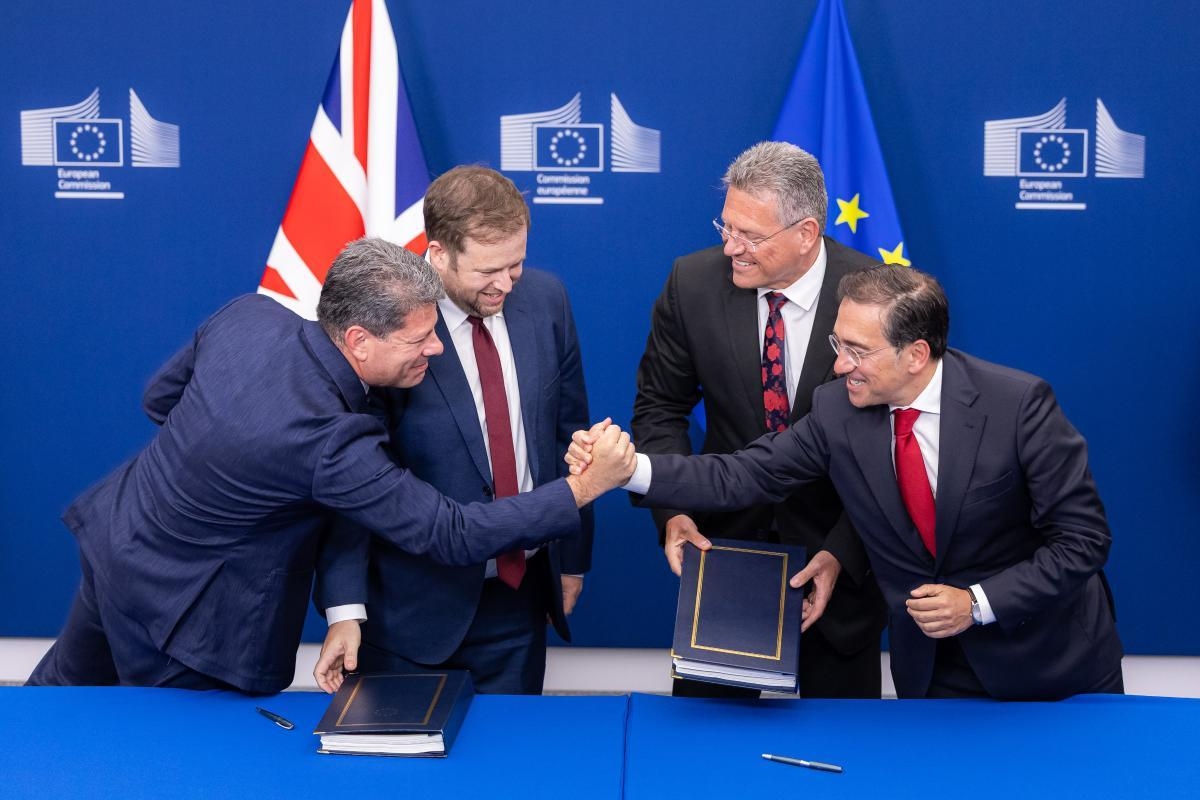
The close relationships between the four men, nurtured over many years and sometimes difficult moments in a complex and convoluted negotiation, were evident on Tuesday at an event ahead of a lunch shared with members of their respective teams.
In a photograph of the moment, Mr Picardo, Mr Doughty, Mr Sefcovic and Mr Albares beamed broad grins at the camera as they held up a signed copy of the treaty in the Berlaymont building of the European Commission in Brussels.
It captured in visual terms the sentiment that all four later sought to underline, about this being a landmark moment in history.
On Wednesday there will be another historic image as Prime Minister Pedro Sanchez visits the border for the removal of the frontier gates on the Spanish side, followed by the removal of the gates on the Gibraltar side.
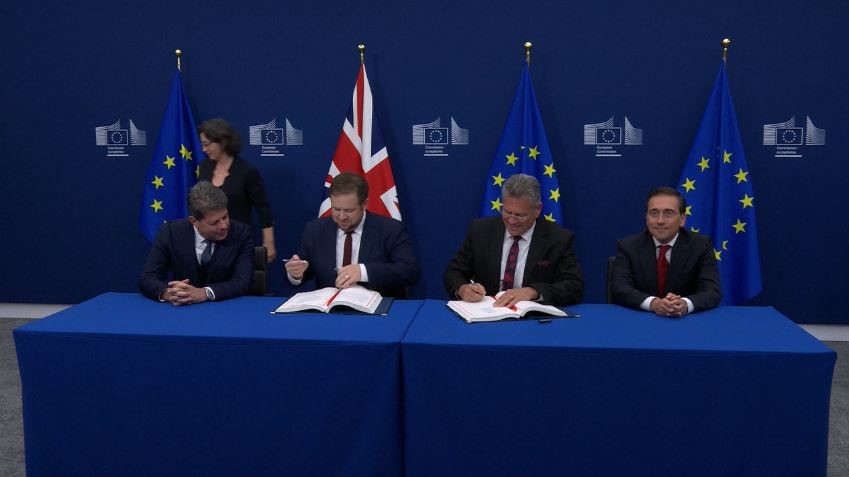
DOUGHTY AND SEFCOVIC
Mr Doughty and Mr Sefcovic did not speak to reporters on Tuesday but made their thoughts clear in respective statements issued by the UK Government and the Commission.
“This historic agreement delivers certainty for the people and businesses of Gibraltar, protects British sovereignty, our military facilities, and has the full backing of the Government and Parliament of Gibraltar,” Mr Doughty said.
“Gibraltar has been at the heart of these negotiations throughout. A cherished part of the British family, its economic future and thousands of jobs depended on finding a practical solution to the challenges created by Brexit.”
“Our support for Gibraltar remains as solid as the Rock. This agreement opens a new chapter with the EU and Spain, supporting jobs, growth and prosperity on both sides of the border.”
“Working side by side with the Government of Gibraltar, we have secured a treaty that has the full backing of Chief Minister Fabian Picardo, his Government and Parliament. I pay tribute to all those whose dedication over the past two years made this landmark agreement possible.”
The Commission’s Mr Sefcovic spoke in similar terms on the achievement of delivering the treaty after so many years of negotiation.
“Today marks a truly historic moment,” he said, adding he was proud to sign the agreement on behalf of the EU.
“It has taken four years of patient, complex negotiation, but the outcome speaks for itself: shared prosperity, closer cooperation, and no more barrier for some 15,000 people who cross between Spain and Gibraltar every single day.”
“It is a very special feeling to see a fence come down.”
“I now look forward to the successful implementation of this treaty.”
In turn, Mr Albares and Mr Picardo spoke to reporters waiting outside the Commission building. The signing itself had been a private event with no access for journalists and only the Commission’s media service present.
ALBARES AND PICARDO
First up was Mr Albares, who said the treaty “opened a new era” for relations between Gibraltar and the Campo, and for bilateral UK/Spain relations, adding it was “the final piece to definitively bring Brexit to a close”.
He said the agreement guaranteed the free circulation of people and goods, eliminated fiscal and environmental “distortions” and brought new connectivity and opportunities to the Campo through shared use of the airport.
“This enables the Campo take a leap into the future, a promising future,” he said.
He thanked his team and his negotiating partners, Mr Picardo included, for their goodwill during “intense” talks to bring down “the last wall in Europe”.
“In these complex moments of change for the world, where it seems that conflict, force and on many occasions even war are the only means of achieving the objectives of foreign policy, we have demonstrated that Spain’s foreign policy looks after the interests of our citizens, as is the case with 300,000 Andalusians in the Campo de Gibraltar, and that cooperation is more powerful that what we are leaving behind,” he said.
“Three centuries marked by mistrust and confrontation.”
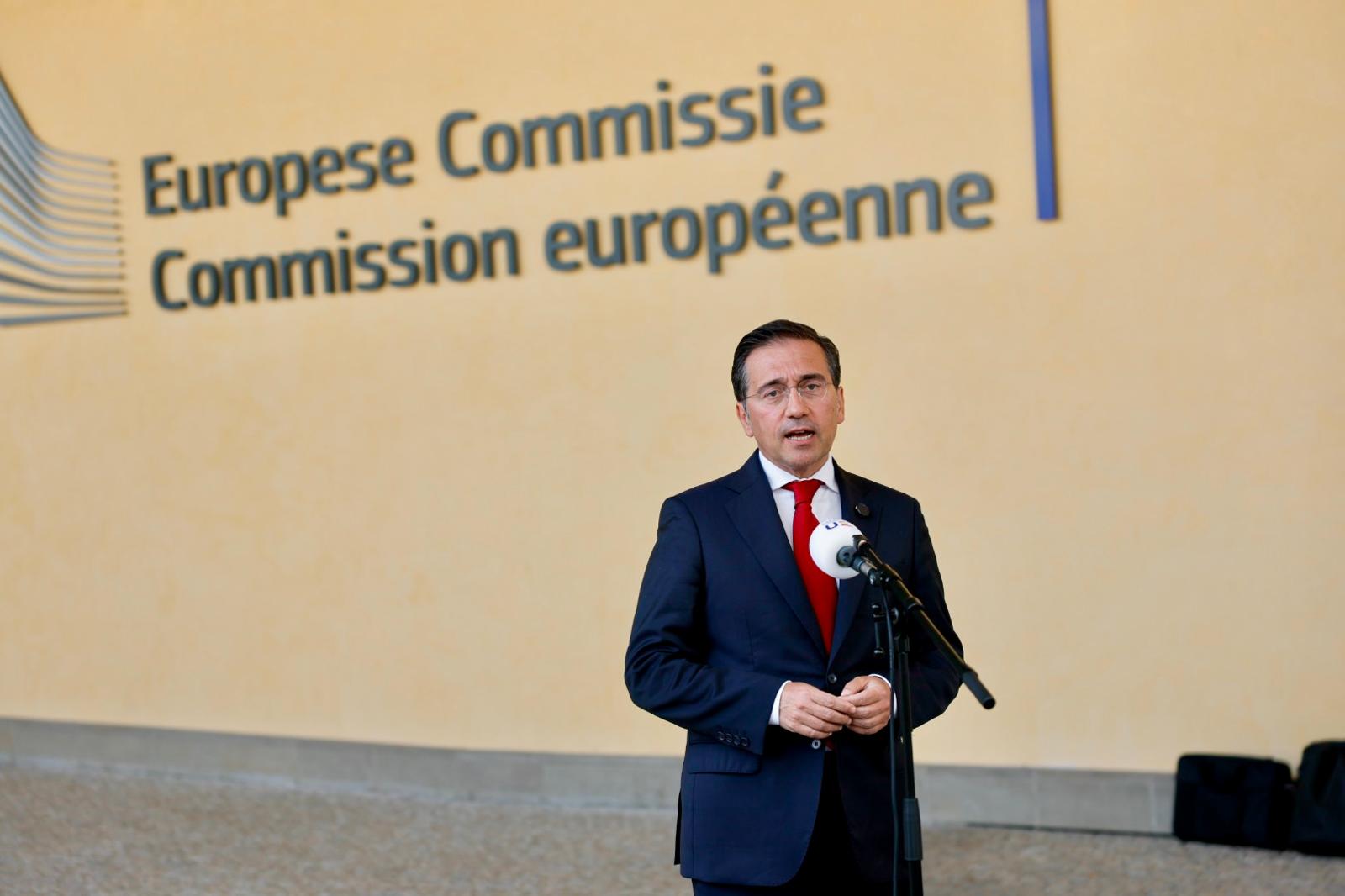
Mr Albares said Spain’s core sovereignty position remained unchanged but that this treaty resolved practical problems faced by citizens after Brexit.
While all eyes are now on provisional implementation and ironing out the inevitable problems that will arise, Mr Albares remained confident that this would be “an easy agreement to put into practice”.
“We have negotiated for a long time, each party firm in its positions, and that guarantees that this is a good agreement,” he said.
“It will be easy to implement because I believe that the people of the Campo de Gibraltar and Gibraltar have wanted this agreement for many decades.”
“I believe that, starting today at midnight, and very rapidly thereon, what people will be asking themselves is, ‘why didn’t we do this before?’”
Asked whether he had a message for the Partido Popular and Vox, both of which have been very critical of the treaty, Mr Albares noted that not everyone in the PP opposed the deal, signalling Junta president Juanma Moreno by way of example.
“But to those who weren’t in favour, even if they don’t realise it, I will tell them that they too have won,” he said.
“In the end, cooperation, investing in and creating coexistence, can only benefit Spain.”
Next up was the Chief Minister, who was visibly content and relieved as he walked out of the Berlaymont building.
“It's a pleasure to be able to say that we have today concluded and signed the treaty between the United Kingdom and the European Union in Gibraltar,” Mr Picardo told reporters.
“Instead of living with our backs to each other, we're going to be getting bureaucracy out of the way of the citizen and making sure that where there was a fence, there is now fluidity.”
“About time.”
“But the time had come. The treaty was now the right treaty, and I am delighted that we have been able to reach this milestone and that we move forward from here.”
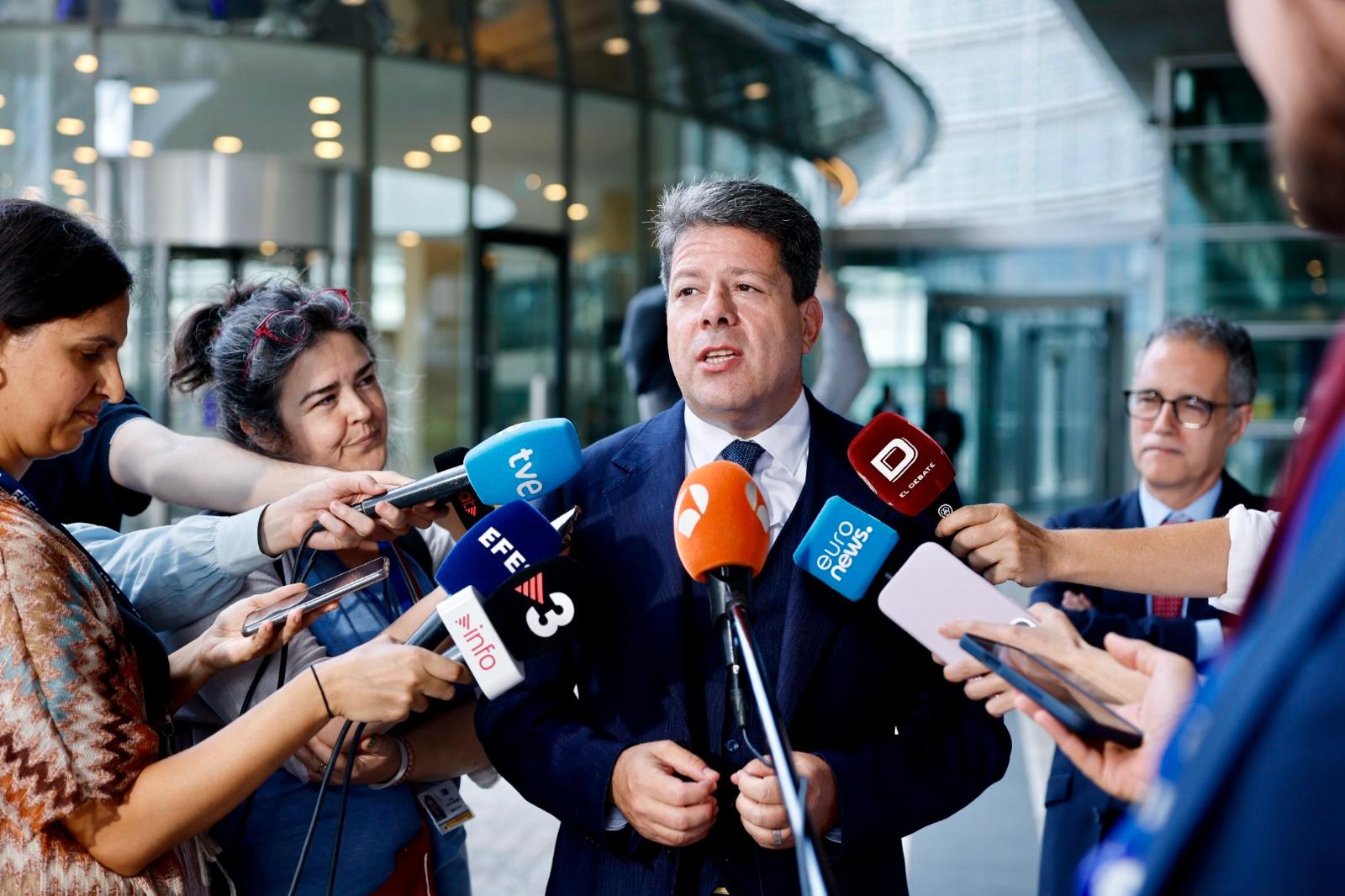
Mr Picardo said the treaty ran to over 1000 pages but only one dealt with the issue of sovereignty, leaving all core position intact and set aside.
“So, you can look at the one page that contains the issue of sovereignty, or you can look at the 1118 pages that contain all of the other issues that we agree on, all of the issues that we're going to work together on now going forward,” he said.
Speaking to the Chronicle later that evening, Mr Picardo acknowledged that implementation would involve challenges and that he had “absolutely no intention” of leaving the post until the treaty was ratified.
He described Tuesday as “among the most significant days in Gibraltar's modern history” and said the treaty enabled Gibraltar to “cheat Brexit”.
And he echoed Mr Albares in his belief that the treaty would become “the new normal very, very soon”.
“Implementation doesn't just depend on Gibraltar, but Gibraltar must be loyal in implementing the treaty in the way that we have agreed,” he said.
“And through that loyalty, we will be able to demand the same level of exact loyalty from other partners who have obligations under the treaty, and that includes the United Kingdom, it includes Spain and it includes the European Commission.”
“I think that we have worked through a lot of the issues that you would usually not expect to see worked through at the negotiation stage. And we've done that because in the past we all know that Gibraltar agreements have faltered on implementation.”
TREATY GOALS
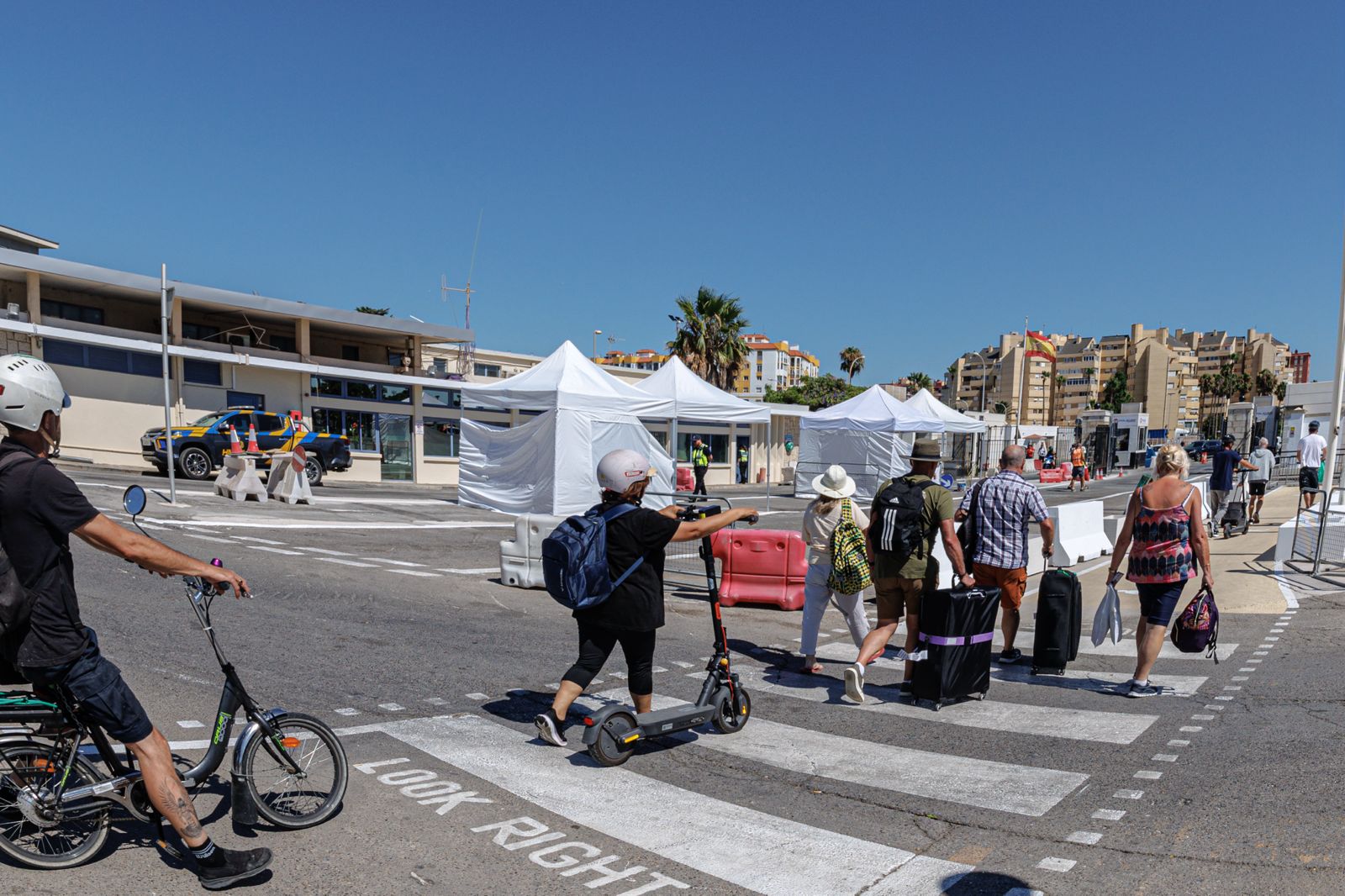
The treaty guarantees fluidity for people crossing the border by removing immigration controls at the land border and moving them to Sir Joshua Hassan Gibraltar International Airport, where Spain will act as guarantor for Schengen controls from a shared facility spanning both sides of the frontier.
The agreement also puts in place bespoke customs arrangements between Gibraltar and the EU customs union, while also creating a new framework for relations with Spain and the EU covering everything from law enforcement and judicial cooperation to labour rights and environmental protection.
Aspects of it have proved controversial in Gibraltar and many people remain uneasy about issues such as security, despite assurances from the Gibraltar Government.
The border area and key parts of Gibraltar including Main Street will be monitored with sophisticated surveillance technology, while physical law enforcement presence will be beefed up at the border.
Some sectors of the economy including retailers are worried too about a new transaction tax and changes to customs arrangements they fear could make them less competitive.
But despite this unease, the overwhelming sense for most is that the treaty is a better outcome than the alternative.
In the absence of a treaty, Spain would have had to enforce a hard border with EES controls that would have been devastating for Gibraltar’s economic model, which relies on frontier fluidity, and for Campo communities that rely on Gibraltar for employment and customers.
The free-flowing border will open up new opportunities for growth including increased tourist footfall in Gibraltar, potential cross-border business opportunities and flights to new EU destinations under the treaty arrangements, guaranteeing too easy access for 15,000 cross-border workers who work across many sectors of the Rock’s economy and public services.

OPPOSITION
In Gibraltar, Keith Azopardi, the Leader of the Opposition, said the treaty was “a milestone” and a “welcome end” to a decade of negotiations after the Brexit referendum.
“There is no doubt that today has the potential of opening a significant new period for Gibraltar,” Mr Azopardi said.
“With it comes hope as well as fears and expectations which many have been expressing to us.”
“While it will change the way things are done economically as well as in terms of citizen’s rights we need to ensure it does not undermine our identity or ability to determine our future.”
“Despite the misgivings that arise as to lack of certainty, jurisdiction, security or trade it is now up to all of us to try to make this treaty work for Gibraltar and its people.”
Mr Azopardi said the treaty would bring both challenges and opportunities, adding a future GSD government would invest in infrastructure, resources, the Gibraltar product and services to “maximise the opportunities and navigate the challenges which undoubtedly lie ahead”.
That would include “targeted assistance” for people and businesses negatively affected by treaty provisions as well as “a careful consideration” of rules that could enhance or protect the economy or the rights of people.
Most Read
Rock’s digital security system sends warning beyond Gibraltar, Parliament told
Fri 16th Oct, 2026
New group to plan healthcare jobs and placements for returning graduates
Tue 13th Oct, 2026
Fourth Committee welcomes Gib treaty as UN approach to decolonisation faces US criticism
Fri 16th Oct, 2026

Today's Paper
14th July 2026
Read our latest newspaper by downloading our app from the link below.


