


Scout trip to Gibraltar proves ‘life changing’ for young explorers


A group of young scouts from the UK spent last week on the Rock taking part in an intensive marine biology and conservation programme with The Nautilus Project that their leader, James Crofton, described as “literally life changing” for many of them.
Mr Crofton, a scout leader with the 1st Robertsbridge Scout Group, returned to Gibraltar with his Asgard Explorer Scouts for the second time, following a successful visit two years ago.
“It’s been a very busy week,” he told the Chronicle.
“The kids have been learning all about marine biology in the Mediterranean, and a lot about the plastic pollution and the human impact on the environment. It’s been non stop for them.”
“They’ve been out on the water, they’ve been in the lab, they’ve been on the beach doing clean ups, and they’ve been learning as much as they can.”
The group has 21 Explorer Scouts, aged 14 to 18, and demand for places on the trip has grown since the first visit.
“We came two years ago, and it was such a success,” said Mr Crofton.
“It was literally life changing for some of the kids. We had one of the girls change her degree option to an environmental law degree instead of criminal. We had two other kids change their A level options to science based things on the back of the Nautilus trip.”
“I think the last time we came, we had half as many kids, and now we’ve got 21,” he added.
“We’ve endeavoured to make it a two year event, and hopefully that’ll continue long into the future.”
The trip is open to all the group’s Explorers but making it accessible has required months of effort.
“It’s open to everyone, and they do a lot of fundraising to make it viable for them to come over here, so it’s not a huge burden on the parents,” said Mr Crofton.
“We cap a price, so they’ve been fundraising since January, selling cookies at school, doing fetes, doing fundraisers, sponsored hikes. They’ve done incredibly well.”
Beyond the practical skills and scientific knowledge, he said the week in Gibraltar has had a clear impact on the young people’s confidence and outlook.
“You see such incredible development in the kids from day one, both in confidence from a social standpoint, but also an educational basis and what they’ve learned from the week,” he said.
He recalled one comment that stood out.
“I’ve heard one boy saying, ‘I’ve learnt more in the few days I’ve been here in Gibraltar than anywhere in all my life. I’ve seen more animals or sea life. I learned so much.’”
“At this time of the week, they’re going home with a lot of confidence and knowledge,” he added.
“You hear them talking to their friends back home and educating them on the human impact of pollution and marine life, and it’s great. It just raises such an awareness, and it’s like a ripple effect. You start telling people, and it just gains momentum and traction.”
Mr Crofton was full of praise for the team running the programme.
“The guys at Nautilus are fantastic, and the work they do is just brilliant,” he said.
“I don’t know how Lewis and Melanie do it, but they are relentless. It’s a passion completely. It’s a vocational thing, and it’s inspiring.”
“I’ve known Lewis all my life, and to rekindle our friendship and have this and do something like this has just been amazing.”
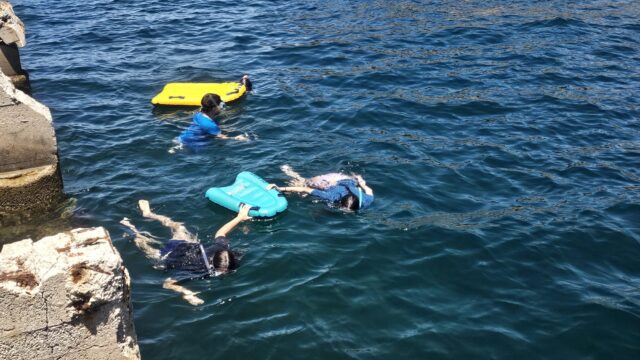
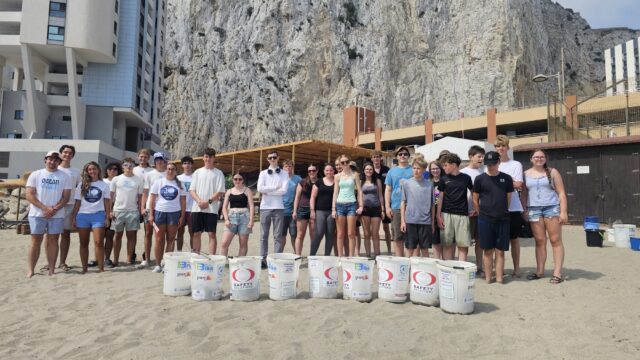
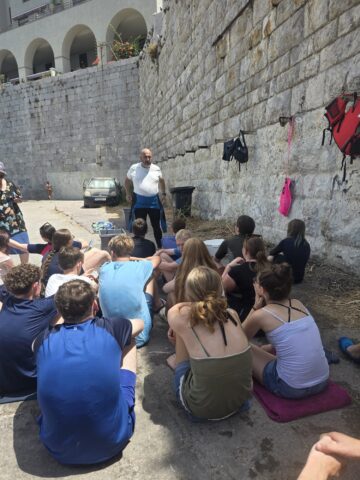
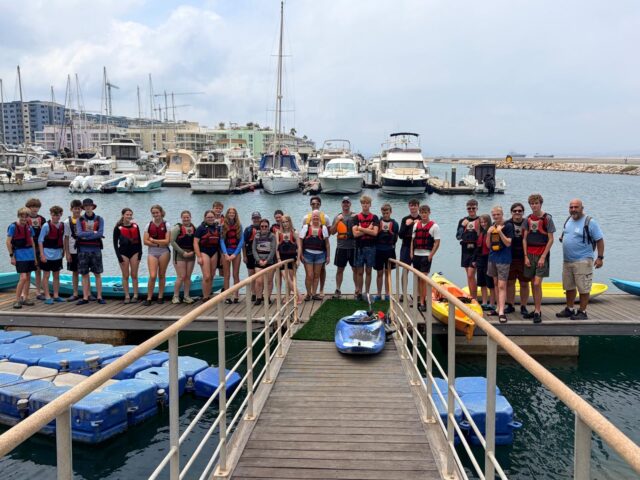
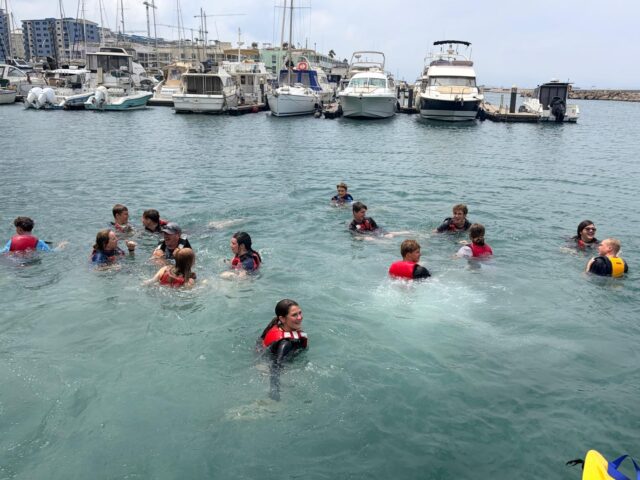
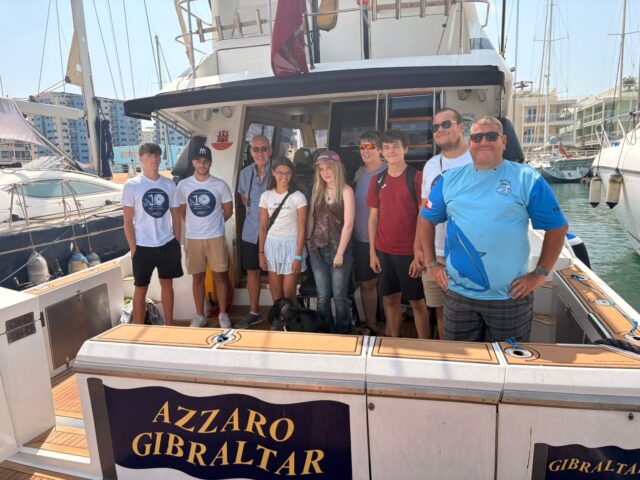
One of the leaders who organised and ran the week was Eva Guillem.
“We have Asgard come every couple of years, and this week we’ve been doing a lot of activities with them,” she said.
“Today we’ve done bio blitzing, which is where we find different animals around the beach. They get to see some of Gib’s marine species.”
The group also took part in a microplastic investigation, collecting plastic fragments from the beach before analysing them in the lab.
“They sit down, they collect the plastic on the beach, and then they analyse it in the lab, so we’ve just taught them a little bit about what we do here on a daily basis,” she added.
Managing a group of 21 scouts presented its own challenges, but Ms Guillem said the team on the ground made it work.
“It is a bit of a challenge, just because there is a lot of them. But I think that we have the right staff, and we all trust each other, and we all know what we’re doing. It’s fine once you get used to it.”
For her, the highlight of the week was the marine invertebrate session, where TNP staff enter the water to collect sea creatures for the scouts to observe.
“We have Lewis and we have some other staff members who go in the water and find some sea creatures, like an octopus, sea cucumbers, whatever they can find, starfish, and we just talk about them,” she said.
“It’s just a chance where they can understand different facts about the animals and how important they are in Gib.”
The scouts, she noted, responded particularly well to anything that involved spending time outdoors.
“Their favourite thing to do here is to just be outside, getting their hands dirty, being in the water, actually getting up close and personal with all the creatures that we have,” she said.
The activities proved popular not only with the young visitors, but also with local participants and staff.
“Every time we do it, we always see even the staff members are interested as well. They always come out saying, ‘Oh, I had no idea.’ And even if they’re from Gib, it’s nice for them as well,” she added.
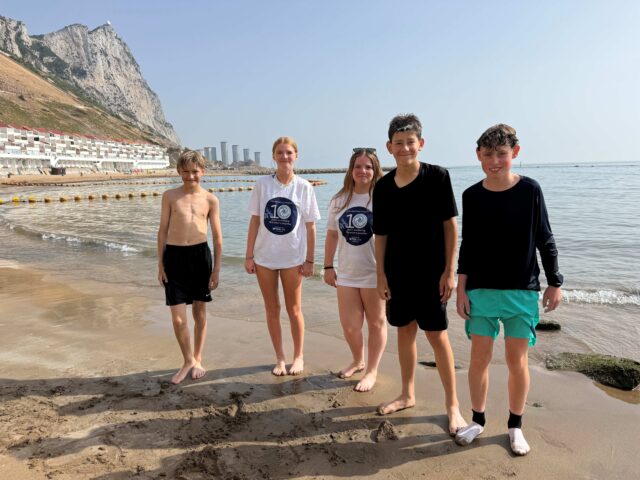
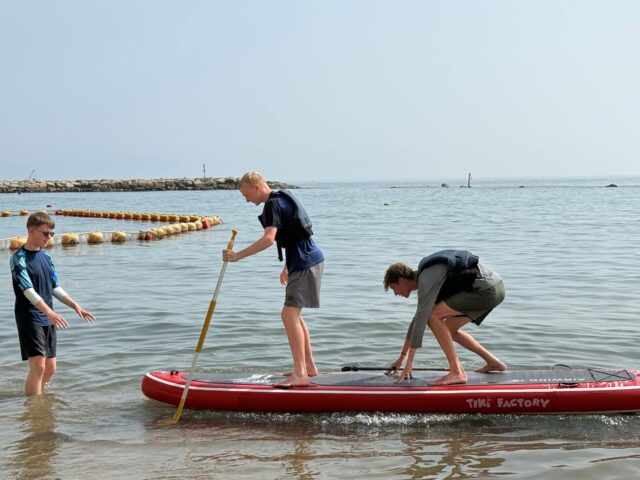
Scouts
Harry Walsh, 14, is on his first trip to Gibraltar and said the warm weather and clear waters had made a strong impression.
“Yeah, it’s good, it’s nice and hot,” he said, adding that the sea itself was “quite unexpectedly cold” compared to the air temperature.
During his stay, he tried scuba diving and kayaking and spent time exploring sea life beneath the surface.
“All the fish,” he said when asked what he had found most interesting. “We don’t normally get many fish back in the UK because it’s all murky and stuff like that.”
Harry had visited Eastern Beach, Sandy Bay and Rosia Bay, but said Eastern Beach stood out “because of the waves”.
On his scuba diving experience, he noted how “breathing felt better than actually breathing in the air right now,” he said noting the oxygen in the tank was very different to the air above.
Although he did not single out one specific highlight, Harry was clear about one thing he would not miss on this trip: The sand he found in his bed every morning.
Jasmine Moat, 15, described her first trip to Gibraltar as “a once in a lifetime” experience, highlighting marine life encounters and a hands on beach clean as highlights.
She said she has “enjoyed every aspect” of the week but was struck by learning about lesser noticed sea creatures.
“I just love learning about all of the different creatures, and specifically the ones that you wouldn’t really think about, and the ones that are kind of just there, and then you don’t really take any interest in them,” she said.
“When you actually learn about them, it’s just like a whole another world.”
One species that captured her imagination was sea urchins.
“I’ve learned a lot about sea urchins,” she said.
“I didn’t really know a lot about them before, and now I’ve found that they’re quite cool. I’ve been trying to find them in the rocks.”
She noted that the experience challenged her own assumptions about them.
“They didn’t really look like a living thing, but when you actually see them, they are clearly living,” she said, adding that she had realised she had been “quite ignorant” about them before.
Beyond the classroom and shoreline, she also enjoyed time in the water, describing snorkelling, scuba diving, and a boat trip to see dolphins as highlights.
“Going on the boat to see dolphins, seeing hundreds of dolphins all at once, was an amazing experience,” she said.
“I think that’s like a once in a lifetime kind of thing. You will never really get to see that again.”
Asked if there was anything she had not enjoyed during the week, she said that while she had initially been hesitant about taking part in a litter pick, the activity turned out to be one of the most rewarding.
“At first, I was a bit like, ‘oh, another litter pick’, we kind of do those at home,” she said.
“But then just seeing the sheer amount of rubbish that we picked up, even when there had been a cleaning machine on the beach before, I just thought it was incredible how much litter we actually picked up.”
She described the result as both impactful and personally satisfying.
“It’s such a satisfying feeling at the end to know that you’ve actually done something good and you’ve kind of enjoyed doing it as well,” she added.
Ella Turner, 15, said her first trip to Gibraltar has left her with unforgettable memories of its marine life and a bigger awareness of the problem of litter in the sea.
“I’ve enjoyed everything really. I think my favourite part was probably seeing all the dolphins,” she said.
“It was just so amazing, seeing them so up close. They’re such like magical creatures, and it’s something that I’ll remember my whole life.”
“We went mostly in the Bay, but we did come round here [on the East side] for a bit. It was just amazing to see them, so many of them.”
She also enjoyed spending time in the water, snorkelling and observing marine life beneath the surface.
“I’ve loved being in the water, seeing all the fish, going snorkelling yesterday, and we got to see an octopus. That was so amazing,” she said.
But it was a beach litter pick that left a lasting impression.
“I thought the litter pick was very enlightening,” she said, “because of the amount of rubbish that we saw.
“It was, like, we really do need to do something about it.”
“It’s made me a lot more conscious that just because you can’t see lots of big bits of rubbish doesn’t mean it’s not there.”
“I’ll definitely take that away and try to look out for stuff when I’m on the beach.”
Reflecting on the week, she said every activity had been a highlight, from meeting local people to learning from the organisers.
“It’s been very good to meet all the people, they’re all lovely. And learning from Lewis, he has so much knowledge. It’s just amazing to hear about all the stuff he’s learnt over the years.
I’ve just enjoyed it all really.”
Theo Crofton, 14, spoke of the joy of discovering the Rock’s marine life but also the shock of seeing how much rubbish is left on local beaches.
This is his first visit to the Rock on a Scout trip, having previously visited with his family. This time, he said, the experience has been “more fun” because of the range of activities on offer.
His favourite moment was snorkelling “because I could see all the fish, there was big fish and they were really colourful and pretty,” he said.
Describing the octopus, he added: “It was in the pipe, and you could see down and it was just looking up at you.”
Before going into the water, the group handled sea cucumbers, an experience he said was both unusual and fascinating.
“It just felt so cool to hold it, and when it squirted out the seawater in its guts, it was quite interesting,” he said.
“It’s slimy like a slug, but then it’s also hard and kind of spiny.”
During a separate activity, the Scouts explored crabs and other sea creatures along the shoreline, spotting “big crabs in the rocks” and another brightly coloured sea cucumber.
But alongside the excitement, Theo was taken aback by the amount of litter collected during a beach clean at Eastern Beach.
“I was surprised at how much rubbish we found,” he said, noting how much was trapped in netted areas.
A talk by TNP about plastic pollution also left a strong impression, especially as he was holding a disposable plastic bottle at the time.
“I felt really guilty when we were in the Nautilus lab and he was telling us how bad plastic [is] with my plastic water bottle in front,” he said.
The experience has prompted him to switch to a reusable bottle.
Alfie Gofton, 14, said the highlight of his visit had been time spent in the water at Rosia Bay, where he took part in both snorkelling and scuba diving.
He said he preferred scuba diving, describing the experience of breathing through the equipment as “different” but ultimately more comfortable than being on land in the humid summer weather.
“It felt different. It felt better than breathing normally. I think they were saying that it’s just because it’s just oxygen,” he said.
He said he had enjoyed seeing octopuses, sea cucumbers, sea urchins and crabs, and singled out sea cucumbers as his favourite.
“I just find them really cool,” he said, adding that he was fascinated by “their way of fighting off the crabs”.
He described how sea cucumbers defend themselves by expelling their internal organs as a sticky deterrent.
“They just throw up their guts and it’s so sticky,” he said.
He also enjoyed the dolphin boat trip which he said was “amazing”.
However, he said one of the most striking parts of his visit was seeing the amount of litter collected in nets in the water on the beaches.
“There’s so much,” he said. “We looked in all the nets and there was like loads of other stuff, I was really surprised.”
He added that he would like to see people change how they handle their rubbish to reduce its impact on the sea.


