


Lords probe Gibraltar’s EU alignment and sovereignty safeguards under treaty
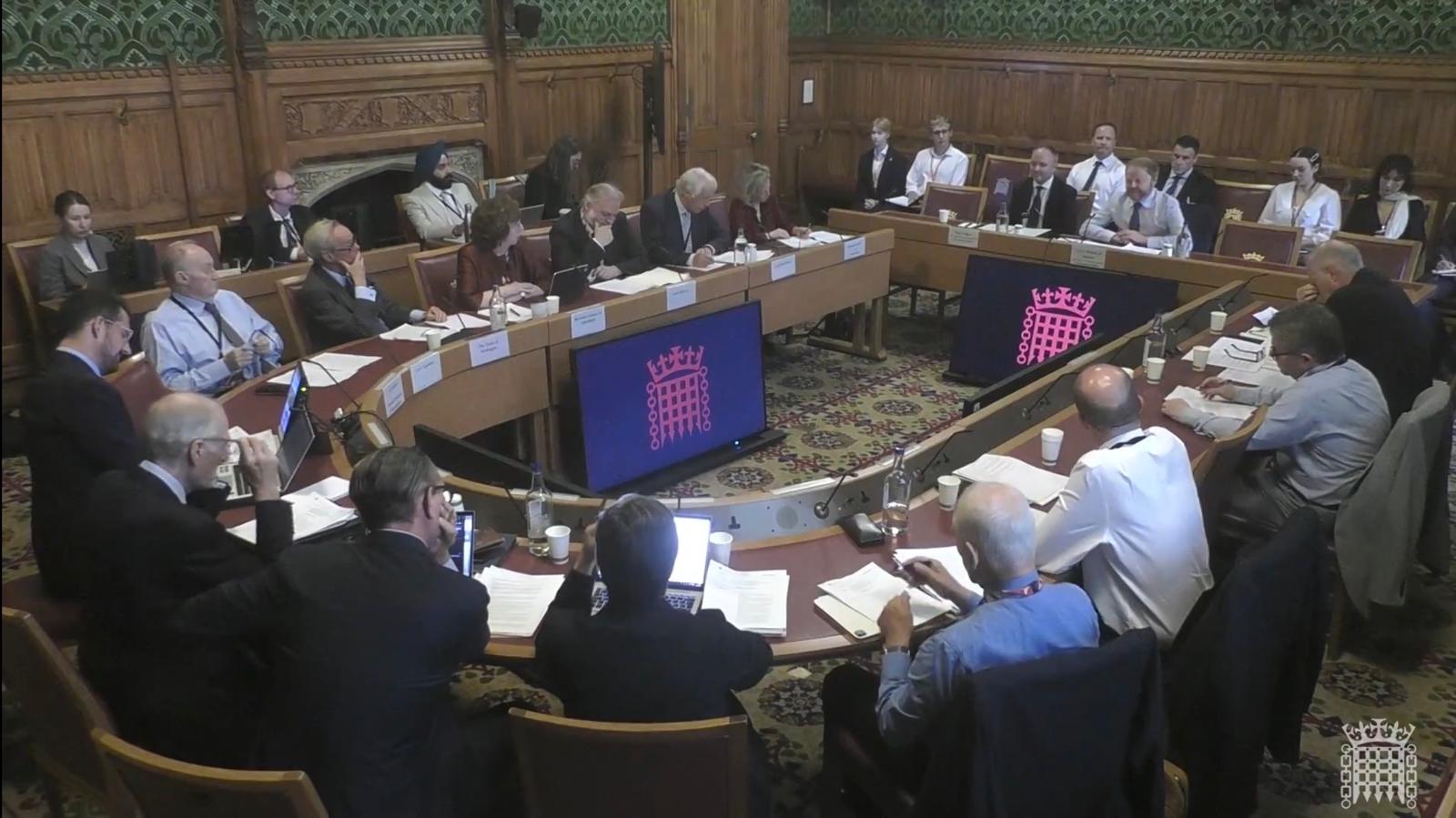
The House of Lords European Affairs Committee hears from Chief Minister Fabian Picardo via video link on Tuesday. Photos via UK Parliament


Gibraltar’s decision to dynamically align with certain EU rules to secure the benefits of the UK/EU treaty was at the heart of detailed questioning in the House of Lords on Tuesday, where peers heard the agreement was a complex post-Brexit compromise aimed at keeping the frontier fluid while protecting British sovereignty.
The treaty requires Gibraltar to apply and keep pace with elements of EU law in defined areas, including rules linked to the movement of goods, customs and parts of the Schengen framework, among others.
In return, the agreement removes routine checks at the land frontier and provides the legal certainty that Gibraltar has sought since Brexit for an economy heavily dependent on the daily movement of people and goods across the border.
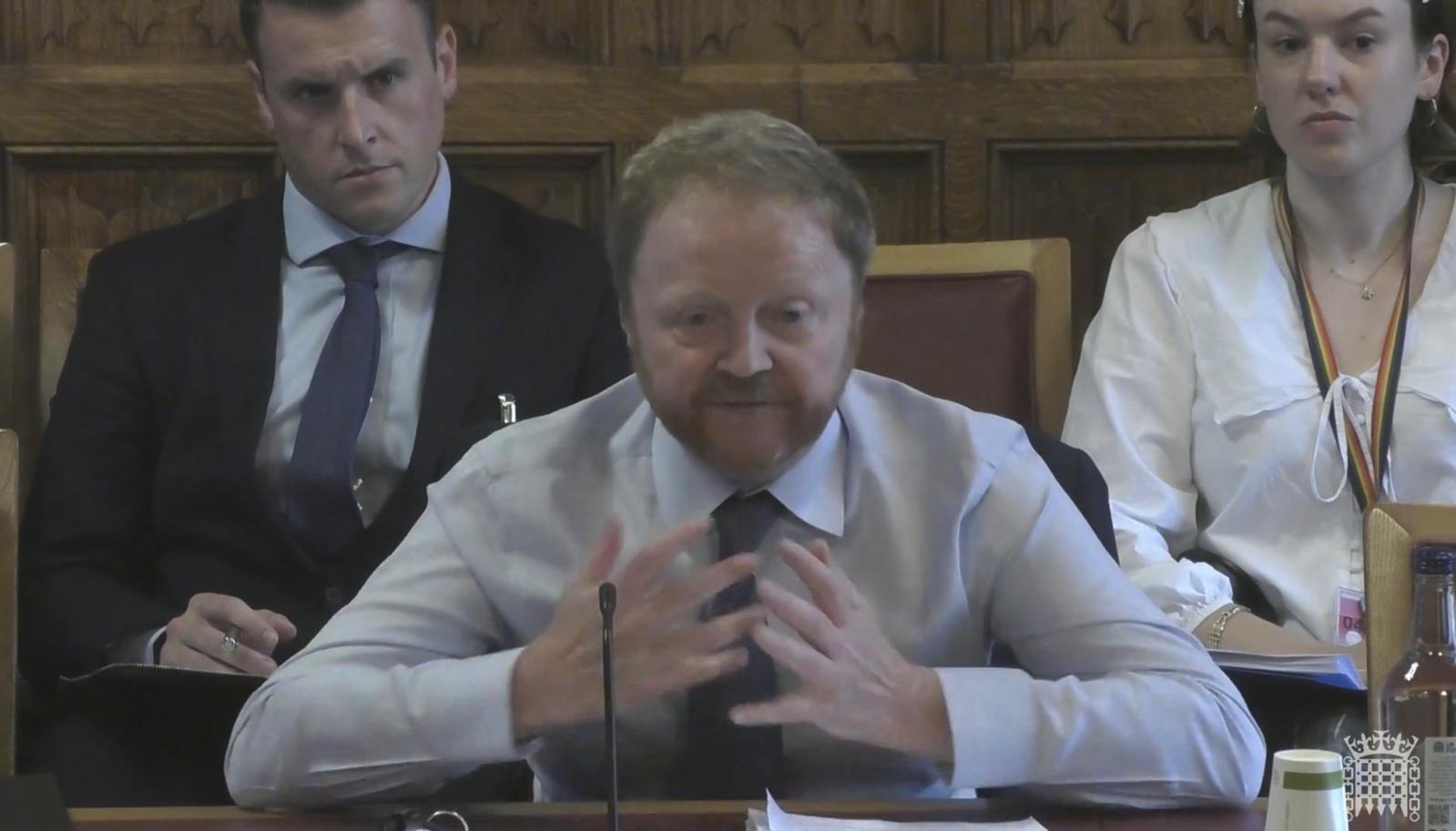
The balance between treaty obligations and Gibraltar’s constitutional position ran through evidence given to the European Affairs Committee by the UK Minister for Europe, Lord Stewart Wood, and Paul Hughes, Deputy Head of the Southern Europe Department at the Foreign, Commonwealth and Development Office.
The pair were followed later by Chief Minister Fabian Picardo, who gave evidence via video link from Gibraltar flanked by Deputy Chief Minister Dr Joseph Garcia and Attorney General Michael Llamas.
Accepting certain rules did not amount to surrendering sovereignty but reflected choices made in pursuit of a wider interest, the committee was told.
“It's customary for governments - we do it as well - in order to satisfy treaty requirements in the name of a greater interest…to observe certain rules,” Lord Wood said.
“That is what the Gibraltarians are doing and that's what this treaty enables.”
Mr Picardo made the same point from Gibraltar’s perspective, telling peers that the prospect of full immigration checks at the frontier had been the most serious practical consequence of Brexit because of the Rock’s reliance on cross-border labour, including in public services, health, gaming and financial services.
The treaty has been provisionally applied since July 15, in part to avoid the introduction of the EU’s Entry/Exit System at the land border before formal ratification could be completed.
Mr Picardo said applying EES controls to thousands of daily pedestrian and vehicle movements would have caused major queues in both directions.
“Our job as politicians is to make life easier for people, not harder,” he said.
But much of the questioning focused less the need for fluidity, which was broadly understood, than on the legal and constitutional arrangements required to achieve it.
Peers repeatedly challenged Lord Wood on whether dynamic alignment with elements of EU law, the involvement of Spanish officials conducting Schengen immigration checks and the creation of a bespoke customs union for goods amounted in practice to a dilution of British sovereignty.
Lord Wood rejected that argument, pointing to Article 2 of the treaty, which safeguards each side’s position on sovereignty, and stressing that Gibraltar had itself chosen the arrangements in pursuit of a fluid frontier.
“Sovereignty has not been diminished by this treaty. That's just not true,” he said.
Lord Wood rejected the suggestion that the treaty could open the way to a “creeping expansion” of Spain’s role in Gibraltar, drawing a distinction between greater cooperation and any extension of Spanish jurisdiction.
“I think creeping cooperation is what the Gibraltarians want,” he said.
Lord Wood pointed to developing links between the British military and Gibraltar law enforcement agencies with their Spanish counterparts, adding the scope of Spanish involvement was “clearly and carefully delineated” in each area.
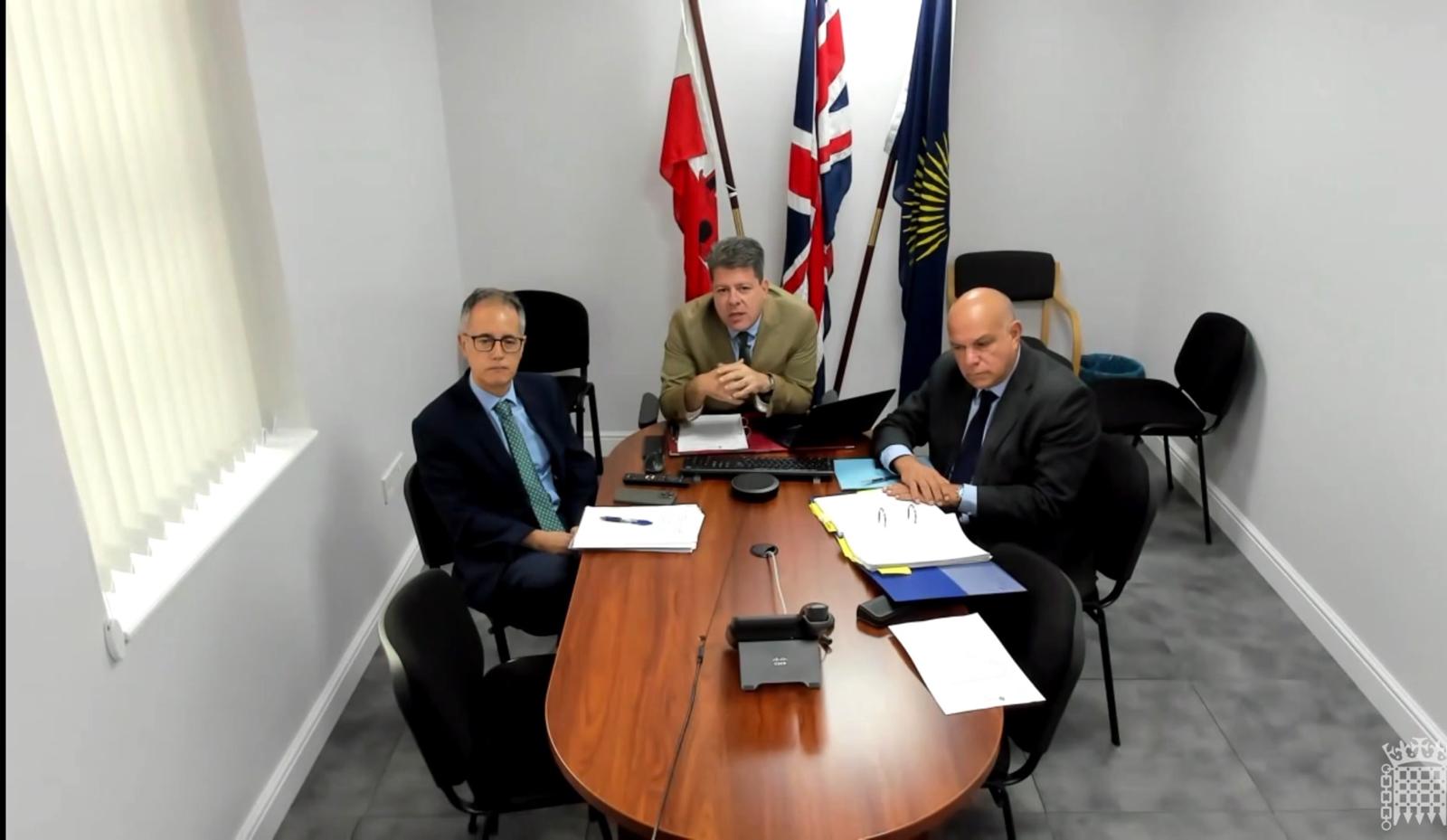
Mr Picardo was equally emphatic when the same issue was put to him, including questions about the European Court of Justice’s role in interpreting EU law incorporated into the agreement.
He said the ECJ would determine the meaning of EU provisions where relevant but argued this was necessary to ensure that identical EU rules were interpreted consistently.
“What Gibraltar is doing is akin to what the United Kingdom did in 1972,” the Chief Minister said.
“That is to say, it is agreeing to abide by rules of a club, and it is agreeing that…the dispute resolution mechanism of that club, which is the European Court of Justice, should be able to determine interpretations as to those rules as a price of a membership.”
And he added: “This is not sovereignty. This is jurisprudential consistency.”
Mr Picardo said he could “put my hand in the Gibraltarian political fire and tell you that not one iota of our sovereignty has been compromised at all” by the treaty.
Conservative peer Lord Moynihan pressed the issue again later during the evidence session, questioning the implications of Gibraltar having to keep pace with EU rules in areas covered by the treaty, including product regulation.
“Are you looking like a British Overseas Territory or an EU Overseas Territory if you have to take all these laws?” he asked.
Mr Picardo drew a distinction between the physical movement of people and goods, where Gibraltar needed fluid access to Europe because of its geography, and services, which remain outside the scope of the treaty and provide the mainstay of Gibraltar’s economy.
“What we have looked at is the reality that Gibraltar geographically, and therefore physically, is attached to Europe,” he said.
“And therefore, the things that move physically, people and goods, need to be able to flow with Europe in a very fluid fashion.”
He stressed that this was not about the EU concept of free movement and that Gibraltar had not agreed a right of establishment.
The committee also explored whether Gibraltar’s customs arrangements would constrain its participation in wider UK trade policy.
The treaty created a customs union with the EU in relation to goods and meant Gibraltar could not participate in relevant goods provisions of agreements entered by the UK such as the Comprehensive and Progressive Agreement for Trans-Pacific Partnership, peers were told.
Mr Picardo accepted that the deal involved choices and compromises but said that Gibraltar’s economy was overwhelmingly services-based, underlining again that services were outside the scope of the agreement.
He said the Rock thus retained the ability to benefit from UK trade agreements in services and had little historic involvement in goods exports.
Another recurring line of questioning concerned dual immigration controls at Joshua Hassan Gibraltar International Airport, including who ultimately decides whether someone can enter Gibraltar.
The committee heard that passengers first undergo Gibraltar immigration controls followed by Schengen checks conducted by Spanish officials, with Gibraltar retaining authority over admission to the Rock and Spain deciding admission to Schengen.
Peers were particularly keen to understand what would happen where the two decisions differed.
Mr Picardo said the two checks were consecutive but legally separate.
Where Gibraltar admitted someone but Schengen did not, there were limited circumstances in which that person could enter Gibraltar but not Spain, he told the committee.
Conversely, someone refused entry to Gibraltar but admitted to Schengen could transit through a separate airport route into Spain without entering Gibraltar.
The Chief Minister said that during the first two months of the arrangements there had been no cases where only one side had refused admission.
Peers also questioned Lord Wood about defence and whether Spanish involvement under the treaty could affect British military operations.
He described the operational autonomy of the UK’s military facilities on the Rock as a “total red line”, saying Spain would have no role in approving or controlling operations, deployments or military movements.
Limited information-sharing arrangements would instead support derogations for defence personnel and goods following the removal of routine frontier checks.
Questioned on the regional cohesion fund envisaged by the treaty, Lord Wood and Mr Picardo both confirmed that this would be funded by Gibraltar, not the UK taxpayer.
Mr Picardo said Gibraltar’s contribution would initially be in “the low millions of pounds” and would be funded through Gibraltar taxpayer resources and contributions from leading industries, with a focus on training people for the local employment market.
The committee also tested how enduring the treaty would be.
Lord Wood and Mr Hughes were questioned closely on different termination clauses, including a 90-day process that could be triggered if Gibraltar rejected an EU measure it had agreed to align with, and a mechanism linked to Spain after a four-year review of mobility provisions.
They stressed that these were structured processes containing opportunities to find alternative solutions rather than mechanisms allowing the treaty simply to be ended without discussion.
For Mr Picardo, the treaty was the product of compromise and was not perfect, but it provided the stability Gibraltar needed after a decade dominated by Brexit uncertainty.
He said the first weeks of provisional application had exposed some practical issues, including airport congestion when several flights arrived together and “sticky” customs procedures, but said these were implementation matters that working groups could address.
Looking further ahead, Mr Picardo said he regarded Gibraltar’s relationship with the EU under the treaty as settled, even though the underlying sovereignty dispute with Spain remained unchanged.
While the treaty reserved each side’s position on sovereignty, Gibraltar would continue to fight for the recognition by the United Nations of its right to self-determination.
“So what I might say is that perhaps we've resolved the issue for Brussels, but we still have a lot to do in New York,” he told the committee.


