


Let the numbers speak: The truth about beds at St Bernard’s


By Gemma Arias-Vasquez, Minister for Health, Care and Business
Recently, the GSD has issued a number of statements on bed capacity at St Bernard’s Hospital, with Ms Ladislaus accusing me of hiding behind the figures. I would put it differently: I have the figures and Ms Ladislaus does not, and when you look at them properly, they tell a very different story from the one the GSD is telling.
What Ms Ladislaus and I should be doing is sitting down together so that I or the Director General can take her through the numbers. This would be far more productive than engaging in a press release war over the bed occupancy at the hospital. The population would benefit far more from this.
Unfortunately, whilst we successfully engaged at the beginning of this term, Ms Ladislaus was clearly advised by the more belligerent members of the Opposition that this was not a good way of carrying out Opposition politics. My invitations to engage have, since, fallen on deaf ears. We are therefore left to engage solely via press release.
So let me set out the numbers.
THE NUMBERS
St Bernard’s Hospital has 146 adult beds, not including maternity and paediatrics. More than 70 of those beds are currently occupied by elderly, long-stay patients. Many of them no longer need to be in an acute hospital at all and are simply waiting for a place in elderly residential care.
Think about that for a moment. Around half of our adult hospital beds are being used for something they were never designed to do. That leaves only around 75 beds to meet every emergency admission from A&E, every elective operation, every winter surge and every unexpected peak.
THE ROOKE CHANGES THE EQUATION
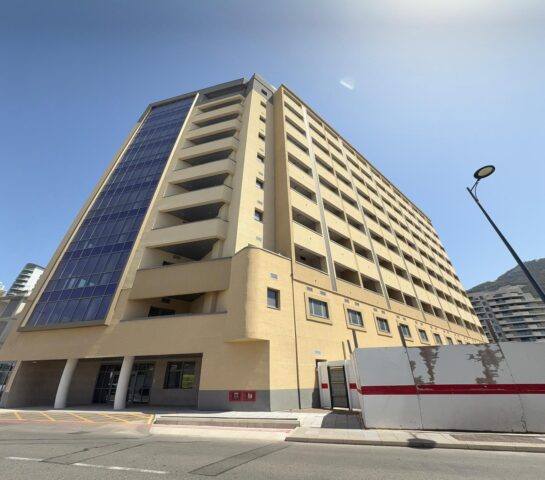
Very soon, those long-stay patients will begin moving to the Rooke, a modern elderly residential and nursing facility with 170 en-suite rooms and space for 218 residents. It is the right place for them, because they deserve a home, not a hospital ward.
When they move, more than 70 beds become available, virtually overnight, at St Bernard’s. That almost doubles the beds available for acute care. That is not a “short-term measure”, as the GSD claims. It is a fundamental change in how our hospital works.
WHY A BIGGER HOSPITAL IS NOT THE ANSWER
The GSD argues that St Bernard’s is managing with bed capacity designed for a smaller population. It is a simple argument, but it misunderstands how modern healthcare works.
Clinical practice today is very different from what it was 20 years ago. Most elective surgery is now carried out as day cases, with patients going home the same day, and those who are admitted stay in hospital for far shorter periods than they once did. That is why acute hospitals around the world now need fewer inpatient beds, not more.
St Bernard’s does not need to be bigger. What it needs is for elderly patients who no longer require hospital care to be in the right place, and that is exactly what the Rooke delivers.
WHAT HAPPENED IN OCTOBER
I also want to address what happened last month directly, because people deserve the facts.
Over the weekend of 17th and 18th October, an unprecedented number of patients from a visiting cruise ship required emergency admission, on top of an already busy week. As a result, occupancy in our adult wards reached 98.6%. Three elderly women, all medically fit for discharge and awaiting residential placements, were moved temporarily into a separate, closed-off area of the maternity unit for just 24 hours, while another escalation plan was activated. They were cared for by nurses, not midwives. Infection-control measures were in place and maternity services were not interrupted. They have since returned to regular wards.
Was it ideal? No. The Director General has said so, and I agree with him. But it was a safe CLINICAL decision, taken not by politicians but by the GHA’s clinicians and bed managers, who assess every patient, every ward and every risk, every single day. It was taken to keep capacity open for the next emergency. Throughout, with the hospital at nearly 99% capacity, it ran completely as normal: A&E kept running, scheduled operations went ahead, everyone was safe and not a single patient had their care affected.
And it happened for precisely the reason I have set out above. Far too many acute beds are occupied by patients who should be elsewhere, and the answer to that is the Rooke.
THE GSD CANNOT HAVE IT BOTH WAYS
On 2nd September, the GSD welcomed the additional capacity at the Rooke and recognised that delays in elderly residential care were affecting bed availability at the GHA. Seven weeks later, the same move is described as a short-term measure. You cannot welcome the solution in September and call it inadequate in October because it suits the headline.
LEAVE CLINICAL DECISIONS TO THE CLINICIANS
Mr Azopardi complains that I describe these decisions as operational. They are, and that is exactly how it should be.
Which ward a patient is placed in on a given night, when a patient is fit for discharge, how beds are allocated across the hospital and how the hospital responds to a sudden surge are all decisions for the GHA. They are taken by the Director General and by the consultants, nurses and bed managers who know these patients and these wards. They are the experts, and they make these judgements every day on clinical grounds.
It is not for Ms Ladislaus to make those decisions from the Opposition benches. Nor, frankly, is it for me to make them from the Ministry. A politician who second-guesses clinicians to win an argument in a press release is not serving patients well.
When the GHA Board was restructured, I was clear that clinical decisions would remain clinical and would never be made political. That principle does not change because the GSD finds it inconvenient.
What is for me, and what I take full responsibility for, is the policy: the decision to acquire the Rooke, run it publicly and allow our hospital to function as an acute hospital again. That was my decision and I stand by it.
PLANNING FOR THE FUTURE
The GSD’s real question is what happens next. Gibraltar’s population is ageing, and demand for elderly care will grow. That is true here, as it is across Europe.
We know that, which is why work on the long-term future of elderly residential care in Gibraltar is already well under way. We are taking advice from those with real expertise, including clinicians, care professionals and specialists in elderly care, and we are building that plan on hard data about our population, our demand and our costs. When it is ready, we will set it out in full. We will not rush it out to answer a GSD press release.
We have the data, we have a plan and we are delivering it.
Our GHA staff deserve better than a running commentary suggesting the hospital is in crisis when it is not. They also deserve the trust to make the decisions they are trained to make. Our patients deserve calm, honest information. And our elderly deserve a proper home.
That is what this Government is delivering.
Most Read
PP MEP says ‘things will change’ on Gib treaty with right-wing govt in Madrid
Tue 27th Oct, 2026
HMS Queen Elizabeth sails into Gibraltar, strengthening long-standing links
Sun 25th Oct, 2026

Today's Paper
2nd November 2026
Read our latest newspaper by downloading our app from the link below.


