


Archbishop Alfred Xuereb on his time with Pope Benedict XVI


Archbishop Alfred Xuereb will be sharing a unique and deeply personal portrait of Pope Benedict XVI in his talk at the Gibunco Gibraltar Literary Festival on Saturday November 14, 2026. He told Deputy Editor Gabriella Ramagge about his book, My Days with Benedict XVI, and how he decided to write the piece out “of deep gratitude, filial affection, and a desire” to share his experience. The Archbishop said the main purpose of the book is to help readers come to know Benedict XVI “more fully, beyond his public image, and to appreciate his sensitivity, humility, wisdom, and profound faith.”
Are there any anecdotes or stories from your time with Pope Benedict XVI that you can share?
The book narrates many beautiful anecdotes from my years serving Pope Benedict XVI, and some of the most meaningful are also the simplest. They reveal a side of him that people may not always have had the opportunity to see: his warmth, humility, sense of humour, deep love for his family, and genuine interest in other people.
One story I particularly remember concerns the early years of his academic career in Germany. Pope Benedict told me that, when he had recently been appointed a professor, he went to a tailor to have a suit made and to buy the academic hat worn by university professors. Because he looked so young, the tailor mistook him for a student and refused to serve him.
What struck me was his reaction. He did not argue or complain. He simply thanked the tailor and went to another shop. For him, preserving peace in his heart was more important than proving that he was right. I have always considered this a beautiful lesson in humility: humility is not weakness, but inner strength.
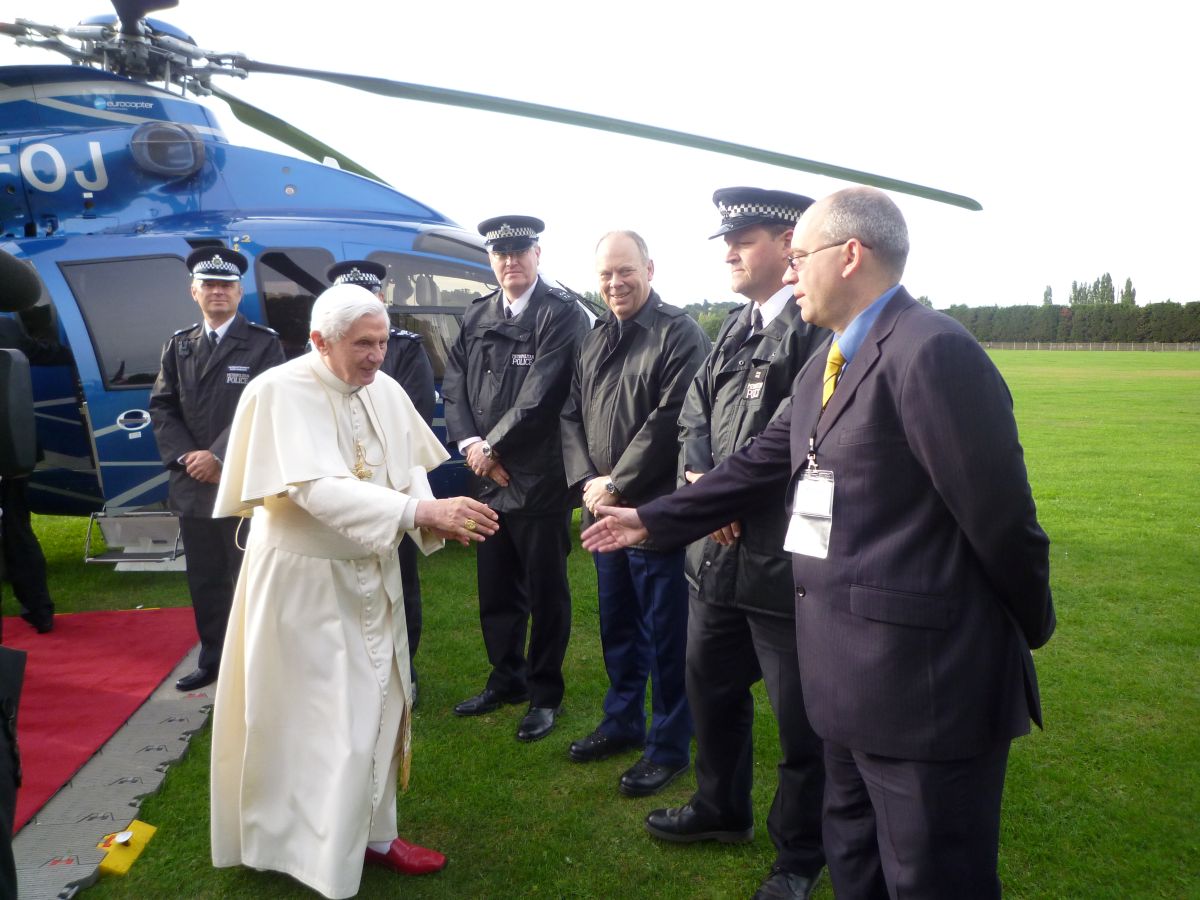
Another lovely memory concerns my Maltese roots. Pope Benedict was genuinely interested in my country, its culture, and its religious traditions. I told him about our Christmas procession, in which children walk through the streets carrying a statue of the Infant Jesus while singing, and about the traditional sermon delivered by a child before Midnight Mass.
He listened with great attention and delight. What touched me was that, despite his enormous responsibilities as Pope, he always found time to take a sincere interest in the life and experiences of the people around him. He made me feel that I was not merely a member of his staff, but part of his close pontifical family.
Pope Benedict also loved to speak about his childhood in Bavaria. He shared memories of his parents, his brother Georg, and his sister Maria, as well as the small concerts they used to perform together at home every Christmas.
These stories revealed the deep affection that united his family. They also helped me understand the roots of his personality and the importance of family, music, and faith in his life. He was a great theologian, but he was also a man who treasured the simple joys and memories that had accompanied him since childhood.
Can you talk about that historic moment that Pope Benedict XVI decided to resign and why he did it?
The decision of Pope Benedict XVI to renounce the papacy was one of the most extraordinary and moving moments in the recent history of the Catholic Church. For me, as someone who had the privilege of serving him so closely, it was also a deeply personal experience. I witnessed firsthand the circumstances surrounding his decision, and the experience left a lasting impression on me.
On 11 February 2013, he announced that he would renounce the papacy, with the resignation taking effect on 28 February at 8pm. He explained that, because of his advanced age, his physical and mental strength had diminished to the point that he could no longer adequately fulfil the responsibilities of the papal ministry. He had reached this decision after repeatedly examining his conscience before God and reflecting deeply on the matter.
For me, the essential point is that Pope Benedict understood his ministry as a service to the Church, not as a position to be held on to at all costs. He recognised that leading the Church in a world undergoing rapid change required considerable physical and spiritual strength. When he became convinced that he could no longer meet those demands adequately, he had the humility to acknowledge his limitations and the courage to make an unprecedented decision in modern times.
What makes this moment especially significant is that he did not see his resignation as the end of his service to the Church. He explicitly stated that he wished to continue serving it through a life dedicated to prayer. And that is precisely what he did during his retirement at the Mater Ecclesiae Monastery in the Vatican gardens.
I believe it is important to understand that decision not as an act of weakness, but as an act of love for the Church. He was willing to step aside because he believed it was the right thing to do for the good of the Church.
His decision offers us a profound lesson in leadership: true leadership is not about holding on to authority, but about discerning what is best for those we are called to serve. Sometimes, courage means continuing in a difficult mission; at other times, it means recognising when it is right to step aside.
Above all, I remember Pope Benedict's profound faith and serenity. His decision was made in freedom, after prayer and careful discernment.
What is a little-known fact about Pope Benedict XVI?
One little-known aspect of Pope Benedict XVI is that, although he had a special affection for cats, he never actually owned one. He used to tell me charming stories about his neighbours’ cat in Bavaria, where he went for his holidays. The cat would always be the first to enter the house whenever he opened the door.
During his years as a cardinal, he would often take walks around the Borgo, stopping to buy bread and other everyday necessities. Whenever he came across a cat, he would pause to talk to it and gently stroke its head.
These lovely details reveal a more personal side of Benedict XVI and show that, alongside his profound theological thought and demanding responsibilities, he also appreciated the simple pleasures of everyday life.
What was it like working with Pope Benedict XVI?
My experience was one of great privilege, but also of learning and personal growth. Pope Benedict had a demanding schedule, and prayer was at the centre of his day. Yet he never allowed his responsibilities to diminish his kindness towards those who worked with him. He was attentive, considerate, and genuinely interested in the people around him.
I particularly remember his paternal way of welcoming me when I first arrived at the Pontifical Apartment. He took an interest in my family, my studies, and my Maltese culture. That personal warmth made a profound impression on me.
Working with him also taught me the importance of keeping a peaceful heart, listening carefully, and approaching difficulties with humility. His intellectual brilliance was remarkable, but what impressed me just as much was his gentleness and his ability to remain composed in tough circumstances. Other close collaborators have similarly recalled his serenity, good humour, and steadfast commitment to prayer.
Ultimately, working with Pope Benedict XVI was much more than a professional responsibility. It was an experience of friendship, fraternity, and spiritual formation. I came to know a man whose greatness was reflected not only in his theological writings and leadership of the Church, but also in the small, everyday gestures through which he showed respect, affection, and concern for others.


