


Gib treaty ‘a very important milestone’, Sanchez says
Photo via Moncloa/Rest is Politics


The UK/EU treaty on Gibraltar is “a very important milestone” that will strengthen the bilateral relationship between the UK and Spain, Spanish Prime Minister Pedro Sanchez said this week.
Mr Sanchez was speaking during a wide-ranging interview on The Rest is Politics, the popular podcast hosted by former Conservative MP Rory Stewart and Alastair Campbell, Tony Blair’s former press spokesman while in government.
The reference to Gibraltar was brief and came, unsolicited, during a broader conversation on the impact of Brexit.
“I think there were, like, three Labour governments - in Gibraltar, in Spain and in Britain - and thanks to, I think, generosity, responsibility and, of course, thinking about people in Gibraltar and in Campo de Gibraltar, we managed to reach a very important agreement,” Mr Sanchez said.
“So I think that this was a very important milestone in order to scale up and strengthening our bilateral cooperation with the UK.”
Mr Sanchez said there was “a clear alignment” in global politics between the UK and the EU, adding that he believed Britain should revisit the question of its “obvious” economic and political future in the wake of Brexit.
“I think that is a big question mark that the British should answer,” he said.
“We need to keep that alliance.”
“Brexit was a terrible loss, not only for the British, but also for the European Union.”
“We have also lost one of our major, let's say, political actors when it comes to international politics and welfare of the European Union as a whole.”
Mr Sanchez said he saw no other path than for the UK and the EU to strengthen their cooperation and that he hoped to one day have the UK return to the bloc, adding that he believed the UK and the EU shared the same destiny, whether “as a member of the European Union or not”.
Mr Sanchez acknowledged that, for the UK, reopening the Brexit debate would polarise citizens and was thus “a very difficult debate to face”.
“But again, it's a question of framework, you know, how Britain could win more sovereignty,” he said.
“And in my opinion, you don't win more sovereignty when you are out of a bigger political project.”
“In our case, of course, the European Union.”
“I mean, imagine Spain out of the European Union.”
“It would be a disaster.”
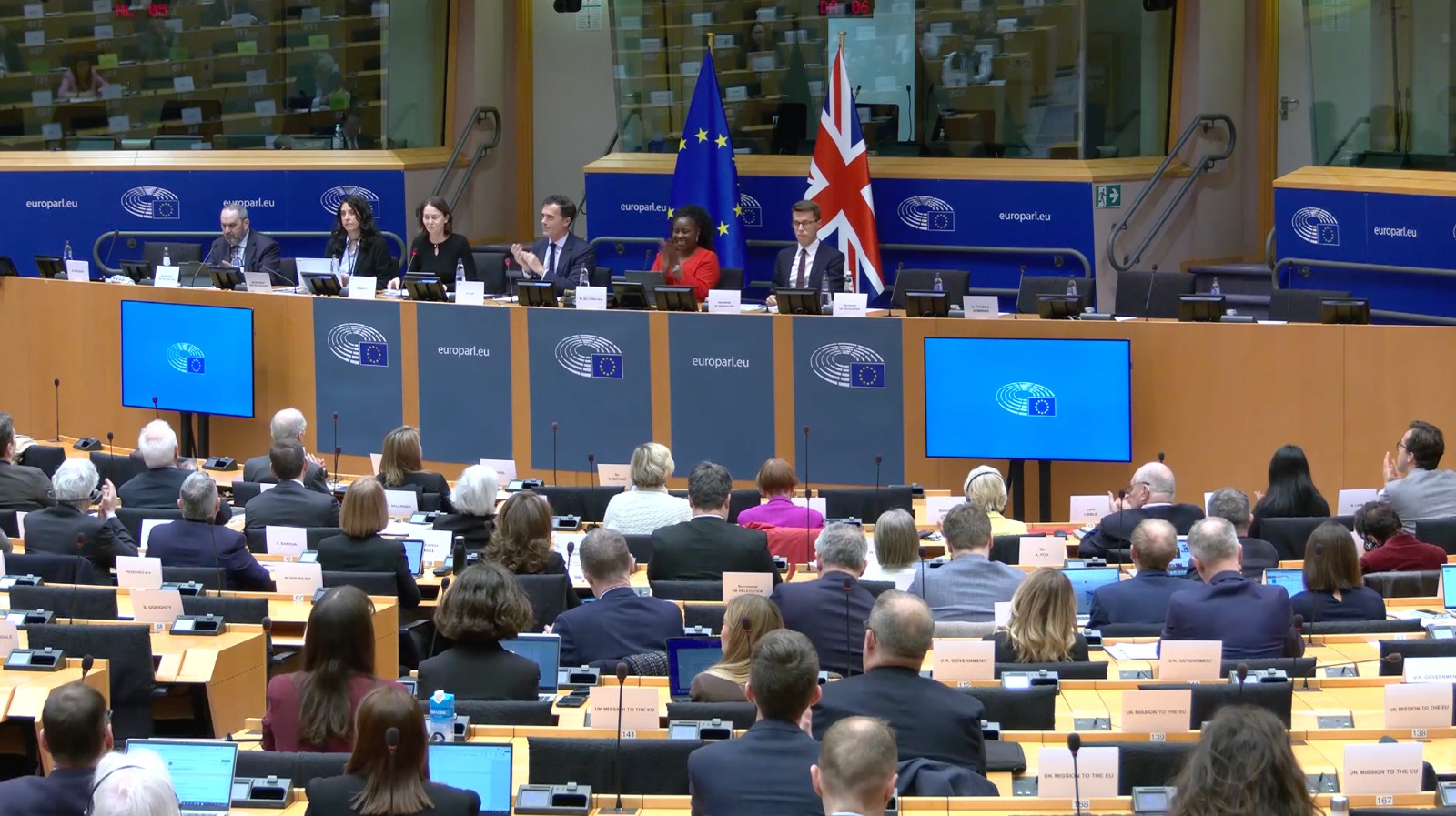
The interview was broadcast as the UK-EU Parliamentary Partnership Assembly met in Brussels to discuss the UK/EU relationship.
The assembly was established under the terms of the 2021 Trade and Cooperation Agreement and acts as a forum for parliamentarians to exchange views on the implementation and operation of the agreement.
“The relationship between the EU and the UK is not an abstract political topic for many, also for me,” said European Parliament vice president Katarina Barley, addressing the plenary session of the meeting on Monday.
“It is something that reflects the reality of millions of people whose lives, families, studies and work cross borders.”
“That is why, obviously, the moment we are in now is an important one.”
“For much of the past decade, the conversation between the European Union and the United Kingdom has been shaped by the process of separation.”
“But we are now at a stage where we can look beyond that period and focus more clearly on what comes next.”
“Because the reality is simple.”
“Our security, our prosperity and our democratic values remain closely intertwined.”
“Russia's war against Ukraine has reminded us in the stark possible terms that peace and security in Europe cannot be taken for granted.”
The sentiment was echoed by Nick Thomas-Symonds, the UK Minister for EU relations, who reflected on the work carried out on implementing the Trade and Cooperation Agreement and subsequent efforts to strengthen the UK/EU strategic partnership in areas such as defence.
Mr Thomas-Symonds underlined the importance of that relationship, “... not least in needing to collectively work together against the reckless attacks from Iran that are threatening our civilians and service personnel across the region.”
“And if ever there was a sign that we live in a more complex world and that close cooperation across Europe is vital to our shared security, then it is this.”


