


Poetry Competition 2025


School Years 6-7 Category Highly Commended
My Little Place
By Gisele Walley
Crumbling leaves and old palm trees,
These are things that everyone sees,
But as for that, it’s not where I’m at,
I’m in a new place,
And you’re not there,
But the spirit will guide you, like a hologram in the air.
Following me round here and there,
As if it’s floating in the air,
I keep it close,
I squeeze it tight,
even during late at night.
This place I know I’m in,
is not a place I know,
So I keep the spirit with me
and it supports me head to toe.
It’s like a friend that’s not really there,
That I pretend can braid my hair
It’s like a room far far away,
where my heart can always stay.
From the emotion, borrowed not bought.
the spirit guides me back to the thought
that love surrounds me wherever I go
and it tells me what I need to know.
School Years 6-7 – Highly Commended – Judges Comment
“My Little Place”
This poem keeps the reader wondering where this ‘little place’ is. The palm trees speak of an earthly location, however the similes used in the description of ‘floating’, ‘spirits’ and the ‘friend that’s not really there’ transcend the earthly confines and lend an ethereal quality to the setting. An effective poem with lovely use of language.
School Years 8-10 Category Winner
Tour Of The Mind
By Danielle Shamir
Welcome to the brain - please mind the gap
between the facts and frequent flickers of imagination.
Flash photography is allowed,
but memories tend to blur on contact
Enjoy the tour!
Let’s begin in the Garden of Half-Remembered Dreams,
To your left, bright Lego flowers gleam
A soft breeze carries summer’s scent,
while sunlight weaves where paths are bent.
And laughter drifts, a distant theme –
your favourite, forgotten dream.
Moving forward to the Hallway of Nostalgia’s light,
Old photographs glow soft and bright.
Warm memories of childhood play–
barefoot beneath skies of day.
The air here hums stories of pure delight –
ones you always tell by night.
Now, we’ll enter the Room of Confusion, please do stay alert –
where physics loses its way and logic starts to slip.
On your left, lost equations drift like leaves in a storm,
and on your right, questions pile up, unanswered and forlorn.
Hold tight – this maze will twist your mind and test your sense!
Next stop: the Waiting Room. Quiet now, please – don’t speak!
Here, time drags slowly, and answers play hide-and-seek.
Above your head, unsent letters hover mischievously in the air,
Beside you, ghostly moments may linger everywhere.
Be patient – this stop can stretch days into weeks.
And now we arrive at the Room of Insecurities.
Look to your left, you can see mirrors warped by old uncertainties.
To the right, a spotlight – don’t worry, it stings.
Each seat here whispers the worst kind of things.
Feel free to stay… most visitors do.
Final stop – please remain seated.
Ahead, behind the glass, you’ll see The Person.
Not one, but all: each version you’ve ever been.
The loud, the quiet, the almost, the when.
Together you form the only one of you there is.
Thank you for visiting.
Please exit through the gift shop.
School Years 8-10 – Winner – Judges Comment
“Tour Of The Mind”
Told through a creative second-person perspective, this poem invites the reader on a guided tour through different “rooms” of the mind, where memories, confusion, and insecurity take physical form. The extended metaphor of the brain as a museum is handled with confidence, allowing each space to convey a distinct emotional landscape. Vivid imagery like “Lego flowers gleam” or “letters hover mischievously in the air,” keeps the reader immersed as the tone shifts from nostalgic to unsettling. The final reflection, where every version of the self is gathered behind the glass, offers a powerful ending that brings the whole journey together.
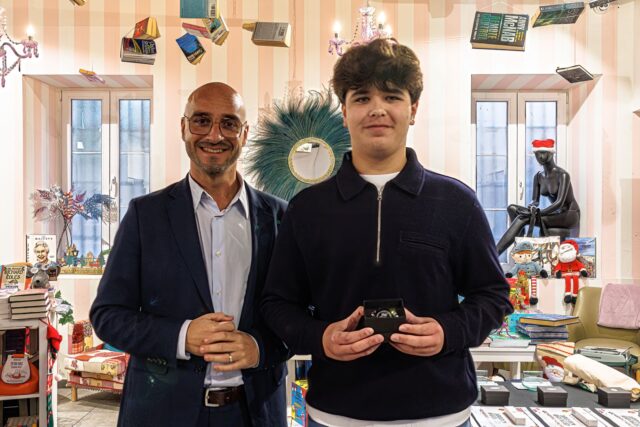
What kind of God?
By Javier Oriol Holliday
The streets lie scattered in ruin and despair,
Whilst we pretend we have no duty to care,
We are ‘activists and protestors,’ so we proclaim,
Whilst innocent children seek shelter from our shame.
Children enslaved, compelled to toil in the night,
Whilst our countenances transform to masks of blight.
We gaze upon them with pity drenched in disdain,
Whilst they relinquish their forms, wrought with pain.
People suffer for their faith, in bonds of derision,
Whilst we act as though naught divides this division.
We behold each other with tender loathing,
Whilst they bear the weight of our warring,
Drought stands the only flood within their minds’ embrace,
Whilst we perceive not the waters we waste.
We cut down their trees and strip their sacred soil,
Whilst their thoughts are shackled to our unyielding coil,
What kind of God would permit such plight?
One who fails when faced with shadowed might?
Perhaps a God who does test mankind’s resolve?
Or one who grants us choice to paths involved?
“What kind of God?”
Told through a questioning, reflective voice, this poem explores suffering and injustice by setting sharp contrasts side by side. The repeated use of “whilst” gives the poem a steady, almost unsettling rhythm, highlighting the distance between what people claim to do and what actually happens. Imagery of ruined streets, exploited children, and damaged land creates a sombre atmosphere that deepens as the poem progresses. In the final stanza, the poet’s rhetorical questions turn the poem inward, prompting the reader to think about whether responsibility lies with a higher power or with humanity itself. This all gives the poem real weight and leaves a lasting impression.
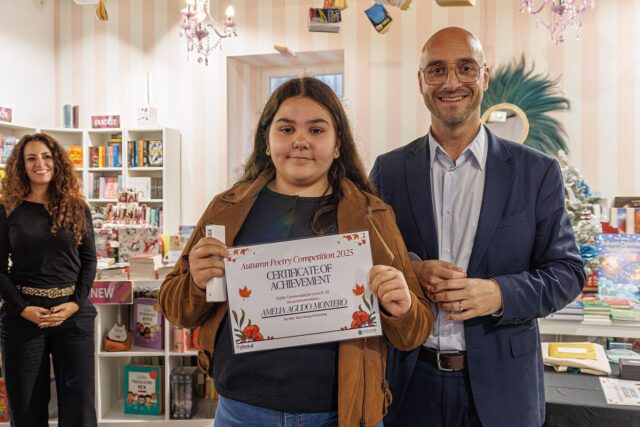
School Years 8-10 Category Highly Commended
The Mint That Changed Everything
By Amelia Agudo Montero
Old and alone
She sits on her throne.
Summer has faded away into darkness,
Autumn is an exciting, spooky season,but all she feels is numbness.
Weight on her shoulders, which she can no longer carry.
Week and brittle she misses her sweet husband,Harry
Children’s laughter fills the eerie streets on Halloween.
Dressing up in unique costumes although most parents are not very keen.
The night arrives,leaves crumble,doorbells are rung.
Too sad and broken to participate she recalls when she was young.
Her happiness would overwhelm everyone.
Now fragile and lonely she speaks to no one.
She hears a subtle knock on her door.
She hesitates but decides to answer whilst pacing the squeaky floor.
A young,timid boy stands on her doorsteps.
He stammers and kindly asks for sweets as he stares as the dozens of spiderwebs.
A spark was lit,she had a rush of happiness run through her broken soul and body
This was the fist trick or treater who has rung her doorbell,the boy’s name is Cody.
Happy but doubtful she offered him a mint.
He gratefully accepted the mint and left with his mother happy and determined.
Joyful and thankful she invited everyone to her house to celebrate.
Halloween is the best time of the year, no one can debate.
School Years 8-10 – Highly Commended – Judges Comment
“The Mint That Changed Everything”
This poem tells the story of an elderly woman whose loneliness starts to lift after a simple but touching Halloween encounter. Because it’s written in third-person, we get to watch her shift gently from feeling numb and low to finding a bit of warmth again. Little details like “leaves crumble” and “the squeaky floor” set the quiet mood, and the poem uses contrast really effectively, moving from her still, empty house to the sudden knock that changes everything. The single mint she offers becomes a sweet symbol of connection, showing how even the smallest gesture can brighten someone’s day.


