


Royal Navy support ship in Gib placed on ‘heightened readiness’ to deploy east
Photo by Johnny Bugeja


By Chronicle staff and PA
A Royal Navy support ship has been placed on “heightened readiness” in Gibraltar to be sent to the eastern Mediterranean if needed.
The Royal Fleet Auxiliary vessel RFA Lyme Bay is equipped to function as an aviation platform and has medical facilities, making the vessel well-suited for humanitarian and disaster relief missions.
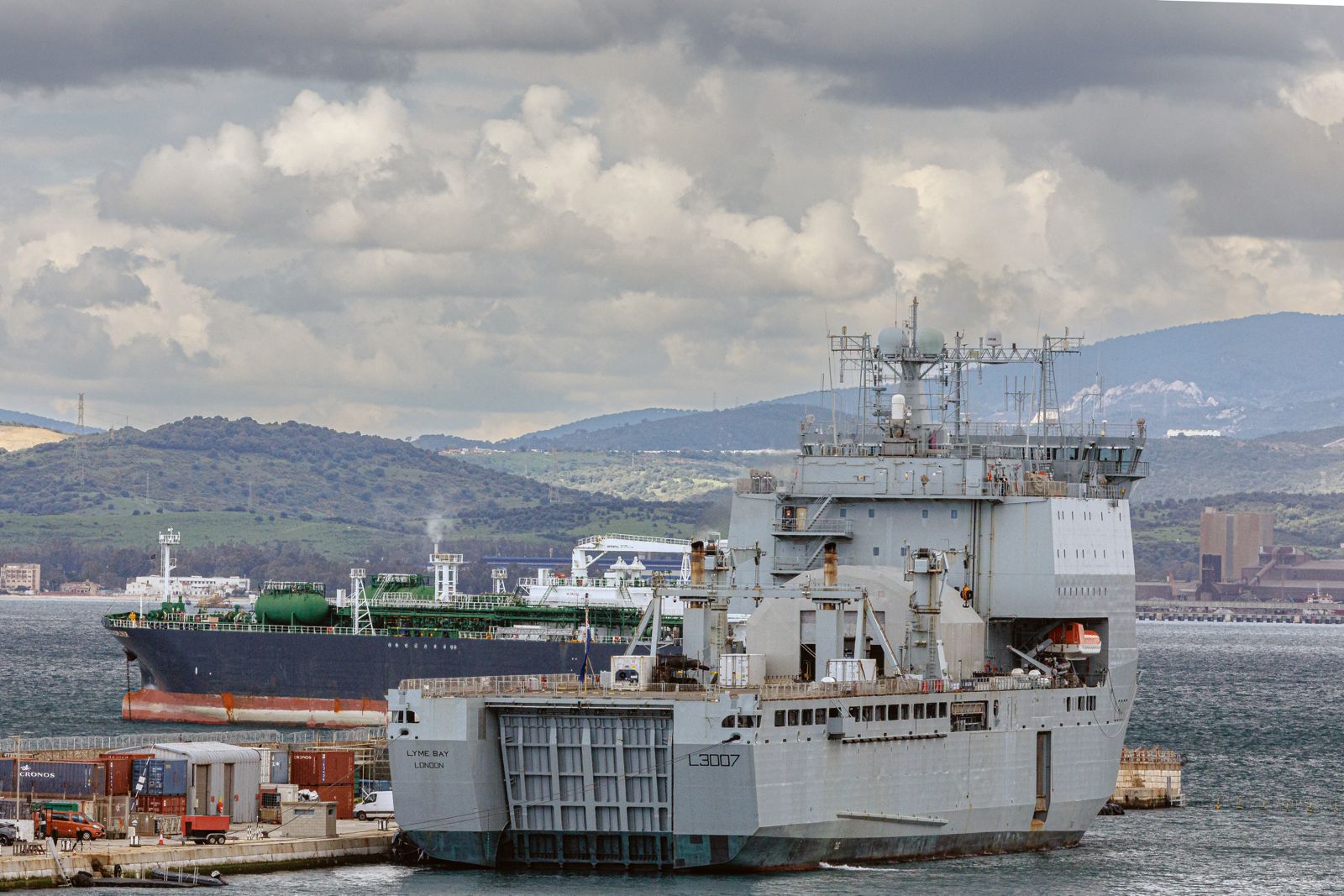
The ship is currently docked alongside the South Mole in Gibraltar’s naval base, where it has been berthed since late last year.
“As part of prudent planning, we have taken the decision to bring RFA Lyme Bay to heightened readiness as a precaution, should she be needed to assist in maritime tasks in the Eastern Mediterranean,” a spokesperson for the Ministry of Defence told the Chronicle.
UK media reports on Tuesday suggested the ship could be used to evacuate Britons if the UK Government gives the order.
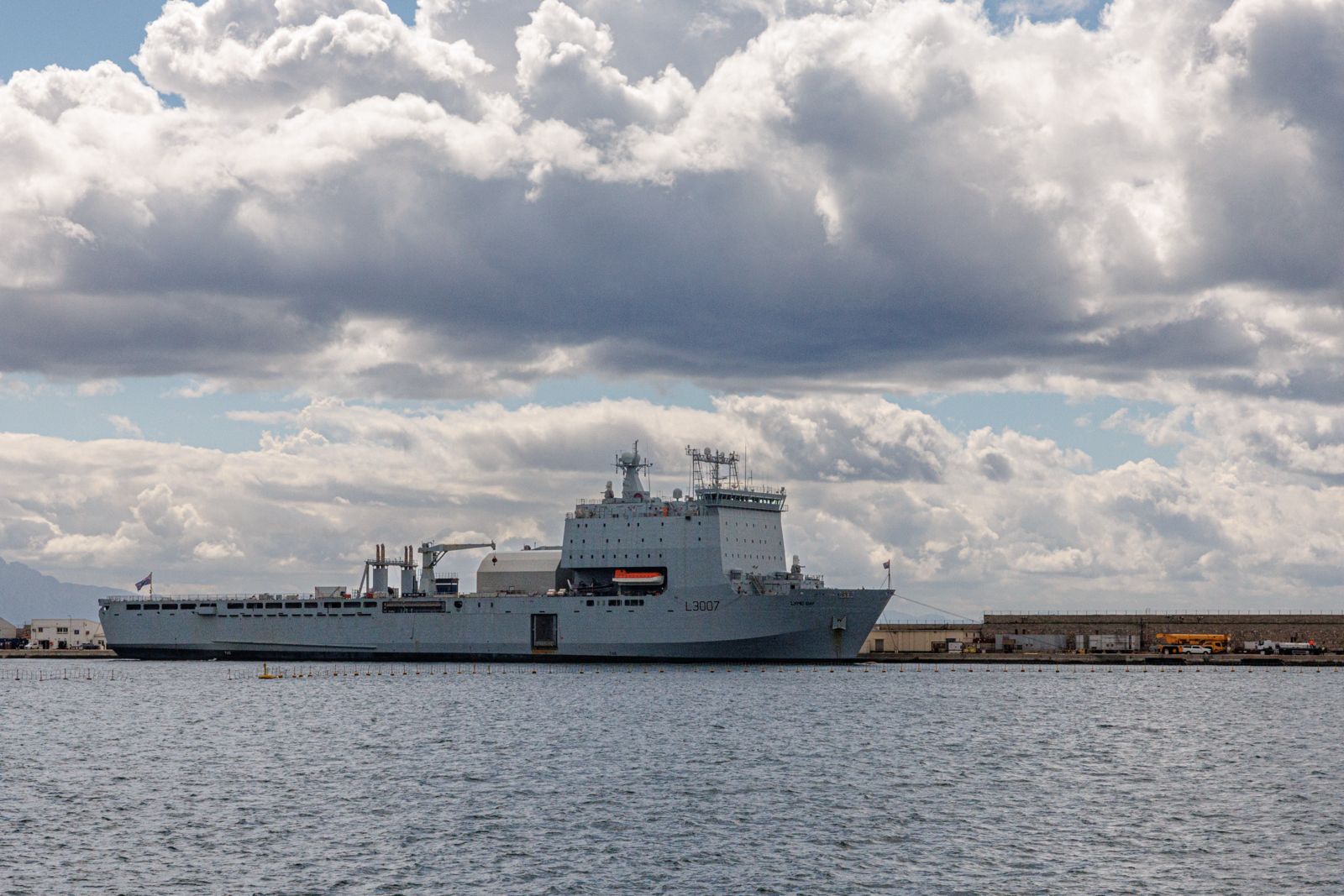
RFA Lyme Bay is the second British ship being readied for deployment to the eastern Mediterranean as the Middle East crisis continues.
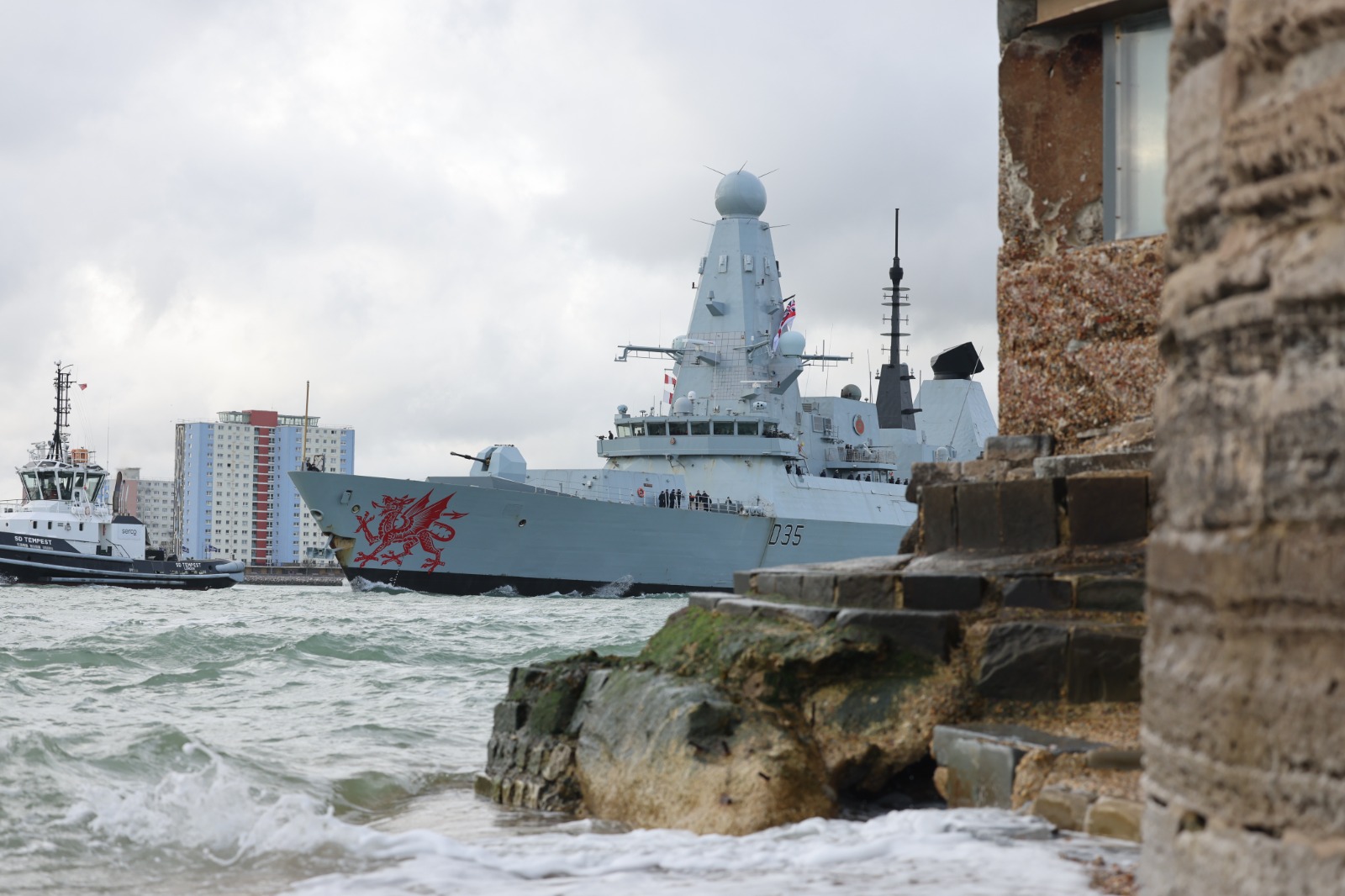
On Tuesday, HMS Dragon sailed from Portsmouth bound for the eastern Mediterranean, a week after its deployment was announced.
The Type 45 destroyer is capable of shooting down drones and ballistic missiles fired by Iran and its proxies as the Middle East crisis continues.
The crew of the vessel were seen lining the deck as the ship moved out of Portsmouth Harbour.
Officials insisted the ship had been prepared as quickly as possible for deployment, with six weeks’ worth of work squeezed into six days.
The announcement of the deployment of the ship came in response to a drone attack which hit the RAF Akrotiri base in Cyprus.
HMS Dragon, which has a crew of around 200, is capable of firing eight Sea Viper missiles in under 10 seconds to take down aerial targets.
Its commanding officer, Commander Iain Giffin, said: “We are trained for this, we are ready for this, we have the equipment and people, we have the support of the British people and, most importantly, our families and friends.”
Defence Secretary John Healey praised the naval personnel and civilian teams who “worked flat out” to prepare HMS Dragon for deployment, adding: “What is normally six weeks of work was completed in just six days – a remarkable effort delivered around the clock.”
“They are the very best of Britain in action.”
Fears over the economic impact of the crisis triggered by the US-Israeli strikes on Iran and Tehran’s retaliation against countries across the Middle East have eased after oil prices fell following Monday’s spike in the cost of a barrel.
Markets calmed after US President Donald Trump suggested the military action would be a “short-term excursion” rather than a more prolonged war and threatened “death, fire and fury” against Iran unless vessels were allowed through the Strait of Hormuz, a vital maritime oil and gas route.
The price of Brent crude was more than 8% lower at just under 91 US dollars (£67) a barrel in Tuesday-morning trading, retreating from near four-year highs above 100 dollars (£74) a barrel in volatile trading on Monday.
Markets responded by recovering some of the recent ground lost in the sell-off, with the FTSE 100 Index up 1.6% soon after opening, up 165.3 at 10,414.8.
But nervousness around the potential impact of higher energy costs still lingered.
The British Chambers of Commerce forecast that inflation would remain “firmly above” the Bank of England’s 2% target, noting the “highly uncertain” global situation.
Both Prime Minister Sir Keir Starmer and Rachel Reeves have acknowledged the war is likely to cause economic damage in the UK, with the Chancellor telling MPs it was “likely to put upward pressure on inflation” over the coming months.
Following a call with her G7 counterparts on Monday, Ms Reeves said she was ready to support “a co-ordinated release” of international oil reserves to ease the economic shock of the crisis.
She also called for action to “guarantee the security of vessels passing through the Strait of Hormuz”.
Despite asking the competition watchdog to prevent wartime profiteering, the Chancellor resisted calls to cancel a planned increase in fuel duty in response to the oil price spike.
It remains unclear how long the conflict will continue, with further strikes reported in Tehran as Mr Trump claimed the US operation was “very complete” and the Pentagon said America had “only just begun to fight”.
Iran has continued to launch strikes at Israel and the Gulf states.
The US has also withdrawn non-essential diplomatic staff from Saudi Arabia amid the continued Iranian retaliation while the UK has withdrawn the dependants of embassy staff in the United Arab Emirates “as a precautionary measure”.
A UK Government-chartered plane brought Britons back from Dubai in the UAE in the early hours of Tuesday.
Meanwhile, Tory leader Kemi Badenoch hit back at suggestions she should apologise for claiming British forces are “just hanging around” in the Middle East.
Asked if she felt she needed to apologise for the remarks made over the weekend, the Conservative leader told the Press Association: “I was criticising the Government, that they’re not doing enough, and they are the ones hanging around.”
On Tuesday, as HMS Dragon sailed from Portsmouth, Ms Badenoch said: “After two weeks of Keir Starmer’s dithering, HMS Dragon is finally leaving port.”
“I wish our brave servicemen and women a safe deployment.”
Overnight, a ground-based British unit took out a drone in Iraqi airspace which was heading towards coalition forces, the Ministry of Defence said.
British pilots have spent more than 230 hours flying on defensive operations in the region, it added.


