


The military elephant in the room
'Defeat of the floating batteries at Gibraltar', by John Singleton Copley, hangs in the Guildhall art gallery in London. Photo by Johnny Bugeja


In the Guildhall in London hangs a wall-sized painting by John Singleton Copley depicting scenes from the Great Siege of Gibraltar in 1782. At three metres by nearly eight metres, it dominates the Guildhall art gallery with dramatic imagery of the British seeing off French and Spanish troops during the war of American independence.
For anyone entering the Guildhall, it is a reminder of Gibraltar’s hard won British sovereignty and its military role spanning centuries.
On Monday, some 350 guests from the financial services industry in London and Gibraltar gathered in the Guildhall for the first time since the start of the Covid-19 pandemic to network and discuss how Gibraltar, with UK support, is seeking to bolster and grow this vital sector of its economy.
The talk was all about regulation and compliance with international rules; about the importance of the agreement underpinning continued access to UK markets; about the UK motor insurance sector, where a third of business now flows through Gibraltar; and about emerging trends at the intersection of technology and finance.

Against the backdrop of ongoing negotiations for a UK/EU treaty that could recast the relationship between the Rock and the EU, including neighbouring Spain, it is in finance and technology where transformational opportunities lie that could drive investment and economic growth on both sides of the border.
Were it not for the sovereignty question whose roots lie in the image of war captured by Copley, this deal would have been done by now. Why wouldn’t countries find ways to cooperate and make life easier for citizens and businesses, strengthening social and cultural links and fostering trade for the benefit of all?
In an interconnected world filled with threats that transcend boundaries, making physical and trade borders less sticky must surely be a defining goal of all relations between friendly governments.
But Copley’s painting is a reminder too that where Gibraltar is concerned, the military aspect remains critical to this day.
For Spain, which regards the Rock as conquered territory that should one day be returned, the British military presence here is a chink in its southern flank where Madrid would rather be in control.
But Spain’s pretensions on either side of the Strait of Gibraltar and beyond, set out in public defence policy documents, do not match its capabilities or investments.
It’s not me saying this. Just last month, Spain’s Chief of Defence Staff, Admiral General Teodoro López Calderón, welcomed a 25.8% increase in defence spending but warned Spanish MPs it was not enough to ensure Spain’s armed forces could properly respond to global threats.
For Gibraltar, this military tension between close allies presents a problem going forward.
British and Spanish armed forces work and train together around the world, not just under the umbrella of NATO but as bilateral partners too. And yet as we know, the thorny issue of sovereignty often translates into friction between allies at sea and in the air around Gibraltar which, were it not so serious, would appear farcical for anyone watching from the outside at a time of conflict on Europe’s eastern border and escalating tensions in the Far East.
The UK Government has given Gibraltarians a cast iron guarantee that it will neither change Gibraltar’s British sovereignty nor even discuss such a change against the wishes of the people for whom the Rock is their homeland.
Nothing will change in that respect unless we want it to, and we have made clear we are British to our core and will remain that way. Not English, but a unique Mediterranean blend of cultures and religions co-existing in a vibrant community guided by the rule of law and institutions built on the British model.
And yet that undeniable, steadfast backing for Gibraltar and commitment to our self-determination is not solely for our benefit. For the UK, it serves a deeper purpose and ensures Britain can operate a military lily pad at the western end of the Mediterranean from where it can support operations closer to hot spots in north Africa and the eastern Mediterranean, down into the Atlantic and east of Suez.
That was made crystal clear by James Heappey, the UK Minister for Armed Forces and Veterans, in a remarkably frank speech delivered during a reception for diplomats in the luxurious Shangri La bar on the 35th floor of the Shard, the UK’s tallest building.
One might be tempted to think Mr Heappey, who spoke in a jovial, often light-hearted tone, perhaps got carried away in his bonhomie.
Except in the audience were ambassadors from countries such as Israel, Finland, Switzerland, Bulgaria and Kosovo, and diplomats and representatives from many other countries, overseas territories and organisations, including the US and the European Union. Mr Heappey confessed he had been asked by the Foreign Office to be “very precise in my language” when referring to the UK/EU treaty talks. Given the crowd in the room then, we can conclude he knew exactly what he was saying.
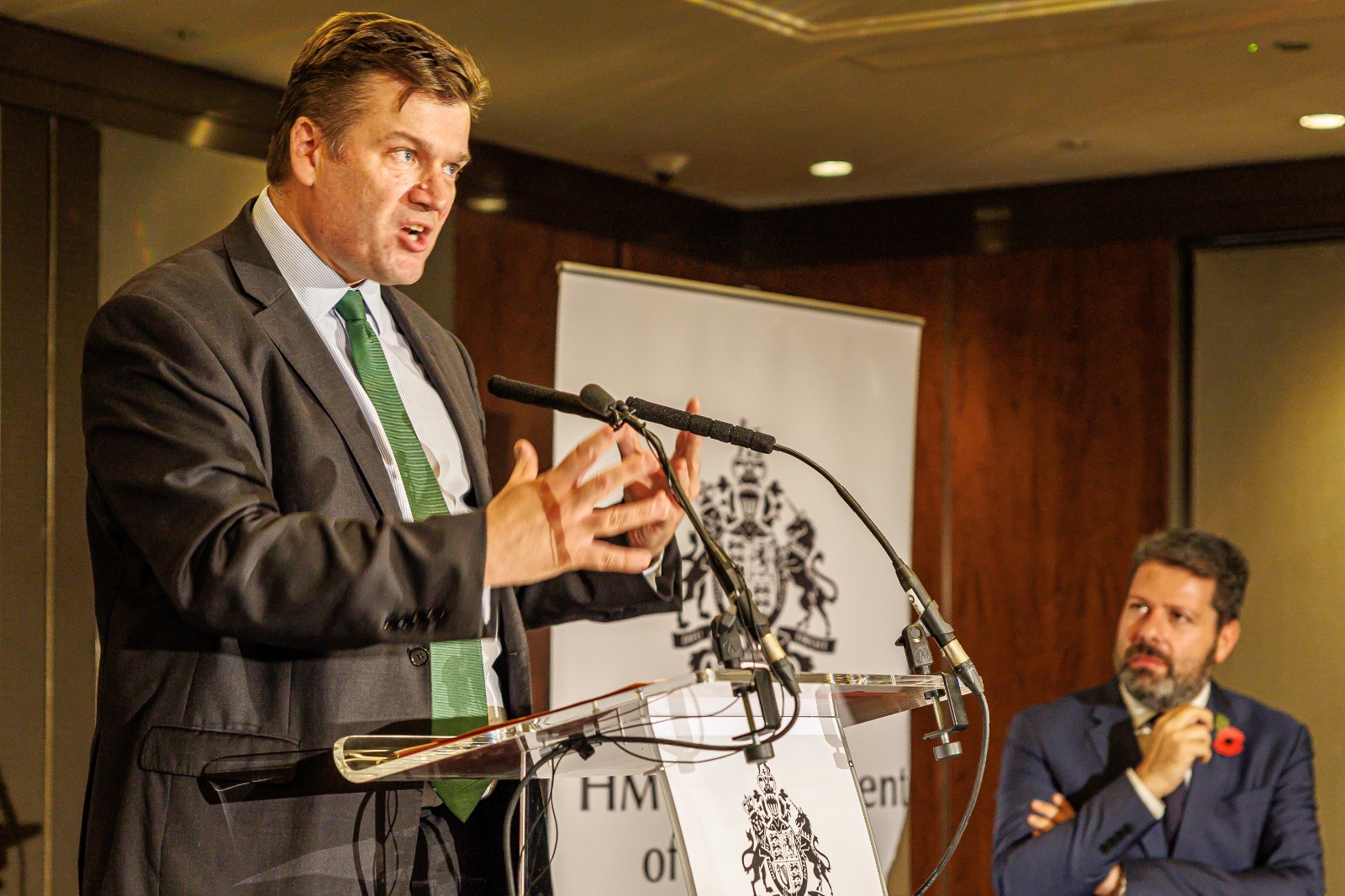
There was good progress in the complex treaty talks, Mr Heappey told the guests, but there was a clear red line that would not be crossed, and not just because the Gibraltarians would not cross it.
“The thing that there can be no compromise on - and there will be no compromise, and within the MoD we stand really making sure there is no compromise on it - is [Gibraltar’s] sovereignty,” he said.
“Because the bases in Gibraltar are of huge strategic importance, not just to the United Kingdom but to Europe as a whole.”
"None of that should stop Gibraltarians choosing their own path, but I know… Gibraltarians are hugely proud of the relationship… with the Ministry of Defence and the UK Armed Forces,” he later added.
"So for all the complexity of the EU deal, I am absolutely confident that [Gibraltarians] will end up in a place where Gibraltar and the UK can continue to have this relationship that is in our mutual interest and that [Gibraltar] can continue to be a much valued part of the United Kingdom family."
Mr Heappey raised an eyebrow or two when he offered current real-world examples of that military role, for example how Gibraltar was offering logistical support to aerial surveillance operations tracking the movement of Russian submarines.
And there was more this week.
The morning after the Shard reception, a US Navy submarine of the type that carry nuclear ballistic missiles docked in Gibraltar for a short stay that was publicly trumpeted by Washington.
Seeing these vessels above the surface is normally a very rare thing, except this year is different.
Hans Kristensen, the Director of the Nuclear Information Project at the Federation of American Scientists, noted this was the fourth time in 2022 that a US submarine of this type had made a high-profile overseas appearance, having been seen previously in Guam, Faslane and the Arabian Sea. In terms of public signalling, this was the busiest year “since the Cold War”, he tweeted.
“It sends a signal to anyone watching about our capacity to operate wherever we want,” a former senior military commander with close knowledge of Gibraltar told me.
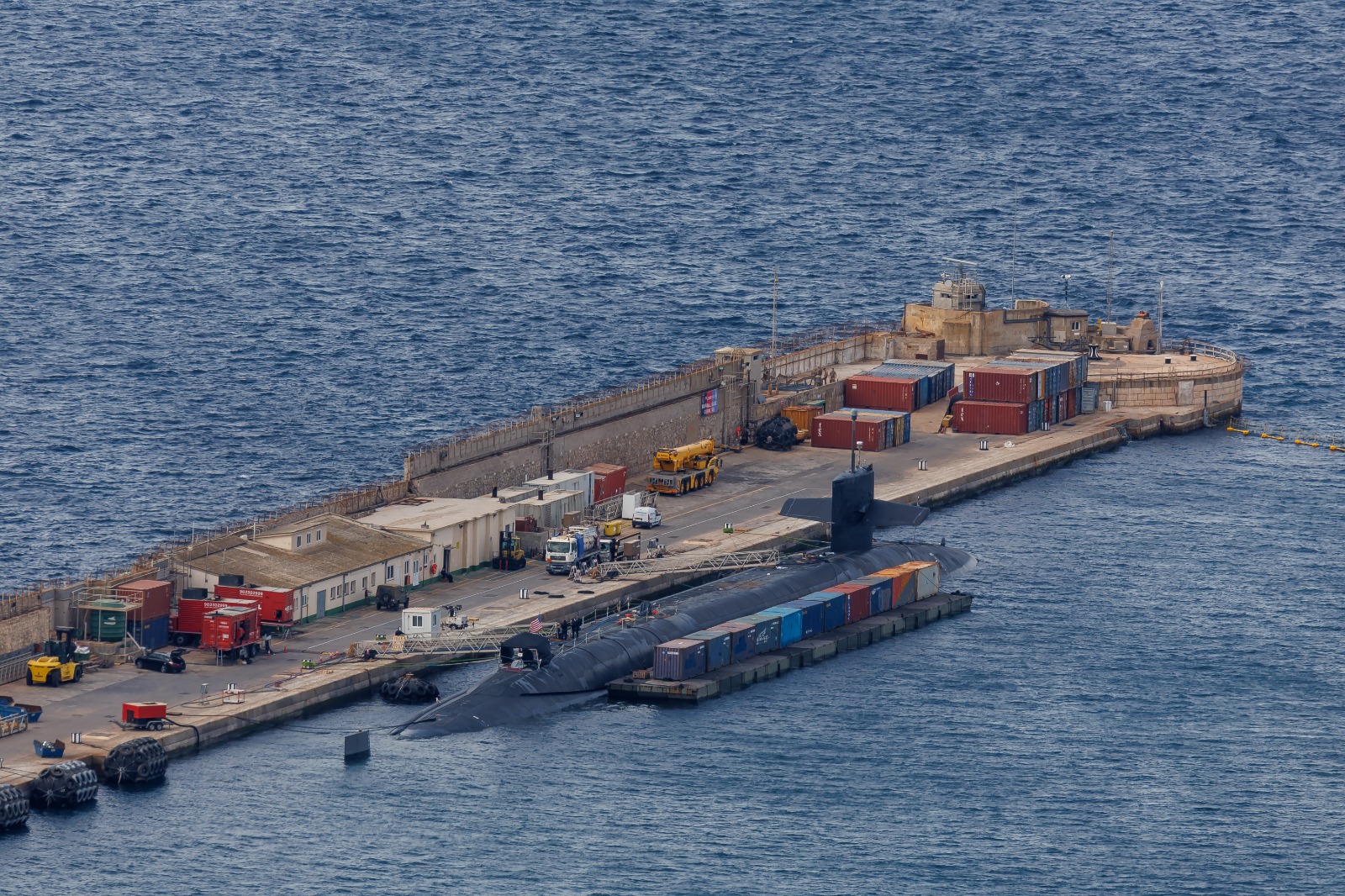
Some observers, particularly in Spain, like to argue Gibraltar’s strategic importance has diminished over time. In fact, the reverse is true, as evidenced by the UK Ministry of Defence’s renewed investment in infrastructure to better support land, sea and air operations, and its basing of HMS Trent here.
For the Royal Navy in particular, Gibraltar is “the default stop” for warships in this region, Mr Heappey said.
We have always welcomed the UK military here and will continue to do so.
But these strategic decisions have major implications for Gibraltar, not all of them good.
At a time of war in Ukraine and tension with Russia, it puts us on the radar in a way that we might rather avoid.
And at a delicate juncture in the treaty negotiations, the outcome of which will shape Gibraltar’s and the Campo’s future for generations, they add a further level of difficulty to talks that are already complex beyond comprehension.
Building a viable bridge between our British system and EU laws without stepping over each side’s red lines on sovereignty is challenging, to put it mildly.
Gibraltar’s strategic role should evolve to avoid age-old frictions and instead dovetail with a treaty that seeks to protect people on both sides of the frontier from the Brexit fallout.
Even the Ministry of Defence, not just in London but in Madrid too, would have a lot to gain from normalised relations between Gibraltar and Spain.
This isn’t about giving any legitimacy to Spain’s sovereignty aspirations, but rather avoiding antagonism over essential military operations in the west’s collective interest. Gibraltar is just one territory in Europe’s war-torn history. Since World War II, we have moved away from historical disputes to working together for shared values and democracy.
The treaty decisions that must be taken in the interests of communities on both sides of the border are already politically difficult for all involved.
The UK, which has pulled out all the stops to work with Gibraltar to seal a deal with the EU, must guard against further complicating that process with military decisions that may be vital in the present global flux, but which may also draw unnecessary adverse reactions.
It cuts both ways though, and Spain must guard against that pitfall too. On global security, we are on the same side, after all.
In 1940, when the world was at war and Gibraltar was a crucial node between battlefronts in the north and the south, the civilian population was a hindrance and was shipped out of the way. To paraphrase former archivist Tommy Finlayson’s definitive account of the evacuation that proved the seed of modern Gibraltarian society, the fortress came first.
But that was then, and this is now.
Most Read
La Linea court reaffirms decision to close of Eastside reclamation case, prosecutor appeals
Fri 11th Sep, 2026
Rosindell says Reform unlikely to endorse treaty but will respect Gibraltar’s decision
Fri 11th Sep, 2026

Today's Paper
4th November 2022
Read our latest newspaper by downloading our app from the link below.


