


Stirling Castle and evacuation memories
Gibraltarian evacuees look down from the vessel as the arrive in Gibraltar. Photos courtesy of Joe Gingell


By Joe Gingell
The presence of the Royal Navy’s mine-hunting mothership HMS Stirling Castle in Gibraltar has brought back memories of when I was repatriated from London with my family on the then troopship HMT Stirling Castle.
Soon after the start of the war, the newly-built Stirling Castle and her sister ship Athlone Castle, of the Union Castle Line, were requisitioned by the British government to serve as troopships.
In July 1940, HMT Athlone Castle sailed from Gibraltar with 1,597 evacuees to the UK. They were the first evacuees to arrive in the UK and with one additional passenger, Athlone Angeles Lopes who was born during the journey.
In 1941, HMT Stirling Castle was kept on a 7-day standby, as part of a 12,000 strong force, in case it became necessary to occupy the Azores and/or the Canary Islands in case Gibraltar was captured.
Towards the end of 1943, it started carrying troops from the United States to the United Kingdom as part of Operation Bolero in readiness for the D-Day landings.
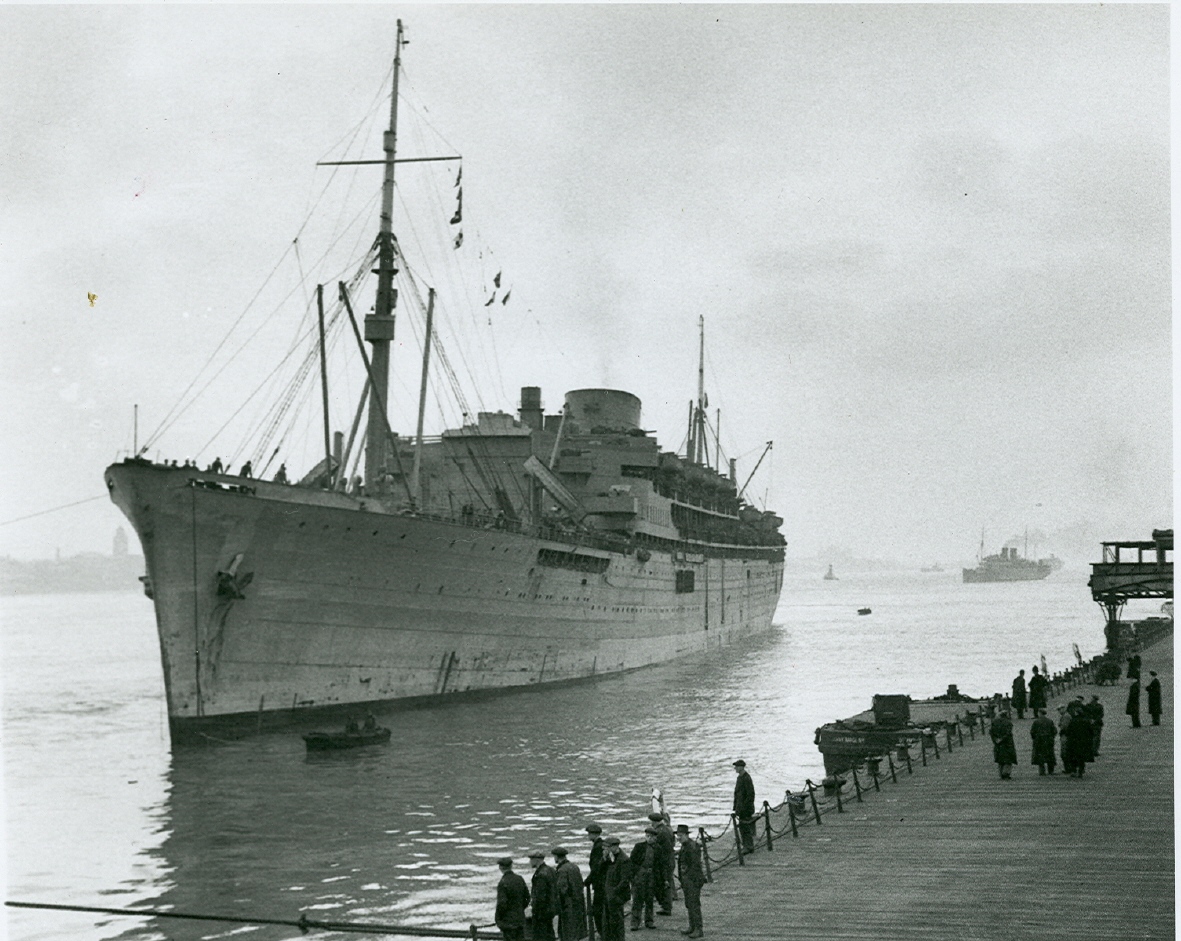
At the end of July 1944, HMT Stirling Castle sailed from Greenock carrying 3,161 repatriates who had spent four years in London.
They were the second party repatriated from the UK and the largest of all the parties to be repatriated.
During the whole journey until it arrived at Gibraltar, she was escorted by the cruiser HMS Argonaut and the destroyers, HMS Wager and Wakeful.
During the journey, some repatriates, whilst on the upper deck, noticed that a submarine had popped out of the water.
The war was still going on and seeing a submarine obviously created a lot of panic among the repatriates for not knowing whether the submarine was friendly or foe.
Very soon later, the passengers were put at ease when it was announced that it was a friendly submarine.
There were the occasional exercises onboard to prepare for any eventuality that required the abandoning of the ship.
These exercises entailed the wearing of life saving jackets, the testing of its gadgets and also the orderly assembling on the upper deck to await instructions from the officers and crew.
There were a few of these training sessions. Fortunately, the real need for this drill never materialised.
HMT Stirling Castle arrived in Gibraltar on 1 August 1944 with two additional passengers born on the journey, Stirling Lima on 24 July and Hortensia Alsina on 27 July, as reported by the Gibraltar Chronicle.
After disembarking, the repatriates were taken in army lorries to their respective places of abode.
We were taken to the entrance of the then Cecil Hotel in Main Street.
As soon as the lorry stopped, I was grabbed by the waist by a man. I instantly looked at my mother, who immediately exclaimed “it’s Dad!”
It was the first time that I had seen my father since I was two years old.


