


Commemorating the Kings and Queens of the United Kingdom


By Richard Garcia
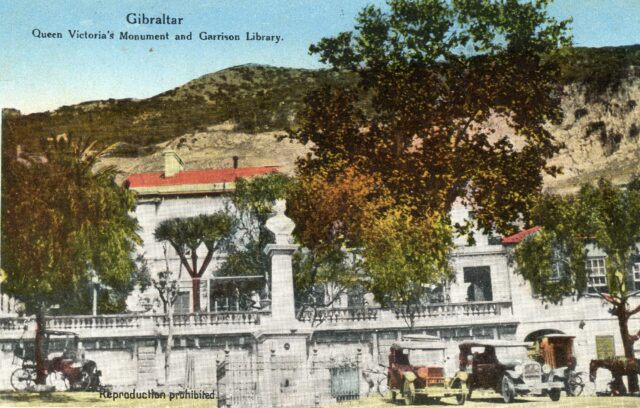
When Queen Victoria died in 1901, it was decided in Gibraltar that there should be a monument paid for by the people to commemorate the Queen Empress. This had never been previously done. No earlier British monarch had been commemorated in any way in Gibraltar. What was different now was that Victoria had presided over a huge empire, and it was boasted that the sun never set on the empire as the British possessions were so widely spread over five continents. The people of Gibraltar felt proud that they belonged to this hugely powerful family, and the symbol of empire was of course the monarch. It was logical that there should be a wish to mark Victoria’s long reign in some lasting way.
The subscription that was collected for a tribute to Queen Victoria resulted in a bust of the queen being sculpted in white Carrara marble. It was placed on a plinth in the centre of what was then known as Gunner’s Parade, but is better known to us today as Governor’s Parade.
The advent of World War II, and the need to dig up Governor’s Parade in order to create a public air raid shelter, meant that the bust and the plinth had to be re-sited. Instead of being centrally positioned on the square, it was placed to one side, close to the new emergency exit stairs leading up to the dress circle of the Theatre Royal.
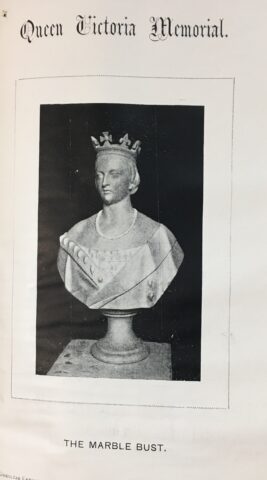
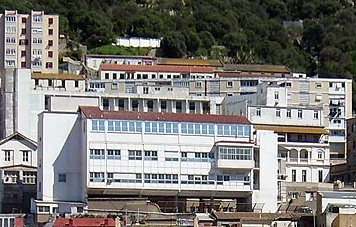
The place where the Victoria memorial was placed was later taken over by the O’Callaghan Eliott Hotel as part of its terrace, and so today it looks as if the memorial is part of the private property of the hotel instead of belonging to the people of Gibraltar who paid for it in the first place. Nevertheless, the Victoria memorial is there for us to see today.
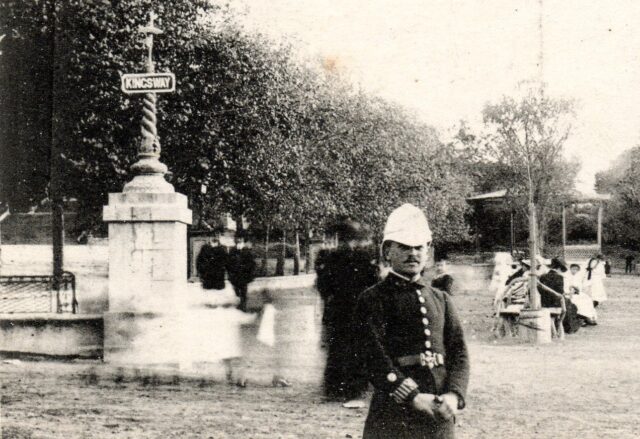
Queen Victoria’s son was less fortunate in this respect. After King Edward VII died in 1910, after a short reign which lasted from 1901 to 1910, it was decided to commemorate the monarch with a memorial bandstand in the lower walks of the Alameda Gardens, adjacent to Grand Parade. The broad sweeping approach to the bandstand was named Kingsway, in honour of the King who had died.
The bandstand and Kingsway were a popular recreational space for the people living in the overcrowded city of Gibraltar in the years leading up to World War II. Military bands, and also local bands such as that of Victor Bashery, entertained the public, particularly on Sunday afternoons. Kingsway was an elegant walk, where people went on Sundays for recreation, to see and be seen. Today, we only have an echo of the name in the first block of flats of the Alameda housing estate: it is Kingsway House.
The next British monarch was King George V, who reigned from 1910 to 1936. After his death, it was again decided to create a public fund to mark the memory of the King. It was an ambitious plan. The idea was to build a hospital for the treatment of tuberculosis, which was a scourge that afflicted many Gibraltarians, and to name it the King George V Memorial Hospital. The name was shortened by the people to KG5. The most generous donor to the fund was John Mackintosh.
The building project had only just been completed when World War II broke out in September 1939. The hospital had not yet been commissioned. Instead of opening its doors to patients and medical staff, the hospital was requisitioned for use by the Imperial censorship department to examine letters and mail taken from neutral shipping that was passing by Gibraltar. The hospital was damaged on 18 July 1940 by bombs dropped by the French who were furious after the French fleet was attacked and sunk by the British at Mers El Kebir in nearby Algeria, after France capitulated to Nazi Germany and refused to sail the French warships to British ports to ensure they did not fall into Nazi hands.
After the censors moved out, KG5 became a field hospital and later a psychiatric hospital after Dr Giraldi succeeded in removing tuberculosis from Gibraltar. However, its link as a memorial to King George V became more and more tenuous, and no-one in the latter days of its life as a hospital made the link between the hospital and a memorial to the king. In the fullness of time, the psychiatric hospital was closed down. The name of King George V, like that of his father, faded from the popular memory.
After the abdication of King Edward VIII, who ruled briefly for some months in 1936, the next British monarch was King George VI, the grandfather of the present king, King Charles III. George VI contracted lung cancer and died young, having been on the throne from December 1936 to February 1952. It was again decided in Gibraltar that his reign should be marked with the building of wing in the medical hospital, which was then known as the Colonial Hospital. When Queen Elizabeth II visited Gibraltar in May 1954, she unveiled a plaque naming the new wing of the hospital the King George VI Memorial Wing. It was, unfortunately, a building that lacked architectural elegance. It was a rectangular box.
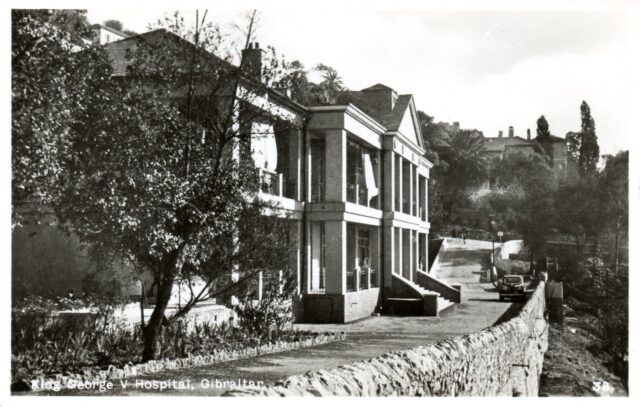
The Colonial Hospital was later renamed St Bernard’s Hospital, and the hospital’s name was retained when the institution moved from its original site above the city centre to the reclaimed land adjacent to the port. Today, two schools are housed in part of the former Colonial Hospital. The King George VI Memorial Wing was demolished. Only its memory remains among older people. No-one today connects the former hospital wing with King George VI. Another Gibraltar memorial to another British king has been erased.
This brings us now to the late queen, Queen Elizabeth II, who enjoyed a very long reign from 1952 to 2024. She was the first monarch to be described on our coinage as Queen of Gibraltar. There are rumblings that the Queen should have a memorial in Gibraltar, and that it should not be a hospital. The idea that appears to have gained traction is that there should be a full-length statue of the queen. This would be a considerable improvement over the way in which Queen Victoria was celebrated, as this consisted of only a marble bust. It also suggests that it would be a long-lived memorial, and would not suffer the fate of the two hospital buildings named after her father and grandfather, respectively.
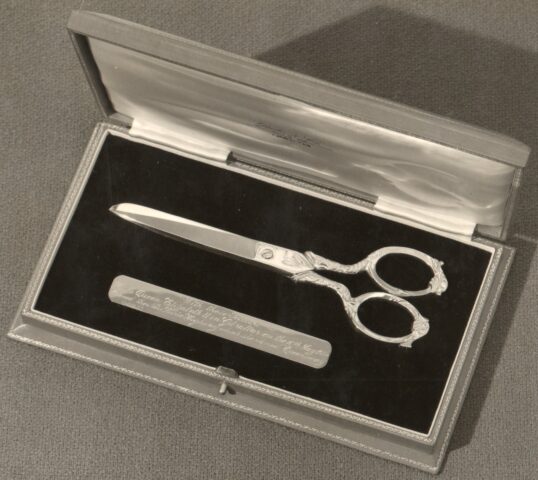
When Queen Elizabeth II visited Gibraltar in 1954, one of the important engagements in her full programme was the naming of the road outside the Line Wall after herself. It became Queensway, a name that continues to this day. Indeed, the scissors that were used by the Queen to cut the ribbon at the naming ceremony were supplied by Gache & Co, a firm that will shortly celebrate its bicentenary.
If a statue of the queen is to be erected, the most appropriate place for it – in the minds of many people – would be on or adjacent to Queensway. There are now two parks on this avenue: Commonwealth Park and Campion Park. Either would be a suitable location for a statue of the queen, and possibly Commonwealth Park might have the edge as the name recognises that Gibraltar is a part of the British Commonwealth of nations and territories.
If a statue to Queen Elizabeth II is erected, it is important that it should be accessible by the public, like the statue to Lord Nelson opposite Trafalgar Cemetery. People should be able to come right up to the statue, to see it at close quarters, in order for it to be properly appreciated. It should not, for example, be placed on a roundabout. The public would only be able to see it at a distance, and this would detract from the importance of the memorial.
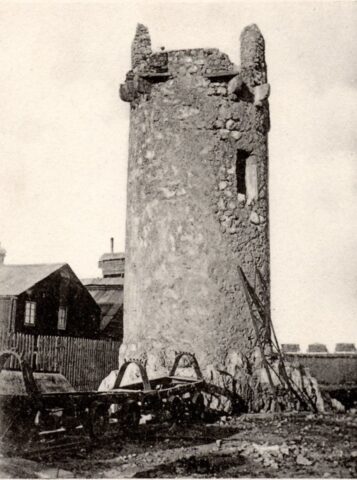
A final note on the issue of roundabouts: Gibraltar lost the Devil’s Tower when it was demolished during World War II. The name only survives in Devil’s Tower Road. The tower was originally situated close to Eastern Beach, within spitting distance of the roundabout leading to Kingsway, the road to the land frontier with Spain. The large roundabout is crying out for a suitable dramatic feature. What better than a replica of the Devil’s Tower? There are plenty of old photographs that would allow for an appropriate life-size replica.


