


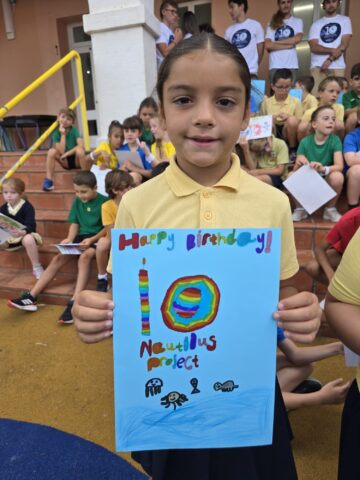
TNP marks a decade inspiring Gibraltar’s next generation of ocean scientists


Ten years after giving his first lunchtime talk on “sharks versus dolphins”, founder of The Nautilus Project Lewis Stagnetto says the leap from office job to full time environmental work has “absolutely” been worth the sacrifice.
But such is its success, the charity is now in “desperate” need of a dedicated field centre to meet growing demand.
Speaking to the Chronicle about the early days of the project, he recalled the days when he would dash out in his lunch hour from his office job to local schools.
“My wife [co-founder Melanie] was at home, and at lunchtime I’d take my lunch break to pop into a school to give them a talk on sharks versus dolphins. And then after the talk was done, I’d go back to work and continue my working day,” he said.
“We did that for a good couple of years.”
As demand from schools increased, so did the strain on his working life.
“The lunchtimes became more and more frequent, and I was taking days off in order to be able to do the morning sessions at Rosia Bay,” he said.
“The demand just started increasing to a point that we really needed to either stop doing it altogether, or just take the leap into Nautilus and try and make it work full time.”
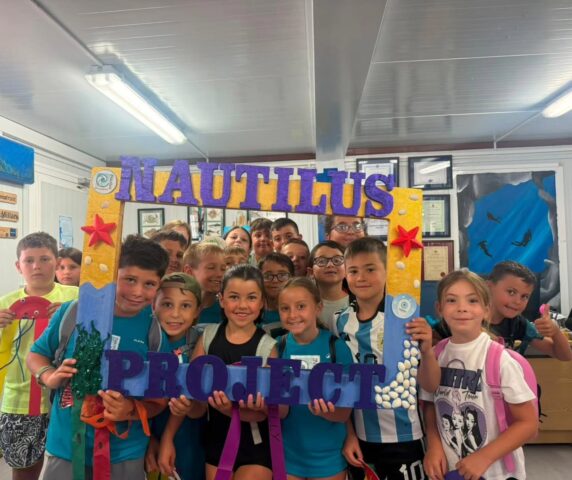
He described it as a turning point moment.
“Like when you start a relationship. Either this is going to go the distance or I’m going to get out of this relationship,” he said.
“We knew there’d be suffering, hardship, sacrifices. But I think we both felt that it was worth the risk.”
Asked if that still holds true a decade on, he did not hesitate in saying “absolutely.”
“I wake up every morning and I am energised to go do the work that we do. It’s taken us all over the place,” he said.
“There are tough days, but the highs and the lows are more exacerbated because this isn’t a business, it’s a charity.” And as a charity it’s work relies heavily on external support.”
“Funding is really important,” he said.
“When funding gets hard, this is where you start feeling the lows, trying to see where you’re going to get your support from for the various initiatives that you want to try and put out there.”
“It’s also true that sometimes you really believe in an initiative, and the funders out there just don’t, and that can be really hard as well.”
The rewards he added are tangible in the classroom and on the shoreline.
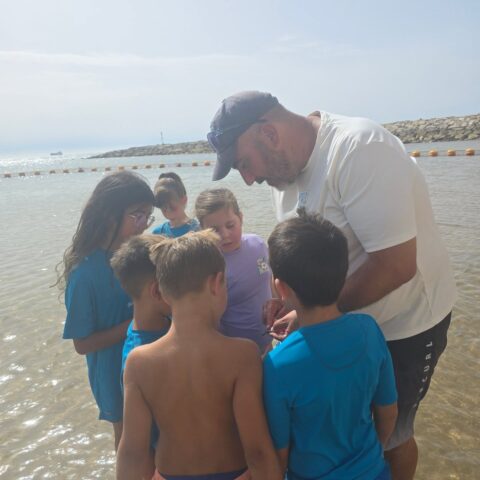
“Every time you see a child’s face as they hold a sea urchin, every time you hear the facts that you’ve been teaching for years starting to come back from the younger brothers and sisters, you really get a sense that people understand the ecosystem better,” he said.
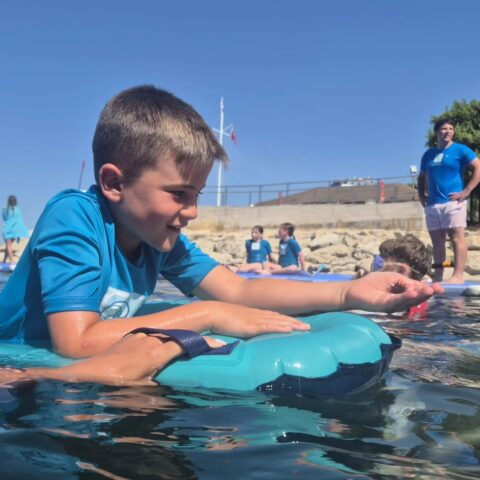
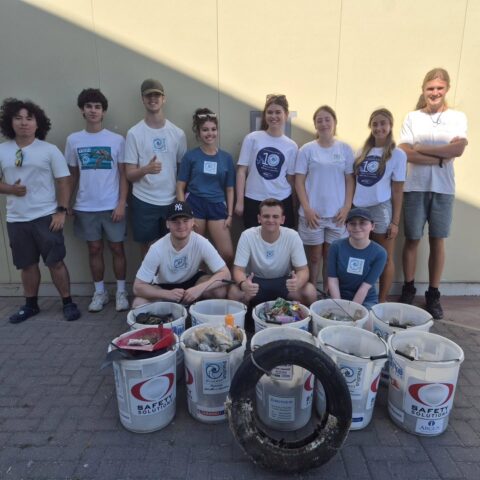
He noted that he often receives photos of children on local beaches, such as Eastern Beach, Catalan Bay and Sandy Bay, heading out on paddle boards to collect plastic and bring it back to recycling points.
“You really get a perception that mindsets are starting to shift and shift in the right direction, and that is very positive,” he said.
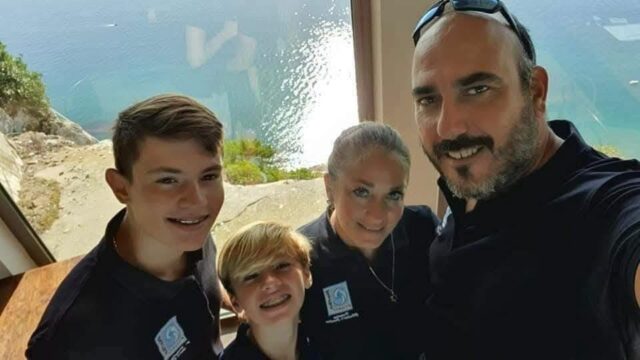
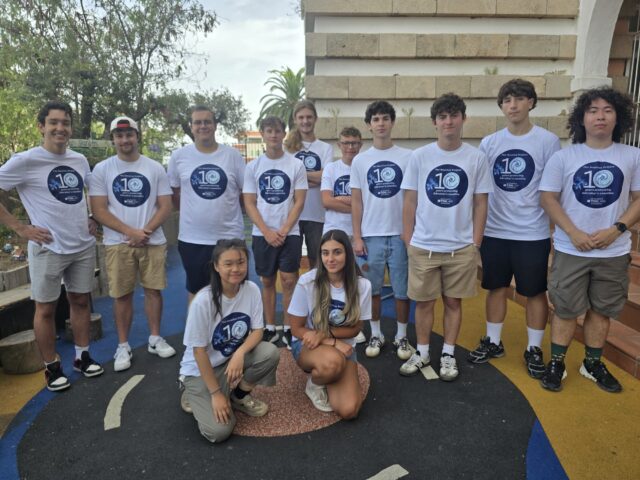
Over the decade, the charity has expanded from primary school talks to youth leadership schemes and international links. Teenagers involved in its programmes have gone on to consider or pursue marine science at university, including their son Alex.
“What we want to do is provide people with opportunities to explore,” he said.
“Gibraltar is so full of accounting firms and law firms that that is what’s drawn the majority of students across. But actually, there are lots of opportunities in science, and all we’ve really done is push on that door of opportunity and show how things can run.”
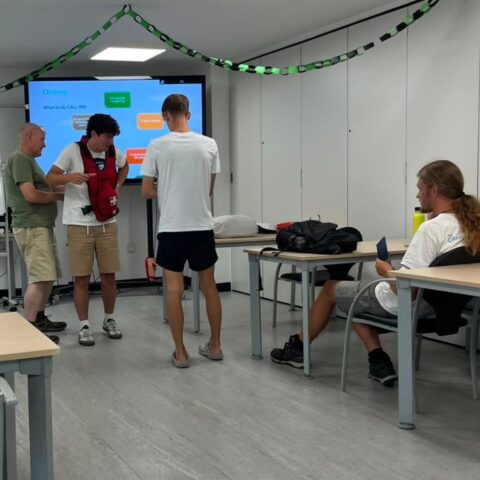
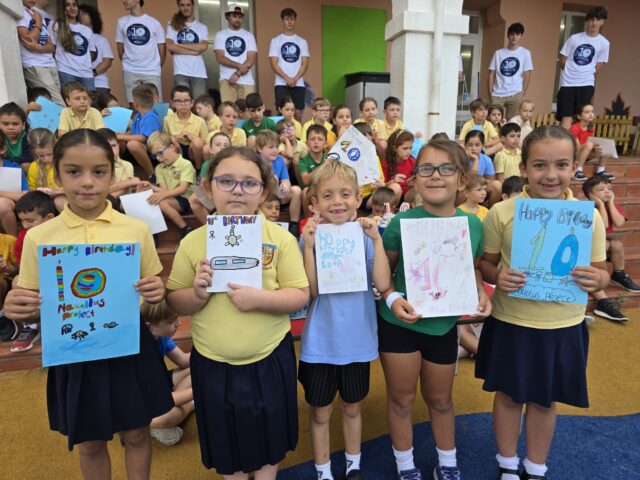
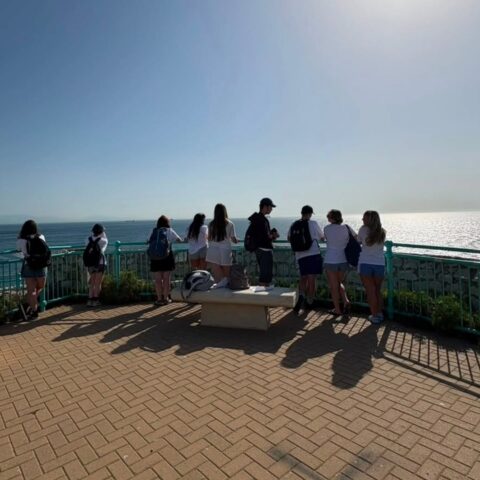
He said the work particularly appeals to students who prefer practical learning.
“It’s not a day at the office filing, or a day at the office going through statutes or accounts,” he said.
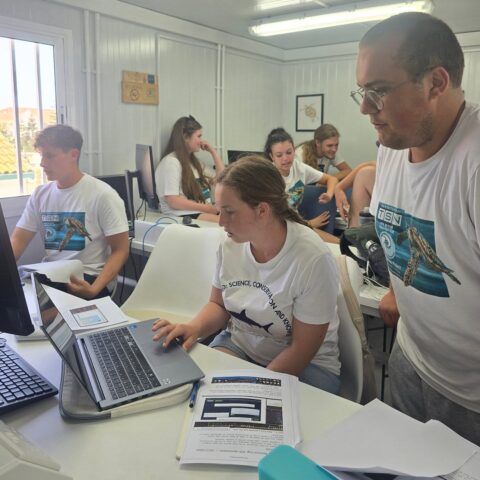
“The day at the office can be out on the boat, it can be diving, it can be working in a seagrass laboratory, and it actually suits a lot of students that want to do something practical.”
Drawing on his own experience as a diver and marine biologist, he described Gibraltar as one of the world’s most remarkable marine “hotspots”.
“I’ve been to places like Galapagos. I’ve been to marine wildlife hotspots around the world. I struggle to find a place better than Gibraltar,” he said.
He highlighted that the Rock is at the junction of the Atlantic and Mediterranean, the narrow, deep strait between Europe and Africa and, as a result, the overlap of two marine ecosystems.
“We’ve got a really compact corridor where marine life that wants to exit the Mediterranean has to go through, and anything wanting to come in has to go through,” he said.
“You don’t actually have to travel a huge distance to see lots.”
“We do not take advantage of the massive diversity of marine wildlife that we have.”
Fin whales passing close to shore in summer, dolphins feeding right up to the coastline in the evenings, and shoals of fish between Camp Bay and Little Bay are just some of the examples he noted.
“We’ve got a very diverse food web and very, very interesting [waters] and lots to see,” he added.
“Here, we get that meshing of both those waters, which brings two sets of species together, and that is incredibly special.”
While the sightings of fin whales and dolphins are incredible, he also warned against dismissing the importance of small, less charismatic species such as the Patella ferruginea limpet, for which Gibraltar is now a stronghold.
“Although in Gibraltar we’ve got lots of them, you don’t have to go very far away and the populations just completely drops off,” he said.
“If we damage the population in Gibraltar, we could really seriously damage the population worldwide.”
Limpets are important to the marine ecosystem too. He explained that they graze algae on rocks and recycle nutrients, with knock on effects throughout the food web.
“To gloss over the importance of any species within an ecosystem is a big, big mistake. One that humanity have paid very heavy prices historically for doing,” he said.
He pointed to the impact of invasive species introductions in Australia and the removal and reintroduction of wolves in Yellowstone as reminders that “nature knows best”.
“We know so little. The best thing to do is to give nature a chance, and nature will sort out everything she wants to do,” he said.
Looking back on the past decade, he identified several key milestones. Including the decision to go full time, the first international school groups from Spain and, later, collaborations with Malta and the UK. In addition, the arrival of seagrass projects in Gibraltar and an academic memorandum of understanding that has brought PhD students to the Rock.
“I think the first time we get seagrasses in Gibraltar would be another really important milestone for me,” he said.
“It’s a really important project, one that I think will have really important benefits, no matter whether you’re a fisherman, a diver, or just a swimmer.”
He also highlighted an agreement with Malta to host doctoral research.
“Something that I think we never really thought we were aiming for,” he said.
“As what we were doing was growing and gaining momentum, people started taking interest, and it kind of developed.”
Looking ten years ahead, his ambition is that Gibraltar’s blue economy becomes recognised as a genuine pillar of the local economy, underpinned by homegrown marine scientists.
“I’m hoping that in 10 years’ time, the students that are currently studying marine science at university now would have already come back and really raised the bar of marine science in Gibraltar,” he said.
And that facilities grow to meet the demand. As despite growing international interest, the charity remains constrained by its present facilities.
“As a charity, we are in desperate need of having some type of field centre where everything is together,” he said.
“Today, everything is spread around. A lot of time is wasted because we’re so spread apart.”
With more schools and overseas groups seeking to visit, he believes a dedicated centre would raise the quality and capacity of marine education on the Rock.
“With the amount of people that we’ve now got interested in coming to Gibraltar we could be bringing in more,” he said.
“If we had a field centre with all our equipment under one roof, I think the quality of education we could provide would be better.”


