


Conservation work to begin at Devil’s Tongue Battery
Within this article there are historical images showing the battery’s former coastal setting and artist’s impressions of how it could look after restoration have also been prepared. The Ministry said these were indicative concepts and the final design and scope of the project would depend on the condition survey and conservation requirements.


The Ministry for Heritage is to begin preliminary conservation work at Devil’s Tongue Battery, with vegetation clearance planned ahead of a detailed survey of the historic fortification.
The project, supported by Gibralflora, will be carried out in phases and is intended to conserve surviving historic structures and improve the presentation of the site.
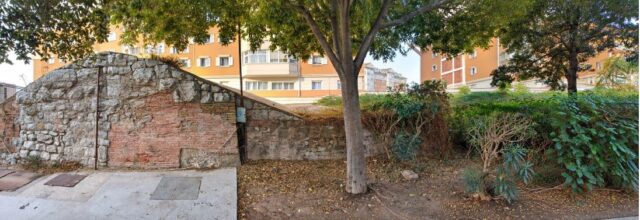
The first stage will involve removing vegetation that currently obscures much of the surviving masonry.
This will allow the Ministry to assess the condition and extent of the structures before developing a restoration programme.
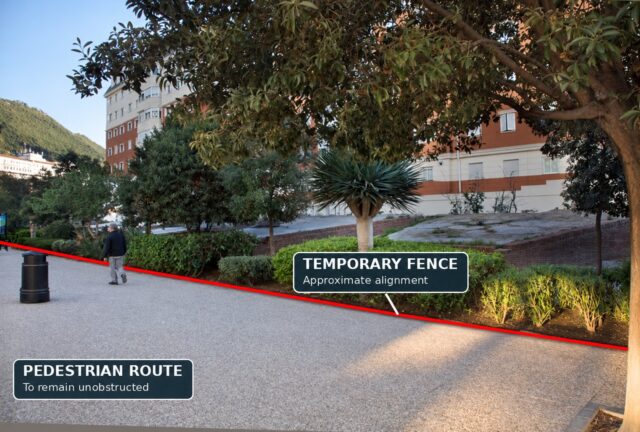
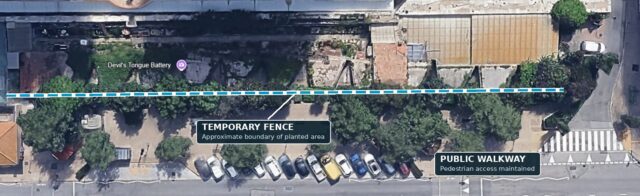
Temporary fencing will be installed around the existing planted area while vegetation clearance, surveying and subsequent restoration work takes place.
The adjoining pedestrian walkway will remain accessible throughout the works.
The Ministry said there would be no loss of planted areas and the site would be re-landscaped, with compensatory planting planned within the project area in a way compatible with the conservation requirements of the monument.
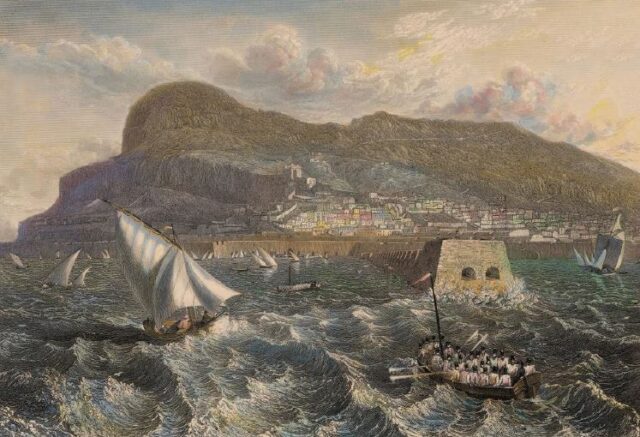
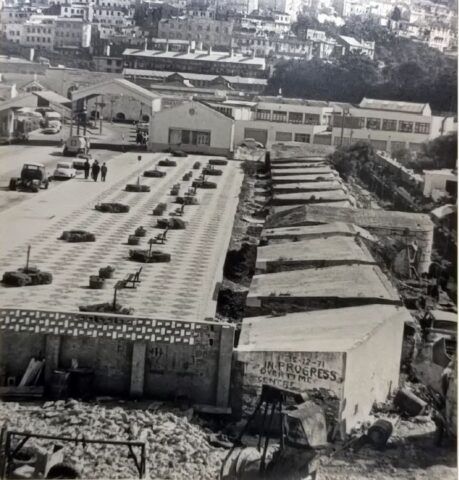
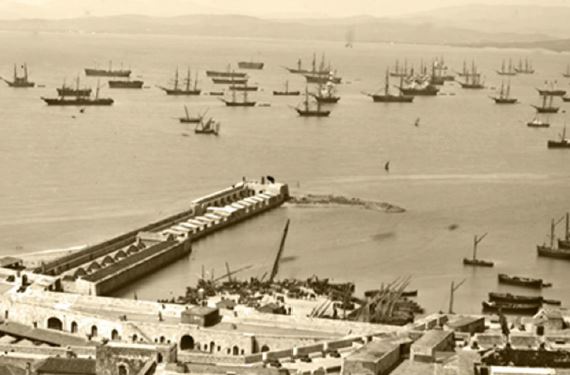
Devil’s Tongue Battery forms part of Gibraltar’s original harbour infrastructure and dates back to the Spanish imperial period.
The Old Mole, known as El Muelle Viejo, was constructed during the 16th century and enlarged in 1608 under Spanish military engineer Cristóbal de Rojas.
It was linked to Gibraltar’s coastal defences through an area historically known as Punta del Diablo, or Devil’s Point.
After the British capture of Gibraltar in 1704, the Old Mole was progressively strengthened for military use.
During the 18th century, Devil’s Tongue became an important artillery battery and eventually mounted 22 guns.
It played a significant role in the defence of Gibraltar’s northern approaches, particularly during the Great Siege of 1779 to 1783.
Originally projecting into the sea, the battery gradually lost its coastal setting as the harbour expanded and land reclamation during the late 19th and 20th centuries left it surrounded by land.
The Ministry said significant elements of the original defensive structures remain.
Its long-term plans include conserving and exposing the surviving masonry, improving the surrounding area and introducing heritage interpretation.
The Minister for Heritage, Dr John Cortes, said: “Devil’s Tongue Battery is one of those remarkable places in Gibraltar where centuries of our history survive, largely hidden in plain sight. What began as part of our harbour during the Spanish period later became an important defensive position, before the expansion of the city transformed its surroundings entirely.”
“Our intention is to recover this important piece of Gibraltar’s heritage, carefully exposing and conserving the surviving structures so that their history can once again be appreciated. This will be a phased project, guided by a proper assessment of the monument’s condition, and we will ensure that environmental considerations are taken into account throughout.”
“By restoring sites such as Devil’s Tongue Battery, we are not simply preserving old walls. We are reconnecting Gibraltar with its past and ensuring that these important reminders of our history can be understood and enjoyed by future generations.”


