Focus on eye safety ahead of next week’s solar eclipse


Gibraltar will experience a major partial solar eclipse next week, with up to 93% of the Sun obscured, and people are being urged to prepare with proper, certified eye protection.
The partial eclipse will take place on the evening of Wednesday, August 12.
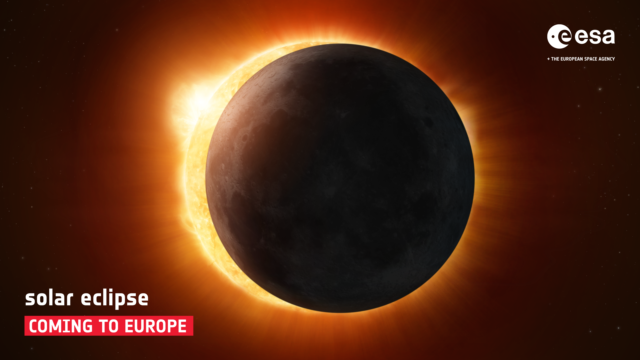
A solar eclipse occurs when the Moon passes between Earth and the Sun, and either totally or partially blocks its light. A total solar eclipse occurs when the Moon's apparent diameter is larger than the Sun's, effectively plunging day into complete and utter darkness.
Talking to the Chronicle, William Recagno from the Gibraltar Astronomical Society said that first contact is expected at 7.45pm, with the maximum phase of the eclipse at around 8.40pm, when the Sun will appear as a thin crescent low on the western horizon. Sunset is projected for around 9.15pm, though the eclipse itself will have passed by then.
The event will be broadcast live by GBC from Camp Bay, he added, for anyone who cannot get to an ideal viewing area.
“This year we’ve got a partial, which is going to be 93%, nearly the total rim of the Sun will be obscured,” he said.
“It will get darker, maybe cooler by about two degrees Celsius, and the shadow takes on an eerie, ghostly look.”
He stressed that the eclipse will be visible from across Gibraltar, and that no single location is being promoted by the society as an official viewing point.
Although GBC will be positioned at Camp Bay, he was clear this should not be seen as the only, or even preferred, location. 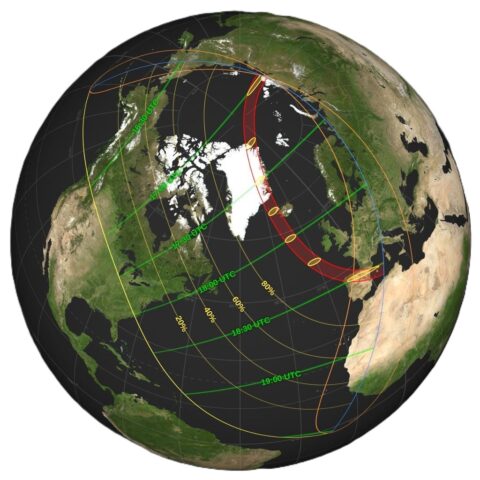
“There are a number of places you can watch it. You can see it from Westview Park, Little Bay, Small Boats Marina, any western-facing spot, and from elevated places up the Rock. You don’t have to be in Camp Bay.”
Because the Sun will be low on the horizon, some lower-lying spots may have obstructed views, but higher ground will offer wider visibility.
The strongest message from Mr Recagno, the society and the GHA’s public health practitioners is on eye safety. People are being urged not to look at the Sun without proper eclipse viewers that meet international safety standards.
Director of Public Health Dr Helen Carter told the Chronicle that the clear message to the public is “do not look directly at the sun when a solar eclipse is happening.”
Because the sky and the surroundings will start going darker, your pupil will dilate resulting in more sunlight going into the back of the eye. She warned that what people won't realise is that that solar radiation can be burning the back of the eye.
Burns on the back of an eye are painless so people will not realise they have caused damage until later, she noted.
Potentially, it could be a couple of hours before people might start noticing some symptoms for the first time.
These symptoms “can be pain and irritation in the eye, headaches. They might have blurred vision, starting to not be able to see colour, and unfortunately, the reason we make a big deal out of this is it's normally irreversible,” she said.
“There's actually no treatment. That isn't just in Gibraltar. This is globally. There is no treatment for significant solar burns on the back of your eye. So this is why it's important.”
“If you look at it with no eye protection, or with glasses that are not properly certified, you can suffer damage and you won’t know until much later. It’s that dangerous.”
The recommended standard for eclipse viewers is ISO 12312-2. Glasses that comply with this should block the harmful levels of solar radiation.
Mr Recagno cautioned against buying cheap or unverified products online, particularly from some third-party sellers.
“The ISO 12312-2 are the professional ones. They’re not expensive,” he said.
“You’ve got to be careful with Amazon or similar sites because there are some which are Chinese, they say they’re ISO and they’re not.”
Local outlets are understood to be stocking eclipse glasses, though the exact sourcing and certification of all products on sale is not known to the society.
While the Sun will be low on the horizon, which means that its light passes through more of the atmosphere acting as a partial natural filter, Mr Recagno stressed that this is not a reason to take risks.
He urged parents and guardians to supervise children closely during the event ensuring they have their glasses on at all times.
Residents hoping to photograph the eclipse can use mobile phones but using a filter too is recommended. However, those using high‑quality cameras were urged to use proper solar filters.
“You need a filter for the camera,” he said. 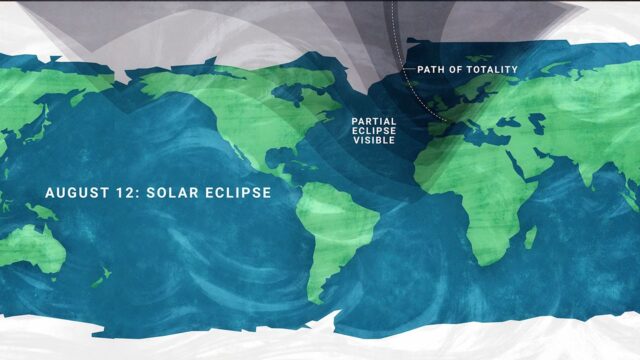
“If you’re looking through a viewfinder, you’re still getting direct sunlight into your eyes. You could also burn the lens and destroy it if you don’t use a proper filter.”
It recommended purchasing equipment and solar eclipse glasses from established astronomical retailers, naming First Light Optics, the UK's largest supplier of astronomy equipment; Rother Valley Optics, a UK optical retailer with 23 years trading experience; Spanish retailer Telescopiomania; and European suppliers Teleskop Service DE and Astroshop EU.
People were advised not to use sunglasses, even when several pairs were placed on top of each other. X-ray or photographic film, floppy disks, space blankets, crossed polarisers, CDs, DVDs or tanning glasses will also not provide the protection needed.
This month’s partial eclipse is being treated by local authorities as a rehearsal for a larger event next year, with the Government, GHA and other agencies already planning.
“This is a prelude to what’s coming,” said Mr Recagno.
“We’ve had five or six meetings with the government contingency group and the GHA. We know that the next big one will bring people to A&E with eye injuries if we don’t get the message across now.”
A further annular eclipse is expected in 2028, which will also be visible from Gibraltar and is described as “quite spectacular”.
Mr Recagno said that the priority for the coming eclipse is clear public information on where it can be seen, when it will occur, and above all, how to watch it safely.
“We need to drill it into people about the glasses,” he said.
“That’s the key message.”