Prior Park School marks ten years in Gibraltar
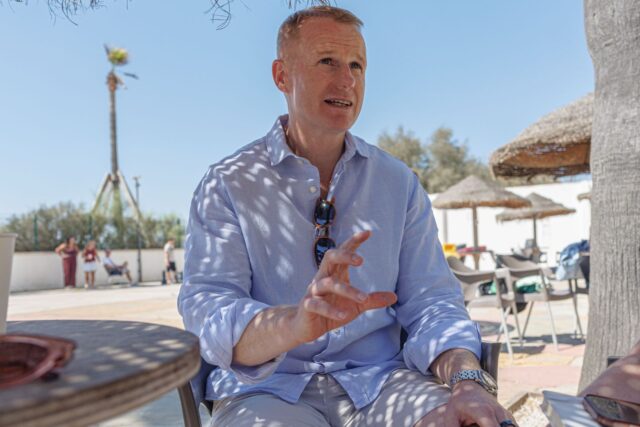
Paul Martyn, Headteacher of Prior Park School Gibraltar. / Photo by Johnny Bugeja


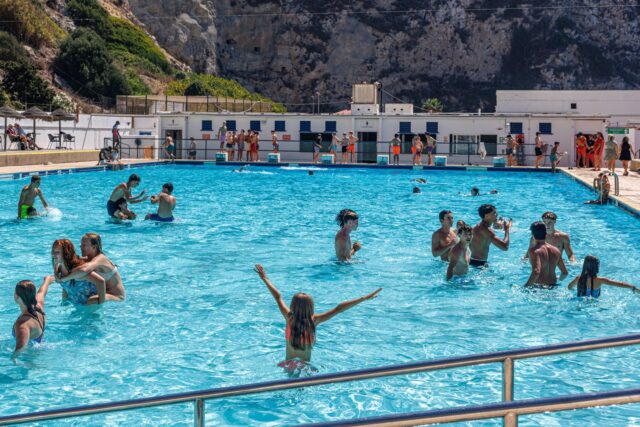
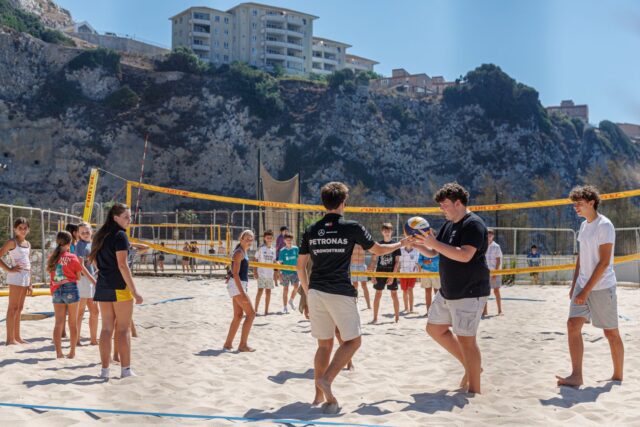
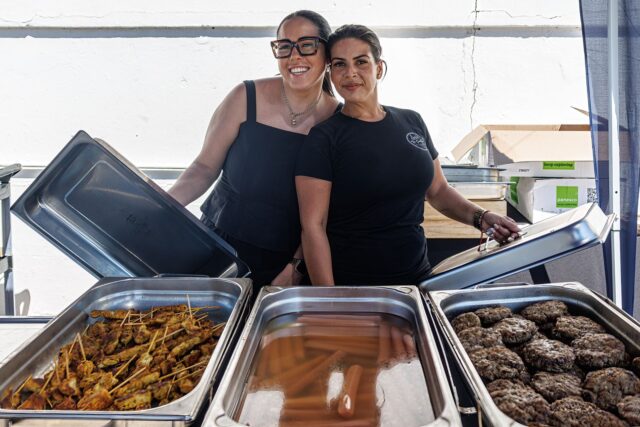
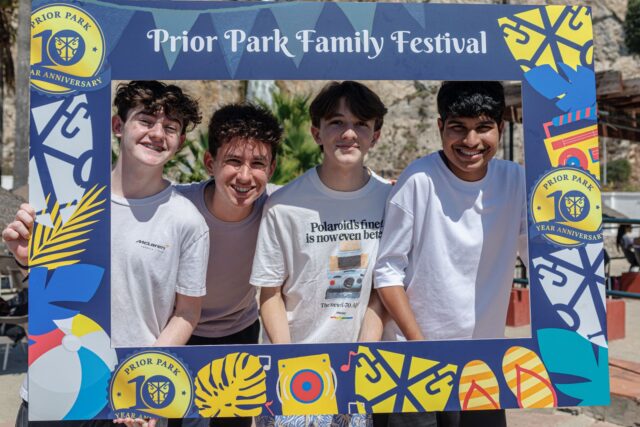
Prior Park School Gibraltar is celebrating 10 years since it opened, a decade in which the school has grown to four times its original size. Since then, 650 children have been educated at the school, which has built its approach around three core values: curiosity, generosity and courage.
For Headteacher Paul Martyn, the anniversary is also an opportunity to reflect on the school’s wider purpose: not only to provide a good education, but to help form future people and professionals who will know the importance of “doing the right things” in difficult moments.
Mr Martyn says, in this interview with the Chronicle, he feels “privileged” to work in Gibraltar and to be part of a team and families building a community with these core values every single day.
Q. Ten years have already passed since Prior Park’s first academic year in Gibraltar. How does that feel?
A. It really has gone in the blink of an eye. I've been teaching for 25 years now. My first 15 years were fantastic in the UK, but these 10 years in Gibraltar have just flown by and, honestly, they've been the absolute highlight of my career.
Teaching children in Gibraltar is a special experience. They're different to UK children. Gibraltarian children and their families are more open, so it's a wonderful place to teach.
The Trust is very lucky to have a school here in Gibraltar.
Q. How has the school grown over this past decade?
A. We opened in 2016 with 52 children and, in that time, we've grown to now more than four times that size. At the minute, we have 230 children and we'd be full at 240. In total, since we've opened, we'veeducated around 650 children.
Q. What are the school’s values?
A. The Trust has three core values that our school adheres to. We value curiosity, generosity and courage.
We would want our children to be curious, to ask curious questions.
We would want them to be generous to one another.
We're a faith school and one of our callings is to use our talents to help other people, to serve people and we're very lucky. We come from a wonderful place in Gibraltar.
There is an incredible amount of privilege to live in a beautiful place like Gibraltar, and we should use those talents to help people who don't have quite the same level of opportunities that we have in our community.
Along with curiosity and generosity, we have courage. Any child's education is going to take setbacks and challenges, and we want our children to be courageous.
They will all remember their childhood and our education.
We want our children to know that hard moments are difficult, but it's more important to be courageous in that moment. Stand up for what's right, do the right things.
Furthermore, we're a Catholic Christian school and it is our mission to live the tenets of what Jesus taught and, for me, more than anything, that is to show love to the community, be genuinely good, a source of good for the world, and that's critical.
Q. What do the alumni say about the school?
A. Our children come back, and they say this has been the time of their life. They recognise that this school wasn't just about education, it was formation, so it's much more important than just passing a set of exams.
That's a very tiny proportion of what is going to make a human being successful in life. It's about who you are as a human being. They recognise that we invest a lot in their formation, so they're thankful.
We do not get bored of our old children coming back and saying ‘can we come and visit?’ and hearing about how they're getting on.
We've got several graduates now back working in Gibraltar, some of them in education. Others are working in the knowledge economy, service sector, in legal, in accountancy... and we have several still in the UK getting more experience in a large city, in a large company.
Q. Education now faces a lot of challenges, such as AI and social media. How do you deal with them in the school?
A. Challenges have always been there; truth be told. They probably feel more amplified now, but whatever the challenge was when it first came out, Facebook and Instagram or later AI, really what I've found to be the solution is a triangulation - with the school, the student and home all working together.
If we can get that, we're always going to face a challenge, and we will come up with a successful solution.
What we can't do is just wish certain realities didn't exist.
AI will exist, social media will exist, and it's our job to help ensure that our children are aware of healthy choices.
We all fall into temptation, and we all spend a little bit too long doomscrolling some days.
That's not just children, I think that's all of us, and it's our job as adults that, when they need that support, we're there to pick them up, dust them off and help them again.
Q. Have you noticed more interest from Spanish families in the school following the removal of the border?
A. In truth, no. We anticipated that the border might make a difference perhaps to recruitment of teachers, and maybe we would have UK teachers that lived in Spain, etc. But in terms of the children, I didn't anticipatethere was going to be a huge change to begin with, for two reasons.
First, I think that parents are going to be conservative with making a significant change with their child's education and it's going to take longer than just from July to make that leap. Over time, we might find the school grows in that direction.
At the minute, more than 90% of our children are British Gibraltarian, and the others are residents of Gibraltar.
And I think, ultimately, the reason why we won't get huge growth coming from Spain is because of Brexit and what that did to university fees.
Previously, British children could access EU universities and vice versa, and I think ultimately, whilst people that live in Spain and Spanish children are seen as overseas students by UK universities, it means that their annual fees are treble the cost of a UK or a home student. That will always be a limiting factor for Spanish families who may want to try British education.
So, I think there's an attraction to it, but until the university issue is resolved, or if it ever gets resolved, it will mean that most of our market will be either British Gibraltarian or people that live and work in Gibraltar.
Q. The PISA report was released last week and the results for the UK’s schools were better than Spanish ones. Do you think that it could be a potential factor for families deciding between British or Spanish education in this area?
A. I've been a teacher since 2001, and I've tracked PISA in all that time. Britain has gone up on the leaderboard, but I'm always mindful that those very large tests and sample sizes will mask individuals and you can get a lot of the data, you can make the data show what you want it to show.
I know that the UK education system has done very well in recent years, particularly in their reading tests and in their science tests, but still struggling with maths.
The reality is that Estonia tops the PISA test for European countries. It doesn't necessarily make it the best education system; it just means that they're passing the test that they decide is a measure of an education.
I think a child's formation is as critical as whether they are strong in English, maths or in science. That's not to dismiss the PISA, it's just that education can be so much broader than what it reveals.
As for comparing the English system to the Spanish system, I wouldn't feel knowledgeable enough to be able to make that comparison.
Q. I assume you are happy with the GCSE and A-Levels’ latest results.
A. We're ecstatic, of course we are. They're incredible results in Gibraltar, for us historically and for when we compare ourselves against the British system and the independent schools in the UK.
We're always going to want to be able to share and celebrate our exam results, but they are an aspect of an education here.
No one is going to make children work harder than themselves to succeed at exam results if they feel comfortable and psychologically safe.
So, my job is not to make exam results good but to make sure the child feels all those fundamental needs so that they can work as hard as they can.
I also have to say a big thank you to my subject teachers, because they are here from 8.30 until the end of the school day in 3.45pm and beyond, offering exam clinics, making sure that those children who want to do well can do well.
They are, without a doubt, the most dedicated staff I've worked with in 25 years.
Gallery by Johnny Bugeja: