


50th Anniversary of the CPSA lockout
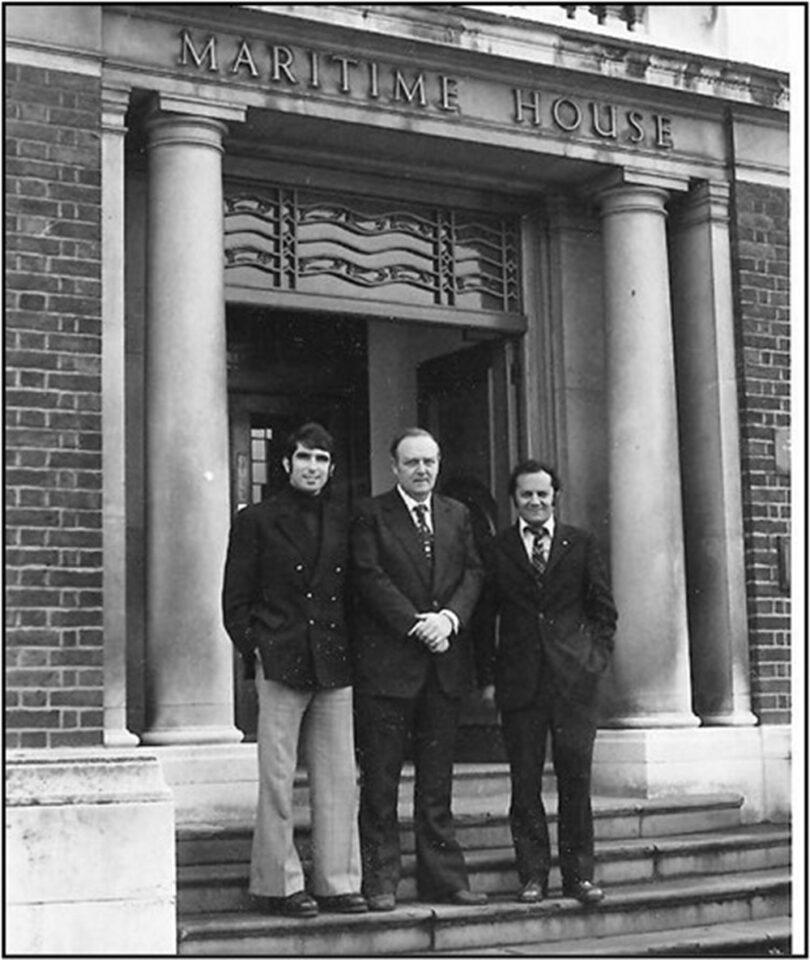
The CPSA Executive Committee Members with Joe Bossano, Julio Pons and Juan Carlos Perez of the TGWU at Transport House.


By Joe Gingell
50 years ago, on Monday 25th October 1976, over 300 members of the CPSA Gibraltar Branch were locked out by the MOD/PSA DOE for refusing to give an undertaking to cease taking industrial action in pursuit of their pay claim.
Following the MOD lockout, an immediate campaign was launched by the CPSA Gibraltar branch. The campaign went on for seven months, making it one of the most lasting and controversial industrial disputes in the history of the trade union movement in Gibraltar.
The CPSA pay claim
Since the Scamp report had recommended 80% parity of wages with the UK, it recognised from the very outset the difficulties in applying this recommendation in the case of the Clerical Officers (COs) and Clerical Assistants (CAs) in the MOD since they were already earning between 70% and 80% in relation to their UK counterparts. The reason for this was that in accordance to an historical agreement between the MOD and the CPSA, the salaries of the COs and CAs in the MOD equated to the Senior Clerical Officers (SCOs) and COs, respectively, in Gibraltar Government.
By the end of January 1976 all non-industrial grades in the MOD, except the clerical grades, had reached a settlement based on the Scamp recommendations. In April 1976, the CPSA accepted, very reluctantly, the Scamp recommendations for clerical grades in the MOD whilst waiting for the outcome of the GGCA/Gibraltar Government negotiations. By early August 1976, the GGCA was still unable to find a basis for a settlement for their members. In order to put pressure on the Gibraltar Government, the GGCA started taking in industrial action, including the boycotting of the 1976 General election. Shortly after the general election, the GGCA proposed a compromise solution which the Gibraltar Government agreed to discuss in return for cessation of industrial action. The Gibraltar Government after many protracted negotiations since November 1975, reached an agreement with the GGCA in September 1976. What was not known at the time by CPSA Gibraltar Branch was that the Gibraltar Government had suggested to the MOD to make the same offer they had made to GGCA also to the COs and CAs in the MOD and that the MOD had rejected the suggestion.
As soon as the details of the settlement between the Gibraltar Government and the GGCA was public knowledge, the CPSA Gibraltar Branch, immediately tabled a claim with the MOD seeking the restoration of relativities with their counterparts in the Gibraltar Government. The claim was totally rejected by the MOD representatives in Gibraltar. They said that they had instructions from the highest authority in the MOD not to concede one penny more to the pay claim agreed in April 1976. In response to the MOD rejection of claim, the CPSA started taking immediate selective industrial action short of going on strike. On the 21st October the Gibraltar Government was still unable to agree the details of the enhanced scales for the clerical grades. Consequently, the GGCA resumed industrial action. After a meeting with the Gibraltar Government’s Industrial Relations Officer, the GGCA agreed to return to normal working after an agreement was reached.
On the 22nd October the CPSA Gibraltar Branch Committee was informed by the MOD Management that unless their membership was prepared to work normally, they would be taken off pay as from Monday 25th October. At the time, the CPSA Gibraltar Branch did not know whether they were going to be backed by the CPSA Head Office since it had been suggesting to drop industrial action and agree to third party intervention in the dispute.
The Campaign
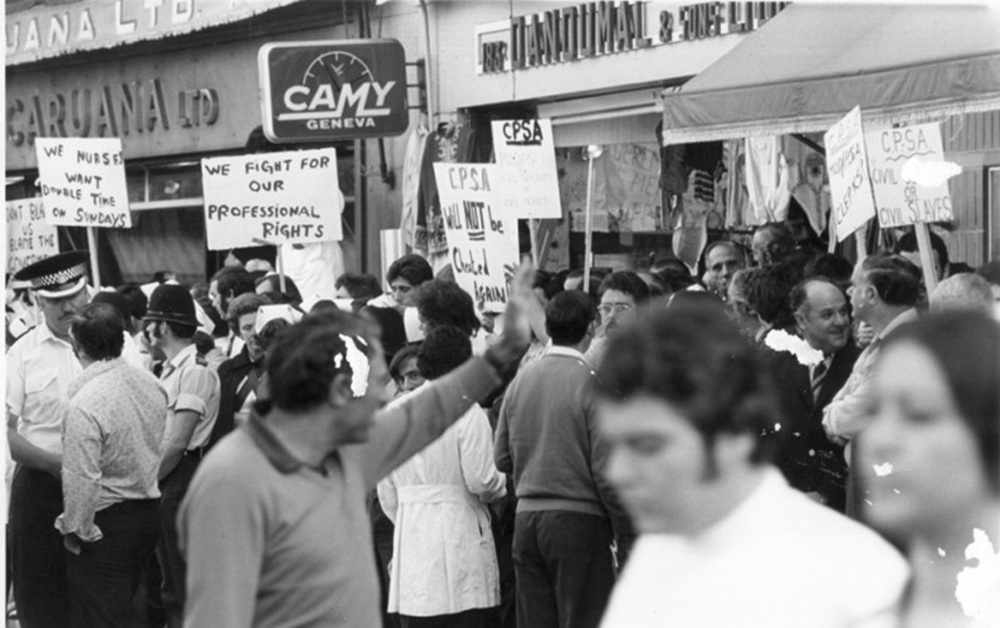
CPSA members and Nurses’ Section of TGWU demonstrating during the opening ceremony of the House of Assembly in October 1976.
The CPSA Gibraltar Branch launched an immediate street campaign involving all members, including daily picketing at all the entrances of all the MOD workplaces, mainly, at the Dockyard North Gate and the DOE/PSA Head Office at New Mole House. There were also many spontaneous demonstrations held in front of the Convent, the then House of Assembly and the Gibraltar Government Secretariat. One of the first demonstrations carried was at the ceremonial opening of the House of Assembly in October 1976. When the CPSA members arrived in Main Street, the Nurses Section of the TGWU was already demonstrating against the Gibraltar Government in relations their pay and working conditions claim. By then the CPSA Dispute Committee had already approved the Gibraltar Branch pay claim and their actions. CPSA National Officer Terry Adams had arrived in Gibraltar to assist in the negotiations.
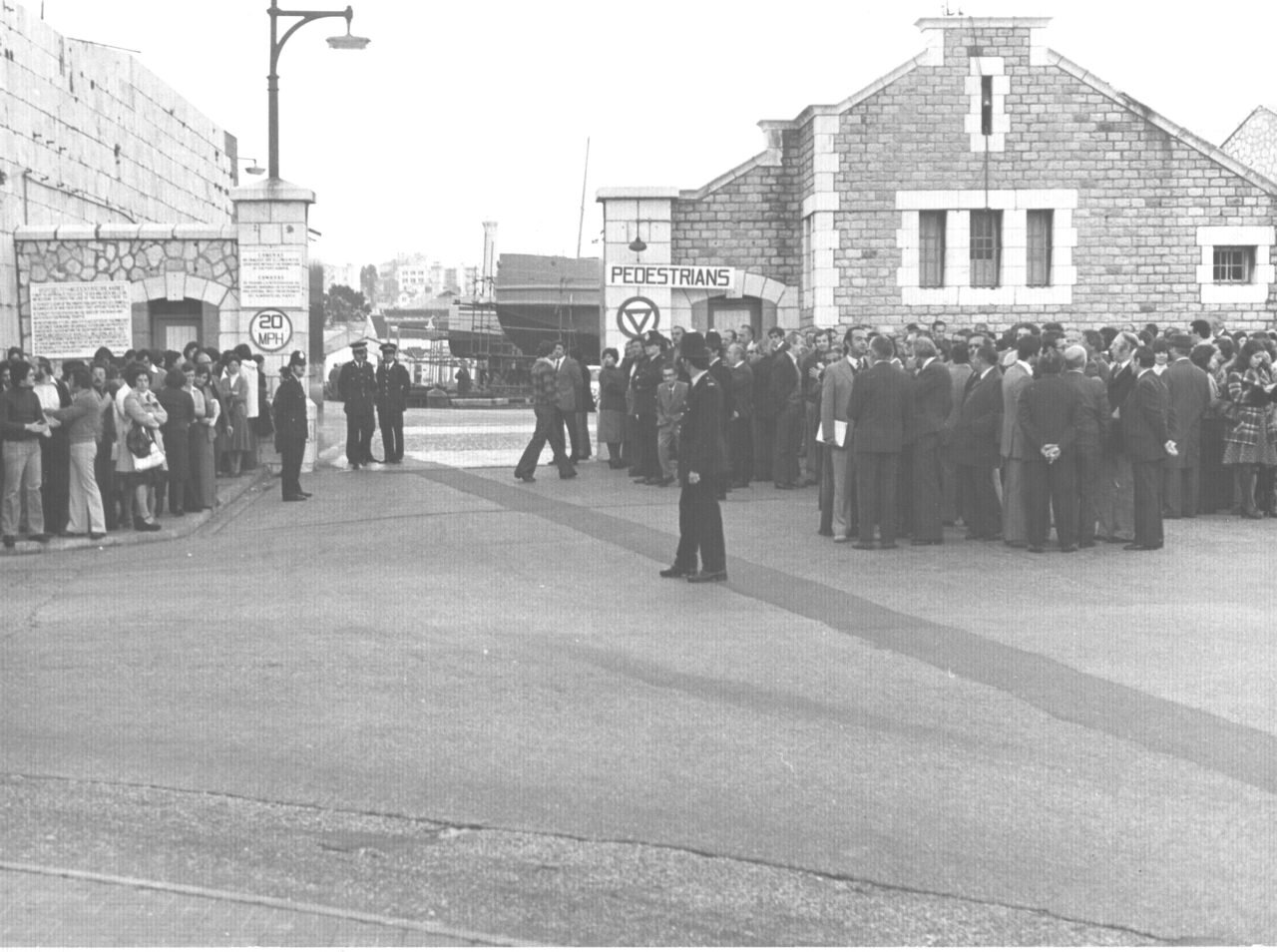
Picketing outside the Dockyard North Gate.
In order to exert pressure on the MOD in pursuit of its claim, the CPSA members held a sit-down demonstration at the entrance of the Convent on the 8th November. The sit-down demonstration was planned to coincide with the monthly ceremony of the changing of the guard at the Convent. During the demonstration, about 200 CPSA members were arrested and taken to the Police station. Many of those arrested were later charged and fined.
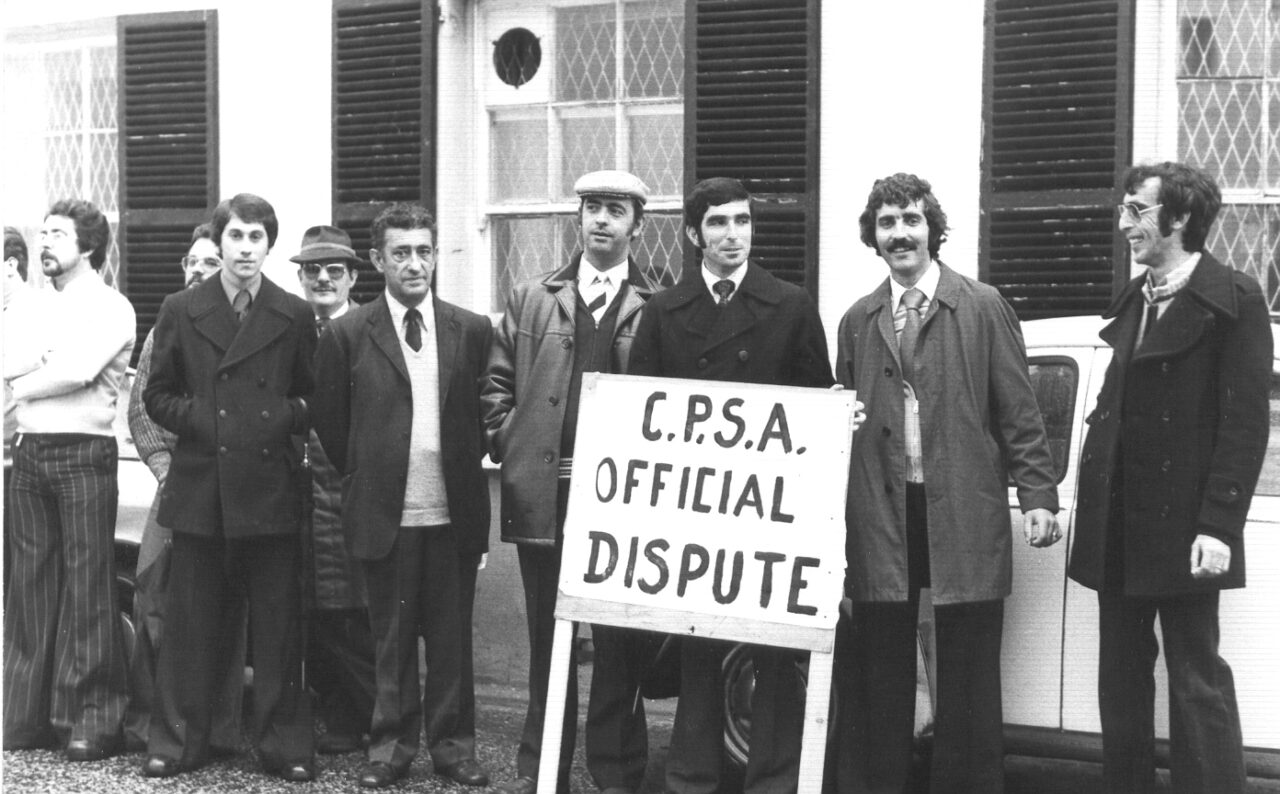
CPSA Members campaigning outside the entrance to the Government’s Secretariat, Office at Secretary’s Lane.
In response to the heavy handling of the sit-down demonstration by all the authorities concerned, the next day the TGWU held a demonstration attended by about 3,000 members. The demonstration consisted of a protest march along Main Street with cars driving in the opposite direction. It culminated with another sit-down demonstration in front of the Convent. No arrests were made then.
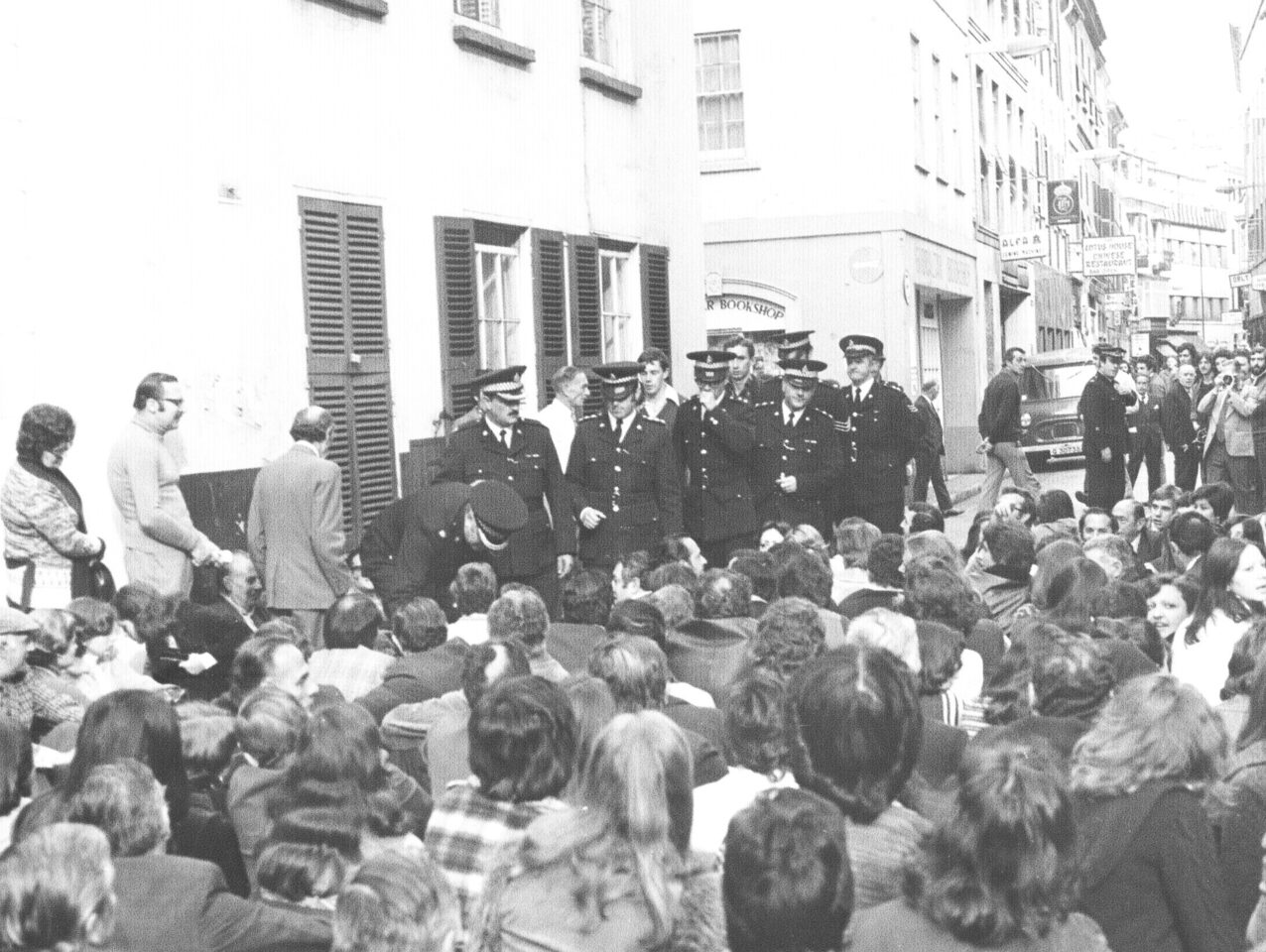
The CPSA sit down demonstration, 8th November 1976.
A few weeks later, ACTSS members who had been blacking telegrams for the MOD were also told that they would be denied entry into their places of work unless they stopped taking industrial action. Since they continued blacking MOD messages, they were, consequently, locked out. Many prominent TGWU trade unionists who were picketing by the Cable and Wireless Office in Main Street, were also arrested for refusing to maintain the distance set by the Police to the entrance of their workplace. All were charged for different reasons and fined.
In response to the handling of the demonstrations, the GTC wrote to the Governor to say that it considered that the action taken by the MOD and DOE in locking out their employees was a threat to the freedom of trade union movement in Gibraltar. The GTC furthermore asked for all charges brought against the arrested trade unionists to be withdrawn and all lock-out MOD and DOE employees to be reinstated without loss of pay or service.
Shortly after the sit-down demonstrations, a 24-hour vigil was mounted opposite the Convent with the aim of maintaining full awareness of their campaign at local and UK levels. Cyril Plant, the General Secretary of the Trade Union Congress came to Gibraltar to meet with the CPSA Gibraltar branch committee members to acquaint himself with the cause of the dispute. During the whole campaign daily bulletins were issued to keep all members informed of everything that was happening. The CPSA Gibraltar Branch Committee members also sought the support of Bob Peliza who was in the UK and contacted the CPSA General Secretary.
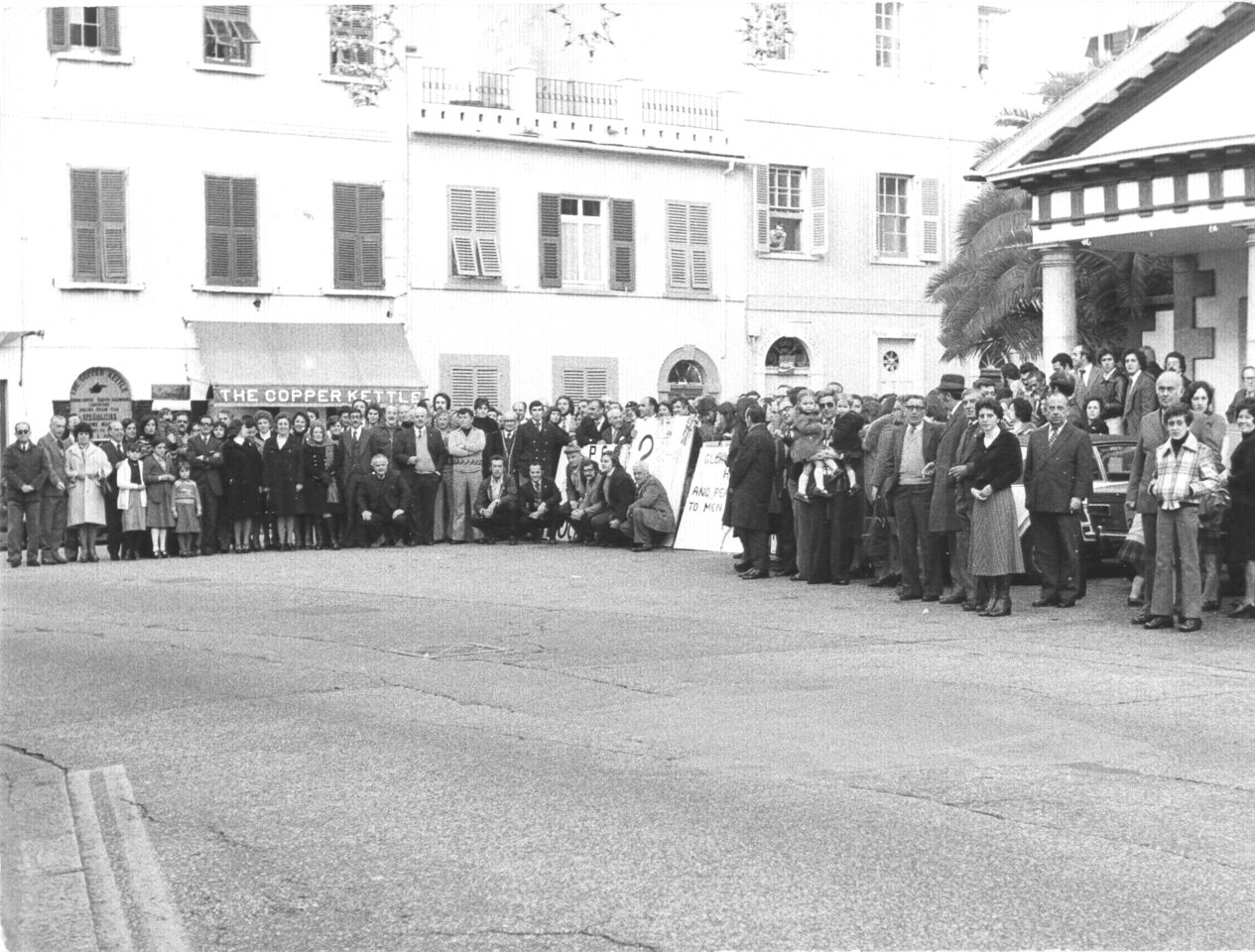
CPSA gathered by the Convent’s vigil stand during Christmas 1976.
A large meeting of union members was held at the Grand Parade addressed by District Officer Jose Netto to continue and to escalate the industrial action in support of the lockout members.
As a result of the CPSA dispute, came about what could be considered as an ideological rift within the recently elected members of the Gibraltar Democratic Movement (GDM). Three of the four elected GDM Members in the House of Assembly were in disagreement with the actions being taken by the trade unions. Paradoxically, all these three GDM members had been elected with the support and the votes of the trade unionists who were taking industrial action! Amidst, these happenings came the start of the demise of the GDM when the leader if the GDM, Joe Bossano, refused to lay the Wreath at the Cross of Sacrifice on Remembrance Sunday. Some months later all the three elected members resigned from the GDM. Two crossed the floor to the AACR and one to the DPBG. As a result, a new party was eventually formed in November 1977, named the GLSP.
The House of Assembly debated extensively the CPSA lock out situation and passed a unanimous motion on the CPSA/MOD dispute. On one occasion the Public Galleries at the House of Assembly became full of CPSA members with shirts displaying messages in support for the campaign. The Speaker ordered the CPSA members to leave the Galleries.
In December 1976, the CPSA Gibraltar Branch spread its campaign to all the CPSA Branches in the UK. At the time the CPSA total membership was about 250,000 from whom many messages of support and donations were being received. Other unions like the National Union of Seamen were also supportive of the CPSA dispute with the MOD.
Andrew Viagas and I with Mr McCluskie, National Secretary of the National Union of Seamen.
In December 1976, CPSA Gibraltar executive committee members and national officers attend a meeting with the Minister for Defence Dr John Gilbert to discuss the CPSA Gibraltar Branch claim. However, nothing much transpired from this meeting. During the visit to London to discuss the claim with the MOD, the Gibraltar branch committee members took the opportunity of seeking the support for its claim at the highest level! On the occasion of the Queen’s Gala Night at Leicester Square, CPSA committee members, who happened to be in the UK for official meetings, got into the crowd watching the arrival of the Queen, where the displayed posters saying “OPPOSE LOCKOUTS, SUPPORT CPSA.!”
In late January 1977 the MOD made an offer but was rejected by the CPSA Gibraltar Branch members. Soon after the rejection of the MOD offer, the CPSA Head Office organized a series of speaking tours throughout all the major cities in the UK. The aim of the speaking tours was for the CPSA officials and members of the Gibraltar executive committee to familiarise CPSA members in the UK with our claim.
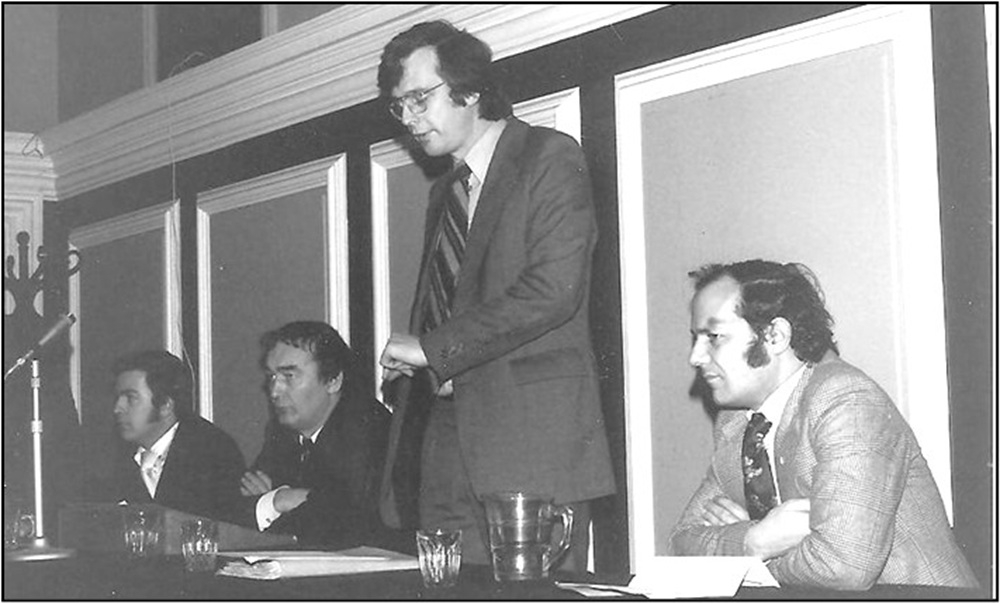
CPSA Deputy General Secretary AIistair Graham(standing) President Len Lever (sitting) Tito Vallejo and I at one of the meetings in the UK to enlist support for the CPSA Gibraltar Branch.
The speaking tours lasted a few months with the occasional involvement in the picketing at the entrance of MOD establishments in the UK and even 10 Downing Street! During the speaking tours, meetings were held with the UK news media, including a press conference in one of the pubs in Fleet Street. Meetings were also arranged with Members of Parliament at the House of Commons or in their constituencies. Michael Alman was able to talk about the CPSA claim with Frank Judd a senior labour MP in Portsmouth. The meeting was arranged by Gibraltarian Rodney Pereira, who lived in Portsmouth. We also managed to get a session of written answers to questions about the CPSA/MOD dispute at the House of Commons. In early March 1977 there was a high-level ministerial meeting to propose a Board of Inquiry into the CPSA/MOD dispute. The offer was again rejected by the CPSA Gibraltar Branch members. At the 1977 May Rally, the CPSA held a special demonstration consisting of a march along Main Street with banners as shown in the photograph.
The CPSA annual conference held in Southport in early May 1977 was bound to be a decisive moment for the CPSA Gibraltar branch. As a result of the intensive campaign, CPSA members in the UK were by then fully versed with the Gibraltar branch dispute with the MOD. Clive Bush , the editor of Red Tape, the CPSA Magazine was a staunch supporter of the Gibraltar Branch. He played a major part in ensuring that the press in the UK gave full coverage to the plight of the CPSA Gibraltar branch.
At the CPSA Annual Conference, when the motion on the Gibraltar branch dispute came up for debate the Gibraltar delegates were given a long-standing ovation. An emergency motion was passed unanimously instructing the NEC to organise ‘a day of action’ by calling a one-day stoppage of all the membership on the 26th May 1977.
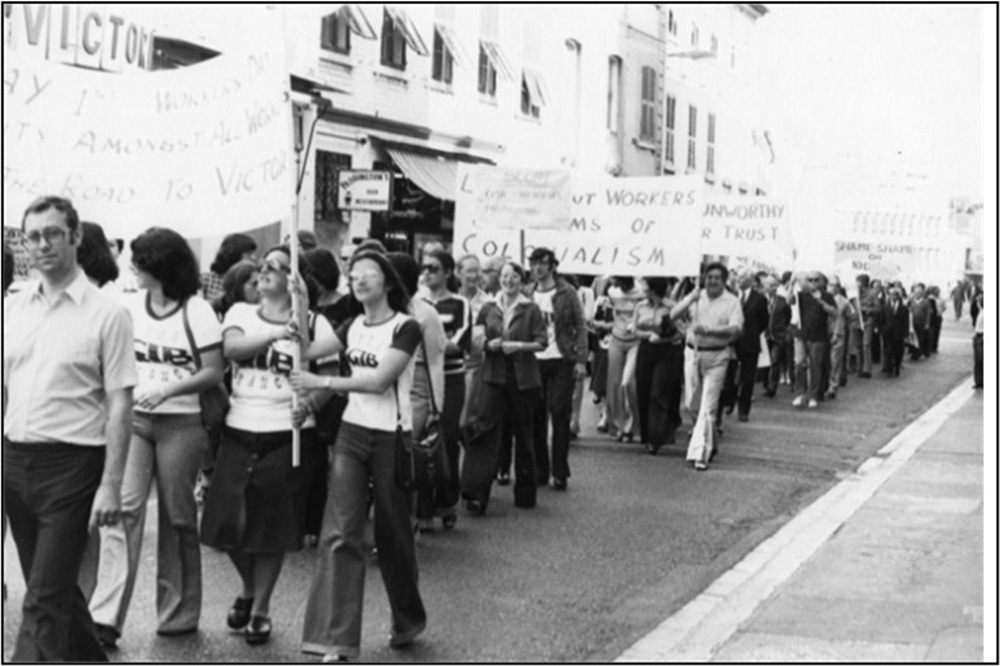
The CPSA at the 1977 May Day Rally.
I do not know of any industrial dispute in Gibraltar which has escalated to the level where union head offices have authorised one day national strike in the UK in support of union members in Gibraltar. Coaches from all the CPSA branches up and down the country, even from as far as Scotland, were being prepared to converge in London near the House of Commons. Two days before the one-day strike took place, the MOD made a spontaneous offer which the CPSA National Executive Committee considered that it warranted the postponement of the one strike. The NEC also took the view that CPSA members in Gibraltar had to be consulted about the proposed MOD offer. The CPSA Gibraltar executive committee was not fully content with the MOD offer as it included the acceptance of an inquiry into the dispute which had been rejected on numerous occasions by the Gibraltar membership since the start of the dispute. The CPSA President, the Vice-president, the Deputy General Secretary and National Officer with responsibilities for the Gibraltar CPSA Branch arrived in Gibraltar to recommend the offer to the Gibraltar membership. The Gibraltar Branch executive members were not entirely happy and abstained from making any recommendations. The general meeting to consider the offer was held at the John Mackintosh Hall on the 27th May 1977. During the meeting a group of CPSA members in the UK phoned the Gibraltar branch committee members to say that they had taken over the CPSA Head Office in protest against the NEC acceptance of the MOD offer. The news was greeted with applause from the Gibraltar members. All the four members of the UK delegation recommended the acceptance of the MOD offer. The offer was then put to the members in a secret ballot. The offer was accepted by a very narrow majority with a few abstentions.
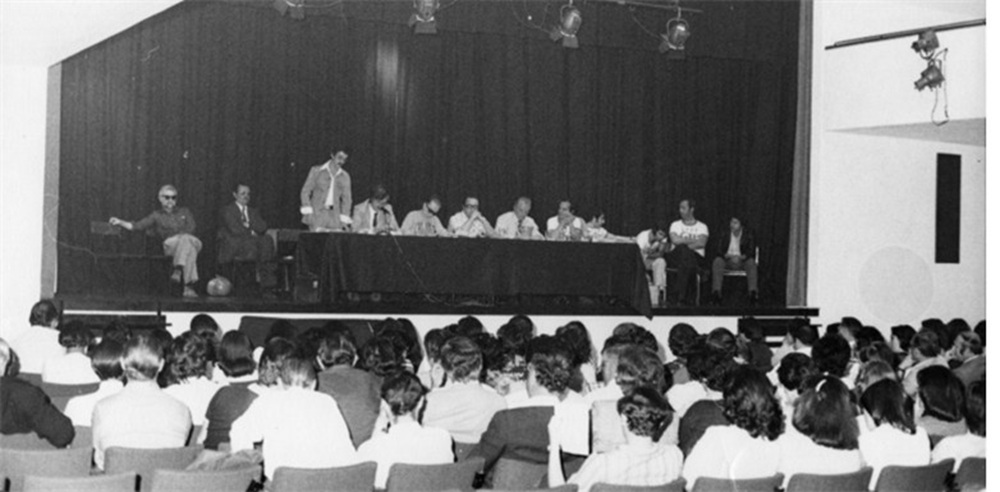
Terry Adams speaking at the Special General Meeting held at the John Mackintosh Hall on the 27th May to consider the MOD offer.
There were quite a number of members who felt let down by the way CPSA Head Office which had put the MOD offer to Gibraltar members. It became a case of “take it or that’s the end of our support for the Gibraltar members” Charlie Harrison said that he felt like a man with a pistol at this head.
When the meeting ended, a group of members who felt bitterly disappointed, made their way to the Convent and smashed the CPSA placards and then returned to the JM Hall.
There are very good reasons to believe that personnel from the MOD intelligence services were discretely present at the meeting and gave a very detailed report to the MOD of everything that happened at the meeting.
Members of the Gibraltar CPSA executive committee were also well aware that during the whole campaign, all their activities were being monitored by the MOD Intelligence personnel.
After the meeting, the next hurdle which had to be sorted out was an orderly return to work arrangements with all difficulties that entailed after being locked out for 7 months. Charlie Harrison and I were released for two weeks in order to be free to deal with any problems of recriminations on return to work.
Ramifications of the CPSA Lockout
It can be argued that the CPSA Lockout accelerated the achievement of 100% parity. The MOD in order to alienate the CPSA Gibraltar branch, conceded pay related claims to the TGWU used as a precedent to achieve 100% parity in 1978 instead of in 1980, as envisaged. The inclusion of a pension scheme for MOD employees on discriminating ground in CPSA inquiry was also very useful foe the introduction of a pension scheme identical to the UK Civil Service Pension Scheme in 1980 for the employees in the MOD backdated to 1972.
As a result of the TWGU and the CPSA having been working very closely during the lockout, the relationships between industrial and clerical workers in the MOD became much closer. The CPSA campaign also contributed in the eventual formation of the GSLP to which many members affiliated and participated to the extent that the first GSLP Government included two CPSA Members.
The MOD Offer
The MOD offer consisted of three main items: an immediate lump sum, an independent board of inquiry into the dispute and a number of pending claims. Neither party wished to commit themselves in advance to the acceptance of the recommendations by the Board of Inquiry. A number of private meetings were held by the Board of Inquiry in Gibraltar and in London and one public meeting in Gibraltar. During one of the crucial meetings held in Gibraltar by the Board of Inquiry, the CPSA Gibraltar Branch organised a reception at the air terminal displaying messages as shown in the photographs below.
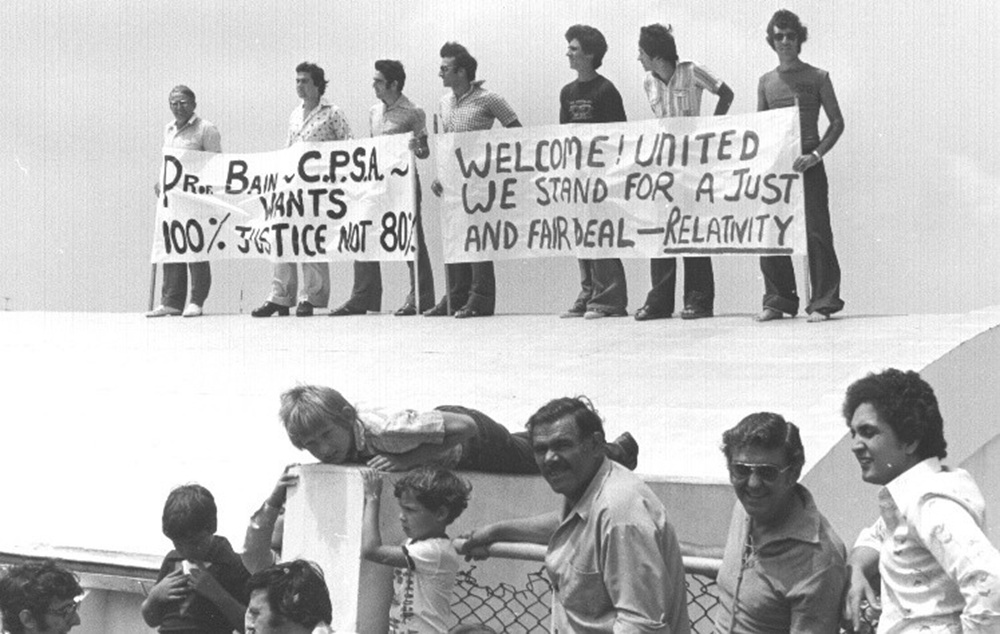
CPSA Members outside the Air Terminal.
Board of Inquiry Findings
The Board's findings can be summarized as follows:
- That the concession by the Gibraltar Government of a lead to SCO had resulted in the disturbance of a well-established local relativity.
- The lead granted to the SCO was inconsistent with the Scamp principles.
- There were doubts about the results of the staff inspection of SCO posts.
- That once the Gibraltar Government decided to go ahead, it was unrealistic to suppose that the MOD/PSA clerical staff could be isolated.
- That once the MOD/PSA conceded that the Gibraltar Government was free to pay increases without staff inspection, the MOD/PSA could not be insulated from the actions of the Gibraltar Government.
The Board’s overall conclusions were that the MOD/PSA consistently followed the principles of the Scamp report; that the Gibraltar Government did not do so, particularly in respect of Senior Clerical Officer (SCO). That once the Gibraltar Government decided to go ahead and that the MOD/PSA, because of other considerations may not have exerted the full pressure that was available at higher level to persuade the Gibraltar Government to reconsider the decision.
That these were the factors which went some considerable way to establish the case of the CPSA in claiming relativity with their counterparts in the Gibraltar Government.
The CPSA had claimed that the MOD CA traditionally equated with the Gibraltar Government CO. However, the Board’s findings were that the position of the MOD Clerical Assistant claim in relation to the Clerical Officer in the Gibraltar Government was not the same as in the case of the SCO.
The CPSA had argued that for political reasons the Gibraltar Government CO had been equated to the UK CO prior to the staff inspection. This from the CPSA’s point of view had diminished significantly its claim for the MOD CA which had historically equated to the CO in the Gibraltar Government. As mentioned in the inquiry into CPSA/MOD dispute, owing to the political situation, the Gibraltar Government was undoubtedly under heavy pressure to secure a pay settlement for the clerical staff in August 1976.
Recommendations
The board recommended the full restoration of pay relativity between the MOD/PSA CO and the Gibraltar Government SCO. Both special scales were to be retained on a personal basis for ten years and then phased out in four years.
The MOD/PSA CAs who were in service prior to the dispute were awarded a special increase on a personal basis and on a mark time basis.
Since about 60% of the CPSA Gibraltar branch members were females, the Branch committee’s pending claim with the introduction of flexible working hours (for the first in Gibraltar) and maternity leave to be brought in line with UK, the MOD agreed to an early introduction of these two items.
Aftermath
As a result of the dispute there is no doubt that the CPSA Gibraltar branch earned recognition and became very popular in the whole of the CPSA. I am sure that all members who served in the Executive Committee feel as I do, extremely proud to have led such a wonderful membership whose motto throughout the dispute was: UNITY IS STRENGTH. The then newly formed Gibraltar Socialist Labour Party (GSLP) in its inaugural 1977/78 New Message praised the stand taken by the CPSA Gibraltar branch members.
Most Read
HMS Queen Elizabeth sails into Gibraltar, strengthening long-standing links
Sun 25th Oct, 2026
Govt raises concerns with Taxi Association over weekend service outage
Fri 23rd Oct, 2026
Police governance reform aims for ‘democratic accountability’ alongside ‘operational independence’
Mon 26th Oct, 2026

Today's Paper
26th October 2026
Read our latest newspaper by downloading our app from the link below.


