


Meenal Viz to share her story of ‘The Power of Protest’ at Garrison Library


Doctor and campaigner Meenal Viz will discuss her book The Power of Protest, which recounts her campaign for healthcare workers during the Covid pandemic and explores the family history that shaped her activism, at the Gibunco Gibraltar Literary Festival on Thursday, November 12, 2026. The talk will begin at 4pm at the Garrison Library.
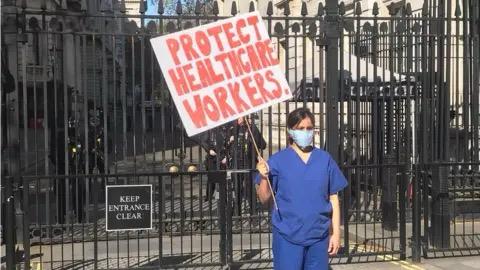
When Meenal Viz stood outside 10 Downing Street during the Covid pandemic with a sign calling for appropriate PPE equipment for UK NHS workers, she was prepared to be arrested.
Pregnant with her first child and working as a doctor in an oncology unit, she feared the consequences of speaking out but believed remaining silent would be worse.
The protest in 2020 became a turning point in her life, drawing international attention to her campaign for healthcare workers.
It also formed a central part of her book, The Power of Protest, which she will discuss at the Gibunco Gibraltar Literary Festival next week.
Looking back on the experience, Dr Viz said the memories remained vivid years later.
“It's strange, because even though it's six, almost seven years into what happened, it still lives so fresh in my memory, almost like I can feel it in my skin, I can feel it in my chest, the same feeling, and I actually don't want that to go away, because it keeps that fire inside me to keep doing good for the world,” she said.
At the time, Dr Viz was caring for vulnerable cancer patients whose treatment had to be adapted because of the pandemic. She was also witnessing the effects of Covid on colleagues, including consultants who became seriously ill.
The situation, she said, exposed the consequences of inadequate protection for healthcare workers and the difficulties faced by those trying to raise concerns about conditions on the frontline.
“When Covid happened and I saw how healthcare workers were being treated and being ignored and being silenced to the extent that we were being gaslit,” she said.
“The consequences that had were so disastrous. I mean people were dying because of that, our colleagues were dying, and I saw the impact of that on families, it's not just one death that we see every two years, people are going to suffer for the rest of their life because of this one death, and it was avoidable.”
For Dr Viz, the crisis was also about the families left behind when healthcare workers died and the long-term consequences of decisions made during the pandemic.
She was pregnant with her daughter Radhika, now six, when she began campaigning and recalled how healthcare workers initially appeared to have adequate protection, with masks and protective equipment available.
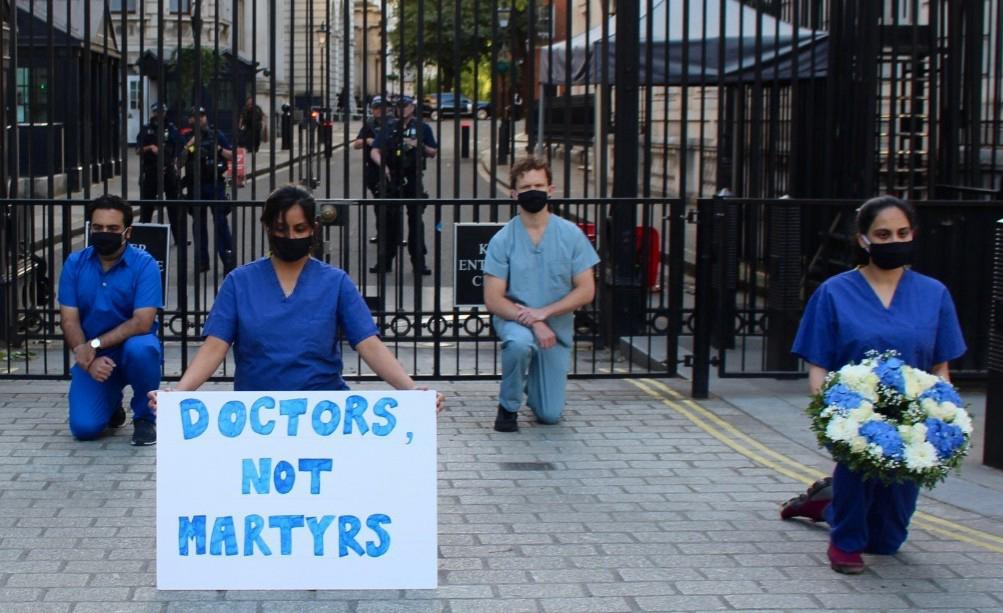
That began to change and staff became concerned about having to use the same mask throughout long shifts, despite the risk of exposure to Covid.
Dr Viz and her husband, Nishant, who also worked in the NHS, worried about contracting the virus and passing it to each other.
“I would see body bags going from the hospital, and it was just body bag after body bag, to the extent that they were using bin liners, because there was just not enough capacity to get people in,” she said.
“I can never get that image out of my head, because behind each body is a whole family suffering, and still suffering to this day.”
Yet taking the step to come forward carried risks. Colleagues warned her that speaking to the media or publicly challenging the response to the pandemic could have professional consequences, including possible repercussions for her medical licence.
Dr Viz said she found herself weighing those warnings against her own sense of responsibility.
“I knew that in the future I'd have a family and have kids, and we'd be talking about the virus, talking about Covid, and my kids would ask me: ‘Mummy what did you do?’ And I don't think I'd ever be able to look them in the eye and say I didn't do anything.”
She asked others to protest outside Downing Street but “no one wanted to join”.
On the day of the protest, she carried a sign calling for healthcare workers to be protected. She had written her husband's telephone number on her scrub sleeve in case she was arrested.
Instead of the confrontation she had anticipated, she received support from members of the public as cyclists and ambulance crews passing by cheered her on.
She was also struck by the fact that it was the first time in months she had been able to stop and take in the world outside the hospital.
Flowers were blooming and the sun was shining, and she could feel Radhika moving inside her.

The demonstration was initially intended to be a small act of protest, with Dr Viz planning to take photographs and post them on social media.
Instead, a photograph taken by the Associated Press circulated widely. She returned home exhausted and later saw her image on the front page of The Times.
Dr Viz said she felt frightened at the prospect of being recognised publicly.
The protest brought further media requests, including interviews and coverage in The Guardian and Vogue. Dr Viz said the attention helped her reach a wider audience, but it also created pressure at a time when she was still working and pregnant.
The experience eventually became the foundation for The Power of Protest, which also examines the family history and personal experiences that shaped Dr Viz's determination to challenge injustice.
Securing a book deal was another difficult stage, she said, and eventually secured a deal with Jessica Kingsley Publishers, part of the Hachette group, in September 2022.
Writing the book came alongside a series of major changes. Dr Viz and her family moved back to Gibraltar, she became pregnant with her second child, Anushka, and she continued working while trying to complete the manuscript.
The book also explores the experiences of her family, including her grandparents, her mother and her father, and the hardships they faced across generations.
Her family experienced the Partition of India and Pakistan, while her father came to Gibraltar and built a life through hard work. Her mother was the first woman in her family to receive an education, a decision Dr Viz believes helped shape her own outlook.
She said these experiences were important to understanding why she felt compelled to speak out and that the book is a celebration of this.
Most Read
PP MEP says ‘things will change’ on Gib treaty with right-wing govt in Madrid
Tue 27th Oct, 2026
HMS Queen Elizabeth sails into Gibraltar, strengthening long-standing links
Sun 25th Oct, 2026

Today's Paper
2nd November 2026
Read our latest newspaper by downloading our app from the link below.


