Calpe Lodge No. 325 marks 200 years of Irish Freemasonry in Gibraltar


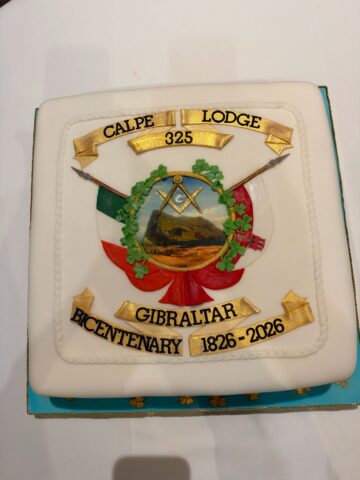
Calpe Lodge No. 325 is marking its bicentenary in 2026, celebrating 200 years of Irish Freemasonry in Gibraltar and a history closely linked to the development of the Rock.
Founded in 1826, the lodge has brought together generations of Freemasons from Gibraltar’s military, maritime and civilian communities, maintaining its association with the Grand Lodge of Ireland while supporting the principles of brotherly love, relief and truth.
Its origins date back to the departure of Irish Military Lodge No. 68 from Gibraltar in 1826. Brethren intending to remain on the Rock petitioned the Grand Lodge of Ireland for permission to establish a permanent lodge for local Freemasons.
The request received the support of the Irish military lodges then stationed in Gibraltar.
On September 18, 1826, the Grand Lodge of Ireland issued an Inhabitants’ Warrant, numbered 325.
The lodge was formally consecrated on January 23, 1827, at the Freemasons’ Tavern in Gibraltar. Brother Daniel Durham became its first Worshipful Master, assisted by Isaac Thompson and Alexander Imbrie as wardens.
From its earliest days, the lodge reflected Gibraltar’s diverse community, bringing together military officers, merchants, craftsmen and local citizens.
Despite challenges, including the Yellow Fever epidemic of 1828 and the hardships of two World Wars, Calpe Lodge continued its work, supporting its members, their families and the wider community.
During the nineteenth century, it became one of Gibraltar’s most active Masonic lodges, with an established reputation for its ritual, administration and charitable activities.
One of its distinctive features was its ability to embrace Gibraltar’s multicultural character while retaining its Irish identity. During the 1870s, the lodge adopted a bilingual tradition, conducting degrees in both English and Spanish and recording its minutes in Spanish for several years.
The lodge also participated in Gibraltar’s civic life. In 1876, its officers and brethren took part in the laying of the foundation stone of the New Market by His Royal Highness the Prince of Wales, later King Edward VII.
The twentieth century brought further developments. Calpe Lodge became closely associated with the Gibraltar Masonic Institute, initially meeting at Cornwall’s Parade in 1935 before moving to the present Masonic Hall at Prince Edward’s Road following its consecration in 1957.
More recent milestones included the 175th anniversary rededication in 2001, the 190th anniversary celebrations in 2016 and participation in the Tercentenary Celebrations of the Grand Lodge of Ireland in 2025.
The lodge has also continued to strengthen its fraternal relations with the English and Scottish Constitutions in Gibraltar and with Irish Freemasonry internationally.
Several members have played significant roles in the lodge’s history.
They included Worshipful Brother Bernard McGinn, who served as Master on 11 occasions during the nineteenth century; Very Worshipful Brother J. W. V. Cumming, whose work helped preserve Gibraltar’s Masonic heritage; Right Worshipful Brother Marcial Hanglin, the first Grand Inspector under the modern Inspectorate structure; Right Worshipful Brother Joe Chiara; and Right Worshipful Brother John Bugeja, under whose leadership relations between Gibraltar and the Grand Lodge of Ireland continued to develop.
As it marks 200 years, Calpe Lodge is reflecting on its origins and the contribution of the generations of brethren who have maintained its traditions.
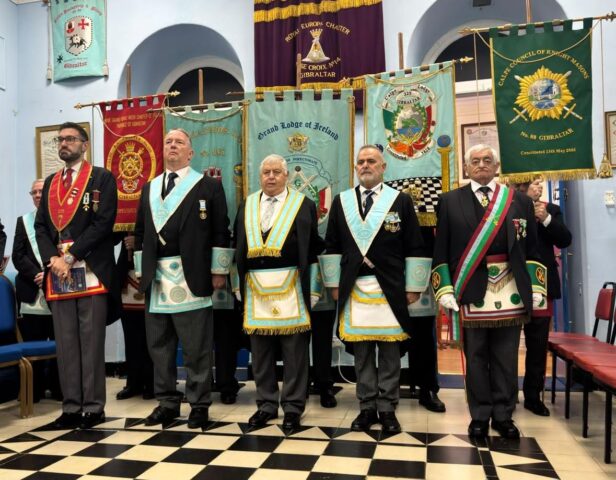
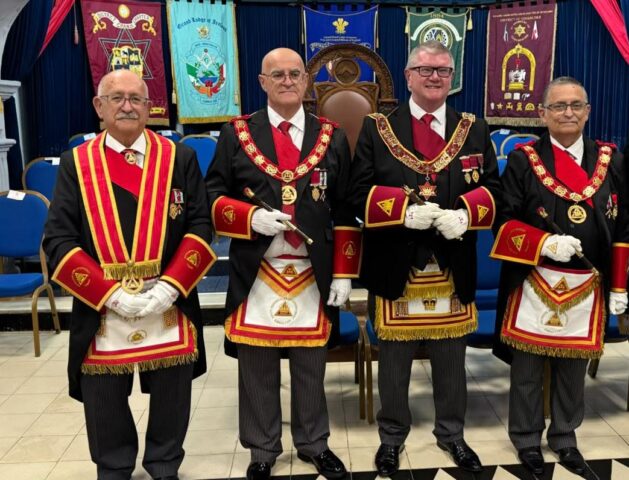
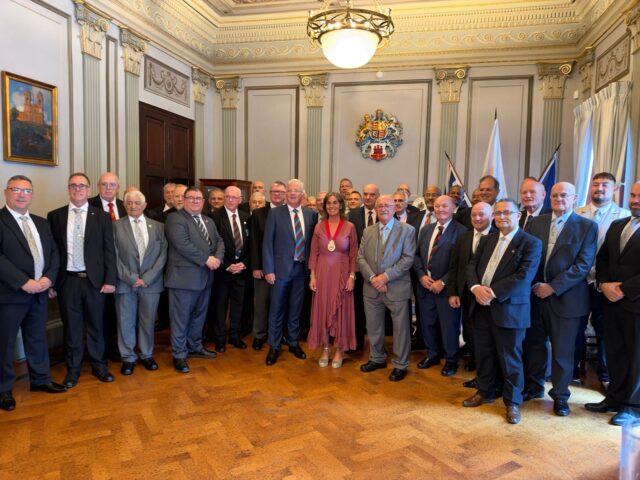
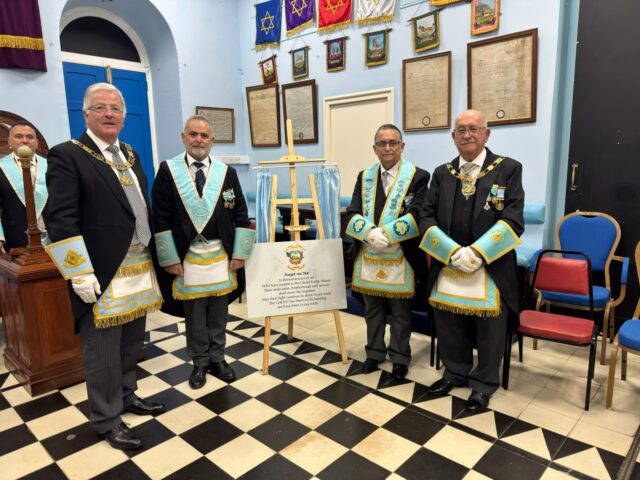
Its bicentenary programme included the unveiling of a commemorative plaque by the Most Worshipful Grand Master, marking two centuries since the establishment of the lodge under the Constitution of the Grand Lodge of Ireland.
The ceremony also involved the Right Worshipful Grand Inspector Designate, Right Worshipful Brother Gerard Laguea, and the Worshipful Master of Calpe Lodge, Very Worshipful Brother Darren Laguea.
The bicentenary marks not only the establishment of an Irish lodge in Gibraltar in September 1826 but also the continuation of an institution that has maintained its place in the Rock’s Masonic life through two centuries of change.