


A voice that once united us: Reflections on The Gibraltar National Choir


Celebrating 20th Anniversary of Misa Criolla
By Lily Olivero, Founder and Musical Director

When I look back to 2004, I realise that the Gibraltar National Choir was never part of a grand personal plan. In fact, I declined the idea many times. I was heavily pregnant with my third child, deeply immersed in family life and my own musical commitments. Yet, after three months of gentle persistence from the Music Centre Trustees (under new management at the time), I finally said yes.
That “yes” would go on to shape 16 years of my life.
The timing was significant. Gibraltar was preparing to celebrate its tercentenary, marking 300 years of its rich and unique history. The vision was simple yet powerful: to bring together voices from across our community into one unified national choir. Once I committed, I did so wholeheartedly. Music has always been my life, and I believed deeply in what this choir could represent.
In January 2004, we held our first rehearsal. I remember it vividly—75 singers gathered in one room. Church choirs, independent singers, people from all walks of life. It was a moment filled with hope, unity, and possibility.
But the journey was not without its challenges.
Within a month, we faced a serious internal conflict—a mutiny attempt that created division and uncertainty. At a time in my life when I was already stretched, I questioned whether I could continue. I even offered to step aside. But the trustees encouraged me to carry on, recognising the foundation that had already been built.
Singing is deeply personal. When division enters a choir, it cuts through more than just organisation—it affects trust, connection, and spirit. I made the difficult decision to put the future of the choir to a vote. The singers chose overwhelmingly to become an independent cultural association. From that moment, I was honoured to serve as its president until 2019.
Even so, the early fractures never fully disappeared. They lingered, shaping our journey in ways both visible and unseen.
One of our earliest tests came during our very first Christmas concert, when an injunction was placed to prevent us from performing under the name “Gibraltar National Choir.” It was a moment of real uncertainty—but one that was swiftly resolved thanks to the support of the late Bishop Caruana. His belief in us allowed the choir not only to continue, but to stand firmly as an independent national entity. For that, I will always be deeply grateful.
What sustained me throughout those years was the unwavering support of the choir’s committee and members. Their encouragement, especially during the most difficult times, kept the choir alive. We rehearsed twice weekly, building not just a repertoire, but a shared identity.
We went on to perform hundreds of concerts. In 2005, we had the privilege of working with distinguished actors Prunella Scales and Timothy West—a moment that reflected the growing recognition of the choir’s work.
But it was in 2006 that we reached what I still consider our pinnacle.
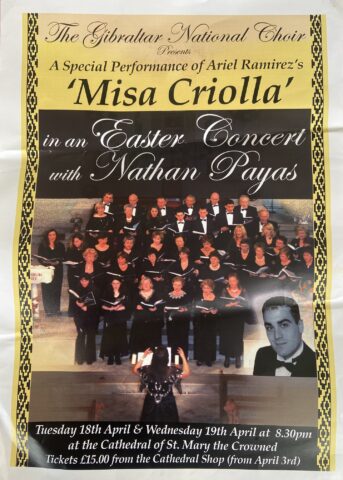
I was approached by local tenor Nathan Payas, who at the time was performing professionally in Vienna. He suggested we attempt something extraordinary: a performance of Misa Criolla. When I explored the piece, I immediately felt its power. Its South American rhythms and spiritual depth seemed perfectly suited to the acoustics and atmosphere of St Mary the Crowned Cathedral.
It also resonated with me on a deeply personal level. The Latin American influence, the richness of its Spanish text, and the fact that it is sung in Spanish felt profoundly connected to who we are in Gibraltar. We are a bilingual community, shaped by both English and Spanish heritage, and this work seemed to embody that cultural bridge beautifully. It was not just musically compelling—it felt like a reflection of our identity.
We began preparing for two nights in April 2006.
I was determined that this would be a truly live, community-driven performance. I reached out to local musicians—guitarists, pianists, percussionists—ensuring that Gibraltar’s talent was at its heart. Then, by pure chance, I encountered a group of South American musicians busking along Main Street. They were playing traditional instruments—panpipes and percussion—exactly as heard in the original composition by Ariel Ramírez.
It felt like fate.
I invited them to join us, and they agreed. Suddenly, the vision was complete: local singers, local musicians, international artistry—all coming together.
The performances themselves were unforgettable.
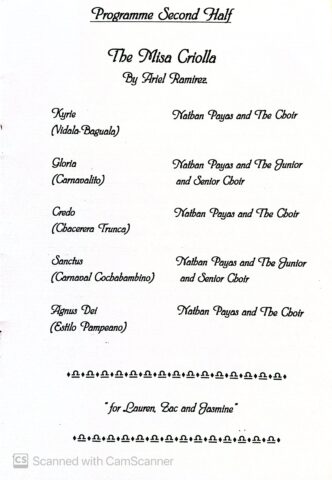
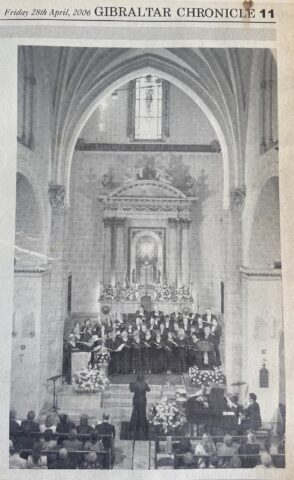
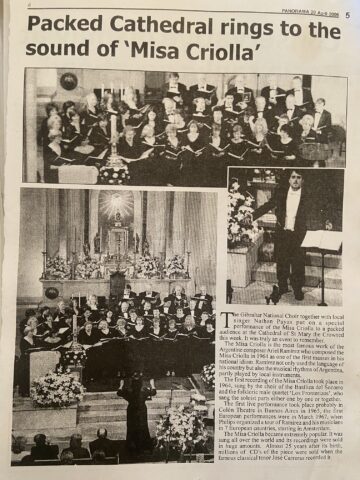
The Cathedral was filled beyond capacity—standing room only. Among the audience were distinguished guests, including Gibraltar’s Governor and Chief Minister. The first half featured operatic arias performed by Nathan Payas and choral works, including Mozart’s Requiem. Then came the second half—the full five-part Misa Criolla.
I remember standing there, conducting both choir and musicians, feeling the energy of every voice and every instrument resonate through the cathedral. It was more than a concert—it was a moment of unity, of shared purpose, of something truly greater than ourselves.
The evenings concluded with a rousing encore of Funiculì, Funiculà, which brought the audience to its feet in a standing ovation and a showering of rose petals!
Thankfully, that moment was preserved. Local sound engineer Charlie Moore expertly recorded the performances live, allowing us to keep a lasting record of what we had achieved. Now, 20 years later, I am proud to share that these recordings are available for all to hear on Spotify—including Misa Criolla, Panis Angelicus, and our unforgettable encore.
The choir continued for many years after that peak—16 in total. Yet, throughout, we remained vulnerable to the realities of a small community. Support from the Ministry of Culture fluctuated as governments and personnel changed. New choirs emerged, each with their own vision, and gradually the idea of a single national choir became diluted.
Where once we had proudly represented Gibraltar on National Day, in later years we found ourselves one of many choirs sharing the stage. Our final major appearance, in 2017, saw us perform alongside the Royal Philharmonic Orchestra—a proud moment, yet one that symbolised a shift from unity to fragmentation.
By 2019, it became clear that the choir had reached its natural conclusion. I invited all members for one final gathering—a celebration of everything we had built together.
Today, as I reflect on the 20th anniversary of that extraordinary 2006 concert, I do so with both pride and perspective.
We achieved so much—not for recognition, but for the love of music and for the love of Gibraltar.
And perhaps that is the message I wish to leave.
In a small community like ours, when something beautiful is created—something that unites, uplifts, and represents us—we must protect it. We must look beyond individual ambition and ego and instead honour the greater legacy.
The Gibraltar National Choir may no longer exist, but its voice remains. Gone, but never forgotten. (Find us on Facebook: Gibraltar National Choir)
My deepest thanks go to every singer, every musician, every supporter who believed in what we were building.
And as we look back, I hope we also look forward—with care, with unity, and with a renewed commitment to cherishing the things that bring us together.
Love and best wishes Lili Olivero (Founder & Musical Director Gibraltar National Choir)
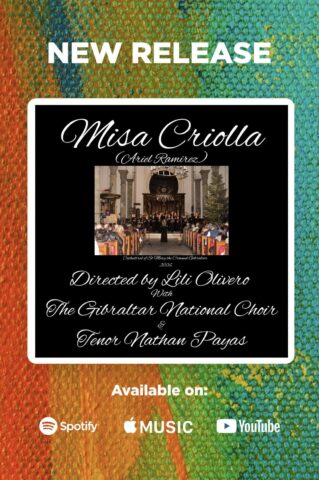
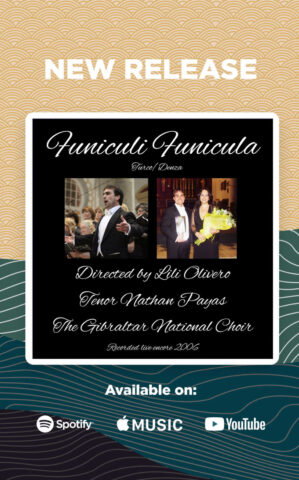
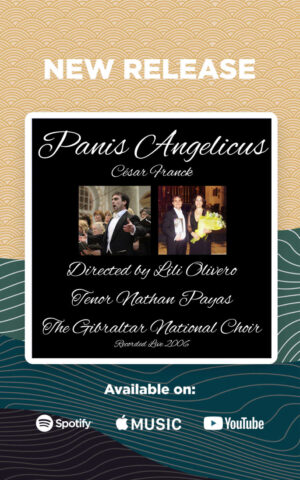
Enjoy the magic of those 2006 performances via Spotify & streaming platforms link below:
Misa Criolla, Funiculi, Funicula and Panis Angelicus (recorded live 2006)
https://open.spotify.com/album/3IpSswPLRRvfiUppa338XW?si=t8loWxIsT3ek84web08otA https://open.spotify.com/album/3tcpAzDdyZRMwAb3crPRp2?si=07m-5d6kSaKN-JFvrt0WWg https://open.spotify.com/album/72LroS7D8iSQ55zc67YCpE?si=6JgUNvDfQwa16ku6WRfBqA
https://www.facebook.com/share/1C5fb685nR/?mibextid=wwXIfr


