


Another spring awakening: Flowers around the Alameda after 210 years


Earlier this year Alice’s Table went on a tour of the Alameda Gardens - the Gibraltar Botanical Gardens which this year celebrates 2010 years of history. Speaking to its director Dr Keith Bensusan we looked back on its history, how the gardens have survived throughout all these years, the role it continues to play in our community, and the important scientific work it carries out. Alice’s Table promised a return to the gardens each season. So, as it now blossoms into spring and we enter Easter Week it seems like the perfect time for another visit, especially if you have not ventured into the gardens for a while. Right now, they are filled with colour and look at their very best both beautiful and vibrant in another “spring awakening”.
Dr. Bensusan says that especially on any given March “mid to late March and into April” he always describes the gardens as close to “their best” whilst considering April as the finest time to visit the gardens.
“For the same reason we have had a particularly grim winter, we are also having a spectacular spring. If for example, if you take a walk in the Nature Reserve you will see some plants flowering more profusely than they may have for years or decades, and we are now beginning to see the same thing happening in the gardens,” he points out.
For this reason, Dr Bensusan, believes 2026 is going to be a particularly good year to visit the Alameda especially as we enter April – the “perfect occasion” to take a walk in the Alameda.
He admits he enjoys his walks around the gardens at any time of year but particularly so in the spring as they never fail to surprise in their beauty. Maintaining their look is not easy but there is a hard-working team of some ten people who are constantly occupied year in year out with making sure the garden looks great for visitors. There is no doubt the gardens are hugely demanding, he adds, and require “extremely high maintenance” with every bed carefully landscaped, replanting, and water fed, all year through the year to ensure it remains a stunning garden.
New plants are introduced most years because “gardens like the Alameda have to be dynamic. We are constantly wanting to improve; change and rejuvenate its look”. Although the Alameda propagates its own stock through its scientific and conservation programme, the team will also purchase plants from Spain and acquire a lot of seeds of wild collected plants, particularly from places like South Africa because of their extremely diverse flora. Their plants are very well adapted to the local environment.
So, what are you doing this Easter week? Why not take a walk in the Alameda? Take our tour (on our facing page), and maybe even join the third Cancer Relief Easter Egg Hunt at the Alameda Botanic Gardens Open Air Theatre this coming Sunday 29 March from 9.30am to 1pm. Each ticket (on www.buytickets.gi) will give access to the Easter Egg hunt around the gardens and an hour of activities in the Theatre with face-painting, storytelling, crafts, and more.
I hope to see you there, or on a walk around the Alameda Garden. Enjoy and a Happy Easter.
TAKE A WALK IN THE ALAMEDA THIS SPRING
Here’s our tour of what to see when you visit this Easter
The Alameda Gardens are filled with a great variety of plants and flowers both bright and colourful. Venture into its beauty. Take our tour and identify and enjoy a walk.
Plectranthus neochilus is native to Southern Africa and well adapted to Gibraltar’s climate. It is a drought-tolerant plant that provides excellent ground cover with fragrant leaves. It flowers from late winter to early summer, providing plenty of colour over a long period.
The very fragrant Freesia alba. Familiar to many people in Gibraltar because they are naturalised here and grow on the Upper Rock, but these too are native to South Africa.
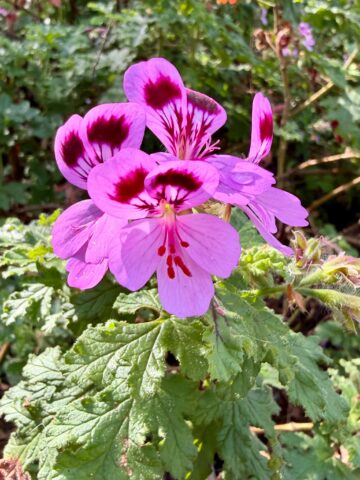
Also familiar as garden and house plants are the Pelargoniums, known popularly as Geraniums (they are not true Geraniums, but belong to the Geranium family). This is the Oak-leaved Geranium Pelargonium quercifolium. Pelargoniums are also South African.
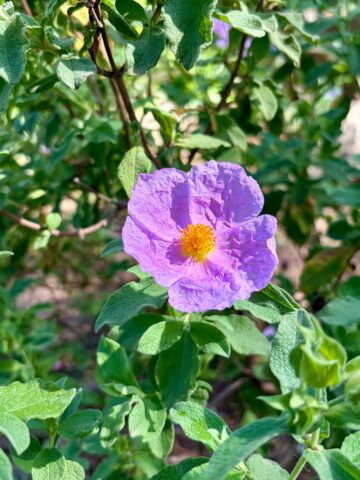
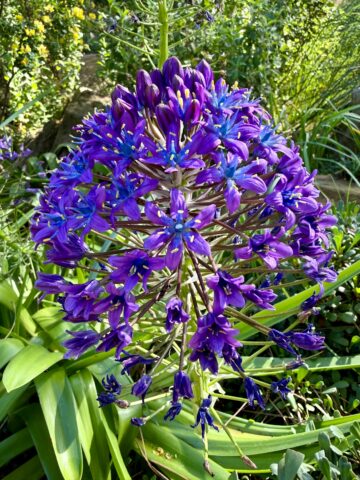
The Alameda grows plenty of native species too, most of them now beginning to flower: The Giant (dark purple) Squill Scilla peruviana, common on the Upper Rock. Pink Rockrose Cistus albidus (right), very rare in Gibraltar but common on limestone mountains in Southern Spain.
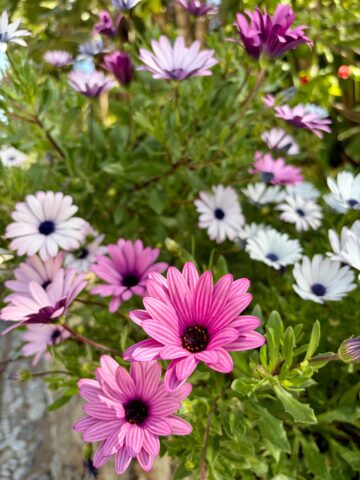
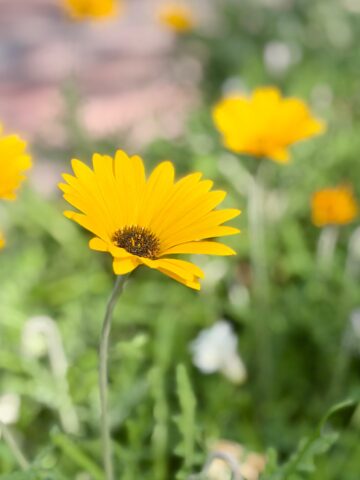
A variety of different rain daisy species bring much colour to the Alameda during the early spring.
Now too, the meadow seed mix is beginning to wake up in its usual bed, which is lovingly maintained by our very dedicated group of volunteers.
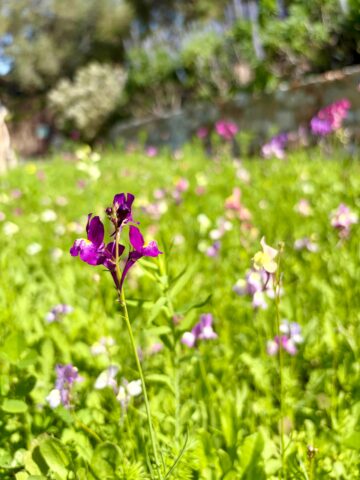
Now too, the meadow seed
mix is beginning to wake
up in its usual bed, which is
lovingly maintained by our very
dedicated group of volunteers
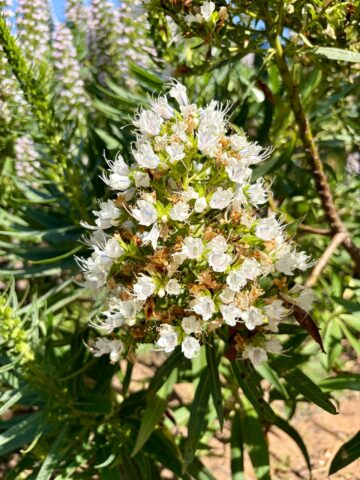
Nearby islands of Macaronesia
offer unusual flora including
giant versions of smaller species
from the mainland, such as
these buglosses Echium from
the Canary Islands.
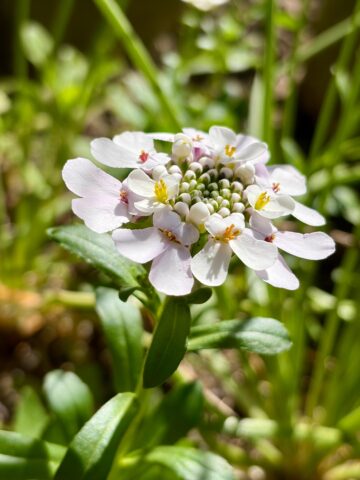
The first flowering individuals of our national flower in 2026, the Gibraltar Candytuft, Iberis gibraltarica
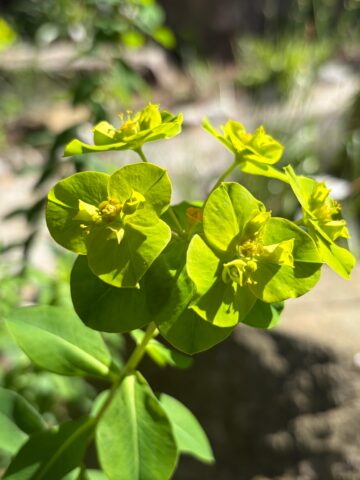
Warty Spurge Euphorbia
squamigera with its green
flowers
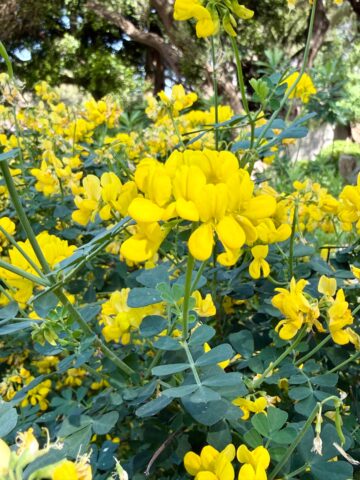
Beautifully scented Shrubby
Scorpion-vetch Coronilla
valentina.
Also familiar as garden
and house plants are the
Pelargoniums, known popularly
as Geraniums (they are not
true Geraniums, but belong
to the Geranium family). This
is the Oak-leaved Geranium
Pelargonium quercifolium.
Pelargoniums are also South
African.
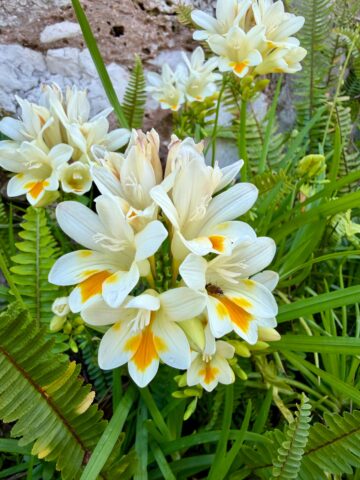
The very fragrant Freesia alba.
Familiar to many people in
Gibraltar because they are
naturalised here and grow on
the Upper Rock, but these too
are native to South Africa.
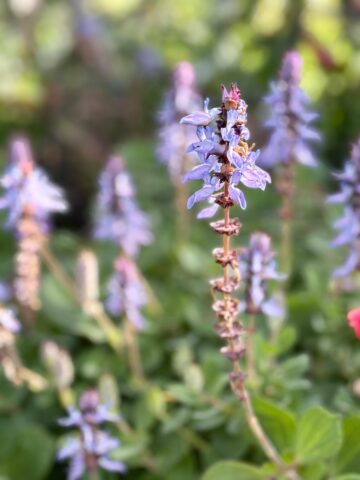
Plectranthus neochilus is native
to Southern Africa and well
adapted to Gibraltar’s climate.
It is a drought-tolerant plant
that provides excellent ground
cover with fragrant leaves. It
flowers from late winter to
early summer, providing plenty
of colour over a long period
Most Read
Treaty Bill published in Gib as Spanish cabinet approves emergency spending on border infrastructure
Wed 25th Mar, 2026
From university director to artist, Nadine Collado exhibits across Europe
Tue 24th Mar, 2026
Pedal Ready and Gibraltar Boys Secondary School trailblaze cycling training in school curriculum
Wed 25th Mar, 2026

Today's Paper
26th March 2026
Read our latest newspaper by downloading our app from the link below.


