


Bird box study highlights swift and sparrow activity across Gibraltar
Photo by Johnny Bugeja


Swifts and swallows in Gibraltar’s urban wildlife was put in focus this summer as local researcher Anne Canepa completed observations of bird boxes for her Masters degree.
Over four weeks in June, she observed a series of bird boxes across the Rock.
“My research was investigating the bird box project that’s been ongoing in Gibraltar, and I was seeing if it’s being used by the correct species, or whether it’s being used at all, and whether there were any predictors in what decides what species use or don’t use them,” she said.
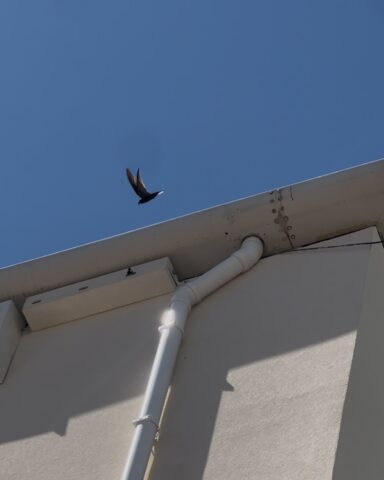
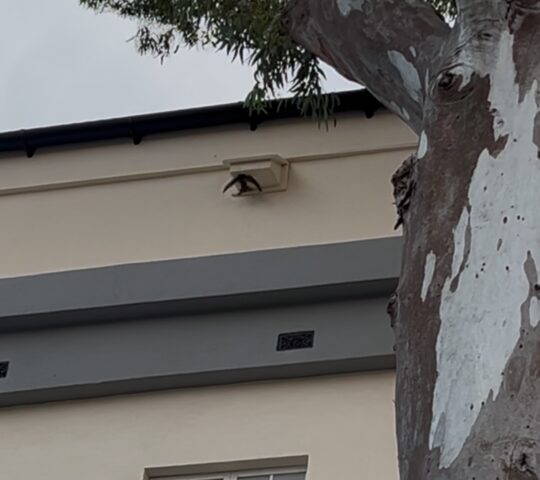
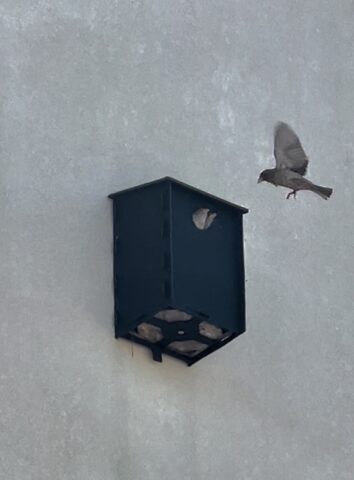

The project, set against the Government’s requirements for bird boxes on new buildings, offered Ms Canapa the opportunity.
“These were ones that were already put up, as part of the Government-implemented program. So when a new development is put up, there’s requirements for them to have a certain amount on the building.”
“I was investigating the current situation in Gibraltar.”
Covering various locations, including Europa Point, Varyl Begg, and Gibraltar International Bank, she found: “Two different species to use them, sparrows and swifts.”
“All of the bird boxes that I was looking at, or the vast majority, were targeted towards swifts.”
“The newest ones would be at Varyl Begg, and they were seen to be used by swifts, which was a good thing, whereas here at Europa Point, I didn’t see any swifts using them. I saw sparrows, a lot of sparrows.”
The location itself appeared pivotal, with bird populations varying among sites.
“I don’t know if it necessarily was about how long established the bird boxes were, or if it was just about the different areas of Gibraltar that defined which species were using them.”
The Minister for Environment, Dr John Cortes, known for his passion and advocacy on bird life, was noted as emphasising the importance of installing “swift and bird boxes” in new developments. And he also met with Ms Canepa to discuss the importance and her work.
Of the bird boxes she watched at Europa Point, the rare Alpine swift was not among the birds using the boxes.
“[Alpine swifts] are more on the east side of the rock because they like to nest in the cracks of the cliffs. I didn’t see any using the boxes here. It was all sparrows,” she said.
She credited technology with assisting her in her work: “I had this app, the Merlin bird app, and I would leave it running during my observations, and it listens to the bird calls, and it would tell me which birds were around.”
A focus on Varyl Begg yielded practical findings about box design and environmental context.
“Varyl Begg is an interesting site that I chose because they’re currently renovating all of the buildings. So they had a lot of old bird boxes that they’re currently removing and putting up new ones.”
“I was interested to see if they might not be using them because they haven’t identified them yet or established them yet. But I actually did see them using them.”
Summing up, she stressed the preliminary nature of these findings: “More research needs to be done,” but she believes that from the small sample size and observations she made, they are using them.
“One thing that I mentioned in my dissertation, that would be a good point for further research, is to maybe install cameras,” she said.
“There are some swift cameras in certain swift boxes. I’ve been looking at one in Ocean Village, and they were laying eggs, but my project didn’t include that, so I had no insight into what was going on inside the nest.”
Another discovery she noted was that “swifts also use other nesting sites on the buildings that weren’t purpose-built, so gutters or under the eaves of the roofs, wherever they could find a small crevice to enter.”
Her research concluded recently, she has been graded and is now pursuing publication of her work.
For now, environmental research will become more of a hobby and perhaps she will return to it in the future for a PhD, but for now her focus is on her new career, having recently started work.
“I’ve just started at Advantage Insurance. It’s the Government scheme, so it’s like an apprenticeship. I’m in the underwriting team for now, I’m learning a lot about that,” she said.
This new career follows on from a two-month stint in Washington DC which was funded by the Parasol Foundation Scholarship.
“I got to spend two months living in an international student house in Washington, DC. We got to hear from a lot of professionals in different fields.”
“I feel like it set me up really well for coming back.”
Despite a government shutdown during her US trip, she made the most of her time and visited some museums, adding that she enjoyed the experience and developed new friends.
Ms Canepa credited her success to her mentors and supporters: “I would like to thank Awantha Dissanayake and Jemila Mellin, my primary and secondary supervisors, their support and their belief in me was instrumental.”
“Also Stephen Warr, from the Ministry of Environment.”
“Just their words of encouragement really supported me.”
Most Read
Property market realigns as total deal value falls and residency pause weighs on confidence
Mon 9th Feb, 2026
UK expects swift action over ‘extremely serious’ and ‘deeply concerning’ Inquiry findings, Doughty says
Thu 5th Feb, 2026

Today's Paper
9th February 2026
Read our latest newspaper by downloading our app from the link below.


