CM and Caruana put quality and cross-border prosperity at heart of treaty growth
Photos by Johnny Bugeja


Chief Minister Fabian Picardo and his predecessor in the post, Sir Peter Caruana, urged businesses to seize the opportunities opened by the UK/EU treaty but stressed Gibraltar would always put quality over quantity as it worked to grow its economy.
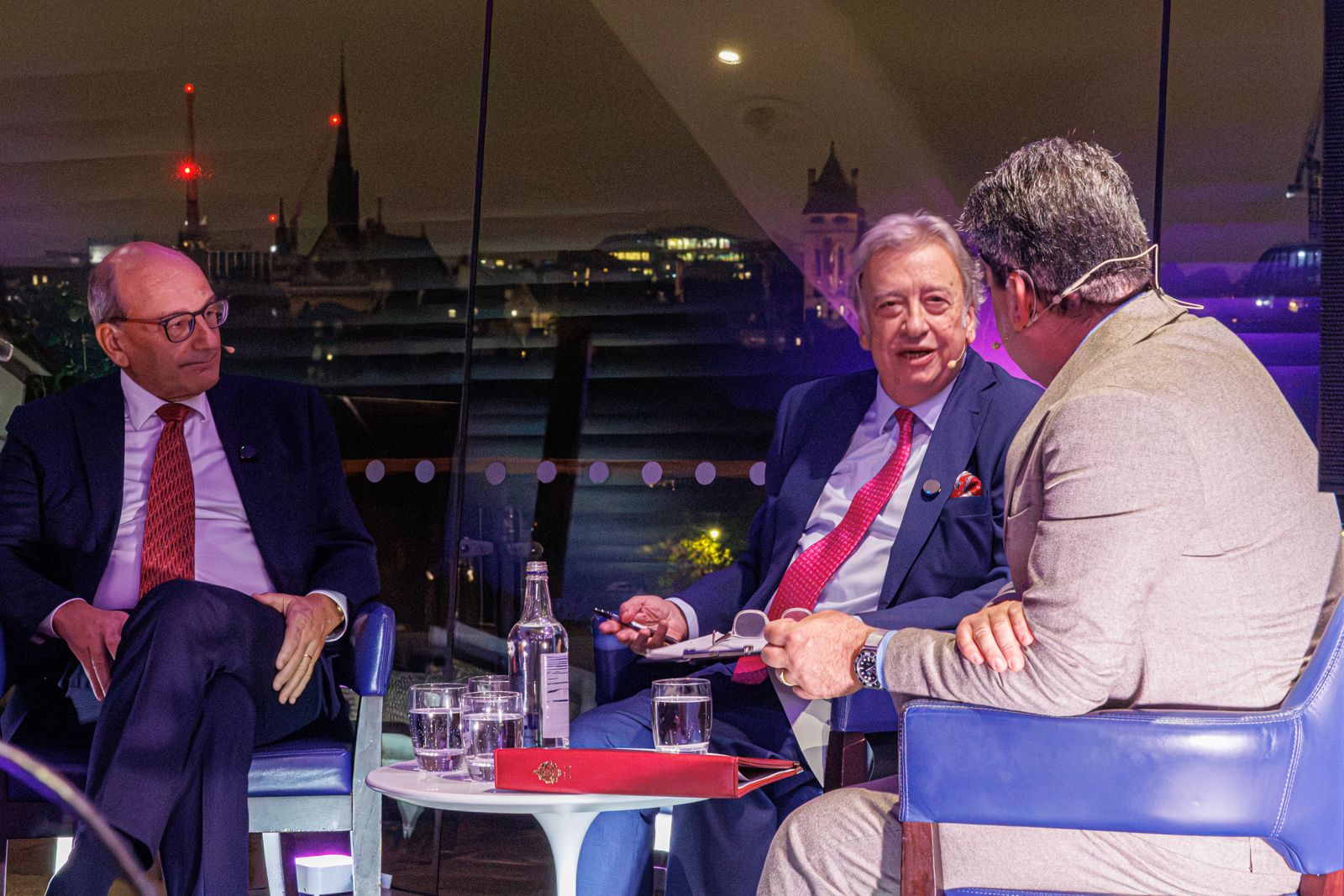
They were speaking during a fireside chat at the GibLink event in London on Tuesday night, moderated by former government media director Clive Golt who had worked for both in that post.
In highlighting the prospects offered by Gibraltar’s new relationship with the EU, both men stressed too that future prosperity must benefit communities on either side of the border to ensure the treaty endured and delivered what negotiators had set out to achieve.
Mr Picardo and Sir Peter, who between them have led Gibraltar for three decades, underscored the potential for investment but cautioned against any expansion that risked damaging Gibraltar’s reputation or quality of life.
Mr Picardo said Gibraltar now offered “an opportunity for growth like never before”, combining its commercial and regulatory advantages with greater freedom of movement for people and goods, with access to the UK market for services unaffected by the new arrangements.
He and Sir Peter said success should be measured by the quality of businesses attracted and the benefits they brought, rather than numbers alone.
Sir Peter described the removal of the border fence as “psychologically liberating” for a community that had built an internationally connected economy while living behind a physical barrier.
And much as Mr Picardo and UK ministers had done at every speaking opportunity this week and prior to that, he said the price of the treaty for Gibraltar was “purely aesthetic”.
“It has no political consequences, it has no sovereignty implications, it doesn’t make us any less British, it doesn’t undermine our Britishness,” he said.
“Aesthetically, we’re having to get used to seeing things that, in terms of our historical baggage and our historical hang-ups, jar.”
“But compared to the prize, which is why we’re all here today, the opportunities that it opens for our society and for our economy, the prize hugely outweighs the price.”

For investors, the changes brought about by the treaty removed an obstacle to Gibraltar’s attractiveness as a business location, he added.
Mr Picardo echoed the sentiment and said the treaty combined fluidity at the land border with Gibraltar’s existing access to the UK market in regulated services, financial services in particular.
But repeatedly, a key message was that while selectivity had always underpinned Gibraltar’s economic development, Gibraltar would become more discerning about the businesses and residents it admitted.
“Gibraltar has never sought quantity, we've sought quality,” Sir Peter said.
He argued that Gibraltar’s success in online gaming and emerging financial technologies reflected its ability to combine responsible regulation with the flexibility needed by developing industries.
Access to policymakers helped them understand businesses and devise appropriate rules, while protecting established operators and Gibraltar’s reputation.
“We don't want 300 businesses, we want 20 or 30 that share our vision of what’s essential,” Sir Peter said.
Mr Picardo similarly stressed that companies seeking weak oversight should look elsewhere.
“Gibraltar wants to be able to say in every sector, we are the best regulator of this sector,” he told guests at the event.
A similar focus on quality would also be vital in developing the airport and port.
Mr Picardo said the treaty opened opportunities for European air routes but cautioned against viewing the airport as the principal engine of economic expansion.
Business development would help generate demand and make routes viable, with aviation complementing wider growth.
“We don’t want to see the airport become a hub in any way,” Mr Picardo said.
“We want it to serve the businesses and people of the region, but not that it should become an economic end in itself.”
Sir Peter concurred that the aim should be appropriate destinations and frequencies serving the economy and residents, rather than encouraging as many aircraft movements as possible.
On cruise tourism, Sir Peter questioned whether greater passenger numbers necessarily represented success, pointing instead to visitors’ spending and Gibraltar’s capacity to accommodate them.
“Often, much more successfully, much more consistent with the fact that Gibraltar is a small place, is the quest for quality rather than quantity,” he said.
Mr Picardo agreed, acknowledging that while investment was needed in the port and cruise terminal to realise treaty opportunities, Gibraltar must ensure growth did not exceed capacity.
“We have a fantastic port, strategically located, and again there we've got to be careful that we don't wish for more success than we can really accommodate,” he said.
Both Mr Picardo and Sir Peter also stressed that shared prosperity required practical benefits for neighbouring Spanish communities, although they tiptoed around the impact that a potential change of government after Spain’s general election next month might have on treaty implementation and cross-border initiatives.
Sir Peter said Gibraltar and the surrounding area had complementary economies and Gibraltar needed to demonstrate that its commitment to mutual benefit was substantive, adding that helping neighbouring communities prosper could also support Gibraltar’s own growth.
Mr Picardo said cross-border employment had risen from 7,500 when he was first elected to 15,500, illustrating how Gibraltar already spread prosperity beyond its boundaries.
He welcomed plans to attract businesses and hotels to La Línea, saying improvements there would benefit Gibraltar too.
“I think it shows that this is going to deliver in both directions, and I think that’s a cautionary fact that anybody who wants to speak out against what this treaty does needs to bear in mind,” Mr Picardo said.
“They won’t be undoing something for Gibraltar. They’ll be undoing something for the region around Gibraltar too when they speak out against the treaty.”
“And I think that's also what we offer here, something that will, when delivered, not just deliver to Gibraltar, it will deliver to the whole region.”
“And that symbiosis, I think, will start to become more obvious, because what we’ve taken away was an iron gate that tried to stop the obvious human socio-economic symbiosis that there must be naturally between two areas like Gibraltar and the Campo de Gibraltar.”
Closing the discussion, Mr Picardo pointed to the tripling of Gibraltar’s GDP under each administration despite successive political challenges and encouraged investors to participate in the next phase of the Rock’s economic development.
“Gibraltar's a place now with an opportunity for growth like never before, but it’s not the Wild West,” he said.
“It's a properly regulated place where you can do properly regulated business.”
“You’re going to grow with us, we’re going to grow with you.”