


Commons committee hears upbeat briefing on treaty from CM and Doughty
Photos via UK Parliament


Nobody understands the importance of the UK/EU treaty to the Rock better than its elected MPs, Chief Minister Fabian Picardo told the Foreign Affairs Committee of the House of Commons on Monday, stressing “I don’t think there are downsides” to the agreement.
During an evidence session in London on Monday, Mr Picardo highlighted the importance of border fluidity to Gibraltar’s economy including key areas such as gaming and financial services, adding this was a “key driver” in the negotiation.
But he said too that “what matters most is people”, not just cross-border workers who play a vital role in Gibraltar’s economy but also people who had family links and friendships that spanned the border.
While a ‘no deal’ scenario would not have meant a closed border such as between 1969 and 1982, the frontier would have become “very, very sticky indeed”.
“This is all about keeping what has been the reality in all of our years of membership of the European Union in common with Spain, since we once again managed to kick open that frontier that only a dictator had been able to close,” he said.
‘IT’S NOT FAIR’
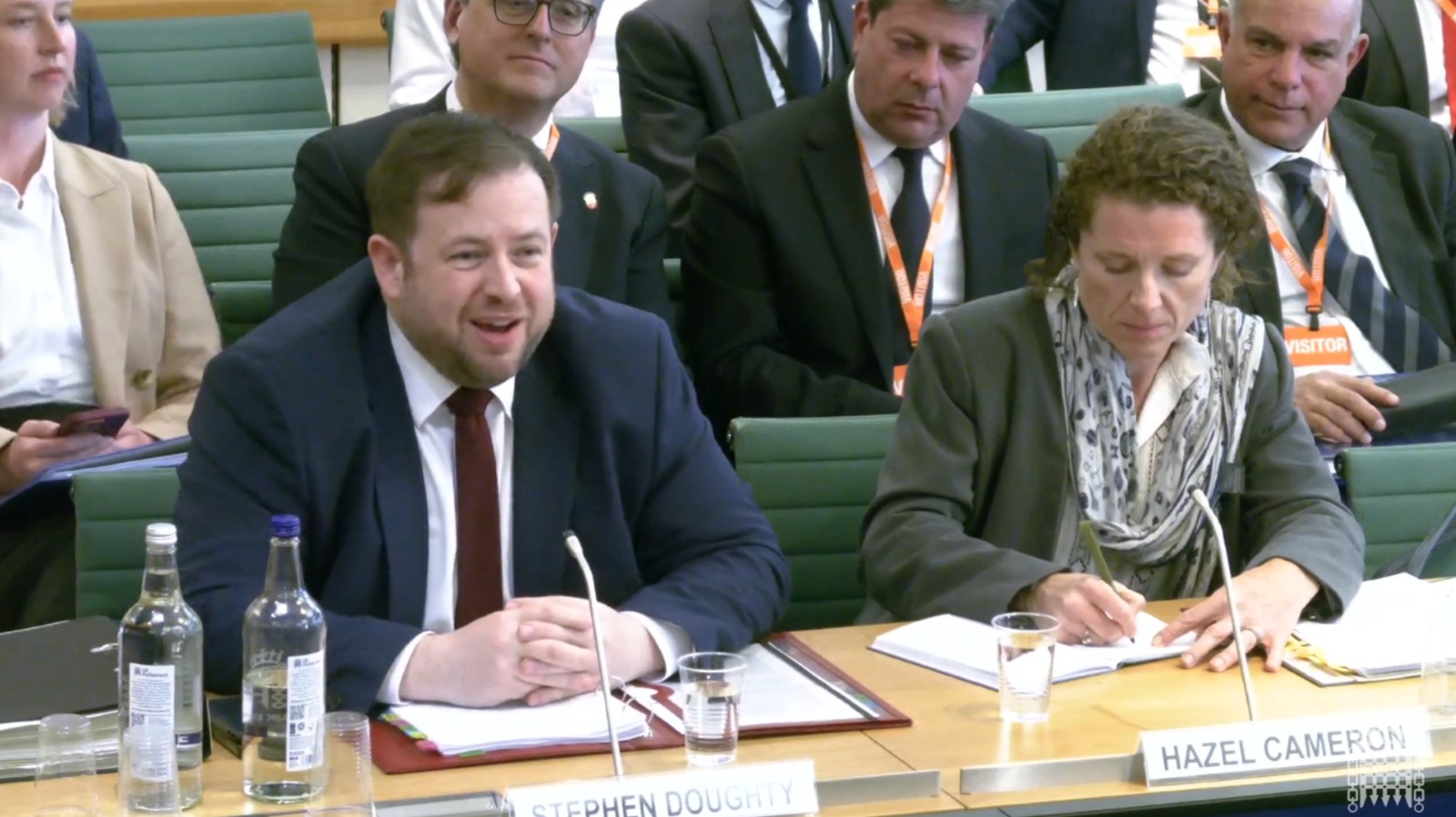
Mr Picardo’s message was later echoed by Stephen Doughty, the UK Minister for Europe, who also addressed the committee alongside Hazel Cameron, Director for EU and Gibraltar at the Foreign, Commonwealth and Development Office.
Mr Doughty highlighted the “excellent cooperation” with Spain in negotiating the treaty, which he said protected Gibraltar’s British sovereignty including the autonomy of its military base, and had been negotiated in partnership with the Gibraltar Government.
“I think this is a good deal,” Mr Doughty said.
“It's a good deal for Gibraltar, it's a good deal for the United Kingdom, it's a good deal for Spain, it's a good deal for Europe, and it really solves one of those last leftover challenges and problems, really, that were created by the UK's departure from the EU,” he said.
Mr Doughty said the UK’s relationship with Spain was “in a very positive place” and reflected the wider reset that the UK Government is working on in its relations with the EU.
“And I think this bodes very well for the future and it shows what you can get done when you get people around a table,” he added of the Gibraltar agreement.
“You negotiate without, let's put this way, ideological prescription and rather doing things that are right for people and for businesses.”
Mr Doughty declined to be drawn on the impact that a change of government in Spain could have on the treaty but stressed that this was a deal between the UK and the EU.
“That's the fundamental thing to remember here, this treaty is between the UK and the EU and therefore I think that carries with it a suitable amount of weight and certainty behind it,” he said.
The exchanges with both Mr Picardo and Mr Doughty were good humoured and upbeat.
At one point, the UK minister was asked to reflect on the fact that Gibraltar residents, like those in Northern Ireland, would enjoy “far closer and far greater” freedoms than the rest of British citizens in the UK.
He was asked whether he believed that was “right and fair”.
Mr Doughty replied that these were “distinct and unique arrangements” that reflected the circumstances of places with a land border with the EU, adding that the UK Government was seeking too to strengthen its wider relations with the EU.
“But the question is, it's not fair, is it?” countered Emily Thornberry, the Labour MP who chairs the committee.
“They’re going to enjoy a much closer relationship with the EU and we don’t.”
“It’s just a question of, do you think it’s fair?”
Mr Doughty replied: “It’s a reflection of the decisions that were taken both in this country and more broadly.”
“But what was clear was that if we didn't have this new deal in relation to Gibraltar, between the UK and EU, that was going to produce a level of uncertainty and detriment to the people and businesses of Gibraltar far outweighing anything else.”
‘NO DOWNSIDES’
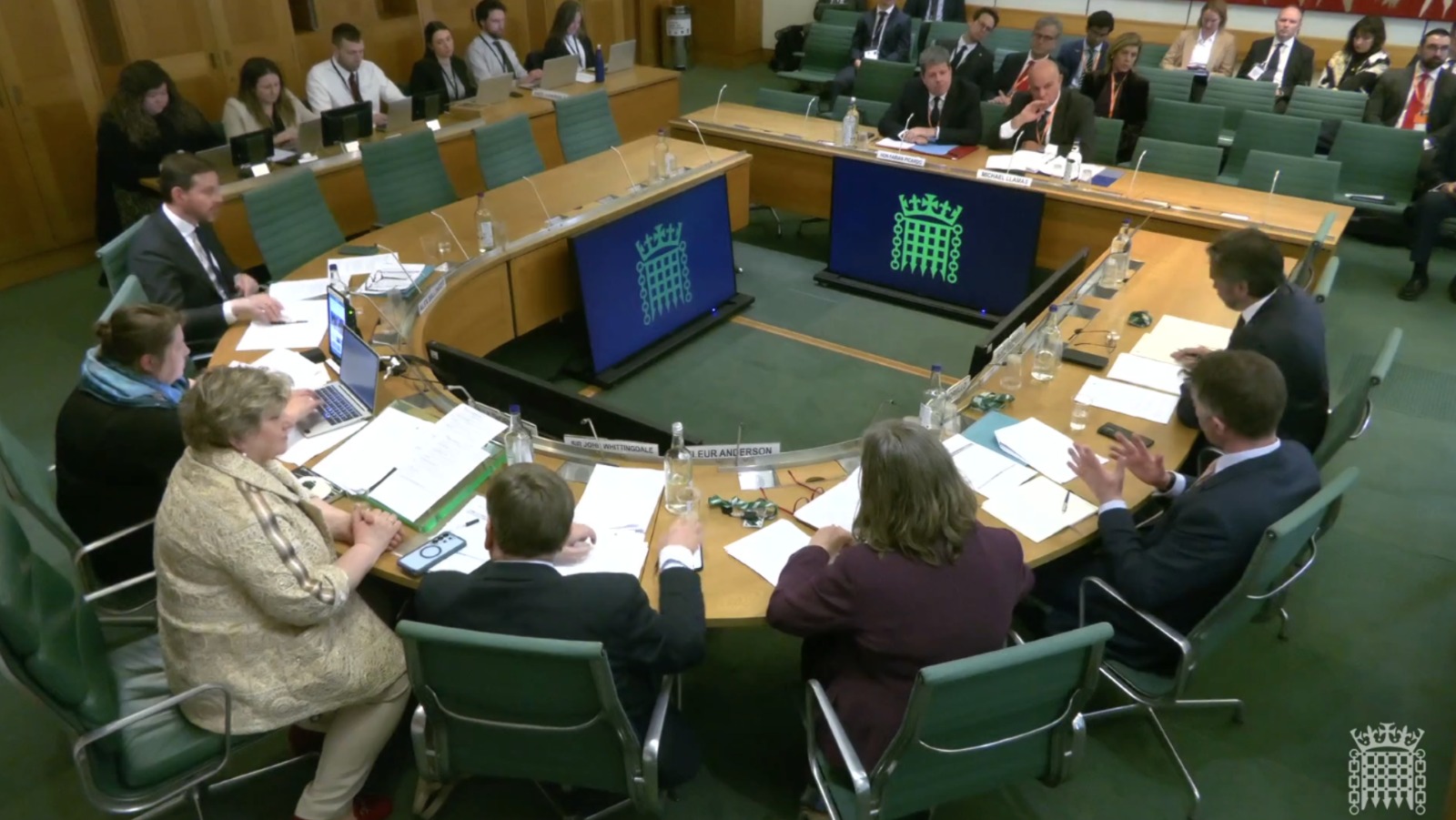
Mr Picardo was joined at the session by Attorney General Michael Llamas, with Health Minister Gemma Arias Vasquez and Nigel Feetham, the Minister for Justice Trade and Industry, sitting behind them in the public gallery alongside Jonathan Scott, Gibraltar’s representative in London.
“I don’t think there are downsides, because we've negotiated very hard to ensure that there are no downsides,” Mr Picardo said, highlighting the tough, complex nature of the negotiation.
“When we went into this process, for us, the key issue was not to compromise on anything to do with the sacrosanct issue of sovereignty.”
“And I think the attitude of the European Union has been - and the attitude of Spain has been - to say, well, look, we understand that we have to put those things to one side because of course, the European Union hasn’t got a sovereignty claim over Gibraltar.”
Asked what he would say to any UK parliamentarian who may be still concerned that the treaty might in some way affect UK sovereignty of Gibraltar, Mr Picardo was robustly clear.
“It's hugely important that all members of Parliament understand that nobody understands the circumstances of Gibraltar better than the elected representatives of the people of Gibraltar,” he told the committee.
“And it would be pure, unashamed colonialism to pretend otherwise.”
Reflecting on this point, he reminded the committee members of the Brussels agreement of 1984, the airport agreement of 1987 and the joint sovereignty issue in 2002.
“The Gibraltarian Parliament is not known for being soft on the British sovereignty of Gibraltar,” he said.
“Indeed, the Gibraltarian Parliament has shown that it is a tighter guardian and a more alert guardian of the British sovereignty of Gibraltar than, if I may say so, with respect, the British Parliament has been.”
He said the Gibraltar Parliament had voted unanimously to ask the UK to enter into the UK/EU post-Brexit treaty on Gibraltar’s behalf, adding: “I’m sure none of us would have done that if any of us believed that there was a sovereignty issue in play.”
He later added: “If the people of Gibraltar, as one, speaking through their elected representatives, are saying that we want this treaty, it would be very strange indeed if the British Parliament were to tell us that we're not to have this treaty.”
“Because in the same way as it would be unacceptable for the British Parliament to impose a treaty on Gibraltar, if there was a unanimous motion of the Gibraltar Parliament that said that we didn't want the treaty, the opposite decision must also be true.”
CONCORDAT
The Chief Minister was asked about the concordat between the UK and Gibraltar, a document setting out commitments between the UK and Gibraltar that will be laid in both the UK and Gibraltar parliaments alongside the treaty.
The concordat will address several aspects related to the treaty including Gibraltar’s right to ask the UK to terminate the agreement if necessary, or not to terminate it against Gibraltar’s wishes should a future UK Government wish to pull out for ideological reasons.
He said Gibraltar and the UK had been working on the concordat throughout the negotiation process and had only to finalise “a few points” relating to British constitutional law and how it interfaces with Gibraltar’s constitution.
“We're not ready to publish yet but will be ready to publish very soon,” he said.
“The motion which was unanimously approved by the Parliament in Gibraltar is contingent on the terms of the concordat being agreeable to the Government of Gibraltar, that being consulted on with the leader of the Opposition of Gibraltar, and the concordat being laid on the table in the Gibraltar Parliament.”
“So it's still a key and final plank of the architecture, but one about which I have absolutely no concerns. We've been working on it for two years already.”
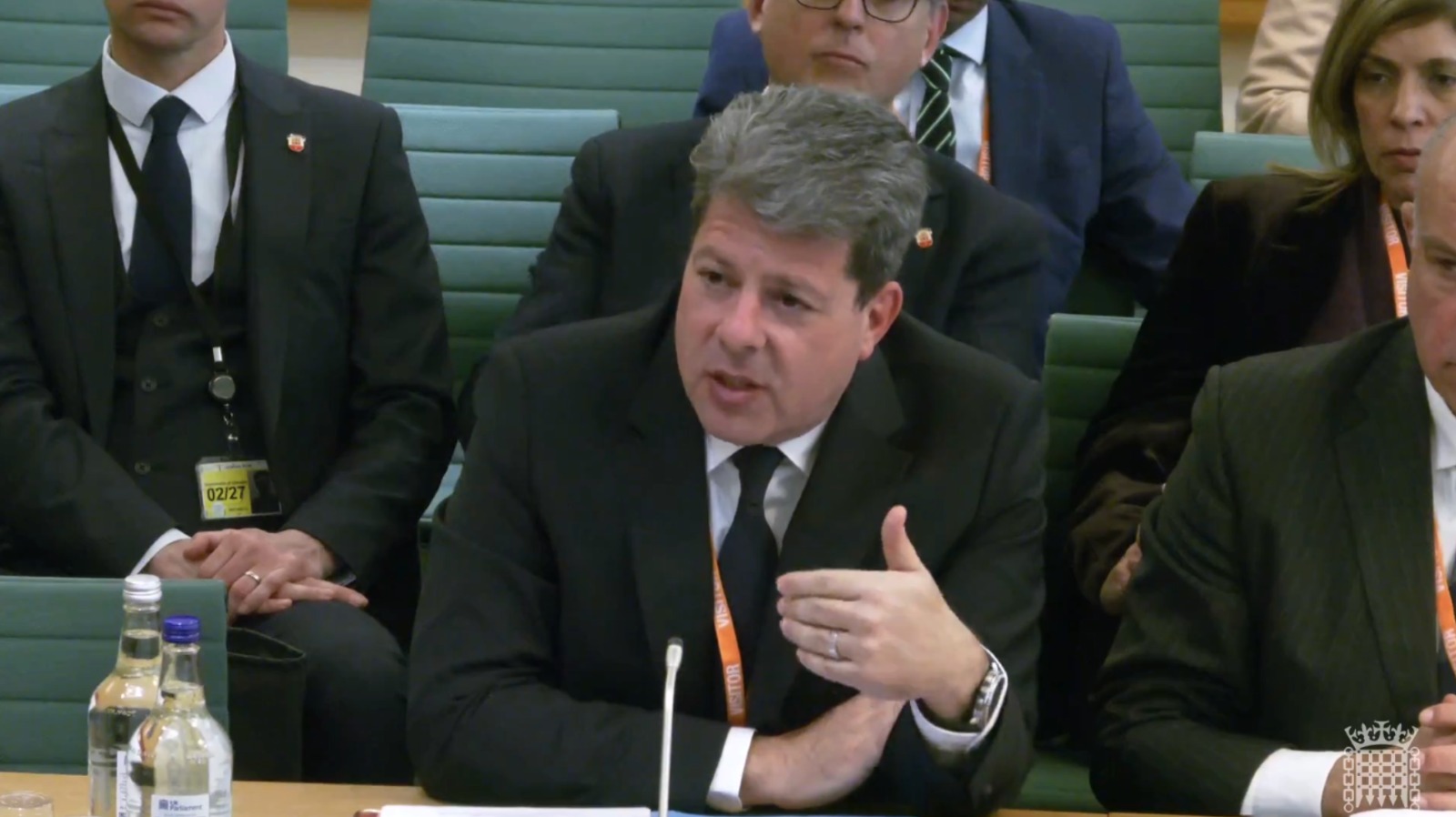
Asked whether he had received the UK’s commitment that it will terminate the treaty if so requested by the government of Gibraltar, and that it will not terminate it against its wishes, Mr Picardo said: “We won't accept a concordat that doesn't contain that commitment.”
In this context the Chief Minister noted that Spain could “request, not require” the termination of the treaty, and if that moment ever came about it would require a qualified majority vote of EU members.
But he added too that “with maturity comes responsibility [and] Gibraltar must ensure that it complies with its obligations under the treaty”, ensuring that “we never give the European Union or Spain the excuse to suggest that we're not complying with our obligations under the treaty, and that therefore, there is some objective reason why the treaty should be terminated.”
The Chief Minister was asked too whether he believed the UK Government should have gone further in ensuring the Gibraltar Government’s role in the implementation of the treaty.
He was clear in his response: “Not at all. Quite the opposite.”
“I think the government in the driving seat of the implementation of the treaty is the Government of Gibraltar.”
“For the UK side, if you look at the terms of the treaty, there is a new terminology there which is the ‘United Kingdom in respect of Gibraltar’.”
“That means the Government of Gibraltar and the lion's share of the obligations, if not all of the obligations for implementation post the formal constitutional process of ratification are for the Government of Gibraltar.”
YOUNG PEOPLE
Mr Picardo was quizzed on practical elements of the treaty including immigration, explaining how the “sequential checks” would work on arrival at the airport, first by Gibraltar officers and later by Spanish officers exercising Schengen functions.
Among other aspects, he told MPs that non-resident UK nationals had always had to meet certain immigration criteria to enter and remain in Gibraltar, adding that three quarters of those arriving by air were heading to Spain in any event.
Mr Picardo said new customs arrangements should make the arrival of goods more fluid, adding Gibraltar was comfortable with the agreed model for a transaction tax and did not expect the changes to drive inflation because goods affecting the basket of everyday costs would largely fall within lower or zero rates.
He added too that the agreement in respect of the airport “goes further in the protection of our equities” than the 2006 Cordoba agreement.
But he returned repeatedly to the theme that the deal was about people.
Asked what it meant for young people, he said: “This is all about young people.”
He said young people would be able to enjoy the whole of the EU and the European continent – including access to the Erasmus programme as British citizens studying in UK universities -without having new barriers put in their way.
“But in particular, and I know that this is a bit soppy, and I keep saying it, and people might get tired of hearing it, but my motivation in all of this is to ensure that people can continue to build the human relationships that make up communities,” he said.
“And in particular for young people to be able to fall in love with people regardless of where the frontier is.”


