


Doughty says midnight border party was ‘very, very special’
Photo via UK Parliament


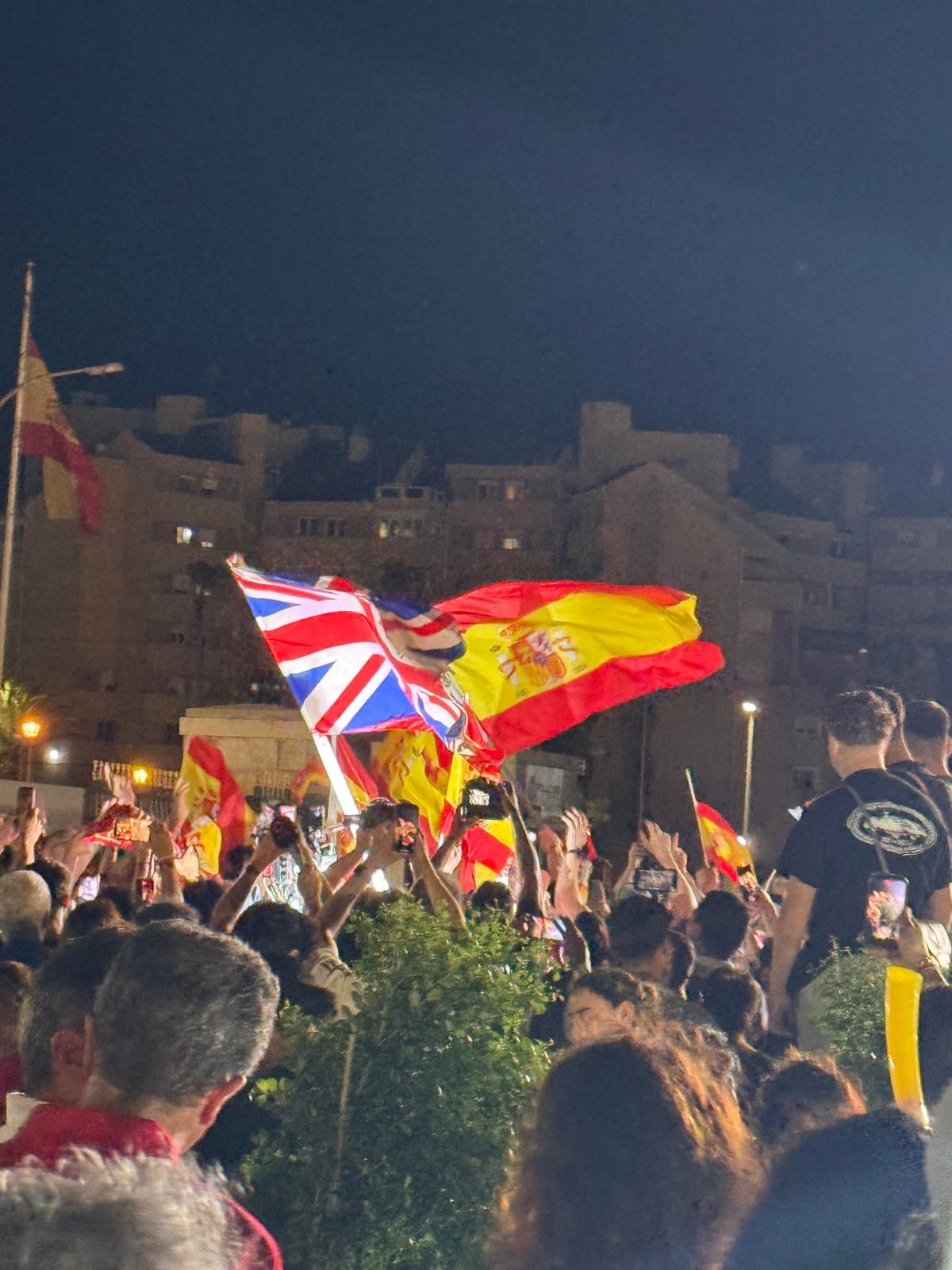
Stephen Doughty, the UK Minister for Europe, described the scenes at the border at midnight on Tuesday as “truly historic” and “very, very special”.
Mr Doughty was addressing the House of Commons on Thursday, two days after he signed the treaty on the UK’s behalf during an event in Brussels.
“Signature of this text has enabled provisional application of the treaty on 15 July, and this has given the people of Gibraltar clarity and certainty,” Mr Doughty said.
“They do not have to wait for a far-off and undefined date of ratification before they can enjoy the economic and social benefits of the treaty.”
“The fluid border is here now.”
“And you will have seen the joyful scenes, the genuinely historic scenes, after so many years at that border, which were genuinely moving, and I think reflect that people have been at the heart of this agreement throughout, and that the efforts of ourselves, the European Union, Spain, and Gibraltar have put them first and foremost, the interests of the people of Gibraltar and indeed the wider region.”
“They were truly historic scenes, very, very special scenes, and I was honoured to be presented with a piece of the now-removed frontier fence myself, to celebrate this very significant moment, the coming down of a barrier in continental Europe.”
Mr Doughty explained the key areas of the treaty, which guarantees post=Brexit border fluidity for people and goods and avoids a hard border.
He said the treaty had no impact on British sovereignty over the Rock and guaranteed the UK military autonomy.
“This treaty has always been about creating a framework for Gibraltar's relationship with the EU and providing its people and businesses with the stability and certainty they needed post-Brexit, having been left out of the arrangements at the time of withdrawal from the European Union,” he said.
“But nothing in it affects UK sovereignty over Gibraltar.”
“To make that explicit, Article 2 of the treaty clearly states that no part of the treaty can be used to challenge the UK position on sovereignty.”
“Gibraltar is a vital part of the UK family. That will not change.”
Mr Doughty also reflected on the historical significance of the treaty and its importance within the wider global context.
“It has banished the fears of a hard border between Gibraltar and Spain, banishing the memories of the past, and it has given Gibraltar the certainty to move forward with renewed confidence,” Mr Doughty said.
“It is going to enhance the prosperity of both Gibraltar and the wider region, and it has bolstered our relationships with the EU and Spain, unlocking wider, deeper, and very welcome cooperation.”
“I am very proud to have signed it. I am very, very proud to have worked alongside all those who achieved this, a hopeful future, putting the past behind us, and finding a way forward focused on people and prosperity.”
In questions to Mr Doughty, shadow Europe Minister Conservative MP Wendy Morton acknowledged the need for an agreed legal basis for Gibraltar’s post-Brexit relationship with the EU, adding people and businesses required that certainty.
But she said too that any agreement must undergo “proper scrutiny”, using the opportunity to take a swipe at the Labour government.
“We find ourselves in the extraordinary position that, with the treaty signed and provisional application underway, and even with the final sections of the frontier fence now removed, Parliament has still not been afforded proper debate or time to scrutinise this agreement,” she said, adding it was the Chief Minister who had kept MPs in the Commons informed.
Ms Morton pressed for guarantees that the treaty would not restrict Britain’s military base, sovereign control or operational freedom in Gibraltar.
She raised questions over Schengen checks, possible disruption at Gibraltar Airport, arrangements for British goods and the impact of new residency rules on British citizens, as well as the provisions in the UK-Gibraltar concordat.
She called too for contingency planning in the event of Spanish provocations after its removal.
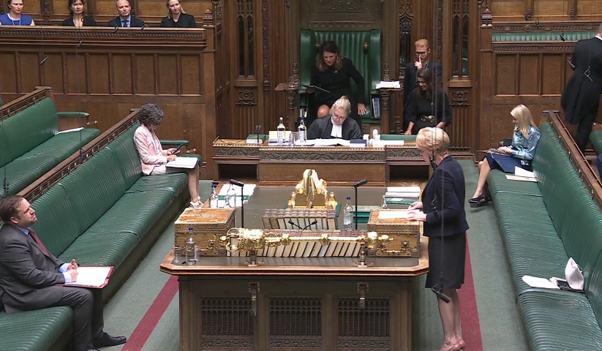
Replying, Mr Doughty said the treaty had unanimous support in the Gibraltar Parliament and insisted there was “absolutely nothing to hide” over its scrutiny.
He confirmed the treaty had been laid before Parliament and that the 21-sitting-day CRaG process had started, with the recess excluded from the timetable. That means MPs will have all August to think about the document before the CRaG deadline expires.
Mr Doughty said military autonomy and operations from Gibraltar were protected, describing this as a key UK red line in the negotiation.
“I do think this is a new era for cooperation between the UK and Spain as NATO allies in many different areas, and I think it sets a very new spirit for that cooperation going forward,” he later said.
Mr Doughty also acknowledged teething issues with the EES system at the border.
“I think there were some slight issues with the first flight that came in, but the second flight came in, I believe, without incident,” he said.
“We are closely monitoring on the ground what is happening. Of course, with any new system - this is a dramatic change - there will be implementation issues.”
“Of course, this deal was also designed to prevent that [EES] system operating at the existing, now-removed, hard border, which would have been very logistically complex.”
Mr Doughty said he expected cooperation rather than provocation from Spain going forward.
“Everybody wants this to work, for people, for businesses, and I think we see a real new spirit and a way forward on this.”
On the concordat, he reiterated “nothing about Gibraltar without Gibraltar”, adding that any divergence from the principle would arise only in exceptional circumstances.
There was a spiky exchange during the debate when Andrew Rosindell, a former Tory MP now with Reform UK, described the treaty as “deeply flawed”.
Mr Rosindell said Gibraltar had been excluded from that Trade and Cooperation Agreement and left “high and dry”.
The treaty, he said, “is quite clearly a constitutional compromise”.
“British citizens will no longer have the same right of access to Gibraltar as we do today,” he added.
Mr Rosindell said Madrid and the EU cannot be trusted because “you give them something, they give nothing back”.
“Their ultimate aim is sovereignty over the Rock, so any compromise to the constitutional arrangements of Gibraltar should be opposed by this House,” he said.
Mr Doughty was swift on his feet in reply.
“Well, of course he was part of that previous party in government that left Gibraltar high and dry, so it's quite rich to hear these comments coming from him,” he said.
“I'm afraid I totally reject his claims.”
“If he'd seen the scenes of Gibraltarians celebrating, if he'd actually listened to Gibraltarians and what they wanted, if he'd actually read the treaty, he would know there's nothing about joint sovereignty in it.”
“Sovereignty was not on the table in these negotiations and never would be.”
“His comments about trust are simply out of kilter with what people on the ground want.”
“People in Gibraltar and indeed in Andalusia want to work together, they want prosperity together, they want to celebrate their trade and commercial links.”
“It is not for him to stand up in this House and tell Gibraltarians what to think.”


