


Frontier changes a moment in Gibraltar's living history
Archivist Gerard Wood. Photo by Johnny Bugeja.


Gibraltar Government Archivist Gerard Wood said the removal of the border infrastructure and treaty implementation will rank alongside some of the most defining chapters in the Rock's modern history.
For Mr Wood, who has worked at the Gibraltar National Archives since 2015, the changes are not simply about physical infrastructure. They represent another landmark in a story that has shaped generations of Gibraltarians.
"It does have a little bit of a similarity to when they knocked down the Berlin Wall," he said, describing the symbolism of seeing physical barriers removed after decades in place.
Mr Wood has spent more than a decade researching and preserving Gibraltar's documentary heritage and highlighted the importance for younger generations to understand local history, particularly the story of the frontier.
That history stretches from the establishment of La Línea in the nineteenth century through the construction of the permanent frontier fence, the tightening of restrictions during the Franco era, the complete closure of the frontier in 1969 and its eventual reopening in 1985.
He said each stage reflected the political relationship between Britain and Spain at the time.
One detail that has remained with him came during research at the archives in La Línea, where he was shown the original padlock used to seal the Spanish gate in 1969.
"There was never a British padlock,” Mr Wood said.
“The British never closed that gate.”
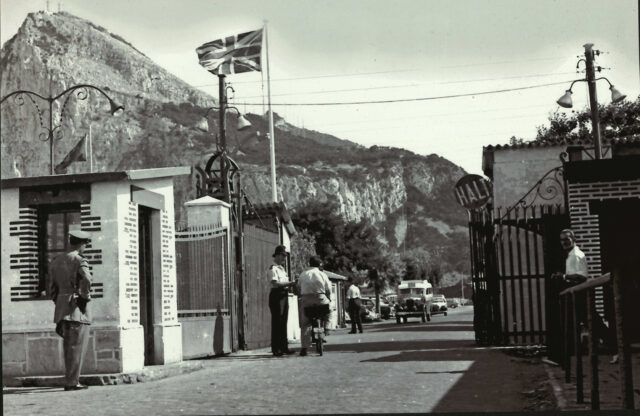
Mr Wood said that the symbolic gesture demonstrated clearly who had taken the decision to shut the frontier.
He also highlighted the irony that, when the frontier fully reopened in 1985, Spanish officials reportedly struggled to find the key to unlock the gate after it had remained closed for 16 years.
For those who lived through the closure, he said, the experience became a defining part of Gibraltar's collective identity.
But he believes younger generations will inevitably view those events differently because they did not experience them first-hand.
"They have not experienced it," he said.
"That's why it's important to be able to educate them, explain to them the past and why."
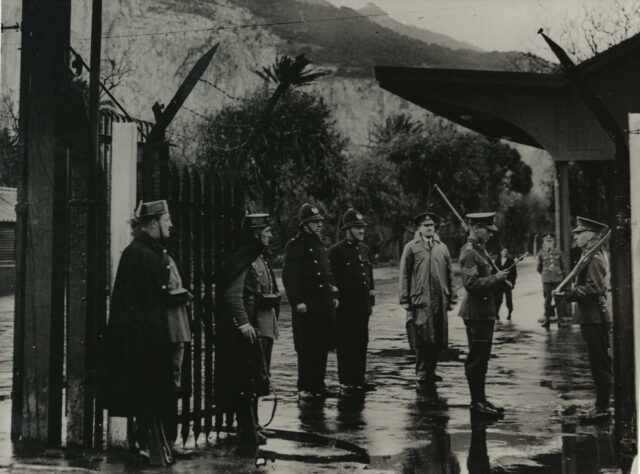
He drew a parallel with those who lived through the wartime evacuation, adding that personal experience gives historical events a significance that cannot easily be replicated through textbooks alone.
Looking ahead, Mr Wood believes the changes now under way could prove to be the biggest structural transformation to Gibraltar's frontier since its full reopening 40 years ago.
While acknowledging uncertainty among some members of the public, particularly older generations who remember the closure, he believes history shows Gibraltar has continually adapted to change.
"We need to accept it," he said.
"It's part of moving on. It's part of progress. It's part of modernisation."
"But as always it's very important to know where we come from, who we are, so that we know where we're going in the future."
For the Gibraltar National Archives, the current transformation will is another chapter to preserve for future generations.
The photographs, documents and physical remains of today's frontier are likely to sit alongside records of the evacuation, the closure and reopening of the border, allowing future Gibraltarians to understand another pivotal moment in the Rock's history.
Most Read
Rock’s digital security system sends warning beyond Gibraltar, Parliament told
Fri 16th Oct, 2026
New group to plan healthcare jobs and placements for returning graduates
Tue 13th Oct, 2026
Fourth Committee welcomes Gib treaty as UN approach to decolonisation faces US criticism
Fri 16th Oct, 2026

Today's Paper
15th July 2026
Read our latest newspaper by downloading our app from the link below.


