


Picardo rejects ‘kangaroo court’ claims in closing address on audit motion
Photo by Eyleen Gomez


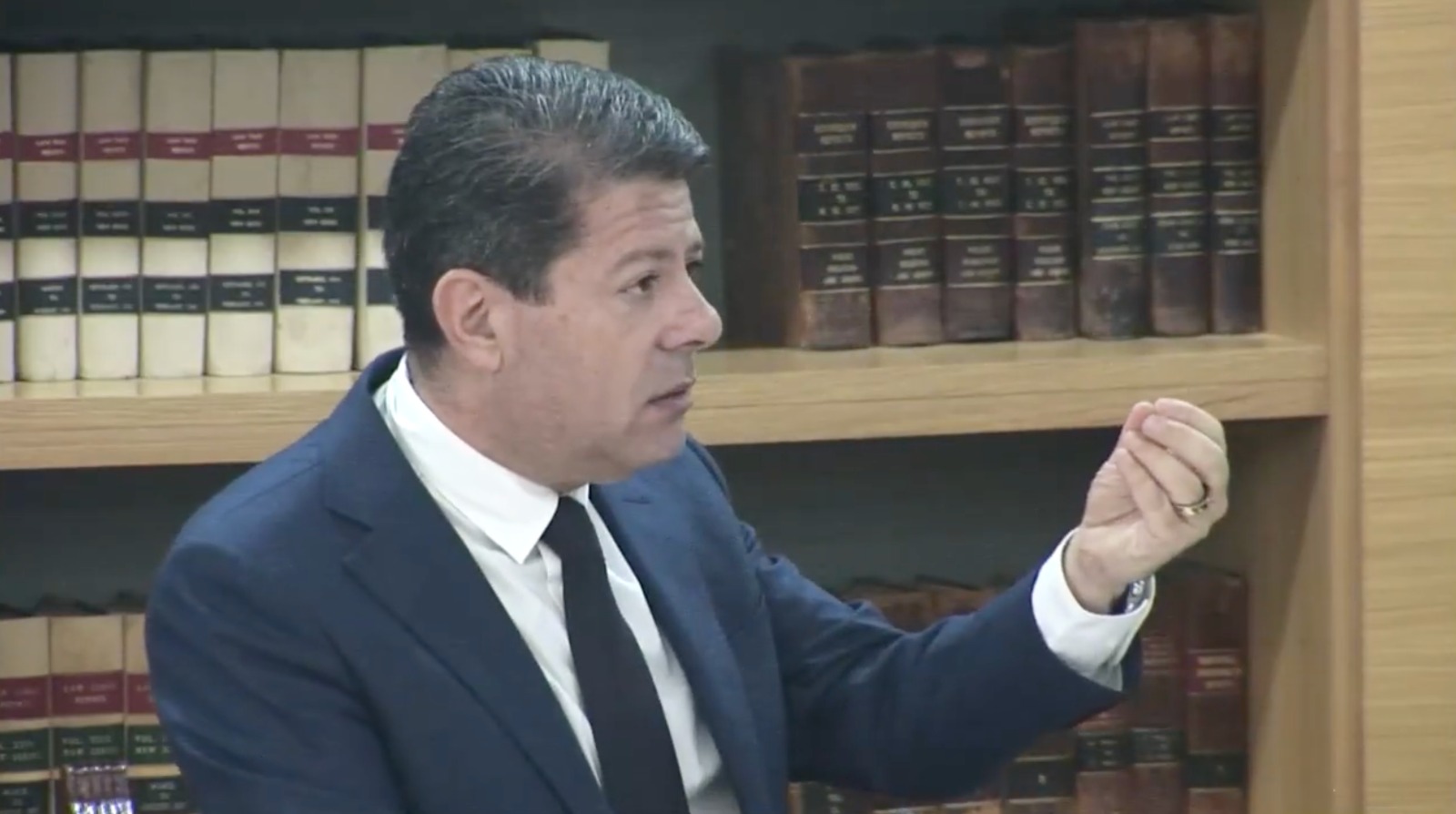
Chief Minister Fabian Picardo used his closing speech in Parliament’s debate on the 2018/19 Principal Auditor’s report to reject Opposition claims that the Government’s motion was unconstitutional and amounted to a “kangaroo court” against the former Principal Auditor.
Mr Picardo said the Opposition was “confusing criticism with control”, arguing that Parliament had both the right and the obligation to debate and, where necessary, challenge findings in the report without infringing the auditor’s independence.
He told MPs that the motion, which was finally carried by Government majority of nine votes to eight, did not seek to direct the current Principal Auditor, but to record the Government’s view on a completed report it believed contained factual and legal errors, as well as sections that strayed into “partisan advocacy”.
“How is it a constitutional outrage for a Government to say what it thinks in a parliament?” the Chief Minister asked, adding that there was “nothing…unconstitutional or otherwise unprecedented or dangerous” in holding the debate.
Mr Picardo said the lengthy proceedings, held over several weeks, reflected the seriousness with which the Government viewed the 2018/19 audit report.
He noted that ministers had balanced the debate with other commitments, including negotiations on the text of the UK/EU treaty, but argued that the time taken underlined the importance of the issues raised.
Mr Picardo rejected Opposition arguments that the motion undermined the constitutional independence of the Principal Auditor or usurped the role of the courts.
He said section 74 of the Constitution, which protects the auditor from “directional control”, remained untouched.
The motion, he insisted, did not instruct the holder of the Office of Principal Auditor how to act, nor did it seek to amend his powers.
“There is nothing directed at the Principal Auditor in office today,” he said.
“We are not telling a Principal Auditor what to do. We are telling a Principal Author what we believe happened.”
The Chief Minister argued that if Parliament were unable to debate or disagree with an auditor’s findings, the office would become effectively unchecked.
“They are saying that whoever is the Principal Auditor at any time is entitled to lay a report that is unchallenged and undebatable, and therefore able to lay a kangaroo report in this parliament,” he said.
Citing constitutional principles, Mr Picardo framed the debate as part of the normal balance of powers between Gibraltar’s institutions.
An audit, he added, was not a “fourth branch of government” and could not be beyond scrutiny from the legislature.
The Chief Minister also addressed Opposition suggestions that the Government should have sought a judicial review instead of bringing a parliamentary motion.
He said legal action remained possible, including via a constitutional claim, but argued that Parliament was the appropriate forum to set out the Government’s detailed response without incurring significant legal costs for taxpayers.
Mr Picardo stressed that the motion as amended did not reject the report in its entirety.
Instead, he said, it identified specific passages the Government considered to be wrong in fact and wrong in law, or ultra vires, while accepting other sections and reflecting on criticism that was still being considered.
“If we are rejecting something that is wrong, that is untrue, or that is ultra vires, all we are saying is that untrue or ultra vires [matters] should not be in report,” he said, adding that this was “not dangerous” as the GSD claimed.
Mr Picardo said the Opposition had chosen to defend “everything in the report…as great truths”, rather than acknowledge areas where, in his view, errors had been demonstrated.
He criticised the GSD for portraying any attempt to correct the record as an attack on the institution of the Principal Auditor rather than a legitimate disagreement on substance.
A central part of the Chief Minister’s address focused on the characterisation of the debate by Opposition MPs as a “kangaroo court”.
He suggested the phrase had been circulated as a political message and repeated “by SMS or by WhatsApp”, including, he said, by supporters “outside” Parliament.
The Chief Minister argued that the label was misplaced, noting that the former Principal Auditor had set out his position in a report of around 600 pages.
Parliament, he said, was responding to that document through a democratic motion, not passing sentence on an individual.
He contrasted the concept of a “kangaroo court”, which he said silenced the accused, with the reality of a report that had already had wide public impact.
The motion, he argued, was designed to “surgically analyse the report and surgically deal with the issues”, backed by case law and constitutional reasoning rather than assertion.
Mr Picardo repeated his earlier assessment that the report had been framed in a way that maximised its political and public impact.
“I said that the report had been like napalm in the way that it had been written and the way that it had been designed to catch the attention of the public and those reporting it like napalm,” he told the House.
Without a detailed rebuttal, the “scandalisation value” of contested passages would go unchallenged.
He said the Government’s response was aimed not only at defending ministers’ reputations but also at protecting Gibraltar’s international standing.
Some sections of the report, he claimed, risked “endangering Gibraltar’s international reputation” and could, if left unanswered, have consequences for the Rock’s financial positioning.
Throughout his address, the Chief Minister interwove constitutional arguments with political criticism of the Opposition’s handling of the report.
He accused Opposition MPs of using the findings as a campaign tool and of seeking a Public Accounts Committee structure that, in his view, would allow them to question civil servants directly rather than hold ministers to account in Parliament.
He also rejected suggestions that challenging elements of the report equated to an attack on staff at the Gibraltar Audit Office.
He said the Government had increased the office’s resources compared to previous administrations, and that his criticism was focused on specific conclusions and recommendations in the 2018/19 report, not on the individuals who supported the former Principal Auditor’s work.
Mr Picardo ended by defending the Government’s record on public finances, comparing the audit opinions issued on his administration’s accounts with those given on earlier governments.
He argued that the qualification used by the Principal Auditor in the 2018/19 accounts was consistent with previous years and with the period when the Opposition parties had been in office.
“When judged by the same standard, we have been as good or better than them,” he said.
The Chief Minister told MPs he was “proud” to defend the motion, which he described as a proportionate and constitutionally proper response to a report that, in his view, combined valid criticism with serious errors.


