


Tougher sentencing and parole reforms for serious sexual offences passed in Parliament


Amendments to legislation strengthening Gibraltar's criminal justice framework for serious sexual offences by increasing prison sentences, tightening parole eligibility, restricting the use of cautions and introducing stricter bail provisions following conviction, were passed in Parliament on Friday afternoon.
The Minister for Justice, Nigel Feetham, presented the Bill where he outlined how the measures were intended to strengthen public protection while preserving the independent roles of the courts, the Parole Board, the Royal Gibraltar Police and the Director of Public Prosecutions.
A key amendment would increase the maximum sentence for possession of indecent photographs of children under the Crimes Act 2011 from five years' imprisonment to seven years.
Mr Feetham said the increase would give the courts greater scope to sentence the most serious possession cases.
"The Government considers that the current maximum should be strengthened to ensure that the courts have sufficient sentencing scope in the most serious possession cases," he told Parliament.
He stressed that possession of indecent images of children was "not passive offending" and "not victimless offending", adding that such material existed because children had been abused or exploited.
"The continued possession, retention and circulation of that material forms part of the wider chain of harm," he said.
Mr Feetham said the higher maximum sentence would apply in cases involving particularly serious material, significant volumes of images, repeated offending, concealment or other aggravating features.
He added that the amendment maintained the existing hierarchy of offences, with offences involving the making, distribution or publication of indecent photographs of children continuing to carry higher maximum penalties.
The Bill also proposes significant amendments to the Prison Act 2011.
Under the changes, offenders aged 18 or over who receive determinate prison sentences of more than 12 months for specified offences would have to serve at least three-quarters of their sentence before they could be considered for release on licence.
The specified offences include serious sexual offences involving children and vulnerable persons, indecent image offences, abuse of trust offences and related offences.
The legislation would also allow the list of specified offences to be amended by regulations following consultation with the Leader of the Opposition.
“This is a targeted approach,” he said.
“It does not suggest that other offences are not serious. It reflects the Government’s view that the offences listed raise particular concerns because of the harm caused, the vulnerability of victims and the public protection issues involved.”
Mr Feetham said the reform would not affect the sentence imposed by the courts but would instead change the point at which release could first be considered.
The Parole Board would continue to determine whether an offender should be released, but only if it was satisfied that continued detention was no longer necessary for the protection of the public.
The Bill also specifies that release should only be recommended where the risk of further offending is "no more than minimal".
Mr Feetham said the reforms would ensure offenders served longer in custody before release was considered while maintaining supervised release on licence, including the ability to impose conditions and recall offenders where necessary.
Amendments to the Criminal Procedure and Evidence Act 2011 would introduce tighter controls on the use of cautions for specified offences.
Under the proposals, adults who admit committing one of the specified offences could only receive a caution where exceptional circumstances existed and the Director of Public Prosecutions gave consent.
Any decision that exceptional circumstances existed would have to be made by a police officer of at least Superintendent rank.
Mr Feetham said cautions remained an important part of the criminal justice system but should not be routinely available for the serious offences covered by the Bill.
"It requires exceptional circumstances," he said.
"It requires senior police consideration."
"It requires the consent of the Director of Public Prosecutions."
The Bill would also allow the Minister to issue guidance on how exceptional circumstances should be assessed.
Further amendments would strengthen the law on bail following conviction.
The legislation extends existing bail restrictions to include relevant convictions in the UK, alongside convictions in Gibraltar and the European Union.
It also introduces a new provision covering offenders aged 18 or over who have been convicted of specified offences but whose sentencing has been adjourned.
Under the proposed law, bail would only be available where there was no realistic prospect of imprisonment or detention, other than a suspended sentence, or where exceptional circumstances existed.
The measures would apply to child sexual abuse, child exploitation, indecent image offences and other specified sexual offences involving victims under the age of 18, as well as certain importation offences involving indecent photographs of children.
The burden would rest on the convicted person to demonstrate exceptional circumstances, with the Bill making clear that personal, family, employment, business or financial arrangements alone would not satisfy that test.
Where bail was granted under the exceptional circumstances provision, the court would be required to give its reasons in open court.
Mr Feetham said the package of reforms was intended to provide a measured but meaningful strengthening of Gibraltar's criminal justice system.
"It gives proper weight to public protection, recognises the seriousness of the offending concerned and ensures that the law is better equipped to respond to these offences," he said.
Shadow minister for justice, Joelle Ladislaus, said the Opposition supported the Bill and the amendments proposed by Mr Feetham.
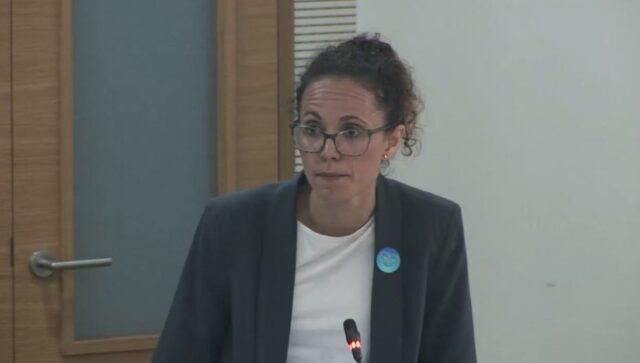
She thanked Mr Feetham for inviting her to discuss the matter and that her comments were included in the Bill.
“These are issues, Madam Speaker, which transcend party politics and the protection of victims of sexual offences and of the whole of Gibraltar from sexual predators is one such issue,” Mrs Ladislaus said.
“We have seen a marked increase in the number of convictions relating to sexual offences in recent years and it is only right and proper that the legislation is amended to provide for convicted offenders to spend longer in prison before they are even eligible to apply for parole.”
Mrs Ladislaus added that there is scope in Gibraltar for the introduction of local sentencing guidelines, which was a GSD manifesto commitment at the last election.
“The aims are the same, to protect the public and ensure that these offenders serve lengthier custodial sentences,” she said.
“I do accept that there may have been advice against that, but I also note that there are comparable jurisdictions, such as the Cayman Islands, who have introduced their own local sentencing guidelines, so it's not an alien concept which shouldn't be considered in smaller jurisdictions like ours.”
“Those guidelines would reflect harsher sentences for sexual offences and other serious crimes, which reflect the public protection and offender rehabilitation needs of Gibraltar and not rely on sentencing guidelines which are relevant to the UK, which is a far bigger jurisdiction with sometimes inevitably differing considerations to ours.”
Most Read
Rock’s digital security system sends warning beyond Gibraltar, Parliament told
Fri 16th Oct, 2026
New group to plan healthcare jobs and placements for returning graduates
Tue 13th Oct, 2026
Fourth Committee welcomes Gib treaty as UN approach to decolonisation faces US criticism
Fri 16th Oct, 2026

Today's Paper
17th July 2026
Read our latest newspaper by downloading our app from the link below.


