


Vallejo: Let me share with you a story on local history


This week Alice’s Table returns to City Mill Lane and the story of well known local history enthusiast Tito – Ernest Peso Vallejo Smith.
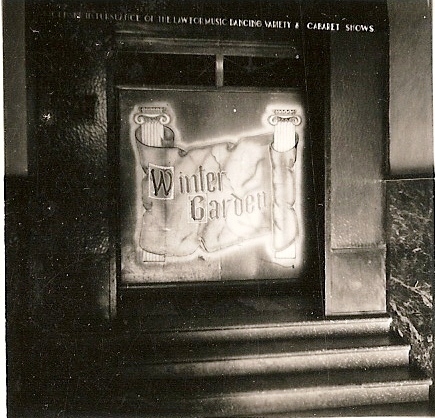
He is the older brother of well known local musician double bassist Albert Vallejo who I also spoke to - born a few years apart at the Hotel Peso above the Winter Garden in City Mill Lane we learnt last week how I had chatted to both separately at Alice’s Table - both contributing to this community in very different ways – but their stories begin in the town area and at around the same time. The story of the Vallejo brothers - Tito and Albert - had to be intertwined over three weeks with the many photographs they shared with me and which I wanted to share with you.
Just as I sat down to write their story – originally wanting to just tell their stories individually - I soon discovered their childhood memories had to be told together. We learnt from them how their adopted ‘abuelita’ Isabel Peso owner of the Hotel Peso and the Winter Garden was very much a part of their lives in the early stages and how they lived with her throughout the majority of her life. Last week Tito began to take us on a journey of City Mill Lane in the late 1950s and 1960s - the area he was born into and which he remembers so well. His journey through City Mill Lane from the Main Street where the Emporium - the store of wonders was and where you could buy anything and everything you needed – where Mango is today.
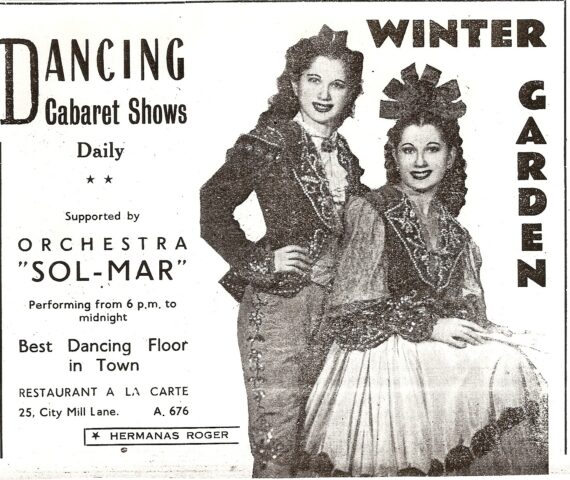
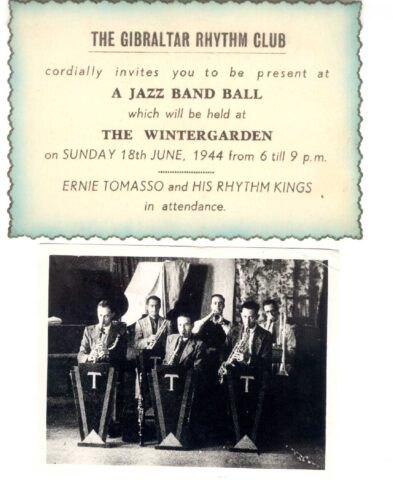
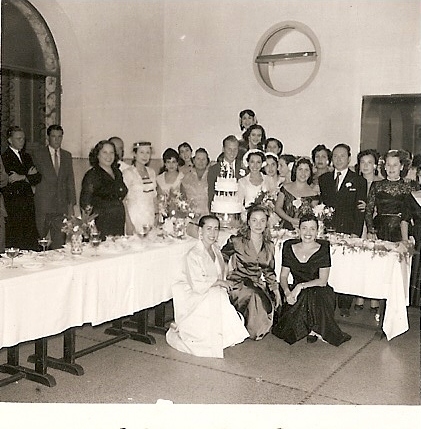
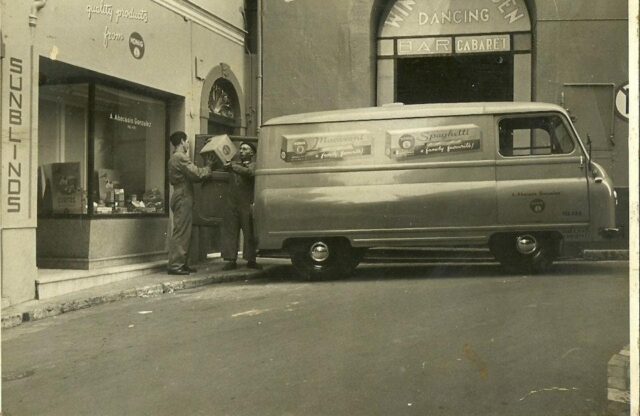
This I am sure will bring back memories to many of you as we step into City Mill Lane proper. Just at the bottom was the Barber shop he started – “Fernando’s Barber shop and where my brothers and I had our hair cut”.
“Into City Mill Lane was the Bloemfontein which was one of the oldest bars in Gibraltar. Further up was the bar ‘El Ideal’ which at the time was run by a Spaniard and later when the frontier closed became the Mason’s Arms, Next to that was a ‘funeraria’ workshop where I would often stop to watch them make the coffins. Opposite there was Astra (where years later school uniforms were sold). The area also housed a warehouse where eggs were sold – later it became a carpenter’s workshop. Where the travel agency is today there was a shop which sold cloth and was run by two old ladies. Later the Ladybird shop. As you turned the first corner there you had the Winter Garden and the hotel.
“Turning the corner and leading to the upper town was a place which sold churros back then – and opposite, was Navas’s old furniture store and next door ‘la tienda de Bartolo’ where my mother would mostly buy her groceries. Next to this was the famous cake shop ‘La Predilecta’.
Near the top was ‘el patio de Mena’, and a clothes shop of used items (many years later it would be Balloqui’s upholstery store). There was also a butcher in the area, and before stepping into Governor’s Street there was the smallest bar in Gibraltar – the Five Steps Down – and a laundry.”
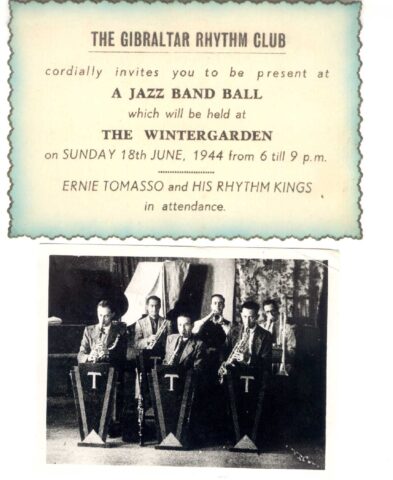
To all this he continues, one must add – the sellers who daily sold their wares –fish, vegetables, charcoal, paraffin (in those days this was known as ‘el gas’ even though Tito explains many households did not have gas stoves but paraffin stoves for cooking). The Winter Garden was three things in one – the cabaret, the restaurant and the hotel. It was the largest cabaret in Gibraltar with dancing girls and an orchestra. There was a large area for dancing. There was no stage, so the orchestra and bands were on a stage above the dance floor. The dancing girls and escorts were referred to as “Tangistas” by the locals. Many of the performers came from Spain, and one orchestra that came regularly was made up of musicians from Valencia.
“Remember my birthdays were held in the large salon and the orchestra would play Happy Birthday for me. As children we had three nurse maids. We had two cars in the family – my father’s and my grandmother’s. In the days when few people
travelled, we went everywhere. I went to England overland when I was first four years old and then at seven by sea, there were no airlines from Gib to UK yet. It took four days each way.
“When we had to have our tonsils removed my brothers and I never went to hospital. It was always arranged for the doctor to remove them at home with all the facilities made available and the ambulance right outside our door.
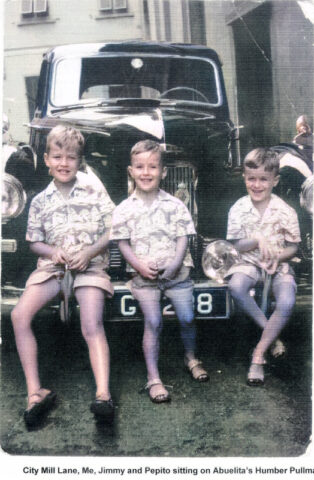
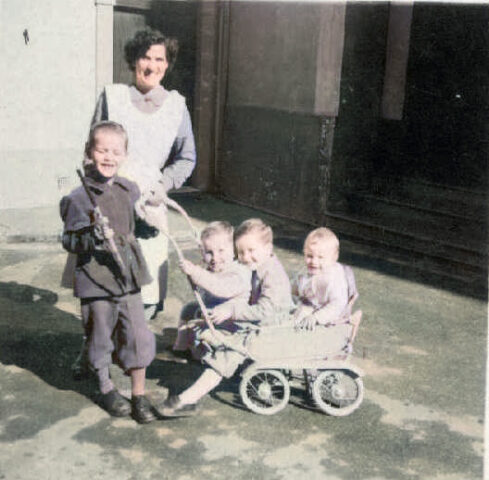
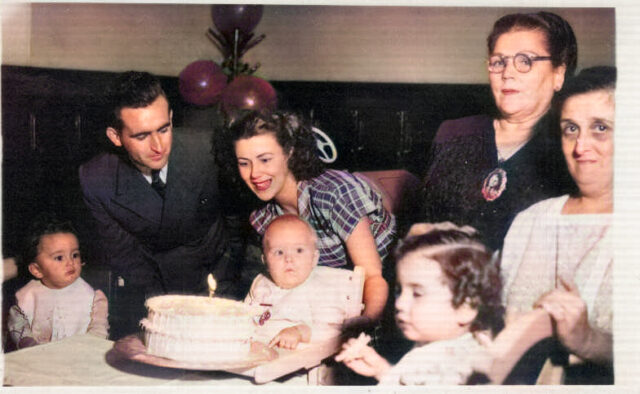
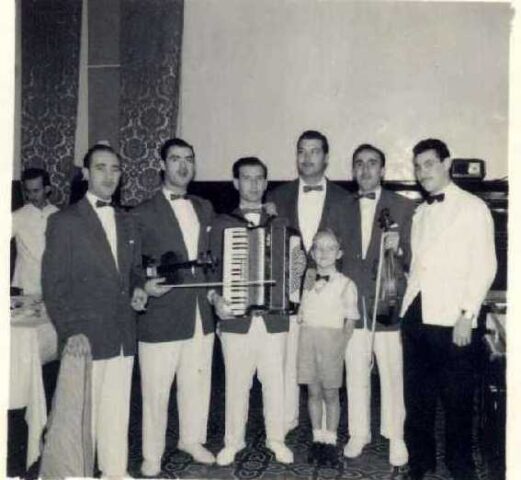
“We had a villa called ‘Villa Isabel’ in Campamento, but when The Queen visited the Rock in 1952, it was rumoured that Franco would confiscate all the properties belonging to Gibraltarians in Spain, and she took the decision to sell it soon after. So, after that every time we went to Spain we would rent. Many of our summers were spent in Miraflores as my Godmother and the owner were great friends.”
But life would change in 1958 – and with the hotel and cabaret lost - the family moved into a two-bedroom flat on Governor’s Street. Tito moved with his Godmother into several flats before arriving at 24 Canon Lane (no longer there). His father Jose had to quickly find a new job - with five kids, his wife and Godmother, he now had to provide for them all and became a petrol pump attendant with the Shell Company. Tito and his brothers went to the schools of the day. Tito remembers Miss De la Paz, Mrs Harrison and St Mary’s school, Castle Road School with Miss Montegriffo, Bishop Fitzgerald and the Lourdes School. At 16 in 1965 he left school – he had to help the family out.
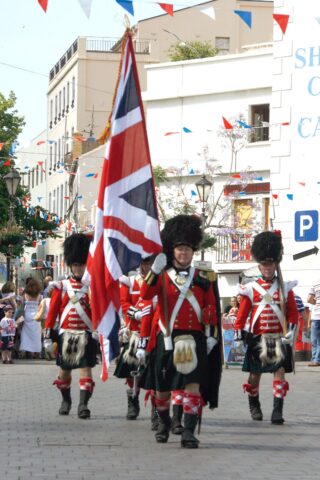
He worked for the MOD for 44 years as a clerical retiring as an Executive Officer. Two years after starting work, on turning 17, he carried out his National Service – and found a new home in the army and soon after joined the Reserve in the Gibraltar Regiment. He served as a Sergeant in the Gibraltar Regiment in both Infantry and Artillery – he was a Skill at Arms Instructor and a Motor Transport Officer in his time. Tito loves all things military and today we can see him parading down Main Street as a member of the Re-Enactment Society, and he often dresses as General Elliot and Winston Churchill. In his younger days he enjoyed sport and participated in all sports, even Water Polo but not hockey and football. For a time, he formed part of the GASA family. As a swimmer he represented Gibraltar at different events in Morocco and even became its Secretary and Treasurer for some years – in fact all his brothers swam (but not Albert the musician).
He married his late wife Margaret in 1972 – and has four children.
Today he has nine grandchildren and one great-granddaughter.
Understanding his early years, it soon becomes clear why history is so important to Tito. His father had a large library of books and first introduced him to history with books like The Scarlet Pimpernel and The Three Musketeers. History soon gripped him. He was involved in three archaeological digs with the late George Palao which added to his interest as did his time as a Tunnel Tour Guide and Cave Guide for Lower St Michael’s Cave where he also formed part of the team who installed the lights in the1990s with Wally Walker and Charlie Pizzarello. Many years ago, he reminds me we worked together on the Strait Vision television series ‘Garrison in the Dark’ – with the late Johnny Zarb with camera in hand, and Peter Canessa. I had forgotten he had presented that series… but the reminder brought back many great memories of us filming inside the Rock in the miles of tunnels and caves in different locations.
Today he is well known as an amateur historian; known for his many stories on Gibraltar and has presented several papers at conferences in Spain and is often called upon for interviews. He is also called to give school children talks about Gibraltar’s history which are not covered by our local curriculum.
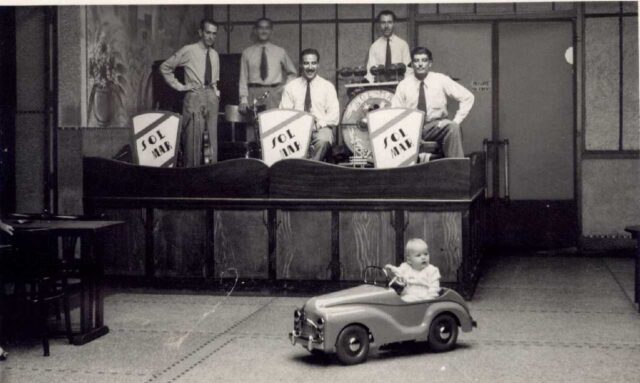
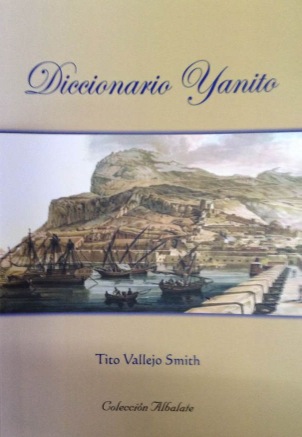
“I can tell you stories about everything – the streets of Gibraltar, history of Catalan Bay and the Yanito Dictionary, the caves, and the tunnels… just ask,” he says as a matter of fact. And you know he can.
Some years back he was called upon during Channel 4’s ‘Britain in the Sun’ television series, and needless to say he became one of the most popular personalities on the show. Tito has a way of bringing history alive which is unique to him. He wants to keep local history alive.
That is his passion – his enthusiasm is catchy and you know he wants to share the stories he has uncovered from our past – but more importantly it all comes from wanting and needing to tell everyone about Gibraltar history.
Next week: Albert, the musician in the family.
Most Read
Royal Navy support ship in Gib placed on ‘heightened readiness’ to deploy east
Tue 10th Mar, 2026
Eastside sediment plume prompts calls for close monitoring and controls
Tue 10th Mar, 2026

Today's Paper
12th March 2026
Read our latest newspaper by downloading our app from the link below.


