Who is in the room when the rules are written?


Puneet Sabhnani was chosen as one of Gibraltar’s two representatives to this year’s Commonwealth Youth Parliament, held last summer in Sydney, Australia. Today, Mr Sabhnani writes of his experiences there and, on Monday, the Chronicle will publish an account written by the second representative, Gianna Stanley.
Ten days ago, I stepped out of a parliament in Sydney. In a sense, I have not fully stepped out of it since.
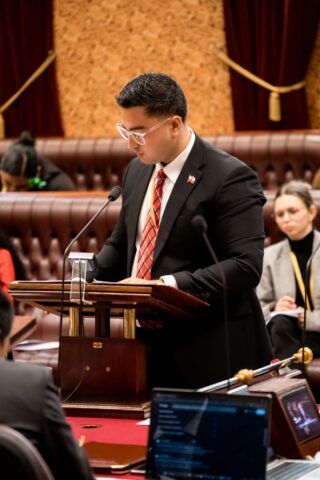
I had travelled to represent Gibraltar at the 13th Commonwealth Youth Parliament, a week-long programme held this year in the chamber of the Parliament of New South Wales. The theme was democracy in the age of artificial intelligence, and the delegates were asked to debate a proposed piece of legislation, the Artificial Intelligence and Democratic Integrity Bill.
I went expecting an academic exercise. What I found was something closer to the real thing: unpredictable, adversarial, and genuinely difficult.
I should be honest about my starting assumption. I work with artificial intelligence for a living, advising organisations on how to adopt it and building the systems that do the work. I arrived thinking the hard questions in this field were technical ones. By the end of the week, I changed my mind. The hardest questions in AI are not really about technology at all. They are about who is in the room when the rules governing it are written.
That distinction matters more than it first appears. When a state acquires a powerful new capability, whether facial recognition, predictive policing or large-scale data analysis, the decisive moment is not when the technology is invented. It is when the law that governs its use is drafted.
Get the safeguards right at that moment and a democracy can adopt powerful tools while remaining recognisably itself. Get them wrong, and those same tools quietly reshape the relationship between a citizen and the state. And these powers, once granted, are rarely handed back.
Much of the week's debate turned on exactly this. The bill dealt with how far a government should be able to go in deploying artificial intelligence for national security and surveillance, and what oversight should sit between the decision to use such a capability and its use against a citizen.
My position, and that of the party I spoke for, was not that the state can never be trusted with these tools. It was narrower and, I think, more defensible: that the authorization to use them must carry meaningful, independent scrutiny, written into the law from the beginning rather than promised for later. A democracy that protects itself by hollowing
out its own oversight has not protected very much.
I made this case three times over the course of the week, in the second reading debate, during questions, and in the committee stage, where legislation is examined line by line. I want to record my gratitude that the President of the chamber was generous enough to remark on my opening speech. But the moments I valued most were not the ones spent speaking. They were the ones spent negotiating.
This was the week's real lesson in how democracy works. A speech in the chamber is the visible part, but the substance of politics happens before you ever stand up: in the corridors, over coffee, in the quiet arithmetic of who will support which amendment and at what price. You arrive with a position; three other parties have moved before you rise; you adapt in real time, or you lose the room. It is slow, human, and often frustrating, and I came away with far more respect for the people who do it in earnest than I had gone in.
There is a particular reason a Gibraltarian should care about all of this. We are a small jurisdiction, but an unusually consequential one. We regulate financial services, digital assets and online gaming for a global market, which means we routinely write rules that larger economies later look to. On a question moving as quickly as artificial intelligence, our size is not a weakness. It is an advantage.
We can get the relevant people, the regulators, the industry and the lawmakers, into a single room in a way that larger states cannot. If the central question of AI governance really is who is in the room when the rules are written, then Gibraltar has a stronger claim to a seat at that table than its geography would suggest.
I left Sydney more certain of two things than when I arrived. The first is that the governance of artificial intelligence will be one of the defining questions of the coming decade, and that it is too important to be left solely to the people who build the technology or solely to the people who fear it. It needs both in the room, and it needs them early.
The second is more personal. Having spent a week attempting a version of public service, I find I want to spend part of my working life doing it in earnest.
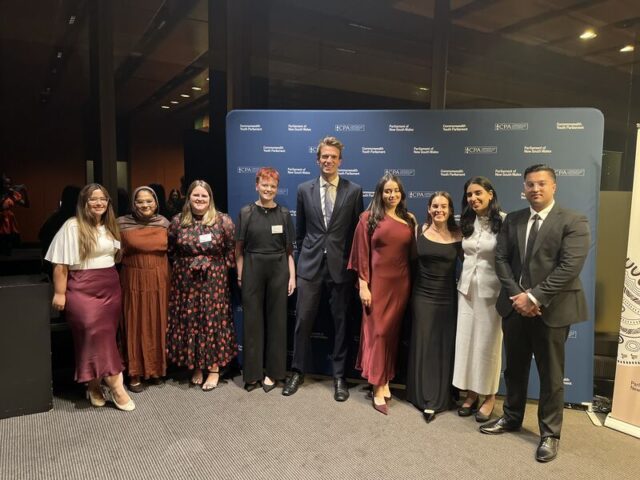
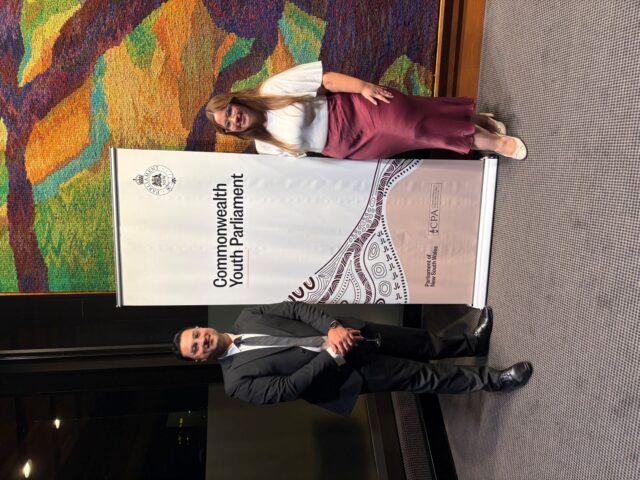
I am grateful to HM Government of Gibraltar and the Parliament of New South Wales for the opportunity, to the Commonwealth Parliamentary Association for convening it, and to the delegates from across the Commonwealth who made the week what it was.
We disagreed often, which was the point. The rules get better when more people are in the room.