


Speakers take stage at Gib Talks PART 1
Photos by Johnny Bugeja


by Sophie Macdonald
Opening the 11th edition of Gib Talks was Julian Felice, reminding us that, really, we’ve been ‘Gib-Talking’ since “Hercules said he couldn’t be bothered to walk across two mountains.” It has taught us to “never stop telling our stories.”
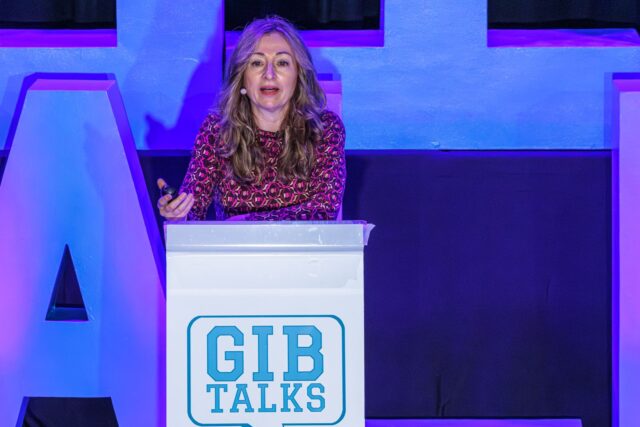
Nadine Collado, who was first on the stage, shared hers.
Eighteen months ago, she left her structured life to sit in front of a canvas. Although she recognised boardrooms as “character building places,” she felt a disconnect with them.
She felt she was experiencing an inner shift: despite feeling that the work she was doing with the University of Gibraltar was incredibly valuable, she felt a creative pull. For Nadine, it wasn’t about leaving one role for another, it was about “identity cohesion.”
Paying attention to “what restores you,” she noted, “leads to new paths.”
Since leaving the corporate world, Nadine has established ‘Odalloc Abstracts’. She has exhibited at a number of international galleries across Berlin, Barcelona, Venice and Stockholm, and she will be presenting at the Louvre Carrousel in Paris this year.
Together with her father, she now spends most of her days painting, showing us that it is never too late to follow what “feeds your soul”.
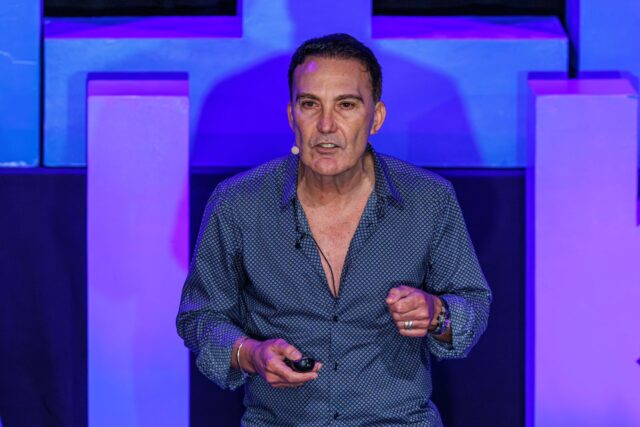
Next up was Mark Montovio’s talk about fatherhood.
This was Mark’s second time at GibTalks and, this time, he turned attention to the role of gender in parenting.
He highlighted that this was a “vulnerable” point for him because of how important being a father is to him. Mark asked “why [is it] so different for a father in society?”
He recalled the numerous times he walked into a restaurant with his son and was asked whether he’d like a table for three, and the time a flight attendant handed a stranger next to him a belt for his baby, because she was the woman on the row.
Humorously, he noted how, after being asked about a table for three for the umpteenth time, he responded “yes. One for the father, the son, and the Holy Spirit.”
He emphasised how being a present father is often rewarded, whereas equal acts by a woman is simply classed as being a mother.
He advocated for undoing the hidden script of parenthood and called for men to see the vulnerability in fatherhood as a power that “be denied”, ending with a heartfelt message to his son: even though he might not have physically carried him, he will “love him until my heart stops beating”.
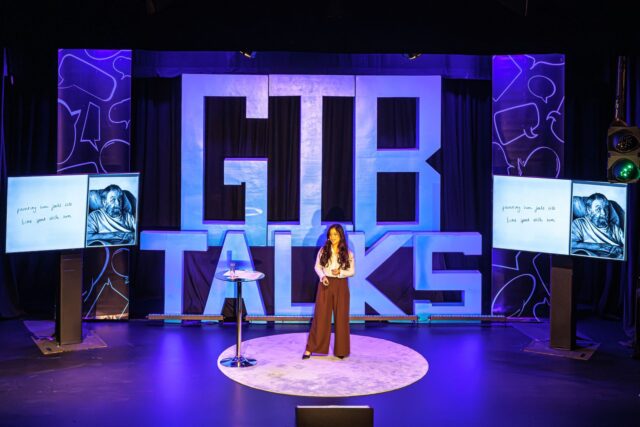
Naomi Duarte followed, immediately drawing in the audience with her modest assertion that she is “still learning.”
Naomi is a young creative in Gibraltar with a wealth of wisdom. She described her love of art, describing it as a form of meaning that “refuses completion” - as a process that is “continuous and beautiful.”
For Duarte, the purest form of learning lies in understanding, and, in turn, “understanding is a form of love.”
She recalled advice her father gave her when she was young - to “draw what you see” - a philosophy that has remained central to her creative practice.
Art, she argued, “connects us to what it means to be human,” a belief she neatly encapsulated by reworking Descartes’ famous dictum: “I create, therefore I am.”
Naomi endeavours to “stay permeable” and to “keep loving through the disciplined joy of understanding.”
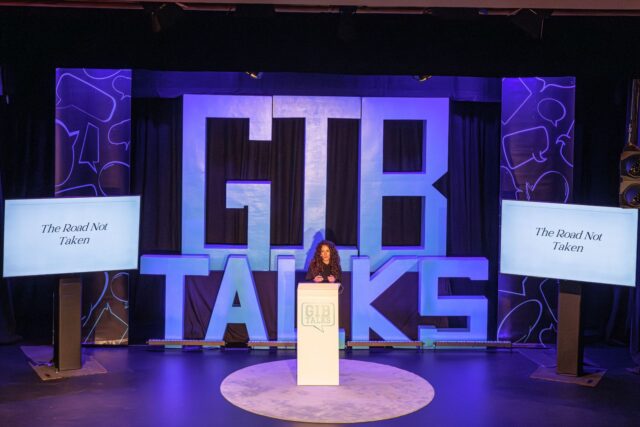
Melissa Bosano’s talk also centred on understanding - this time, the impact of the choices we make.
Titled The Road Not Taken, her talk drew on Robert Frost’s famous poem to reflect on the shared human desire to navigate life with purpose.
Like Frost, Melissa observed that even when two paths appear “just as fair,” the challenge lies in choosing one.
Using vivid metaphors for life’s journey, she likened it to a rollercoaster, a puzzle, and, most memorably, a car journey - one in which we eventually graduate to the front seat.
She noted that, while some choices are within our control, others are made for us, leaving us to decide how we respond. In doing so, she invited the audience to reflect on their own core values.
Melissa then shared a personal moment from her own life, recalling how, at 18, she faced an unexpected turning point.
With an offer to go to university, she was also navigating an unplanned pregnancy. Although her life did not unfold as she once imagined, she spoke with pride about choosing the road less travelled, one that, for her, “made all the difference.”
Melissa’s talk fittingly set up Richard Buttigieg’s talk about serendipity.
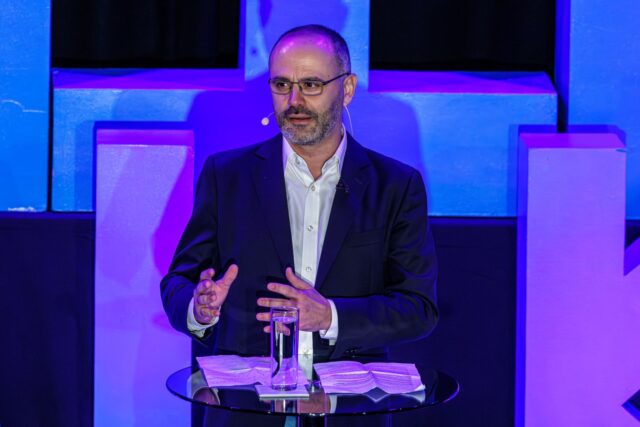
Richard described serendipity as “hustle hub mixed with happenstance” - as driven both by chance and human grit.
He traced how serendipity has shaped his own story: from how being a transformed student after developing a passion for Spanish and law during his A-levels at the Gibraltar College, to his university happening to develop a new course in those very subjects, which he switched to while being on a business course.
Richard emphasised how serendipity rewards hard work and, after starting work at Hassans despite a misunderstanding, he decided he would become the “hardest worker in the room.”
He highlighted that, when “life glitches at you, perhaps that is the very cue that life is giving you.”
He urged the audience to “stop waiting for the stars to magically align” and instead work hard so that when “the dawn comes through,” we are ready to receive what we deserve.
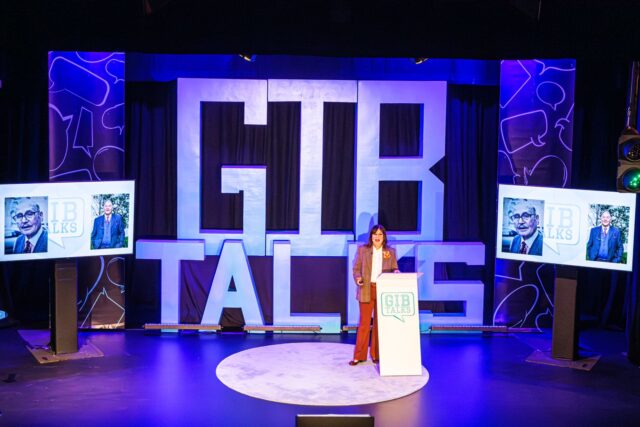
Centring on hard work, Isobel Ellul spoke about the men in her life - her grandfather, Vicente, and her father, Eric Ellul - who both taught her about the power of choice.
Her grandfather set up a popular hair-styling business in Gibraltar and her father set up his own law firm - both defying the “glass ceilings of the futures and roles.”
She noted how, growing up in London in the late 60s, this planted a rebellious seed inside of her. This resulted in her feeling stifled when she returned to a Gibraltar with a closed frontier, and Gibraltar’s “prolific gossip grapevine.”
She longed to return to London’s anonymity and progression, where she wasn’t simply known as “Vicente’s granddaughter” or “Eric’s daughter.”
However, as an MBE recipient, her career as an advocate has meant this isn’t the case anymore: she dabbled in politics and sought to become “a voice for the voiceless” during the abortion referendum, even though she noted “respecting the differing views of others.”
Isobel ended by noting that the dynamic has since reversed: people now ask her father if he is her father.
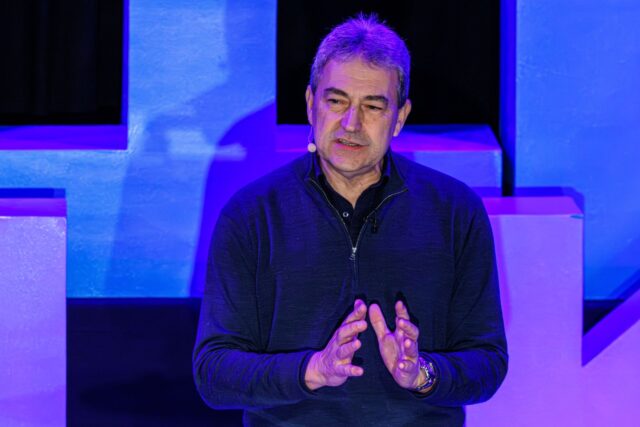
The final talk of the morning came from Peter Montegriffo, who asked a simple but pressing question: “where are we going?”
While firmly advocating for sovereignty, he also called for “close and constructive dialogue with Spain,” acknowledging that Spain has “never made that easy” and that public scepticism is understandable.
Still, he stressed that dialogue is essential to ensure Gibraltar remains part of the political conversation, rather than “walking” into outcomes it “did not choose.”
Describing treaty negotiations as a drama with “two protagonists but four actors,” Peter outlined Gibraltar’s position between the EU and the UK.
For the EU, he said, Gibraltar has become a useful building block in repairing relations with London; for the UK, its interest is more pragmatic.
Quoting Sir Peter Openshaw, he noted that while Gibraltar is viewed with affection, its military value remains a core asset – “honest,” if not sentimental.
While adjustment will be needed, he argued that the treaty offers an opportunity for Gibraltar to remain attractive to investors while staying authentic.
He pointed to interdependence and development - beginning, perhaps, with revitalising the Old Town - and urged an embrace of Gibraltar’s cultural complexity, including Llanito, which “we should develop to ensure we make the most of our languages.”
Paraphrasing Mark Carney, he concluded that Gibraltar must continue to engage with Europe and Spain, ensuring it “remains at the table and is not on the menu.”
See part two tomorrow.
Correction: This piece was updated on Wednesday 4 February to correct the name of Nadine Collado's website and Instagram handle which is in fact @Odalloc.abstracts and www.Odallocabstracts.com .


