


Vallejo: Let me share with you a story of City Mill Lane


This week Alice’s Table will revolve around the area of City Mill Lane where two brothers were born a few years apart. I sat and chatted to them separately at Alice’s Table as they both contribute to this community in very different ways – but their stories begin in the town area and at around the same time. One is into local history often telling our stories beyond our borders, and the other is a musician who is often seen performing in orchestras and bands throughout Gibraltar.
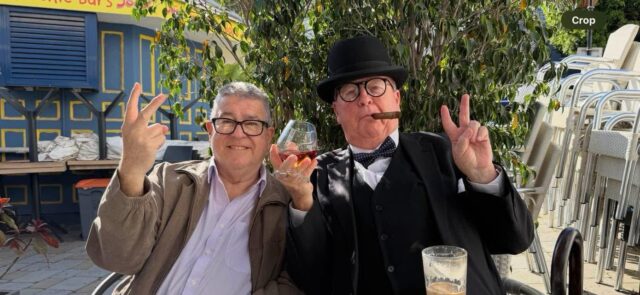
They are the Vallejo brothers - Tito and Albert. Tito is an enthusiast of local history and has been an advocate of our history reaching out to all who will listen… always collecting stories from our past which he readily shares with all those who cross his path. Albert is a fine musician who has performed in every venue on the Rock with his Double Bass – classical, jazz, military, the modern classics and pop – you name the song, and he probably has played it at some time in his life. Just recently he formed part of the orchestra in this year’s New Year’s Day Concert at the John Mackintosh Hall. As I sat down to write their story – I was originally going to write about them as individuals but as I got going with their story, especially in the early years, I knew their childhood memories had to be intertwined.
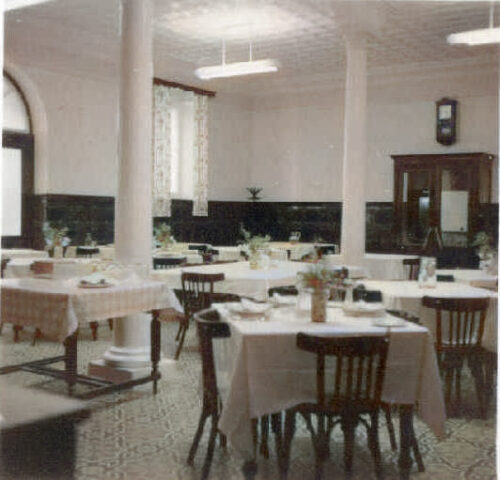
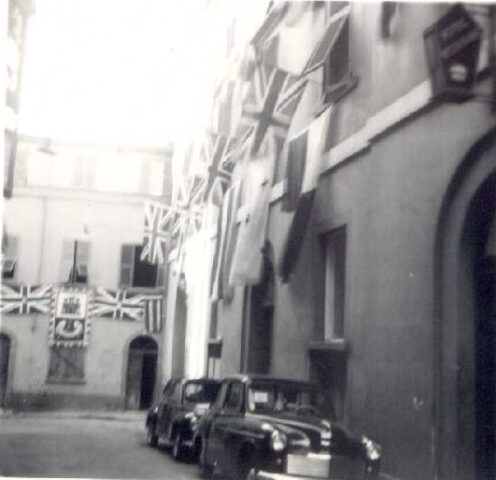
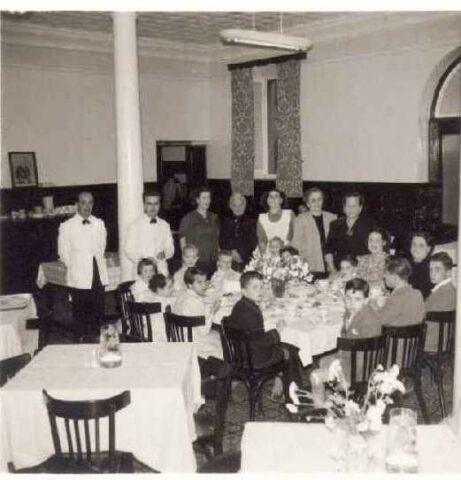
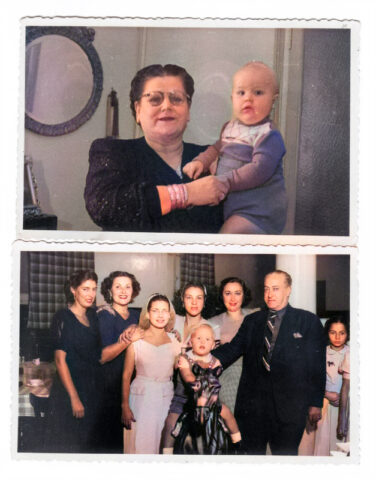
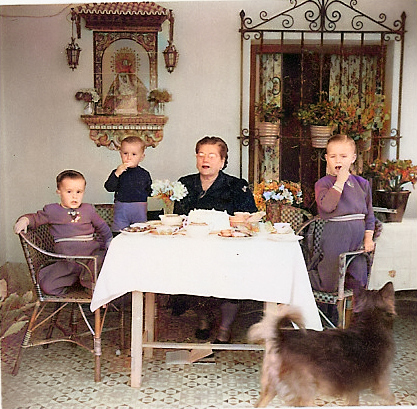
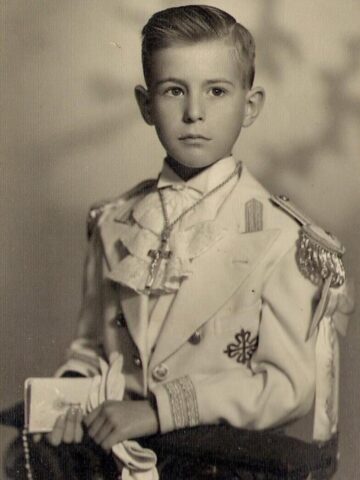
Tito – Ernest Peso Vallejo Smith - readily tells me he was born in October 1948 – and without hesitating adds – “in the last century”. Well, I expected nothing less from him – for I already knew this session was going to be a history lesson about Gibraltar in more ways than one. He is the eldest of five brothers – Joe, Jimmy, Albert (our musician) and Julio. Albert Richard Vallejo the musician is brother number four, and I soon learn about his own pride in his family history. He is six years younger than his brother Tito and was born in January 1954. He too was born at home at the Hotel Peso above the Winter Garden. As he takes me back to his childhood, Tito tells me how he and his brothers were very much born with “a silver spoon” in their mouths in his Godmother’s hotel – the Peso Hotel on City Mill Lane. In fact, all the brothers would be born there over a ten- year period. Growing up Godmother Isabel Peso had also taken care of their father and practically raised him as her own, so when Tito was born – the first child of his generation – she would assume grandmother duties and responsibilities and would live with him throughout her life even when Tito first married.
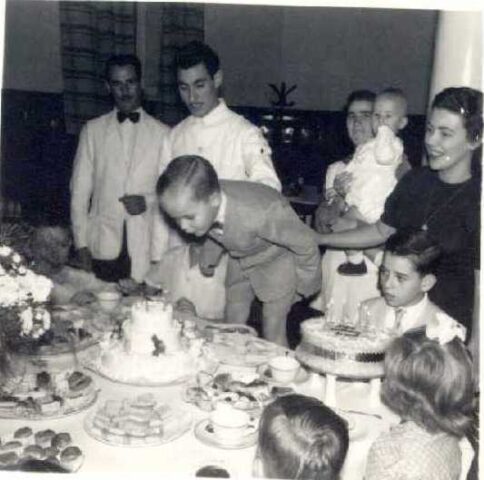
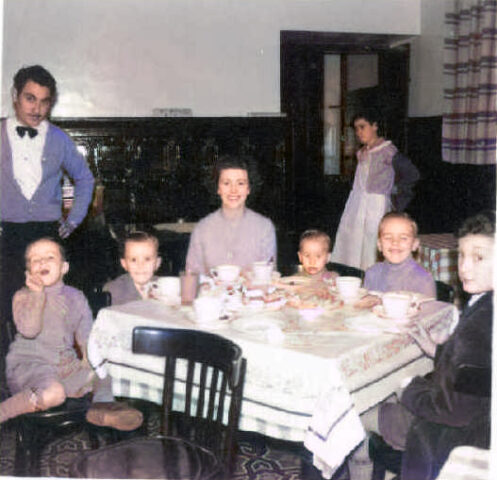
Jose (Joselito) Vallejo – their father was born in Spain. Next door lived Isabel Peso who owned the hotel at 29 City Mill Lane and the well-known place of entertainment the Winter Garden. Isabel would raise Jose and bring him to live in Gibraltar where he would attend the Christian Brothers school, becoming a Naturalised British Subject and Gibraltarian, and who also served in the Gibraltar Defence Force at the outbreak of war (WWII). He resided in Gibraltar for the rest of his life and managed the hotel, cabaret and restaurant at the Winter Garden for many years. And for many years the family would be linked to the area of City Mill Lane and the famous Winter Garden – the largest cabaret on the Rock. Above the premises was the hotel where the family lived throughout the 1950s. Jose would marry Hilda Winifred Smith whose father served in Gibraltar.
Born in the Calpe Married Quarters Hilda would leave with her family and her father, Regimental Sergeant Major Edward Smith, on his army postings on leaving Gibraltar. At 19 years of age Hilda (who had travelled across the British Empire wherever her father was posted to) visited her family in Gibraltar from Newbury where she was already living with her family. It was during this visit, with her mother and sisters, that the couple met whilst renting rooms at the Hotel Peso. The rest is history – the couple – Jose and Hilda - married within a few months and would have their first child – Tito – in 1948. His four brothers followed. Tito and Albert both tell me how their grandfather Edward Smith (quickly pointing out he had the same name as the captain of the Titanic) had arrived in Gibraltar with the Royal Signals as a Regimental Sergeant Major from the UK. On one of his postings to Gibraltar he met his wife to be – their grandmother Rosario Casas Ramos from Gaucin who came to Gibraltar from Spain looking for work. They were married soon after they met both in the Cathedral of St Mary the Crowned and at the King’s Chapel as he was of the Protestant faith and she was of the Catholic faith.
Now let’s turn to the woman who would play such a major part in their lives Isabel Peso. Born in Estepona she married a Gibraltarian called Ernesto Peso. She would help make a success of the hotel and the Winter Garden. Over the years she became known as good business woman locally and would be Godmother to many on the Rock. Tito explains how 1958 would prove to be a very important date for Gibraltar which would change how many of the establishments worked, and even disappear.
“It was the year that – National Service ended in the UK – and meant that the military carrying out their National Service on the Rock left with no one to replace them. From that day the military presence was less than it had been for many years. The resident battalion remained but the extras were no longer posted to Gibraltar. “The bulk of military personnel in Gibraltar suddenly vanished. This had an effect on the Gibraltar economy and on some of the establishments which would end up having to close its doors. The Hotel Peso and restaurant, and entertainment venue - Winter Garden - suffered and they too were eventually closed.”
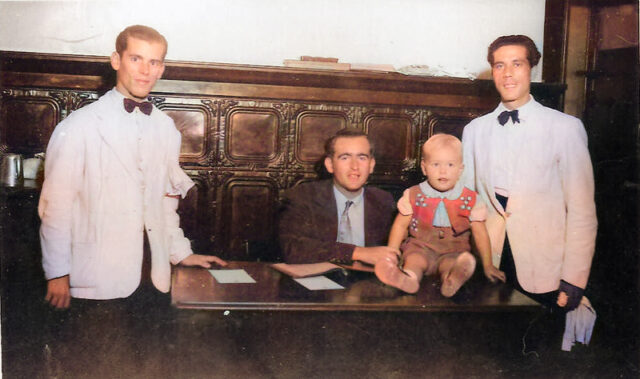
It meant that all the cabaret-like establishments which offered entertainment mostly for the large numbers of military personnel– the Universal, the Trocadero, el Suiso, the Royal, Panama, La Caverna, Arizona and the Embassy, and the Winter Garden, – could no longer stay in business. They had lost their trade.
“The establishments as they had existed for many years were no more – and their owners were forced to re-open them as cafeterias, shops or other commercial ventures. My Godmother ‘abuelita’ decided to remain open until it was no longer viable – and that really was the downfall of the Winter Garden which was not transformed into another workable establishment.
“Abuelita Peso could not understand the changes taking place in the new modern world. We must remember that by then the American Fleet, the Canadian and Australian Fleets, that once had been seen frequently in port (before, through and after the war)the British Atlantic and Mediterranean Fleets – were soon all gone. They left and never came back. Gibraltar was changing but the business did not change because my ‘abuelita’ resisted that change until closure came.”
The family who had always lived in the hotel suddenly were left with nothing – “Myself and my brothers quickly went from having been born with that ‘silver spoon’ to having to sleep on a mattress on the floor. It was 1959.”
But Tito still reminisces of the days he lived on City Mill Lane and his gang of friends – (as his brother Albert does) some of which are still good friends to this day.
“In those days every area had their gang – the ‘pandillas’ from Los Pinillos, from the Patio Carrera’s, from the Calle Comedia and la Escalera del Monte. I remember the squabbles as kids and the gangs who pelted each other with dates from the palm trees on the Line Wall Boulevard.”
City Mill Lane – like most streets in Gibraltar before the arrival of the supermarkets had its own special smells. Tito recalls the grocery stores which all had different strong smells depending on what they sold.
When he mentions this – I am suddenly transported back to my own childhood and I know exactly what he means – I recall the smell of the Golden Ham, Mr Galliano’s store at the bottom of Prince Edward’s Road at the corner with Governor’s Street, and the other at the bottom of City Mill Lane with the saw dust mixed with the smells of meat – and the ‘fiambre’ which then would have been bought on a daily basis for afternoon tea - the salami, the mortadella and still a favourite of mine, tongue.
“Much of this was not cut by machinery but with a knife in hand, and whenever you entered the store the first thing that grabbed you was its variety of smells - whatever was on the counter whether it was spam or cheese (Queso de Plato) and the store itself. Hanging inside was the salted cod (the bacalao), and heading out into the street were the large tubs of smoked herrings (Arencones) and salted trotters (used for pucheros and soup) – today all these items are luxuries and cost a great deal, Tito adds.
“Back then these items were what we would call today Poorman’s food which was cheap and often used in our kitchens. These were the smells emanating from these stores,” he emphasises.
If you went up further along City Mill Lane there was ‘el patio de Mena’. Tito recalls that here they sold items wholesale.
“If you went in you could even smell the cloves, the cinnamon, and so many other spices and goods.”
If you then walked to Irish Town you could smell the coffee and the tobacco (picadura), he further adds, because “every area of town had its own smell”. If you then entered Casemates and walked up Main Street the smells from the horse carriages were very different – “manure mixed with earth”. Further up were the different smells of the shops that sold the tobacco and the goods from the Indian shops with their rich, complex and warm, woody incense.
“These used to be the smells of Gibraltar which are now a thing of the past,” he says.
Next week: Tito and local history, and a journey through City Mill Lane.
Most Read
Local man arrested on suspicion of assisting illegal immigration after port incursion incident
Fri 4th Sep, 2026
Potential for new flights prompts Gib to discuss airport parking with La Linea
Mon 24th Aug, 2026

Today's Paper
5th March 2026
Read our latest newspaper by downloading our app from the link below.


