


Just give me the bass line ‘I will play it all’ classical, military, jazz and pop


Alice’s Table is back to one of my favourite things – music, and the people who play music making life a better place for us all. A life filled with music is always better than none. And already in 2026 Albert Vallejo has contributed in a big way to putting smiles on faces and bringing us the joy of music – in my view there is nothing like listening to live music. Albert is someone I have wanted to bring to Alice’s Table – he is always musically active, and entertaining us, practically every month of the year.
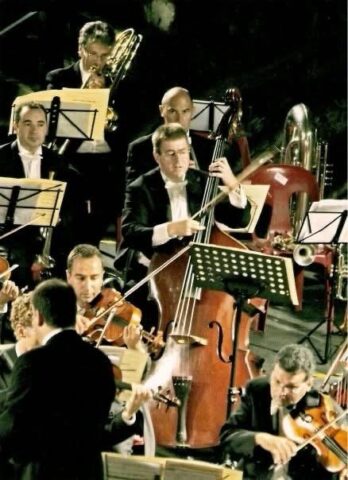
So, 2026 started with music as he joined the orchestra which brought us the New Year classical concert ‘live’ from the John Mackintosh Hall in early January. Yes, Albert and his double bass are always in great demand, and this makes him one of our most active musicians –– and always with his double bass in hand. Or should I say in both hands. He is there at classical concerts when called upon, a member of the band Dejavu – and frankly, we see him all year round because he never misses an opportunity to play his double bass when an audience is present. For 12 years he also played with the Paul Riley Big Band but there is a lot more.
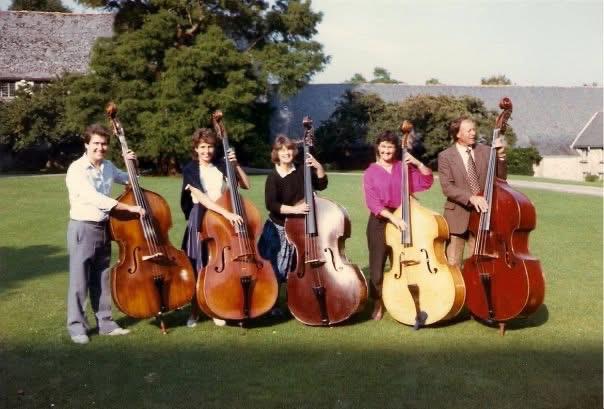
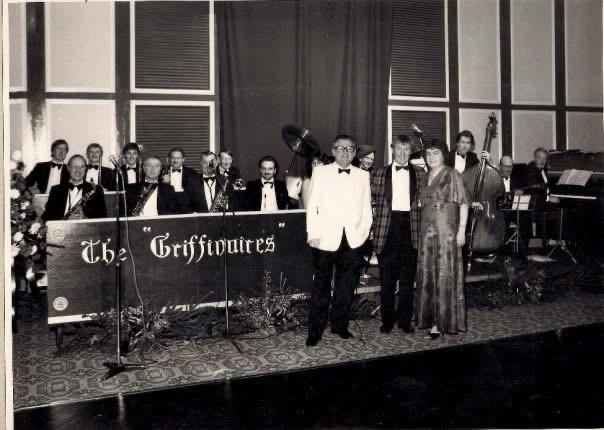
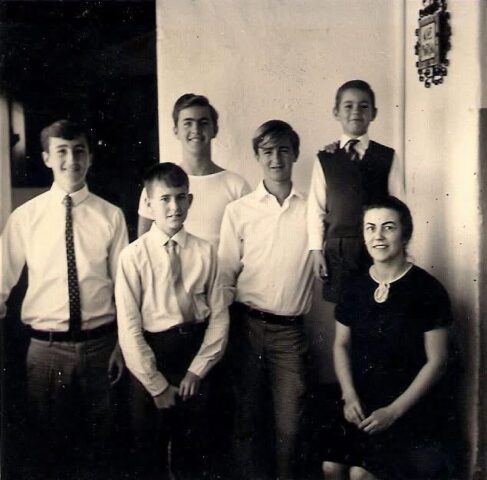
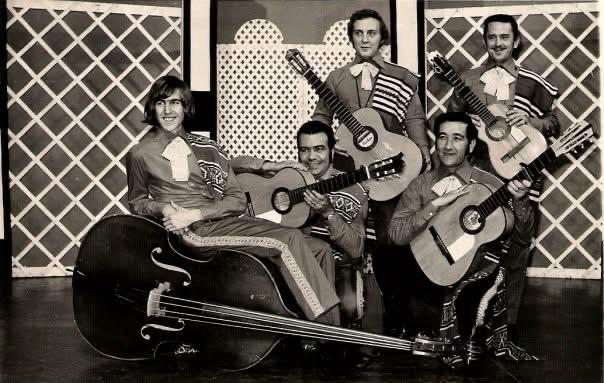
Born in City Mill Lane at the Hotel Peso, we learnt in the last two weeks that his brother the well-known local history enthusiast Tito Vallejo is six years his senior. Albert was born in January 1954, at home just like Tito at the Hotel Peso. The family lived in apartments in the Hotel Peso above the well-known Winter Garden cabaret and restaurant, owned by their adopted grandmother – Godmother to all - Isabel Peso who had married the respected businessman Ernesto Peso and who died whilst in Madeira during World War II. Albert, like his brother Tito (last week) speaks with great pride of the popular cabaret the Winter Gardens – and how as a child he recalls seeing the orchestras which regularly played there – and probably without realising may have influenced him into becoming a musician. As a family they lived in the apartments above in the Hotel Peso. He tells the same story as his brother (Tito), knowing all the children in the area of City Mill Lane – and at the top of hospital steps where they often played football, and went to St Mary’s Infant and later Bishop Fitzgerald school.
“I remember the Theatre Royal where we sat in the side boxes with my friends when we were between five and 12.”
With so much going on in this part of town, up Governor’s Street he remembers the Golden Ham – where he would buy ham rolls. In La Mesquita, the ice-creams and further up the bakeries’ large ovens at the bottom of the hill leading to the old hospital.
“As children we used to take the bits of wood to the ovens and in return they would give us the broken bits of cake which would not go on sale. We also took the empty coke bottles and retrieved a penny every time.”
In the patios, Albert recalls neighbours playing music and joining together in song. Back then, he recalls, many families had upright pianos in their homes – “people gathered together and sang songs. we have always been blessed with talented musicians” - he describes his childhood as “very good days when it was very safe and children played in the streets”.
He recalls the area of the Piazzella with the Theatre Royal, Pitman’s, the Sugar Bowl – and the air raid shelters where they often played on the concrete ramps which became their slides. When the hotel became bankrupt Albert can clearly recall the day his “Abuelita” moved to premises behind the Command Pay Office in the area. Music came very quickly into his life. He was a fast learner. His father enjoyed classical music and jazz and played trombone. His mother played the violin. Listening to music at home around the gramophone is a memory he treasures. Today Albert the musician plays the tuba, bass guitar and of course the double bass. But it was always the bass line which attracted him to the music – that was and still is the first thing he hears. At 15 there was a young teacher (just having recently returned to Gibraltar) who was scouting for pupils who were interested in learning music and picking up an instrument. The aim was for them to play for the Music Centre in the Youth Orchestra. It was the late sixties, and this young teacher was the well-known local musician, conductor and composer, the late Hector Cortes. The Music Centre as we have read before on these pages was based at the Sacred Heart Church in the presbytery on the very top floor, with the late Bishop Charles Caruana playing a major part in its set up and running. The then Father Caruana, co-director of the Gibraltar Music Centre, encouraged him to take up an instrument and, as a very close friend, was instrumental to Albert joining the Music Centre.
Interestingly, Albert had wanted to play the bassoon but when asked he made a mistake and said the tuba instead – and so it was.
“I didn’t even know what a tuba looked like, but it very soon became the first instrument I learnt.”
The tuba is an instrument, always in demand, but which very few would-be musicians ever think of playing. So very soon as his confidence grew, he was performing with the then popular Gibraltar Band – and under the baton of Hector Cortes. Sometime later he was called upon to join the Gibraltar Symphony Orchestra – again under the baton of Hector Cortes. He performed with guitarist, the late William Gomez on many occasions, but with this orchestra he performed (at just 15 years of age) the concerto for classical guitar the Spanish composer Joaquín Rodrigo: Concierto de Aranjuez and Fantasia para un gentilhombre.
“I would arrive with my tuba and follow the score. But all the time I was increasingly made aware of the bass line. I don’t know why but I have always been attracted to the bass notes, and I would often focus on the basses looking at them watching how they played and the sound they made.”
It was in those days when Hector’s father, another well-known local musician of the day, Nemesio, played the tuba in the band and in the Gibraltar Symphony Orchestra played the double bass – so it was not long before young Albert found himself behind the double bass as well.
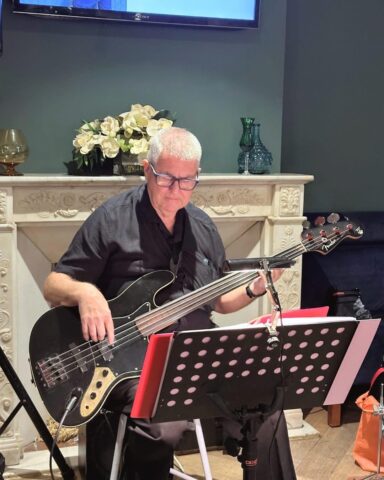
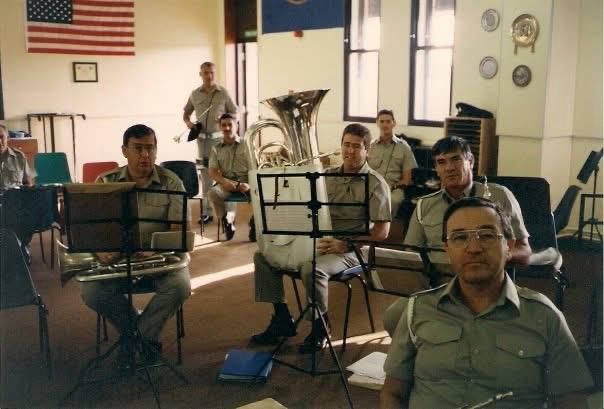
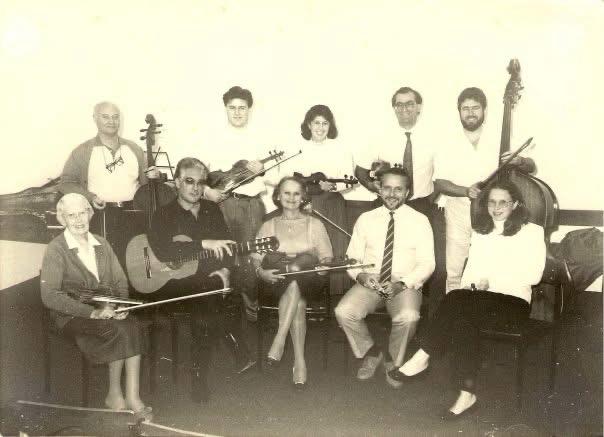
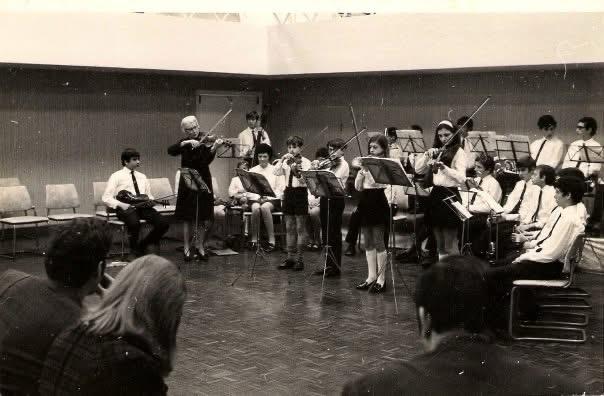
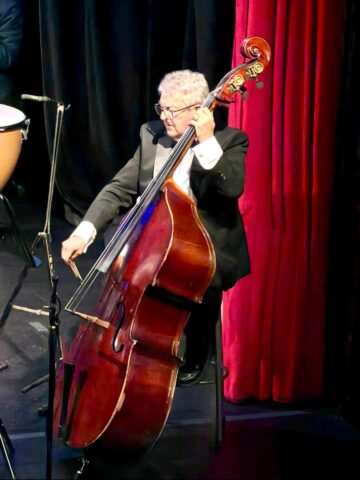
“The Cortes family lived where ‘la tienda de Carta’ was at the top of Prince Edward’s Road and Hector allowed me to play his father’s double bass. I would practise in the music room downstairs – and I would often go through the shop behind the counter and down to the room. Hector gave me some lessons and I practised by myself. It is the sound of the bass which has always fascinated me – that richness of sound – they are always the first notes I hear in the orchestra.”
Soon, he was also picking up the bass guitar. He joined the pop group – The Triads – with Johnny Victor (his brother-in-law) on flute, Manolo Fa on trumpet, and Brian Torres on keyboards.
“We played everything and anything - the pop music we heard on the radio.”
Whilst this was happening the Gibraltar Song Festival was growing in stature. By then the songwriting team of Gomez/Cortes were entering their songs which proved very successful. In 1970 they entered the song ‘Me and My Oomph-Pa-Pa’ about a girl who had fallen in love with the tuba player. Hector called on young Albert who got a solo spot with the tuba. He also formed part of the Song Festival Orchestra where he played the bass guitar. During all this time Albert was still a pupil of the Gibraltar Grammar School – and would move to the Gibraltar and Dockyard Technical College on Queensway as engineering was his calling. But music was never far behind and at the time the Peninsulares needed a double bass player, and Albert joined the original group for a couple of years before he left for the UK for further education.


