


GPS collars to support study of Barbary macaque movements


Six Barbary macaques will be temporarily fitted with lightweight GPS collars as part of research aimed at supporting the long-term management of Gibraltar’s macaque population.
The study is being coordinated through the University of Gibraltar and the Department of the Environment.
It is being led by Lillianne Hawkins as part of her Masters research, funded by the UK Darwin Plus Fellowship scheme and facilitated by the University of Gibraltar.
The Department of the Environment is providing additional support, including the deployment of the GPS collars.
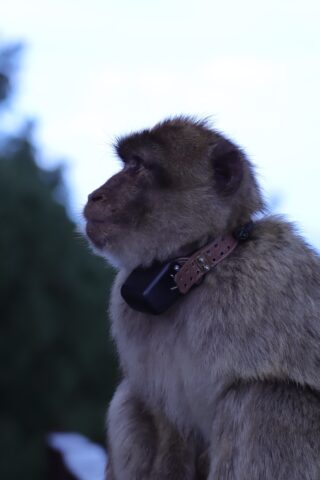
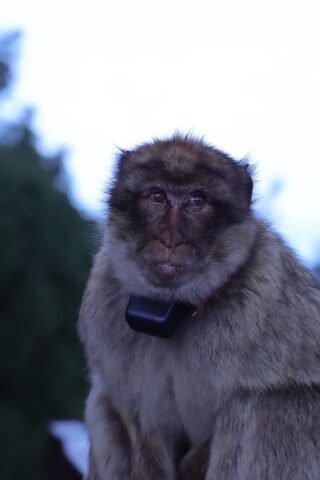
The collars will collect fine-scale spatial data over a monitoring period of around two to four months, helping researchers improve their understanding of macaque movement patterns beyond what can be observed directly in the field.
The study will look at habitat use, spatial overlap between neighbouring troops and how troops influence one another across different parts of the Upper Rock component of the Gibraltar Nature Reserve.
It will also examine how management practices and resource availability relate to movement patterns.
The findings will contribute to evidence-based management of Gibraltar’s macaque population and support longer-term scientific research.
The Government said all collar deployment procedures are being carried out under strict veterinary supervision using established welfare protocols.
The collars are lightweight, fitted for temporary use only and include an automatic release mechanism.
During the monitoring period, the macaques will be observed regularly as part of welfare checks by the Macaque Management Team and project researchers.
Dr John Cortes, the Minister for the Environment, said: “This is yet another useful research project which will help us better understand the exact movements of our flagship macaques. It builds on the initial work carried out in 2013 by the GONHS and Notre Dame University (USA) and will undoubtedly provide valuable and updated information for the team of professionals working behind the scenes to ensure our macaques are well cared for.”
Most Read
New group to plan healthcare jobs and placements for returning graduates
Tue 13th Oct, 2026
Economic Crime Unit’s new offices unveiled, alongside a call for further investment
Tue 13th Oct, 2026
Commission reinforces EES exemption guidance after incorrect registrations
Tue 13th Oct, 2026

Today's Paper
14th May 2026
Read our latest newspaper by downloading our app from the link below.


