


The Cauldron: The cradle of Spanish football


It's no secret that the British had a habit of turning up in all corners of the globe and claiming bits of land. We in Gibraltar live in one such place. But did you know they once had another ‘colony’ just a three-hour drive away, on the outskirts of Sevilla?
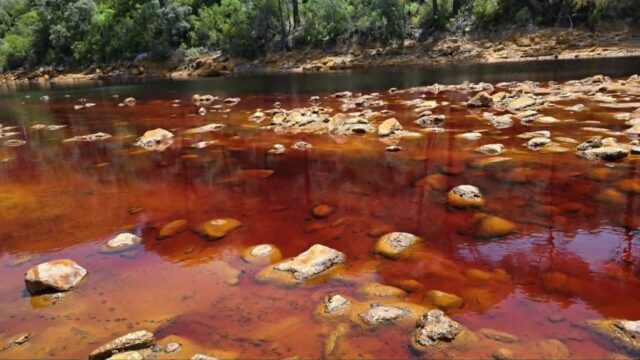
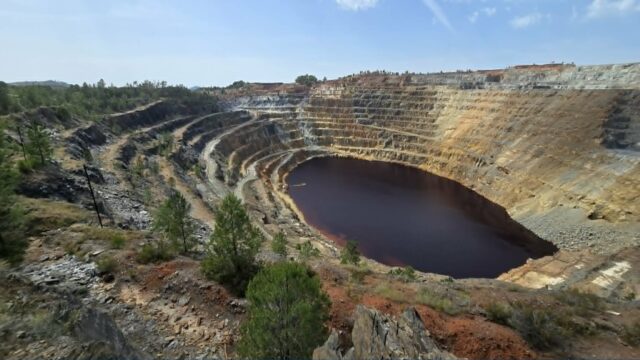
I recently visited Minas de Río Tinto and was astounded to find a surreal, multi-coloured Martian-like landscape of open mines towering over wine-dark rivers and lakes. Yet, what seemed at first blush to be a regular Andalucian village soon revealed something quite different; the sight of gables and pitched roofs told me that the British were afoot in these parts.
Since antiquity, a large area in the Huelva province has been mined for copper, silver, gold and other minerals. The main river that flows down to the Atlantic Ocean at Huelva ran with metallic traces which resulted in it being named the red river, Río Tinto. The usual suspects began digging: Phoenicians, Greeks, Romans, Visigoths and Moors.
The mines were presumed exhausted and, after a long period of abandonment, the Spanish government began operating them in 1724. However, Spain's mining operations were inefficient, and in February 1873 the state was persuaded to sell the mines off cheaply to an international consortium created by three powerful families, the Mathesons, the Rothschilds and the Goldschmidts. The Rio Tinto Company was born and the lucrative deal specified that Spain would permanently relinquish any right to claim royalties on the mine's production. It was also agreed that the company could build a railway linking the village with the port of Huelva. The need for the latest technology meant workers were brought from where techniques were most advanced, Britain. It was sharp and swift, and operations began immediately.
Ríotinto soon became a small British colony thanks to the mines, a "Gibraltar sui generis", as the local writer and poet Juan Cobos Wilkins called it. The luxurious and exclusive Bellavista Quarter was built for the English personnel, a Victorian-style neighbourhood equipped with tennis courts, golf courses, and a Presbyterian church designed to reflect a traditional Scottish kirk. Meanwhile, the original Spanish town ended up being buried under millions of tons of slag and waste from the excavations. The old village featured key landmarks like the church and Plaza de la Constitución, scene of the tragic 1888 “Año de los tiros” (Year of the Shots) massacre, when the military opened fire on striking miners protesting the toxic fumes from open-air ore calcinations. It is considered one of history's first large-scale environmental protests.
You can read all about these events in a museum located in the restored former hospital building in the Ríotinto Village. A unique space where visitors can explore the interior of a Roman mine, check out some vintage train carriages or find out how British women taught embroidery and knitting to local girls. This was my starting point of a fascinating day packed with adventure.
Anyone can drive around the region and enjoy the unique scenery free of charge but I would highly recommend booking the full experience which takes you to hidden gems: The Peña de Hierro mine which you access via a 200-metre-long gallery; a trip on the original railway along the river; the iconic and immense Corta Atalaya open mine; and Casa 21, a restored Victorian house which recreates the lifestyle of the British managers who lived there.
I was searching on Google Maps for a place to eat lunch and the curious Club Inglés Bella Vista caught my eye. One right turn off the regular town road brought us abruptly into a weird parallel universe… from sweeping moonscapes to the hidden Nerva bullring, to English country life in one fell swoop!
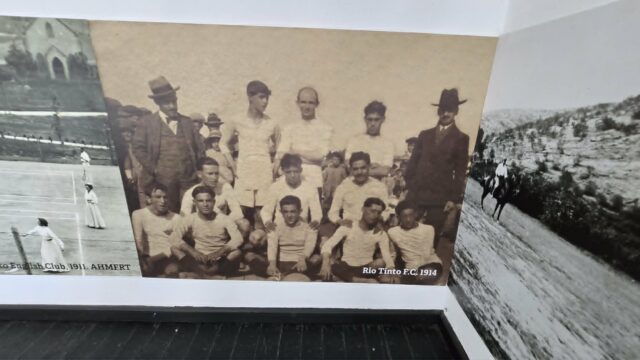
We parked outside the English cemetery and wandered past sunburnt tennis courts and gated front gardens. Founded in 1878 as a place for entertainment and recreation it had three sections: Cricket Club Río Tinto, Lawn-Tennis Río Tinto and Foot-Ball Club Río Tinto. Today nothing much has changed, it is redolent of the classic British club: wood panelling, low leather chairs, billiard room, a stage complete with curtains, signs for men-only areas, glass cabinets displaying British flags and paraphernalia. Extraordinary.
William Bice is documented as organising the first football ‘kick-abouts’ on Spanish soil in Minas de Río Tinto in 1873. Meanwhile, in Vigo, a group of British workers for the Eastern Telegraph Company played football in their free time. These two ‘colonies’ gave birth to the first amateur Spanish football teams: Exiles Foot-Ball Club (1876) and Río Tinto Foot-Ball Club (1878).
Rio Tinto FC catalysed the Sociedad de Juego de Pelota which organised football games against crews of English ships that docked in the port of Huelva. In 1888 the club played matches against the mariners of a merchant ship called Jane Cory on the grounds of the Huelva gas factory. The local population began gathering there to watch this curious sport, which soon gained followers among the local youth.
This sociedad developed into the oldest official football club in Spain, Recreativo de Huelva, founded in December 1889 by two Scottish doctors of the Rio Tinto Company, Alexander Mackay and Robert Russell Ross.
After Recreativo, Sevilla FC is the next-oldest club in Spain and a certain Gibraltarian, John Sydney Langdon, played a crucial role in the beginnings of Sevilla CF, being one of its founders, then serving as club doctor, and even as a linesman in the first official football match in Spain which took place on 8 March 1890 at the Hipódromo de Tablada, Sevilla.
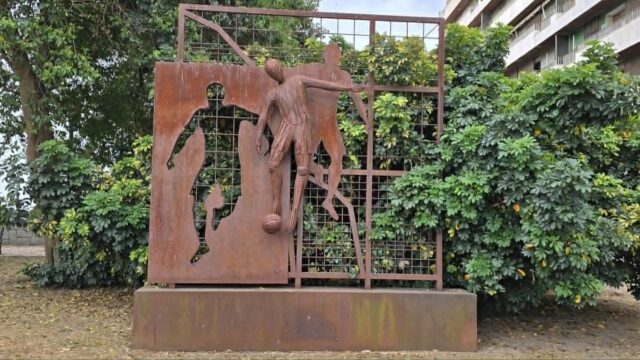
A quick glance at the line up reveals a mixture of British and Spanish surnames. The Campo del Velódromo, Huelva, was the first football ground in Spain and, today, the square where the pitch used to be is home to the Monumento al Velódromo, a work by the sculptor Juan Manuel Seisdedos.
So, what happened to the British in Huelva? During the Spanish Civil War, the mining basin was seized very early by Franco's Nationalist forces. Post-1939, Franco's regime pursued policies favouring Spanish ownership and wanted control of this huge mineral asset.
Rio Tinto Company still existed and operated, but it was no longer the autonomous British industrial state-within-a-state that it had been. In 1954, the company negotiated the sale of their Spanish assets in a multi-million deal.
For nearly 80 years, the Minas de Río Tinto ‘colony’ was unlike anywhere else in Spain, and its British legacy remains clearly visible today. English architecture, railways, and industrial infrastructure sit alongside enduring cultural influences, from English words and customs to the tradition of drinking tea—and, of course, football.
For more info, visit their website: https://www.parquemineroderiotinto.es/
Rebecca Calderon is an author and playwright. She was actively involved in politics in the past, having been an executive member of the Gibraltar National Party and later the Gibraltar Liberal Party. She subsequently stood as a candidate for the Progressive Democratic Party in the 2011 general election. She has not been a member of any political party since 2013, but since 2022 has been an active member of Action for Housing, a voluntary pressure group.


