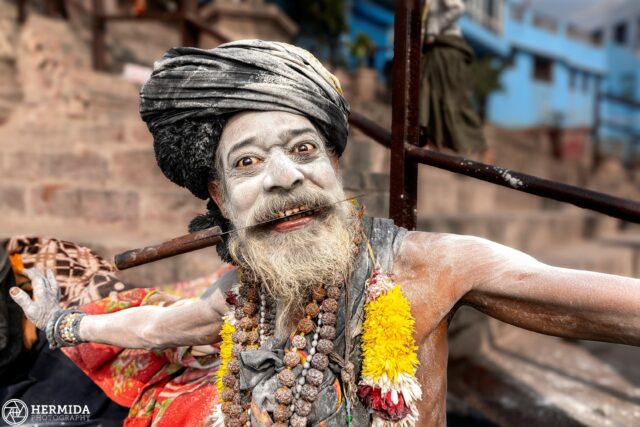
The search for people
Photos by Stephen Hermida


Since he experienced his ‘Damascus moment’, he understood that he wasn’t looking for landscapes, but the power of a gaze instead.
Everything began with a camera bought almost on impulse in the Canadian Rockies.
Stephen Hermida had loved photography as a teenager, but in the days of film it was an expensive and complicated hobby. Without access to a darkroom, he drifted away from it.
Years later, while on holiday with his family in Canada, everything changed.
"The landscapes were spectacular," he recalled.
While visiting a camera shop in British Columbia, he discovered the latest generation of digital cameras. Unlike compact point-and-shoot cameras, these offered interchangeable lenses and full creative control.
As he hesitated over the purchase, he finally bought the camera on the last day of the trip.
"That was in 2004. That was when my passion came back to life."
At first, the camera remained largely unused. That changed when he enrolled on a photography course at the Gibraltar Photographic Society.
"I enjoyed it so much that I just kept going and going," he said.
"Then I started winning competitions, and I thought, 'Well, maybe I really have some promise here.'"
His first photographic expedition took him to Morocco with a small group of photographers.
It was there, surrounded by the dunes of the Sahara, that he experienced what he describes in his forthcoming book as his ‘Damascus Moment’.
While the rest of the group concentrated on sweeping landscapes and sunsets, Hermida found himself pointing his camera elsewhere.
"All my companions were focused on the dunes, the sun, and the landscape. Meanwhile, my camera was always searching for people."
"At that moment I realized I wasn't interested in landscapes. What moved me emotionally were people."
"That was it."
"That was when I realized, in the desert, on that trip: 'This is what I want to do.'"
The following year, for his fiftieth birthday, his wife asked what present he wanted.
His answer was simple.
"A photographic trip."
She gave him a photography tour of India.
It proved to be another defining moment.
Travelling during Holi and visiting Dharamshala, where the Dalai Lama lives in exile, Hermida found himself photographing Buddhist monks gathered for a special day of prayer.
"It was a beautiful experience to be in Dharamshala and to witness such a special moment."
More importantly, it transformed the way he photographed people.
"That was where I learned what portrait photography really was and how to photograph people properly."
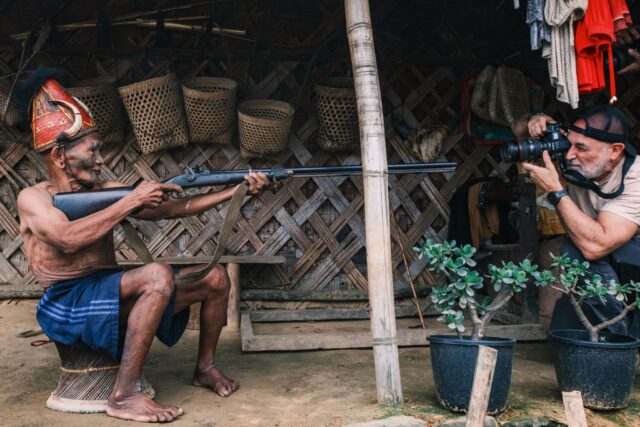
"That was where I learned to get close to my subjects."
"By then I had stopped being a coward hiding behind a telephoto lens, taking stolen pictures from a distance."
"It wasn't about photographing people secretly anymore. It was about approaching them."
From then on, photography became more than a hobby.
Each year, while continuing to work, he set himself the goal of making one or two photographic journeys.
Cuba was among the first.
It also provided one of his more unusual travel stories.
Photographing buildings overlooking Revolution Square, Hermida spent considerable time composing images featuring classic American cars passing beneath the famous image of Che Guevara.
He had not realised the building housed Cuba's State Security headquarters.
An officer and two soldiers approached him and escorted him inside for questioning.
"I explained: 'Look, what I'm doing is trying to compose this shot. I'm waiting for the classic old cars to pass through this position so I can have Che Guevara in the background.'"
Eventually they accepted his explanation and released him.
Despite the incident, Cuba remains as one of his favourite destinations.
"The people..."
"The colours..."
"The music..."
"The landscapes..."
"Although, more than anything else, it was the people."
As his confidence grew, so did the ambition of his journeys.
Danger in Ethiopia
He travelled alone to Ethiopia, hiring only a local guide and driver.
One encounter with the Mursi tribe in the Omo Valley demonstrated just how quickly situations could become dangerous.
Plans had been made for him to stay in the village, but on arrival the chief was absent. Instead, his son and several companions, who had been drinking, demanded payment.
His guide urged him to leave immediately.
As they tried to drive away, armed villagers surrounded the vehicle.
Fortunately, his guide convinced them they would return later that day.
They never did.
"That same night I heard that they had killed a local farmer," Hermida said.
"They don't fool around there."
The incident reinforced his belief that travelling in such places requires experienced local guides and careful preparation.
Without them, he said, many of the journeys would simply not be possible.
His travels have since taken him to some of the world's most remote communities.
In Myanmar, he travelled to Chin State to photograph elderly women whose tattooed faces preserve traditions abandoned decades ago.
One unexpected cultural encounter centred not on their tattoos, but on his beard.
"They found it disgusting."
"They were repulsed by my beard."
The experience became another reminder that perspectives are shaped entirely by culture.
"To us, having an entire face tattooed seems extraordinary."
"To them, however, the strange thing was that I had hair growing on my face."
The last witness
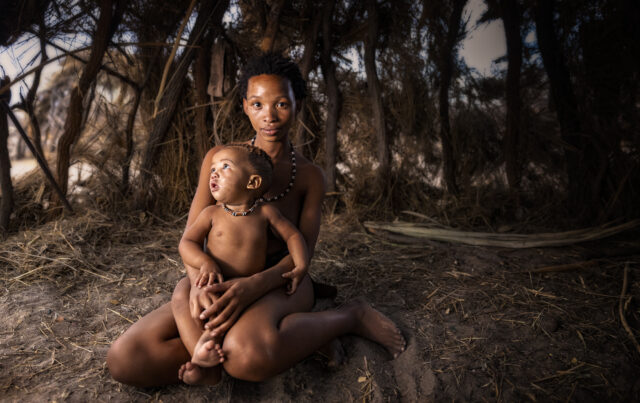
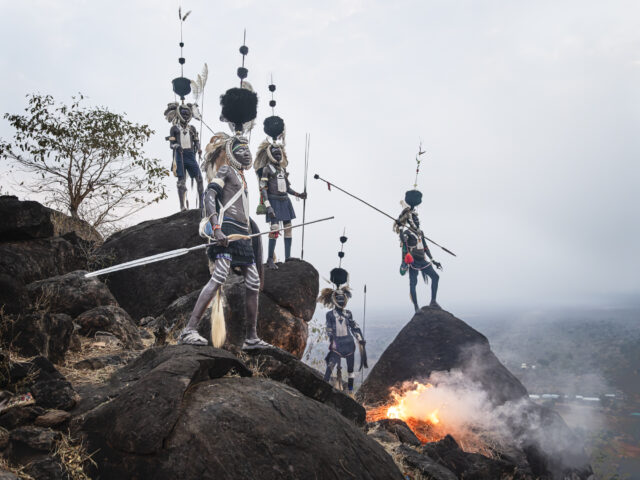
Over time he found himself drawn increasingly towards communities whose traditional ways of life are disappearing.
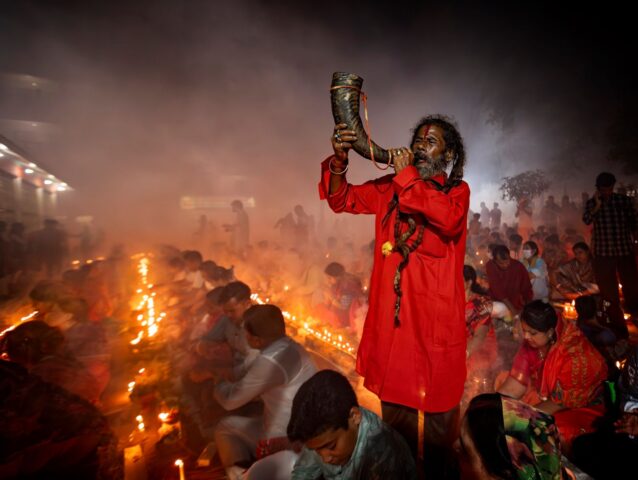
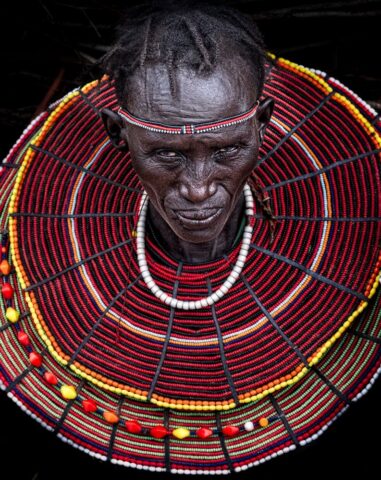
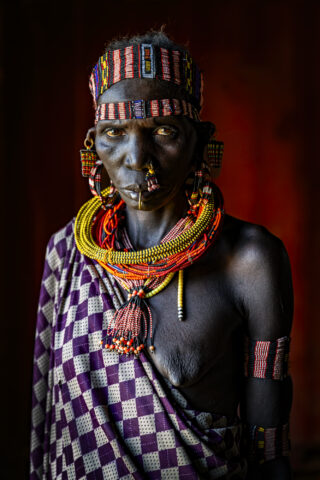
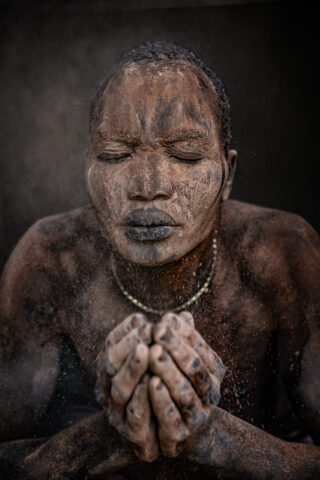
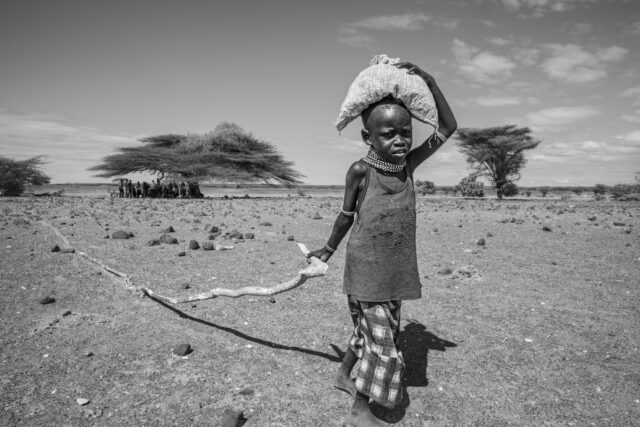
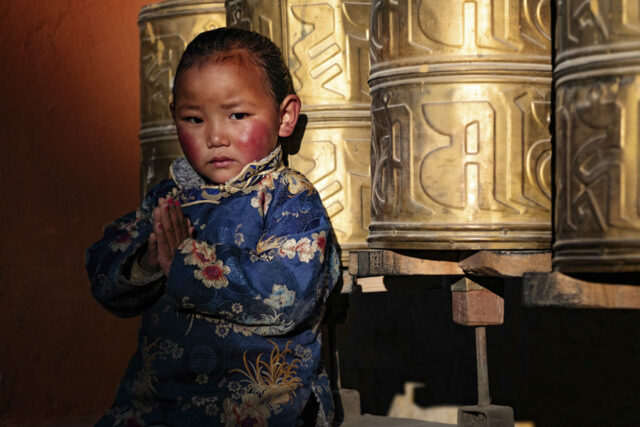
He has photographed former Konyak head-hunters in Nagaland, tribal communities across Ethiopia and South Sudan, indigenous groups in Colombia, remote communities in Pakistan and Bhutan, and nomadic cultures in Chad.
Again and again, he says, the same thought returns.
"We're witnessing something that's disappearing."
"Something that will be lost forever."
He believes women are often the guardians of these traditions.
"What has struck me is that, in most tribes, it is the women who preserve the traditions."
"They are the visible guardians of their culture."
As modern education, technology and globalisation reach previously isolated communities, many customs are fading.
"The tribes themselves may survive."
"But much of what makes them unique—the clothing, the customs, the rituals—will gradually disappear."
Travelling has also shaped his view of humanity.
"I feel incredibly privileged."
"I'm seeing things that, for most people, they will only ever see on the Discovery Channel."
"It's like travelling back through time."
He remembers becoming lost while camping in Chad, only for a local man to quietly take him by the hand and guide him safely back to camp.
"That's humanity."
He also recalls witnessing the grief of a tribe after a young girl died from malaria.
"It was one of the strongest experiences of my life."
"Very powerful."
"Very moving."
"It was heartbreaking."
The experience remains with him years later.
Many of his journeys have involved risk.
He travelled through South Sudan while conflict continued in parts of the country, with contingency plans in place in case fighting spread towards the capital.
Insurance proved difficult to obtain.
Yet he considers the photographs among the strongest he has ever produced.
"It was one of the most difficult countries I've ever worked in."
"But photographically it was also one of the most productive."
Today, while continuing to travel internationally, Hermida has turned his attention closer to home.
His latest project, Discoverers of People, aims to photograph 29 Gibraltarians whose lives reflect the diversity of the community.
"The idea is to photograph twenty-nine people from Gibraltar who represent the diversity of the community and who each have an interesting story that most people don't know."
The artistic process
For Hermida, however, the artistic process does not end when the shutter is pressed.
"I don't use artificial intelligence."
"I don't add or remove elements."
"I simply work with the colours, contrast, light and tonal balance that already exist in the original image."
His greatest attention is reserved for one part of every portrait.
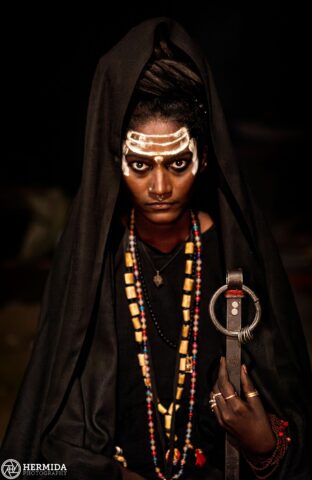
"Above all, I pay close attention to the eyes."
"For me, in portrait photography, the eyes are everything."
"When someone looks at one of my portraits, I want them to feel that the subject is looking back at them."
Ultimately, he believes photography is about far more than documenting distant cultures.
Someone once told him he had a mission.
"Your mission is to show other people parts of the world they would never otherwise see."
Looking back over two decades of travel, Hermida believes that is exactly what he has been trying to do ever since that moment in the Moroccan desert when he realised landscapes were never really his subject.
"It was always people."