


Treaty signed in Brussels


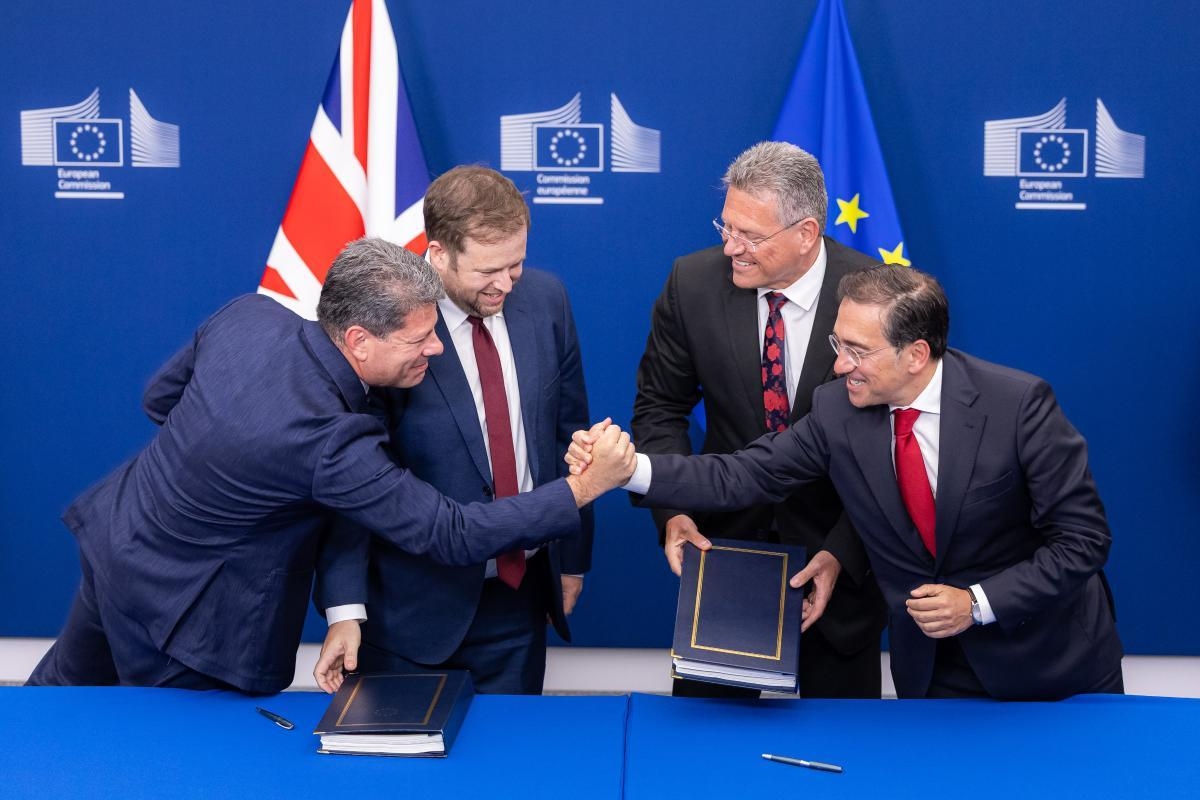
The UK/EU treaty on Gibraltar was signed in Brussels on Tuesday afternoon, clearing the way for provisional implementation and the removal of immigration controls at the border as from midnight tonight.
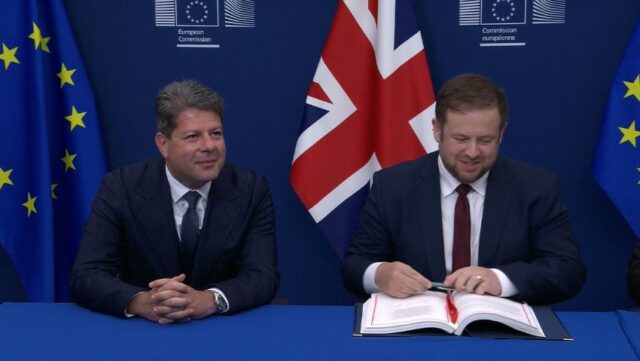
The treaty was signed by UK Europe Minister Stephen Doughty and Maros Sefcovic, the EU’s Commission for Trade and Economic Security, both of whom were closely involved in the negotiation.
Also present at the signing were Chief Minister Fabian Picardo and Deputy Chief Minister Dr Joseph Garcia, and Spain’s Minister for Foreign Affairs, Jose Manuel Albares.
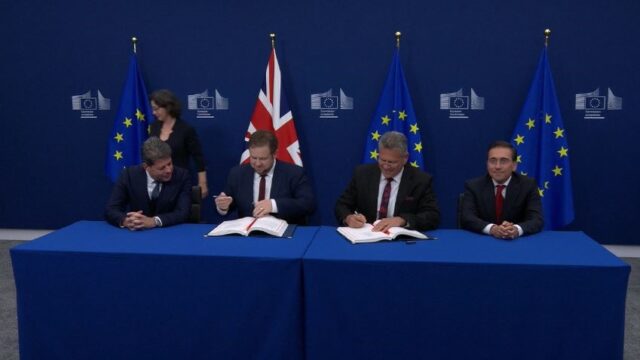
After nearly five years of tortuous talks, the treaty represents a historic moment for Gibraltar and the beginning of a new relationship with neighbouring Spain and the wider EU.
The agreement parks sovereignty to one side and leaves all respective positions untouched to instead focus on pragmatic solutions to the problems caused by Brexit.
Gibraltar voted overwhelmingly for Remain and respected the outcome the UK referendum, but was left out of the UK/EU Trade and Cooperation Agreement.
Geographical reality meant that, alongside the UK, it had to carve out a new position for itself in a post-Brexit world that ensured it could prosper even while being outside the EU.
The treaty guarantees fluidity for people crossing the border by removing immigration controls at the land border and moving them to the airport, where Spain will act as guarantor for Schengen controls from a shared facility spanning both sides of the frontier.
The agreement puts in place bespoke customs arrangements between Gibraltar and the EU customs union and creates a new framework for cooperation with Spain and the EU in everything from law enforcement and judicial cooperation to labour rights and environmental protection.
It also guarantees the UK's military autonomy on the Rock.
Aspects of it have proved controversial and many people remain uneasy about issues such as security, despite assurances from the Gibraltar Government.
The border area and key parts of Gibraltar including Main Street will be monitored with sophisticated surveillance technology, while physical law enforcement presence will be beefed up at the border.
Some sectors of the economic including retailers are worried too about a new transaction tax and changes to customs arrangements.
But despite this unease, the overwhelming sense is that the treaty is a better outcome than the alternative, which would have been a hard border that would have been devastating for Gibraltar economic model, which relies on frontier fluidity.
The free-flowing border will open up new opportunities for growth including increased tourist footfall and flights to new EU destinations under the treaty arrangements, guaranteeing too easy access for 15,000 cross-border workers who work across many sectors of the economy and public service.
Shortly before the agreement was signed in the Berlaymont building of the European Commission in Brussels, the UK and Gibraltar signed a concordat that governs how the UK and Gibraltar will give effect to their respective obligations under the UK/EU treaty.
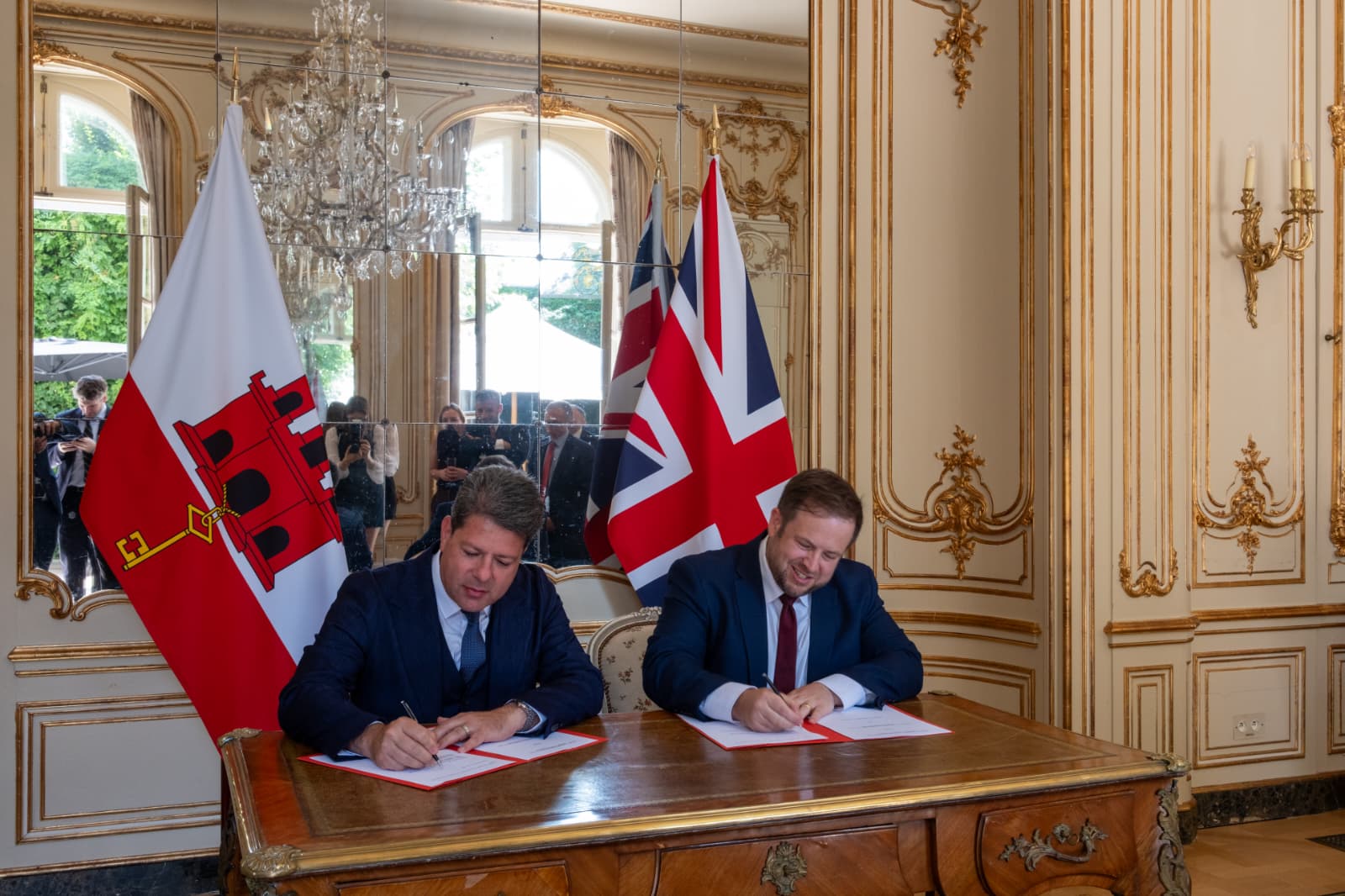
The concordat provides that, other than in exceptional circumstances, nothing will be done by the UK under the treaty contrary to the wishes of the people of Gibraltar.
It guarantees the Gibraltar Government’s ability to exit the UK/EU treaty should it wish to or stop a future UK government from doing so against Gibraltar’s wishes.
MORE FOLLOWS
Most Read
New group to plan healthcare jobs and placements for returning graduates
Tue 13th Oct, 2026
Rock’s digital security system sends warning beyond Gibraltar, Parliament told
Fri 16th Oct, 2026

Today's Paper
14th July 2026
Read our latest newspaper by downloading our app from the link below.


