


Business group reviews first 10 weeks of treaty arrangements


The Minister for Health, Care and Business, Gemma Arias-Vasquez, chaired a meeting of the Business Transition Advisory Group at No.6 Convent Place to review the first 10 weeks of the new customs and border arrangements under the UK/EU treaty.
It was the group’s second meeting since the treaty began provisional application on July 15 and the first since the new arrangements had been operating on a day-to-day basis for several weeks.
Senior Customs officials, the Government’s CEO of Business and representatives of the business community attended the meeting.
Members received updates on the operation of the new arrangements and reviewed progress on issues raised by businesses at the group’s previous meeting in July.
The group was also briefed on the Government’s package of support measures for businesses during the transition, including the Transaction Tax Deduction Rules published on Thursday, with further measures expected in the coming weeks.
Representatives discussed their sectors’ experience of the new arrangements, including processes they considered to be working well and areas where further adjustments may be required.
They were also updated on work aimed at ensuring a level playing field for businesses operating in Gibraltar and simplifying the process of registering and licensing a business.
The Government said it would continue monitoring implementation, provide further guidance where required and convene the group regularly as the arrangements bed in.
“Ten weeks on from provisional application, it was important to bring the Group back together to take stock of how the new arrangements are working in practice," Ms Arias-Vasquez said.
“I am grateful to HM Customs and officials for the work they continue to do on the ground. Much is now running smoothly, and where businesses have told us things need to work better, we are listening and acting."
"This Group remains an essential link between Government and the business community, and we will keep meeting, keep engaging, and keep resolving issues as they arise."
LLAMAS
Separately, Attorney General Michael Llamas acknowledged on Friday that Gibraltar had experienced “teething problems” following the provisional application of the treaty with the EU, but said truck movements had returned to previous levels and work was continuing to ease operational issues for traders.
“As anticipated, we have had the teething problems that were inevitable for a change of the magnitude brought about by this treaty,” he said.
“But what I see, over two months on, is that no online gaming company or financial services company has left Gibraltar, trucks are now coming into Gibraltar in the same numbers as before 15 July, our hospital and our care homes continue to function with normality and tourists continue to flow through the land border.”
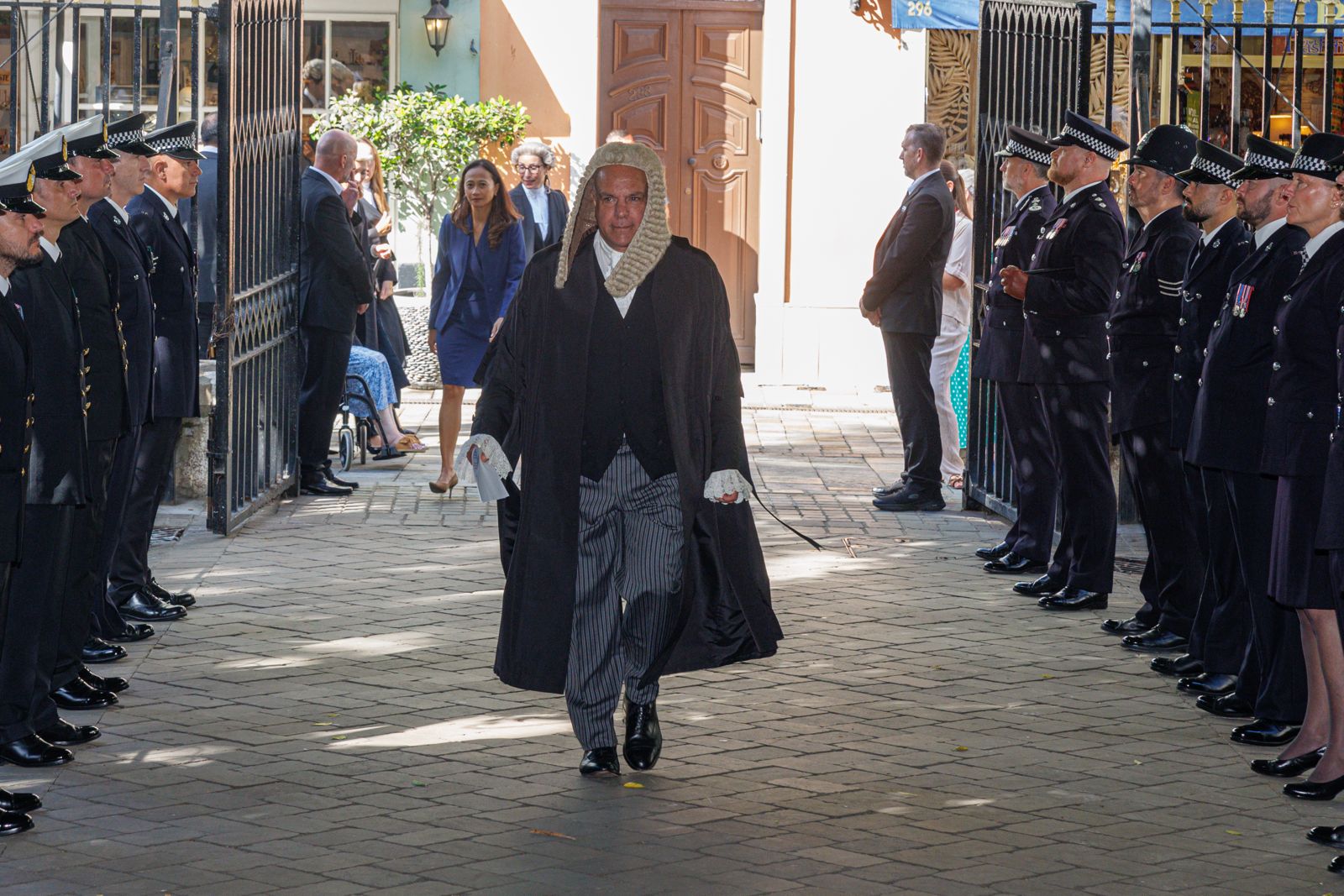
Speaking during the Ceremonial Opening of the Legal Year, Mr Llamas said further work would continue in the coming months to address practical implementation issues, with particular focus on trade.
The Attorney General said the wider treaty had delivered the stability sought after years of uncertainty following Brexit.
“After so many years describing how we have been navigating the fallout of Brexit, it is with a tremendous sense of satisfaction, and dare I say relief, that it all came to fruition on 15 July 2026 when the provisional application of the treaty started,” he said.
He said ratification was expected to be completed at Westminster by October and in the European Parliament by December.
“Our overriding objective of avoiding a hard land border with Spain, without compromising sovereignty, has been achieved,” Mr Llamas said.
“It has been done through the establishment of bespoke arrangements with the Schengen Area and the EU Customs Union.”
He said the agreement had provided certainty not just for trade and movement across the border but also for Gibraltar’s wider economy and legal sector.
“The stability provided by the treaty is what will allow our profession to continue to thrive,” he told lawyers gathered in the Supreme Court for the ceremony.
Mr Llamas also highlighted the scale of the legal work required to put the new arrangements into effect, describing treaty implementation as “one of the largest and most complex legislative exercises undertaken in Gibraltar”.
The Office of Parliamentary Counsel drafted the Treaty on Gibraltar and the European Union Act 2026 and more than 50 pieces of subsidiary legislation.
In parallel, the Office of Advisory Counsel advised Gibraltar Government departments and public authorities on treaty-related matters including customs, immigration, border management, law enforcement and state aid.


