


Arias-Vasquez meets Burnham and discusses treaty at Labour conference


The Minister for Health, Care and Business, Gemma Arias-Vasquez, met UK Prime Minister Andy Burnham at the Labour party conference in Liverpool on Monday evening, where they discussed the UK’s relationship with Gibraltar and the provisional implementation of the UK/EU treaty.
Mrs Arias-Vasquez told the Chronicle that Mr Burnham was well briefed on the treaty and its provisional implementation and that the discussion was positive.
Mr Burnham also sent warm wishes to Chief Minister Fabian Picardo, who was unable to attend the conference this year, she said.
In turn, Ms Arias-Vasquez congratulated Mr Burnham on taking office and wished him well ahead of his first annual party conference as leader.
“I am grateful to the Prime Minister for his time and for a warm and constructive conversation,” she said.
“I thanked him for the work and support of his Government on all matters relating to Gibraltar, which is greatly appreciated.”
“Gibraltar and the United Kingdom share a long and close friendship, and I look forward to building on it with the Prime Minister and his Government.”
The encounter took place on the sidelines of the Gibraltar Government’s traditional reception, which was attended by Mrs Arias-Vasquez and Justice, Trade and Industry Minister Nigel Feetham.
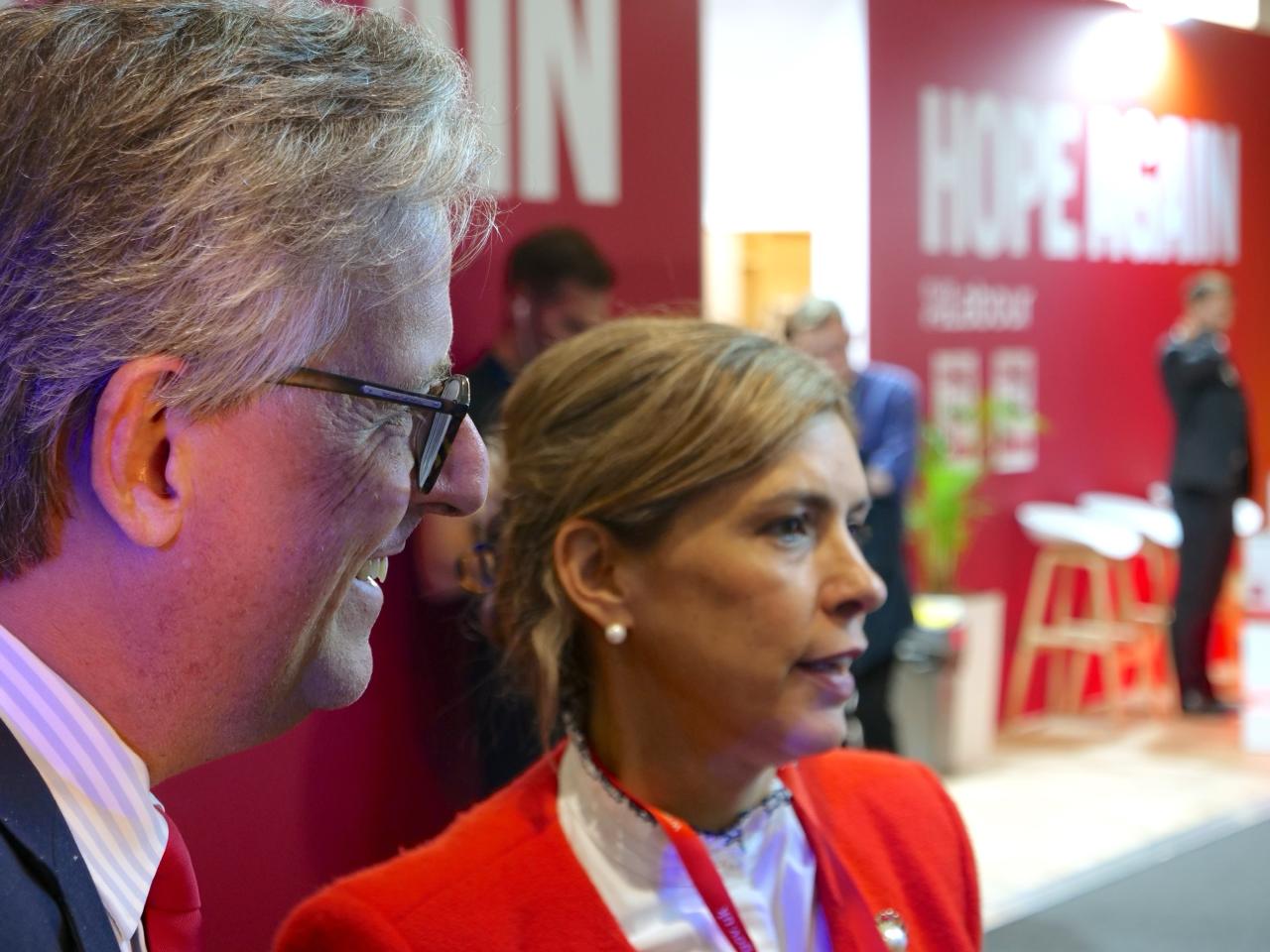
This was the first Gibraltar reception at a Labour conference since the UK/EU treaty entered into force provisionally on July 15.
Addressing guests, Mrs Arias-Vasquez said Gibraltar’s new treaty with the EU had protected British sovereignty while providing certainty for businesses and delivering practical benefits for people on both sides of the border.
She reflected on the uncertainty Gibraltar had faced after Brexit, noting that 96% of Gibraltarians had voted to remain in the EU and that around 15,000 workers cross the border with Spain every day.
“A hard border would have hurt families, businesses and livelihoods on both sides of it,” she said.
Ms Arias Vasquez traced the negotiations from the New Year’s Eve framework agreement in 2020 through to the political agreement in June 2025 and the treaty’s signature on July 14 this year, after which routine immigration checks at the land border ended.
“People can now at last do something as simple as just moving between Gibraltar and our neighbouring towns with a fluidity that generations of Gibraltarians never knew,” she said, stressing that the agreement protected sovereignty.
“It is safe on sovereignty, exclusively British sovereignty over Gibraltar, over our territory and our waters, and it is fully upheld and explicitly protected,” she said.
Mrs Arias-Vasquez said the treaty also provided economic certainty and practical benefits for workers, families and young people, thanking UK ministers, officials and Labour supporters who had contributed to the negotiations, even outside government “when standing up for Gibraltar won you no ministerial office and very few headlines”.
But she cautioned too that the treaty itself was not the end of the process.
“A treaty is not an ending,” she said.
“It is a legal framework which creates an opportunity for a new journey for us together.”
“And a legal framework has to be made to work.”
Ms Arias Vasquez said Gibraltar was now focused on implementation at the port, airport and border while the formal ratification processes continued in the UK and European parliaments.
And she said Gibraltar’s relationship with the UK went “far beyond the treaty”, pointing to longstanding links in healthcare, education and business.
As Health Minister, she saw “every single day” how Gibraltarian patients received specialist treatment in UK hospitals, while its clinicians and generations of students studied at British universities.
“Our businesses trade here. These are human ties, and they are strong,” she said.
Turning to her own political ambitions, she confirmed her intention to seek the GSLP leadership after Mr Picardo steps down later this year, adding that if she was “fortunate enough” to lead the party, she would work to “ensure that this legacy continues”.
Mrs Arias Vasquez reflected on benefiting from scholarships and affordable housing policies introduced by previous GSLP administrations and said she wanted that approach to continue for another generation.
“I am a product of a socialist Labour government,” she said.
“And of that I am very proud.”
Ms Arias Vasquez said Labour governments should focus on improving everyday lives through healthcare, education, housing and social care.
“Labour governments open doors. They break glass ceilings,” she said.
“They believe that governments exist to make ordinary lives better.”
“They are the values that we are putting into practise in government in Gibraltar today, in our hospital, in our schools, and in the homes that we are building for our people at every stage of their lives.”
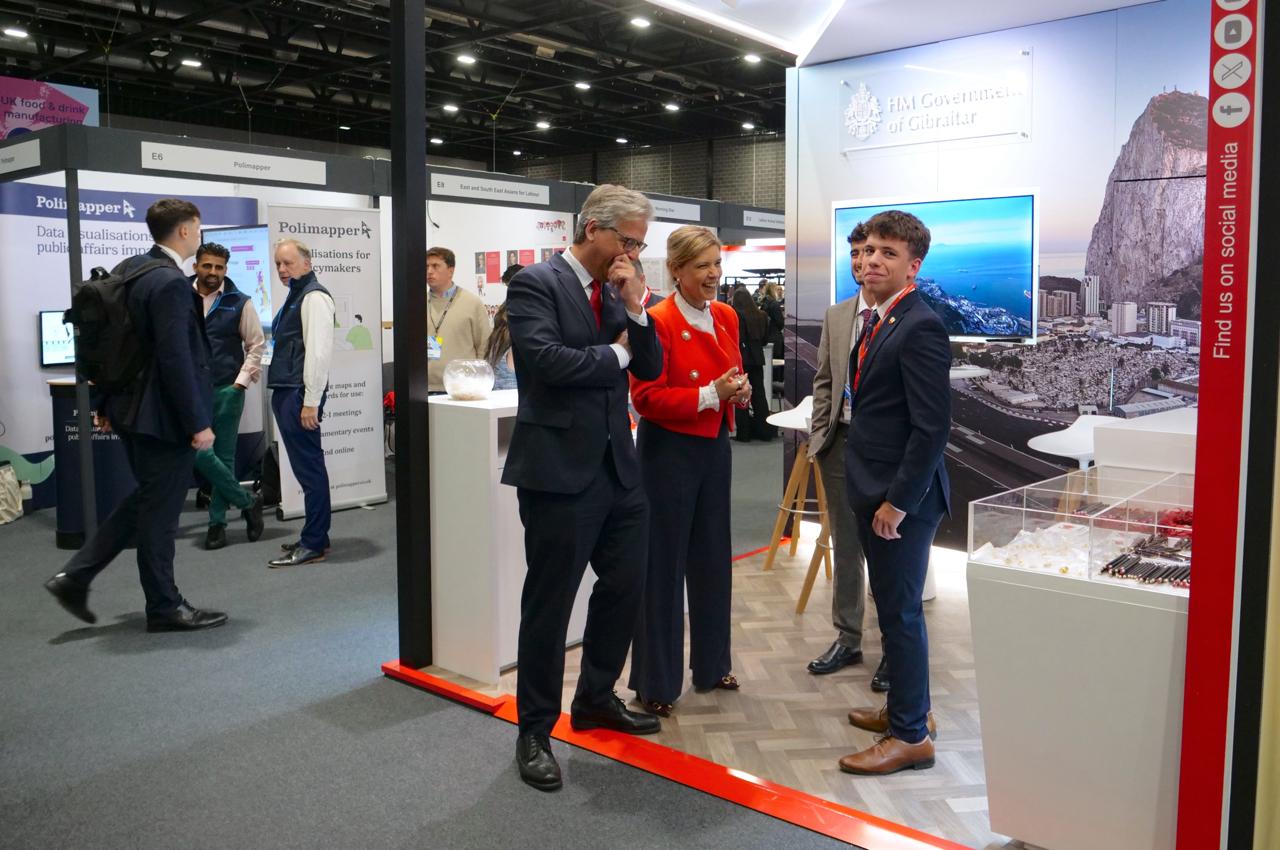
Amanda Martin, the Labour MP for Portsmouth North and chair of the All-Party Parliamentary Group for Gibraltar, said the new UK/EU treaty represented an important moment for Gibraltar and should provide the basis for strengthening links between the Rock, the UK and the EU.
Addressing the Gibraltar reception, Ms Martin said Gibraltar and the UK shared “a long and proud history” but should also look to the future.
“The new treaty is an important moment for Gibraltar,” she said.
“It provides a framework for a closer relationship with the European Union while respecting Gibraltar's constitutional position and British sovereignty.”
Ms Martin stressed Gibraltar’s role in the negotiations.
“There was nothing about Gibraltar without Gibraltar in those negotiations, because treaties are ultimately about people,” she said.
The Labour MP, who was in Gibraltar recently for National Day, said the focus should now turn to making the new relationship work in practice through cooperation and dialogue between Gibraltar, the UK and the EU.
“And that means working together, listening to each other, and importantly, learning from each other,” she said.
“Relationships should not simply be about governments and institutions.”
“They should be about people, businesses, families, young people, and our communities.”
She highlighted the potential for collaboration between Gibraltar and the new Royal Marines Museum, due to open at Portsmouth Historic Dockyard in October, describing it as a “small but important example” of how the history connecting the two communities could be preserved for future generations.
But she said the relationship should extend beyond those historical links, and that Gibraltar and the UK “should be ambitious” in seeking greater cooperation in areas including culture, education, the economy and social care.
“Gibraltar has a distinctive identity and a remarkable history and a very strong sense of community, and those are things that we must celebrate,” she said.
Ms Martin said she hoped the new chapter would be marked by an open and constructive relationship based on “respect, cooperation, and a willingness to understand each other's perspectives”.
“The strongest relationships are not built simply on what we have in common,” she said, thanking the people of Gibraltar for their “enduring friendship”.
“They are built by taking the time to understand our differences as well.”
The Gibraltar Government is attending seven UK party conferences this autumn.


