


Eurovision Song Contest, a force for good but can it really be 70 years of history?


The Eurovision Song Contest began before I was born. Before Gibraltar had its own television station. Even before Radio Gibraltar was born in 1958. Let’s just pause and think about that for a moment. The year was 1956, just two years after The Queen made her official visit to Gibraltar. Now, that really takes us back. It was organised as a one off – the ‘Grand Prix of European Song’ and was held in Switzerland. Who could have imagined it would grow into the dynamic event it is today?
The idea was to unite Europe for good through music and to pave the way for live international television broadcasting. This was to be the test that would bring broadcasters together and would serve to also open the airwaves around Europe for future cooperation. And it worked. And as we know it keeps on working – although today the expansion of Europe within the Eurovision Song Contest is a little more outstretched – but there can be no denying the event year in year out is a huge, now not just international, but a global success. But I can’t help wondering, where does Australia fit in? And yet, if the formula continues to bring the goods to unite, bring positive energy, and friendship, then why not reach out musically to all the corners of the world. It may just solve some of our current world issues – don’t you think? Such is the power of music.
2026 marks a milestone in Eurovision history. Can you believe it has been held annually over 70 years – yes, this is its 70th edition. It is its Platinum anniversary. So, as a fan of Eurovision for all of my life – and we have featured Eurovision before on these pages – I felt it was right to bring back the Eurovision Song Contest back to Alice’s Table as we ready for this year’s party. Now you may knock it, but you cannot ignore it, or that its audience reaches out to 166 million people across the globe – and now on YouTube Tik Tok and X, the numbers are even higher.
Love it or hate it – secretly, I believe there are a lot more of us out there who just won’t admit to a good night in while watching the Eurovision Song Contest – a tradition that I admit I adhere to every year with good friends, good food, good entertainment, and all of us having a good laugh and good fun. This year the contest has returned to Austria – and Vienna is the place chosen. Actually, it will be its third time organising the contest after ‘Wasted Love’ performed by JJ won last year – to be honest I don’t remember it, and I probably voted for something else – but that just does not matter because it is party time again.
This year only 35 countries are competing – just two fewer than last year – and the smallest number of participants since 2023. In the final tomorrow night 25 songs will be in the mix. Absent tomorrow will be Spain, Iceland, Ireland, the Netherlands and Slovenia, all boycotting the event because of Israel’s participation. But the show still goes on – I know I will miss the Irish and Spanish entries – and all other competing countries will be hoping their entry will be the winner so they can hold the 71st edition next year. I don’t know about you, but I don’t think I have guessed the winner in quite a few years – few good tunes these days and a lot of razzmatazz, and unusual, and bizarre presentations.
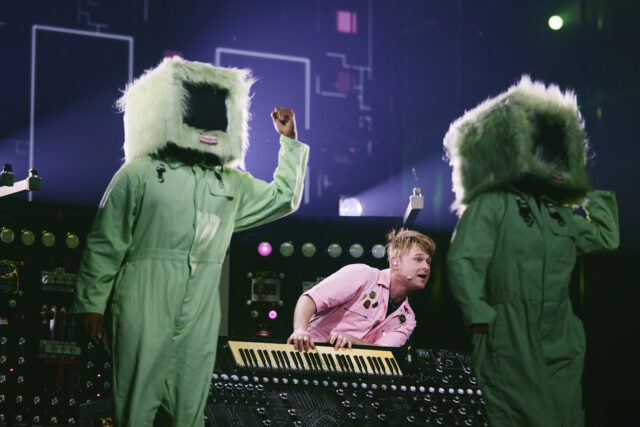
This year the UK entry by Look Mum No Computer is a love it or hate it moment. As a YouTube star, his real name is Sam Battle, and he has built most of his staging himself for his performance tonight - the song is called – ‘Eins, Zwei, Drei’.
To be honest I just don’t know what to make of it but in Eurovision terms everything is possible and who knows the contest could even return to the UK next year – it certainly has got a catchy and singable bit in it – can we even call it a chorus?
Our Graham Norton has stated that this song is certainly different to anything else the UK has ever entered before. And I would agree, and he also commented recently that Look Mum No Computer was a “really great choice”. Time will tell – and we don’t have long to go to find out. When asked if the UK entry could win tomorrow? Norton was certainly right in his response – “Never say never”. And how true that is because anything goes.
Over the years we can look back on each decade as holding a character all of its own – kind of their own stamp.
EMBARGOED TO 0001 TUESDAY MAY 12
For use in UK, Ireland or Benelux countries only Undated BBC handout photo of YouTuber and experimental singer/songwriter Look Mum No Computer, real name Sam Battle, who will represent the UK at the Eurovision Song Contest in Vienna in May
Issue date: Tuesday May 12, 2026. PA Photo. Photo credit should read: BBC/EBU/PA Wire
NOTE TO EDITORS: Not for use more than 21 days after issue. You may use this picture without charge only for the purpose of publicising or reporting on current BBC programming, personnel or other BBC output or activity within 21 days of issue. Any use after that time MUST be cleared through BBC Picture Publicity. Please credit the image to the BBC and any named photographer or independent programme maker, as described in the caption.
The 1950s established the song contest with a swing-ballad tone, the 1960s could be described as a classic chanson. In the 1970s – well this can only be seen as a pop explosion – with Abba’s ‘Waterloo’ leading the pack. The 1980s brought the glam and power ballads. The 1990s brought the Celtic dominance and post Soviet expansion. Then into the Millennium – the 2000s – saw the introduction of the televoting which gave it a new lease of life as European audiences joined in and brought with it the spectacle. Into the 2010s – and the contest continued to grow with the modern pop and social themes, and now in the 2020s – in this increasingly digital era mixed with A.I. all the platforms come into play as the global audience reach continues to grow.
Graham Norton just this week praised the Eurovision for “bringing audiences together” not just for one night but for an entire week (and more), and this not just across Europe but beyond as well. Just think about this amazing phenomenon – it is a night when everyone votes at the same time, and in the same moment. Now, how does that happen? Sounds crazy but it’s true – a fact – that the Eurovision contest makes it possible as the Eurovision family reunites and comes together for one more year whatever is happening in the world. And Europe comes together when it matters – take the year Ukraine won – the message was clear. It was Sam Ryder’s year even though he came in second with his ‘Space Man’.
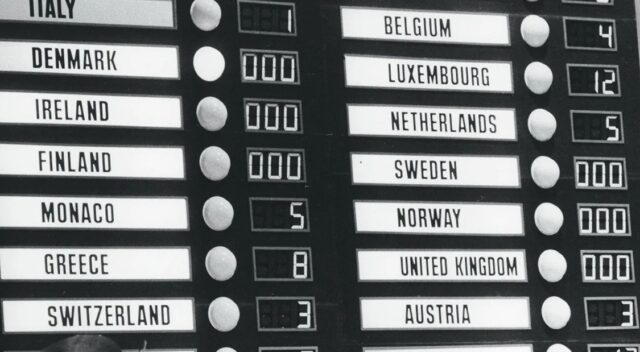
The contest has changed in so many ways. I can remember watching it in black and white with a snowy picture and background noise as we tuned into Spanish television TVE1. That was the only way we could watch back in the 1960s and 1970s. As you waited for the result of the jury – in the hope that Spain would not get the dreaded 12 points – with cheers when the UK entry received 12 – but Eurovision back then was a lot more predictable – today it’s less so. Countries still insist on voting neighbouring countries as we will see tonight, and more often than not those 12 points just don’t matter in the final result. But the famous NIL POINTS, now that’s another matter.
In his book Eurovision by Chris West he writes in his introduction of their being politics in the voting with blocs of nations supporting each other – we all know that! But he suggests this is part of the fun – “it drove Terry Wogan to distraction, but most Eurovision fans love that moment when the Cypriot announcer says with a straight face, ‘And our twelve points go to… Greece’ It is all part of the ritual”. But he suggests that this also tells us something important about Europe and about belonging. He describes it as the politics of belonging “not just to your bloc but to Europe as well” because “Eurovision has always asked what it means to be European”. So, it is a unity that brings us together every year as a common denominator through our traditions and songs – for the good of all whilst listening to music.
In the early years more established names were attracted to the festival like Matt Monro (UK, 1964), Kathy Kirkby (UK) and Conchita Bautista (Spain) both in 1965, The New Seekers (UK, 1972 with Beg Steal or Borrow – and a favourite of mine), Massimo Ranieri (Italy, 1971), Nicola di Bari (Italy, 1973), Al Bano and Romina Power (Italy, 1976) and Umberto Tozzi (Italy,1987).
The UK had a long list of established singers over the years and as I look back to the late 1960s and 1970s – when a good song did matter – in many countries catchy songs became classic tunes. Here are some of my favourites over the years – sorry to say it is mostly in the early years (late 1960s, 1970s and 1980s) – and a few more - so let’s reminisce. Cliff Richard did not win the contest with his super memorable – ‘Congratulations’ (UK, 1968) but it became a huge hit for him reaching number one for two weeks in the UK and many other European countries - it famously finished in 2nd place that year losing by just one point to Spain’s ‘La La La’ by Massiel (still a Spanish hero of Eurovision 58 years later). And although ‘Congratulations’ did not win the contest it was a massive commercial success and became (still is) one of Cliff‘s signature hits. Who does not remember Sandie Shaw (wearing no shoes) with ‘Puppet on a String’ (1967), and Lulu’s ‘Boom Bang a Bang’ (UK, 1969) - these three are probably my earliest recollection of watching the contest on Spanish Television in black and white - in the days when I watched with my parents and then once over listened to the Spanish jury reflecting on the contest and why they had not won - always and interesting roundup. Then came 1970 – the year Dana won with ‘All Kinds of Everything’ for Ireland – and here I recall listening to famous Spanish commentator José Luis Uribarri – his comments not always what you wanted to hear. 1970 was also the year the UK came second with Mary Hopkins song ‘Knock Knock (Who’s There)’. It was also the year of ‘Gwendolyne’ by Julio Iglesias (Spain) which came a joint fourth with three other songs.
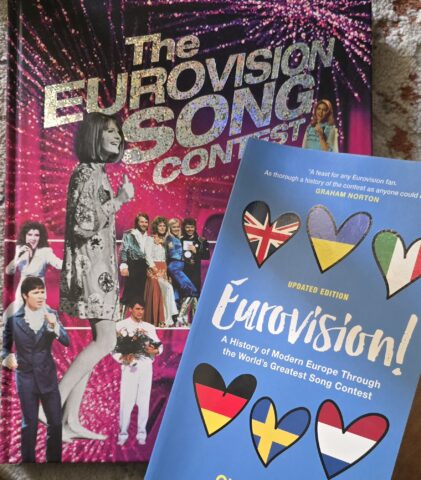
Let’s jump to 1974 – I must mention again Abba – the Swedish quartet - with the song that would transform the Eurovision in song with ‘Waterloo’, and visually as they came onto the stage in Brighton in their hippy-odd-like costumes. The contest would never be the same again and would launch Abba into a global star status.
The book 50 years of the Eurovision Song Contest describes the moment as “the biggest jolt since its cosy inception”, and who would have imagined what they would become and how they would influence the music world even to this day.
Another jump to 1976. It was Brotherhood of Man with ‘Save Your Kisses for Me’ that would take the UK onto another win. Their choreography was slick and they won the hearts of many and a clear winner with 164 points. The catchy simple tune spent six weeks at the top of the UK charts and topped most of the charts across Europe. 1981 was another year when the choreography again triumphed – but ‘Makin’ Your Mind Up’ was definitely a catchy tune which also launched the career of Bucks Fizz. 1986 was a special year for Gibraltar for although we have always been excluded from the contest (maybe one day) our very own Brian Wade wrote the UK entry that year called ‘Runner in the Night’ performed by Ryder and came 7th.
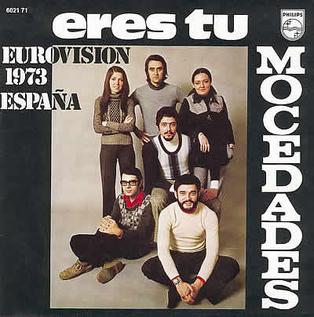
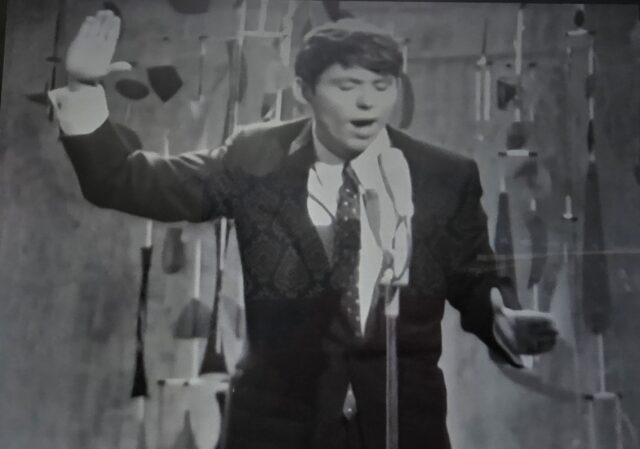
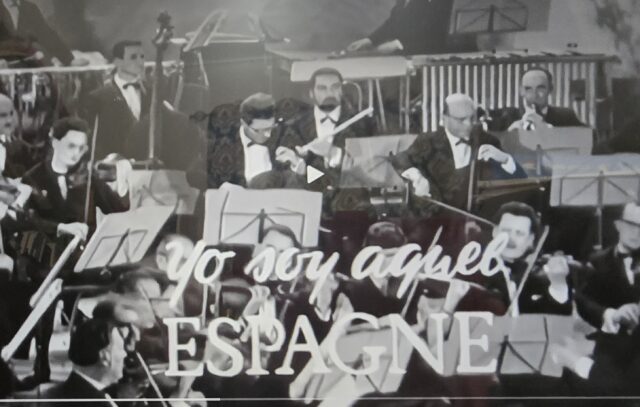
As for Spain – let’s forget the winners and concentre on the ones that didn’t make it but are now part of music history like Raphael with ‘Yo Soy Aquel’ (1966), Mocedades with ‘Eres Tu’ (1973) – for me the two best Spanish entries of all time, then there was Bachelli with ‘Y Solo Tu’ (1981), Paloma San Basilio with ‘La Fiesta Termino’ (1985) and Sergio Dalma with ‘Bailar Pegados’ (1991).
I have two favourites from Israel, both winners - Izhar Cohen and the Alpha Beta ‘A Ba Ni Bi’ (1978) and then they did it again the following year with ‘Halleluja’ by Milk and Honey. 1980 saw the beginning of the Johnny Logan dominance and story winning in 1980 with ‘What’s Another Year?’, and in 1987 with ‘Hold Me Now’. Then in1992 he penned the winning song ‘Why Me?’ sung by Linda Martin. Logan is often referred to as Mr Eurovision. Italy has always been one of my favourites, but I will only highlight one – Toto Cotugno and the winner from 1980 ‘Insieme 1992’. I have to say there were many songs I came across as I researched this article – songs that I just do not remember – but it did dawn on me that whilst we may have forgotten many there have been just as many great songs that we still remember which the contest has produced over the years. I have mentioned some which remain my favourites and form part of my playlists – but I must not forget two - the anthem that rocked ‘Rise like a Phoenix’ by Conchita Wurst representing Austria in 2014. But for me it is Katrina and the Waves with ‘Shine a Light’ – a clever anthem which sits close to my number one and ranks as one of the best winners of all time. A UK entry which won in 1997. It was a clear winner too. And you are probably wondering which is number one – no surprises when I write – that it has to be Abba – the contest’s most influential winner of all time.
Over the years the Eurovision Song Contest has made the show more visual, introducing major technological advances – they definitely introduced the wow factor and some must watch television moments in leaps and bounds. They have pushed the hi-tech and created unbelievable television - augmented reality, given us immersive and impressive staging, and even fusion of both live and virtual performance techniques. What will 2026 bring? There’s just one thing for me – bring back the live full orchestra – pre-recorded music never quite does it for me. I guess we can argue that the songs matter less than ever these days – but increasingly the contest has been able to reflect the music of the day. And undeniably every year there are songs that live on. I still live in hope each year that the contest will produce another great song.
This new Millennium has seen changes to the voting, the jury make up, and the constantly changing participation rules. And of course, there are now two semi-finals which determine the final list of finalists – from a one night affair it is now more than a week-long affair with umpteen number of events organised in the run up to the final night. And I reckon there is still more room to grow as the solid fan base of Eurovision wants more and more. I have no doubt because one can only admire how the organisers, effectively, the broadcasters, have consistently reinvented the Eurovision Song Contest, facing many challenges.
70 years is quite a feat – although for a time the Eurovision lost its way – but with the addition of more countries it was able to rebrand itself keeping up with the latest trends – incorporating new musical ideas. In many ways it has not been afraid to make the changes necessary to keep it relevant in a world of constant change and new challenges that it continues to meet. And I am certain it will continue to evolve into the future.
As we look ahead to tomorrow tonight – who knows what will happen? But I can guarantee you a show filled with innovation, entertainment, visually stunning and musically challenging. And there’ll be plenty of laughs, plenty to talk about – what will Norton have to say? Solid entertainment. Oh, and good food – a celebration of friendship as we gather for another year. Here’s to another 70 years of Eurovision – now, will it be douze point or nil point?
Time to take out your scoreboard.
I secretly knew you were a fan of Eurovision.
Enjoy.
Most Read
New group to plan healthcare jobs and placements for returning graduates
Tue 13th Oct, 2026
Economic Crime Unit’s new offices unveiled, alongside a call for further investment
Tue 13th Oct, 2026
Commission reinforces EES exemption guidance after incorrect registrations
Tue 13th Oct, 2026

Today's Paper
14th May 2026
Read our latest newspaper by downloading our app from the link below.


