


Gibraltar’s city centre is looking better, but don’t forget the walls


By Christian Hernandez

There is much to welcome in the recent efforts to brighten up Gibraltar’s city centre. The additional plants, flowers and planters have made a real difference, bringing colour and vibrancy to our streets. Credit where it is due. The Government, the Department of the Environment and everyone else involved deserve recognition. This is exactly the kind of initiative that helps brighten a city centre.
We only need to look a little further along the coast to see what can be achieved when this is done properly. Estepona is probably the best local example. Not so many years ago, parts of its old town felt tired and run down. Today, it is one of the most attractive towns in the region, full of colour, flowers, clean streets and civic pride.
Gibraltar is very different from Estepona. Our city centre is denser, older and shaped by a more complex history. Historic city centres, though, often benefit most from thoughtful beautification, particularly when planting and public realm improvements go hand in hand with the maintenance of historic sites. That brings me to a related issue which needs to be tackled.
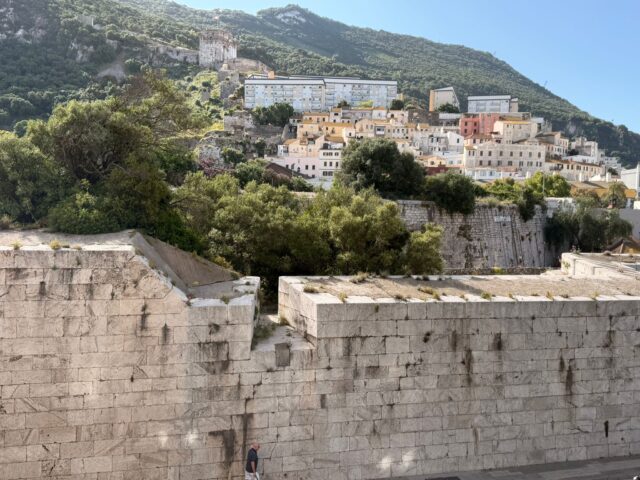
Our historic city walls and fortifications are one of Gibraltar’s greatest assets. We sometimes take them for granted because we walk past them every day, but there are not many places with such a concentration of walls, gates, bastions, batteries and fortifications in such a small area. They are part of what makes Gibraltar unique. Unfortunately, too many are not being shown at their best.
In numerous places, weeds, shrubs and wild trees have been allowed to grow out of the old stonework and, in some areas, appear to have taken over completely. The West Place of Arms is an obvious example, North Bastion is another, so too are parts of Waterport walls at the entrance to casemates, Montagu Counterguard, Queensway, sections of the Charles V Wall, as well as some walls adjacent to the Tower of Homage and numerous other stretches of our fortifications which should be among Gibraltar’s proudest heritage assets, but instead look neglected. Some very worthy work has already been carried out elsewhere, with Wellington Front being perhaps the best example of what can be achieved when our historic walls are properly cleared, restored and presented. The same approach now needs to be extended to the rest of our historic defensive network. Much of this vegetation has clearly been there for years. Some may think it looks charming or natural, as though the uncontrolled greenery somehow adds character to the walls. I do not agree.
There is a very big difference between planting flowers in the right places and allowing uncontrolled vegetation to grow out of historic masonry. The first improves the city, the second damages it. In urban environments, plants and trees belong in planters, gardens, parks and properly designed public spaces, they do not belong growing out of old defensive walls. Roots work into cracks and joints, trap moisture, loosen masonry and, over time, cause damage. What may look picturesque from a distance is often a sign of neglect.
The most impressive historic walled cities understand this very well. Malta and Dubrovnik do not leave their walls covered in shrubs and weeds on the basis that it looks rustic. Their walls are cleaned, maintained and presented properly, so that the stonework itself is the feature. Even our neighbours understand that historic walls and fortifications need to be cared for and properly presented. The Alcazaba in Málaga, the walled town of Niebla, Carmona all show how Andalusian towns and cities treat their walls as assets to be conserved and displayed. The same is true across the Strait, where the fortifications around Marrakesh and Fez are valued for their scale, colour, form and history, not for being covered by uncontrolled vegetation.
Gibraltar’s walls are arguably even more important as they are not simply another example of Andalusian or Mediterranean fortifications. They are unique to Gibraltar, shaped by our geography, military history and Britishness. They are different from those found across the border or across the Strait, and form part of the identity of the Rock.
Gibraltar’s fortifications should not be treated as old walls to be softened by neglect. They are a unique and irreplaceable part of our heritage and should be kept clean, visible and properly conserved. They do not need to be hidden by greenery to have character, they already have history, scale, texture and presence. What they need is maintenance, conservation and a clear policy that vegetation should not be allowed to take hold.
In an English Heritage commissioned University of Oxford project to investigate ivy on historic walls and buildings they stated that “There is no question that ivy or other plants properly rooted into walls will cause damage and should be removed in a similar way to any other tree or shrub at the earliest possible stage.” “Cadw” which is the Welsh Government’s historic environment service with responsibility to protect, conserve and promote the historic environment of Wales, including castles, monuments and other heritage sites is equally clear. They state that where vegetation is growing in walls, the recommended action is to “remove vegetation at the earliest possible opportunity”. Their reason is straightforward, “self-seeded shrubs, saplings and ivy, can cause severe damage if left unchecked”. Cadw also notes that the “growth of vegetation often signals that other maintenance work is needed to eliminate cracks and holes where seeds can lodge”. Why is it different in Gibraltar ?
The planting and flowers in the city centre are a welcome step in the right direction, but the next step should be obvious. Let us keep adding colour and life to the city centre, improving the streets and public spaces. At the same time, let us deal properly with the weeds, shrubs and wild trees growing out of our historic walls.
Please lets have a survey of the worst affected areas followed by a sustained programme of clearance, conservation and maintenance, rather than occasional one off clean ups.
Gibraltar’s flowers and planters bring vibrancy to our streets. Our city walls should bring dignity, history and permanence, both matter, but they are not the same thing.
Christian Hernandez is a lawyer and a former president of the Gibraltar Chamber of Commerce.


