


First Gib Song Festivals paved the way for future international success in local events


There can be no doubt the first edition of the Gibraltar Song Festival from 1965 to 1976 put Gibraltar on the music and world map on a large scale. It probably was one of the first local events with an international dimension which brought some of the top songwriters and singers then finding success in the UK - musical personalities and composers – such as Les Reed, Charlie Chester, Ronnie Bridges, Jim Kennedy and Tim Rice who would serve as a judge in 1976.
Last week we heard of the Gibraltar Anthem Rock of Ages being presented in 1970 at the festival and this week we return to that year. It is one of the years I recall to this day – I was just nine years old – but as I mentioned last week, 1969 and into the seventies especially, I became very aware of music; my interest in songwriters also began, more so the songwriters and performers from Gibraltar. I certainly looked forward to the festival every year.
When I joined Radio Gibraltar in 1977, as I have written before, my interest grew and by 1980 – probably because I wanted to tell the story of the Gibraltar Song Festivals – I produced a series of programmes called MusicalRock. Some of this material is taken from the interviews I conducted then.
The 1970 festival (in its sixth year) held in St Michael’s Cave was won by Johnny Tudor, a Welsh actor and entertainer, who had come to prominence in the UK show Opportunity Knocks, which he went on to win four times, and he followed with a five-year recording contract. In fact, his winning song at the Gibraltar Song Festival ‘Don’t Throw Your Love Away’ written by Barry Kingston and Geoff Stephens was recorded and released as a single in the UK and other European countries on the Spark label in 1971. Spotted by Dorothy Squires at the same festival she performed the Gibraltar Anthem he appeared with her at the London Palladium.

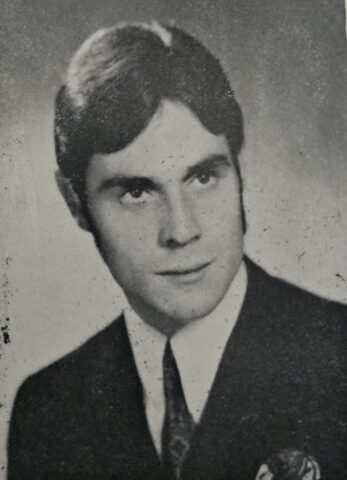

In second place that year was a song composed by Ed Welch who would become a regular at the festival for several years and Ray Dell. The song ‘This Is Love’ was performed by Londoner Rosanella. The third prize went to ‘Love Where Are You Now’ also by Welch and again interpreted by Rosanella.
In an interview some years back Johnny Tudor told me this had been the first time he had entered the festival – although he had already found success a year earlier at the Knokke Festival in Belgium.
The experience of singing in St Michael’s Cave was an experience, he said, he would never forget.
“The acoustics were wonderful and when the full orchestra struck up, the sound filled the cave. The song I sang, ‘Don’t take Your Love Away’ was a good song in the style of Engelbert Humperdinck, in fact the arranger that did it, Arthur Greenslade, had been Engelbert’s Musical Director. I got to sing the song because Bob Kingston, my then recording manager, had sent a number of my demos to the Gibraltar Song Festival.”
But he admitted he never thought he was going to win.
“Rosanella, another Brit, had two songs in the final and one was very strong, ‘al la’ Shirley Bassey (both songs written by Welch). So, when they announced the winners in reverse order you can imagine my surprise when Rosanella was third and second and I was first.”
1970 was also the year of ‘For a Moment of Your Time’ which would later be translated into Spanish as ‘Por Un Poco De Tu Amor’ written by Albert Hammond and Mike Hazlewood. It was sung by Joe Carseni that night.
That year the organising committee was made up of Chairman: Rev. Charles Caruana (Honorary member of the Songwriters Guild of Great Britain), Music Consultants: Joseph Nogerua, Member of the PRS, and musician Francis Caruana, Lighting Effects Manager was Norman Cumming, Stage Manager was Cecil Gomez, Treasurer was Paco Galliano, the Secretary Clive Mendez, Asst. Secretary: Dennis Carroll, and Public Relations was John Restano, Honorary Member of the Songwriter’s Guild of Great Britain.
The festival had seen a total of 120 entries that year from the USA, Canada, Rhodesia, Greece and the UK. A total of 15 entries were selected, and which were performed over two days with five songs being eliminated on the first night and only 10 going through to the final night in a Gala Performance.
1971 saw the return to the top spot of local composers – the partnership of William Gomez and Hector Cortes - who produced another winner with the song ‘In My Dreams’ and which was performed by Su James. The silver and bronze medals went to ‘Sunshine That You Bring’ sang by Stella and Bambos and written by C. Zachariades and H. Razhard, and ‘Take A Little Time’ performed by Tapestry and written by Peter Jeffries.
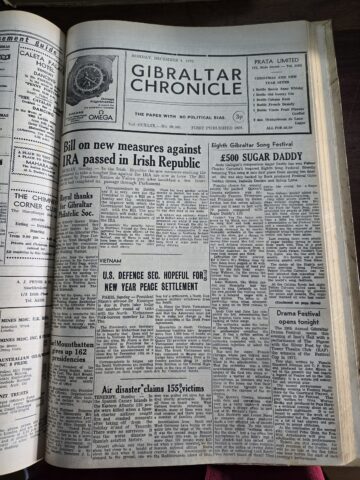
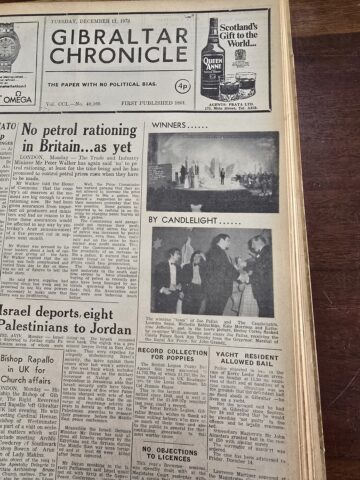
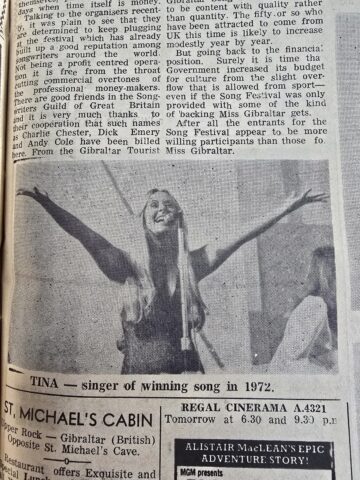
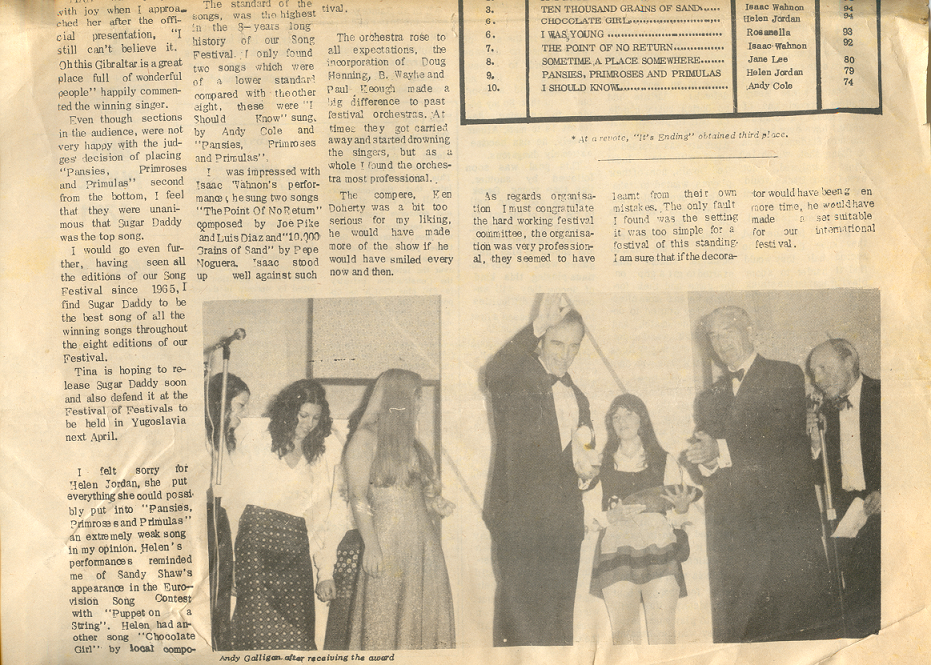
One of my most memorable years has to be 1971 – the eighth Gibraltar Song Festival with 10 final songs competing. The festival was won by a young lady who would later represent Ireland at the Eurovision Song Contest. Her name was Tina and her song was a boppy pop number called ‘Sugar Daddy’ which was written by Andy Gilligan.
That year the gold winner received £500 double the prize from the previous year.
In an interview with Andy Gilligan he spoke of how she sang her heart out and how “without her brilliant performance the song would not have won.
Her performance also made a big impact on an Irish Eurovision representative present that night at the Cave. As a result of her success in the Gibraltar Song Festival she was given the honour of representing Ireland in the Eurovision finals the following year”. Her Gibraltar winning song achieved 110 points from the judges. In second place was ‘Couldn’t You Try Again’ written by Ed Welch (108 points). In third place ‘It’s Ending’ written by Ted O’Neil (96 points).
The winning song of 1973 was to become another firm favourite for Radio Gibraltar listeners. The festival now in its ninth edition would see the third winning song in nine years for the successful partnership of William Gomez and Hector Cortes.
The song ‘Por el Camino Aquel’ was performed that night by local singer Pepe Payas.
The silver medal went to another local songwriting partnership. That of Guy Palmer and Ronnie Israel with their song ‘Tu’ which was performed by Louis Vinet – both Guy and Louis were then members of the band Seen and Heard.
The bronze medal went to Bob Barrett who was another great supporter of the festival and had found success in previous years and who had written the song ‘Cindy Rises’.
To understand the solid international reputation the festival continued to achieve one must look to the judges that year – all top notch and well-known in the music industry. The judges included Jimmy Kennedy of the Songwriters’ Guild of Great Britain well known for his classic songs ‘Red Sails in the Sunset’ and ‘South of the Border’. Another of the judges Doug Flett, was co-writer of the British Eurovision entry ‘Power to all Our Friends’ performed by Sir Cliff Richard in 1973 and coming in third place. Eddie Heyman, American lyricist of such evergreens as ‘When I Fall in Love’ and ‘Love Letters’.
By 1974 though it was becoming clear that the festival was having difficulties. It had grown too big and local audiences were on the decline. That year too its chairman Father Caruana had to put the festival on hold as he was away from Gibraltar on a media course. But the hope that the festival would return the following year remained alive – and it did. The 1975 festival – the tenth - saw more success for composer Bob Barrett who won that year with his song ‘Mulberry Mornings’.
The silver and bronze medals were also won by great supporters of the festival from the UK. In second place was the song ‘Somebody Else’s Sunshine Is Somebody Else’s Rain’ composed by Ed Welch. Third place went to the song ‘Aren’t We Lovers Fools’ by Brian Willey and Jack Dieval.
In 1976 some 60 composers and artists descended on Gibraltar – there were songs from England, Wales, Norway and Chile.
There was always – to the very last song festival of this first edition great interest from outside Gibraltar. So much so that the organisers had received enquiries to see if the festival could be relayed by satellite to Chile.
That final year of this first edition then in its eleventh year received 312 entries from 23 countries. The selection of songs was carried in Gibraltar with the guidance of a member of the Songwriters Guild of Great Britain.
The winning song was to receive £1000 in prize money – again double the amount from the last time it had been held. The festival was back in its original home too – at the Queen’s Cinema. The tickets that year – were priced at £2, £2.50 and £3.50. How times have changed.
According to the Gibraltar Chronicle report the winning song was to have a comfortable win. The song ‘Just a Dream’ written and performed by Phillip Goodhand-Tait was to receive a total of 129 points from the panel of judges - it was a beautiful ballad with a catchy hook line. It would become one of two songs that year that would also be released on record.
Phillip Goodhand-Tait was an English singer-songwriter, record producer and keyboard player. He wrote and recorded songs that have been covered by Roger Daltry (‘Oceans Away’, ‘Parade’, and ‘Leon’), and Gene Pitney (‘You Are’ and ‘Oceans Away’). In 1971, Goodhand-Tait also wrote the soundtrack for the film Universal Soldier.
The silver medal in 1976 went to a song with local connections written by Gibraltarian songwriter and producer Brian Wade and his co-songwriter Tony Cliff.
The song ‘Only You and I’ was performed at the Queen’s by Maynard Williams who in 1973 had joined his first West End musical, Joseph and the Amazing Technicolor Dreamcoat, at the Albery Theatre. Sometime later in 1985 he would also form part of the original cast of the Lord Lloyd Webber musical Starlight Express initially playing the roles of Espresso and Electra.
The bronze medal that year was won by composers John and Barry Brown with a song called ‘God Bless Love’ and performed by Jeanne de Rooij.
And I must mention one of my favourite songs from this festival. Joe Adamberry – whose name you often see on these pages and one of our best-known local musicians. He composed a song - I can still sing today – ‘Magic in the Lady’ performed on the night by Mark Christian – our very own Hubert Valverde. A song which came fourth just two points behind the third placed winner. Once again highlighting how
much the festival had grown and its popularity in the UK, the judges that year included lyricist of the musicals Joseph and the Amazing Technicolour Coat, and Jesus Christ Superstar and soon to have more success with Evita – Sir Tim Rice.
Another judge was the then editor of the popular music magazine Melody Maker, Ray Colman. Bill Cochrane from the songwriters Guild, and George Seymour Head of UK publishing.
And a local name many of us will remember from the 1980s and who featured recently on these pages Aurelio Danino who would front Lelo and the Levants, as well as local singer-songwriter Mari Montegriffo who would enter festivals in her own right in later years.
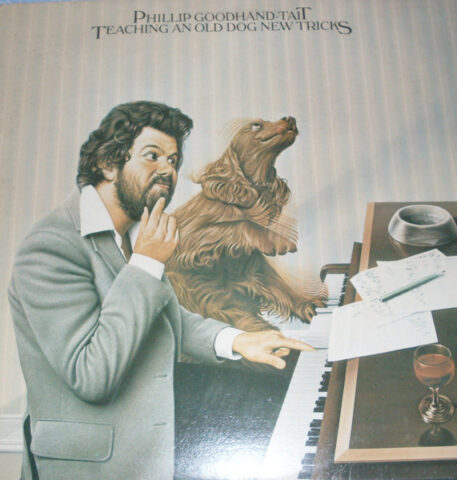
One day she would be a Minister in the first GSLP Administration, and also Mayor of Gibraltar. Two of the songs that year were released on record – ‘Just A Dream’ was on the track list of the album ‘Teaching an Old Dog New Tricks’ by Phillip Goodhand-Tait. The other song was ‘God Bless Love’.
The reality was that interest from outside even though the festival was now on rocky ground continued to grow but from within the festival continued to lose support from the public – some blamed the televising of the show at the time – but perhaps this first edition of the Gibraltar Song Festival had just run its course. The fact is the music industry was also changing. The relatively poor response by the public to the festival concerned the organisers.
By then the Committee Chair was musician – sax extraordinaire – Francis Caruana who told the Gibraltar Chronicle on the night that he was disappointed in that there seemed to be more interest in the festival from outside Gibraltar than from within. He added: “We might get better public support if we organise the Gibraltar Song Festival to take place in London and not on the Rock.”
This would not happen.
The eleven-year run of this very successful first edition had played its final note. 1976 would be the last.
Most of the organisers then would say it had simply grown too big. Money was not available and the organisers were finding it impossible to get the support and sponsorship.
And yet there can be no doubt that first edition ended on a high – Gibraltar had seen major players from the music industry gather in Gibraltar for a decade, local songwriters had experimented and achieved success amongst the very best, especially in the UK music scene of the day offering opportunities to local musicians, local singers had been given opportunities they could only dream of – and all this added in a major way to the music scene that still exists today on the Rock… and all the musicians, bands and singers that would follow. There would be other editions of the festival in the early 1980s, in the 1990s and in 2000s – but they only lasted a few years.
Without a doubt, however, that first edition of the Gibraltar Song Festival – 1965 to 1976 - proved hugely important for all of Gibraltar.
It helped to raise the morale of the Gibraltarians during those very difficult years of the mid-sixties into the seventies – years of uncertainty – always proving Gibraltar could hold its own and organise big events even if the frontier had been closed by the Spanish dictator Franco. Gibraltar could make it happen with its local – Gibraltarian – resources.
And those first festivals – if we move ahead to all the many international events which have been held and are still held successfully in Gibraltar – was the one that made it all happen. It was the first.
It gave us the Catholic Community Centre, and it gave focus to the music community… and it gave hope for the future.


