Fortress walls bring Gibraltar's history to life
Photos by Johnny Bugeja


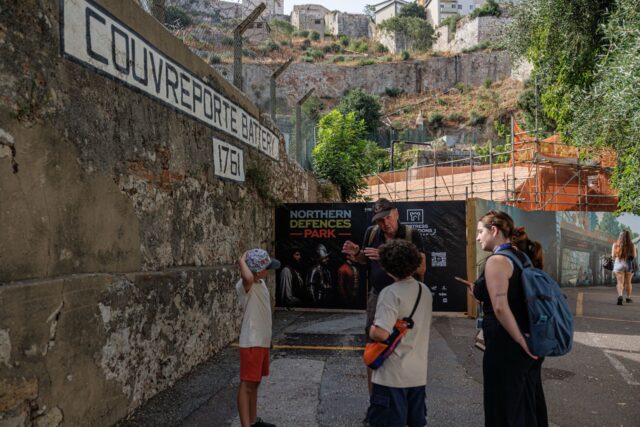
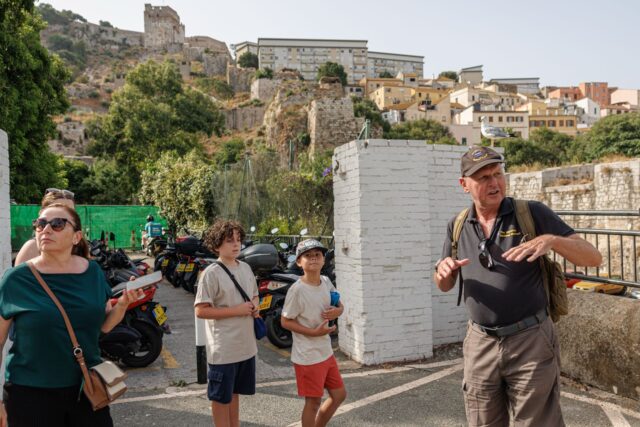
The story of Gibraltar's city walls came alive for a group of young explorers as Phil Smith and Naomi Fa, from the Gibraltar National Museum, guided them through centuries of military history, explaining how the Rock's defences evolved into one of Europe's most formidable fortresses over the centuries.
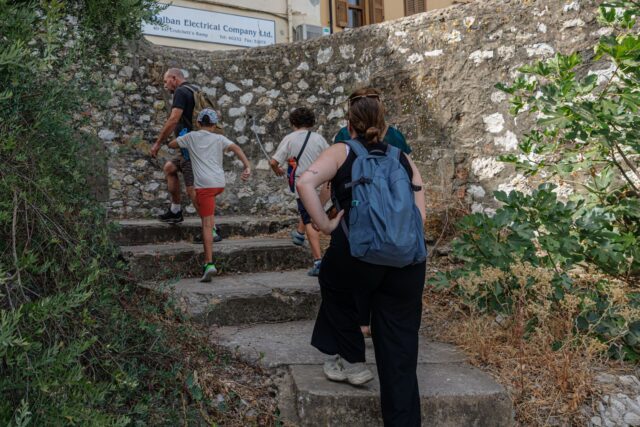
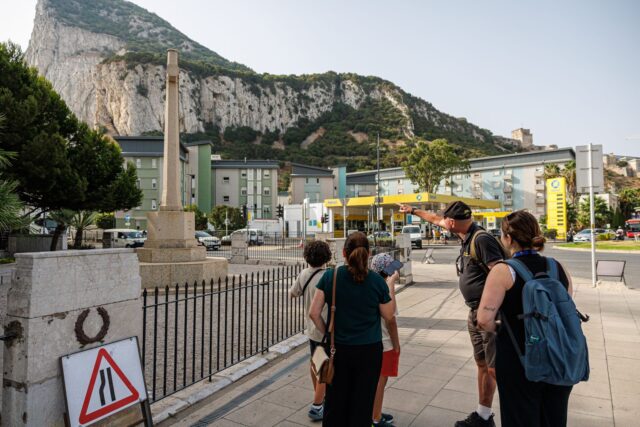
Beginning at the Cross of Sacrifice and ending at the American War Memorial, the latest Walks Through History took children on a journey across more than 600 years, using the surviving walls, bastions and tunnels to help them imagine a Gibraltar very different from the one they know today.
Rather than simply describing the city's defences, Mr Smith encouraged the children to picture the landscape as it would have appeared during the Great Siege, when there were no modern buildings, no runway and the sea reached much closer to the city walls.
The walk also traced the evolution of Gibraltar's fortifications, showing how they adapted as military technology changed through the time.
He told the children that Gibraltar's first defensive walls were built by the Moors after they crossed from North Africa and conquered the Iberian Peninsula.
"The Moorish defences were designed only for archers with bows and arrows because they didn't have gunpowder then," he said.
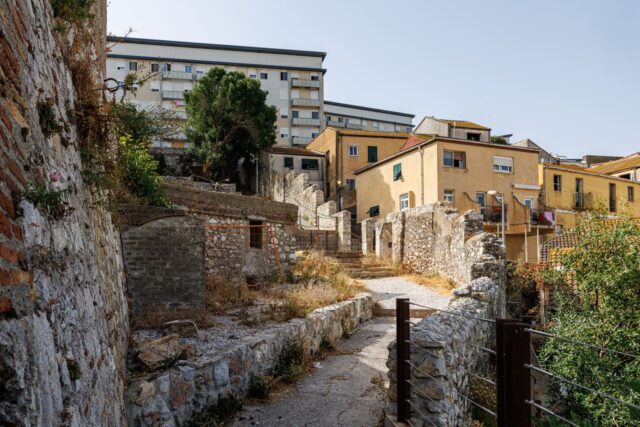
The original wall stretched from Casemates to Europa Point and later became known as the Line Wall, giving Line Wall Road its name.
When the Spanish captured Gibraltar in 1462, they reinforced the fortifications to accommodate cannon and gunpowder.
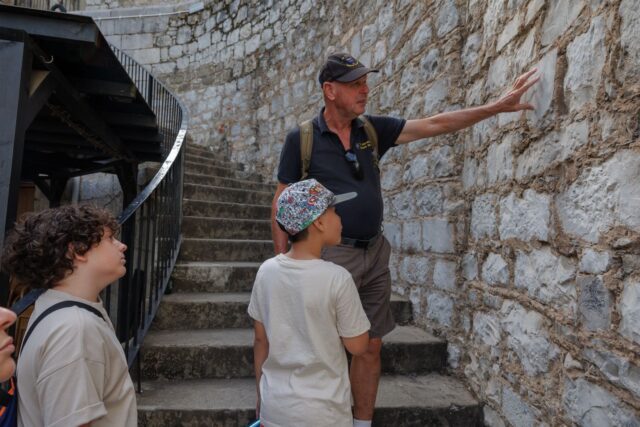
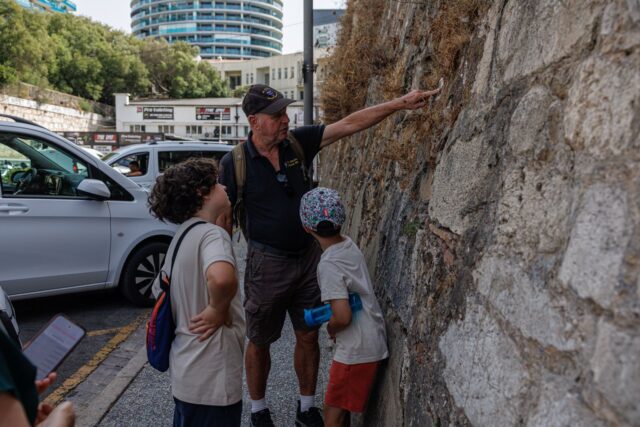
"After the Spanish came to Gibraltar in 1462, they had cannon and gunpowder, so they made the walls a lot thicker and made places to put cannon on," Mr Smith said.
The British later rebuilt many sections after taking Gibraltar in 1704, strengthening defences that had been damaged during the capture of the Rock.
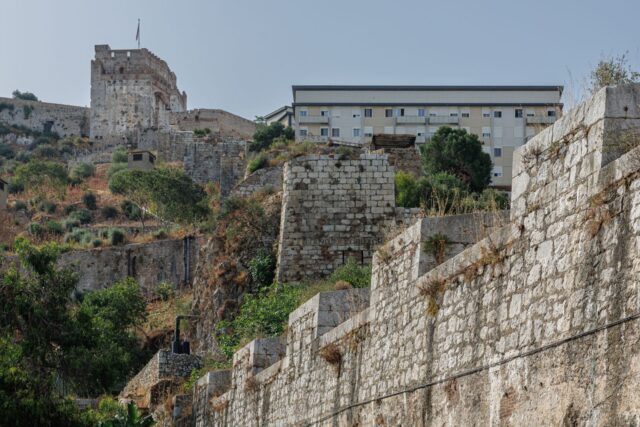
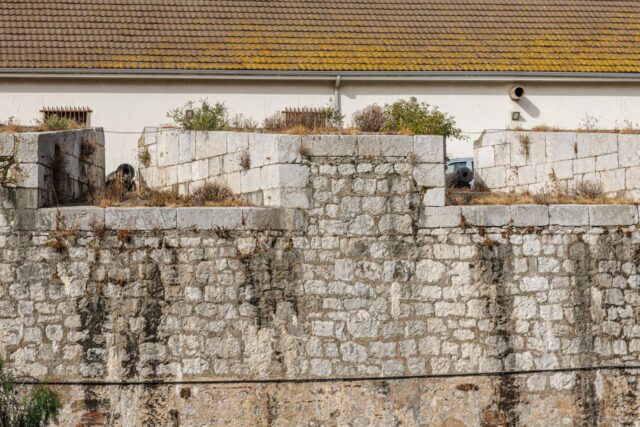
The walls suffered further damage during the Great Siege before being repaired and reinforced once again. Additional military works were added during the Second World War, creating what Mr Smith described as a visible timeline of Gibraltar's military history.
"So, if you look at the structure of the walls, you've got Moorish, Spanish, early British and World War II, four layers all built on top of each other," he said.
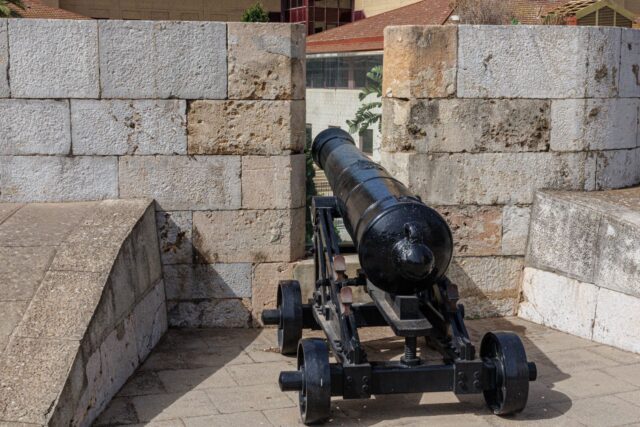
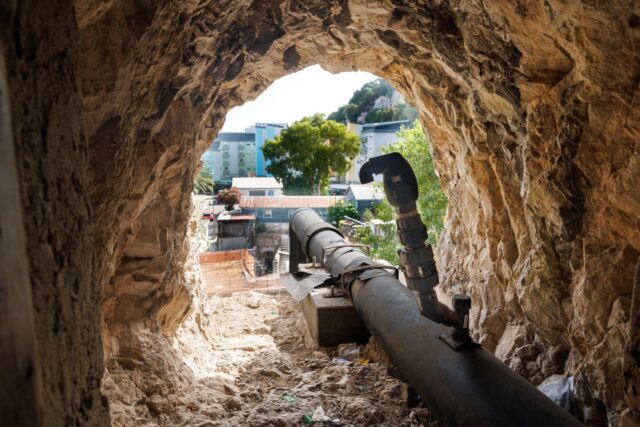
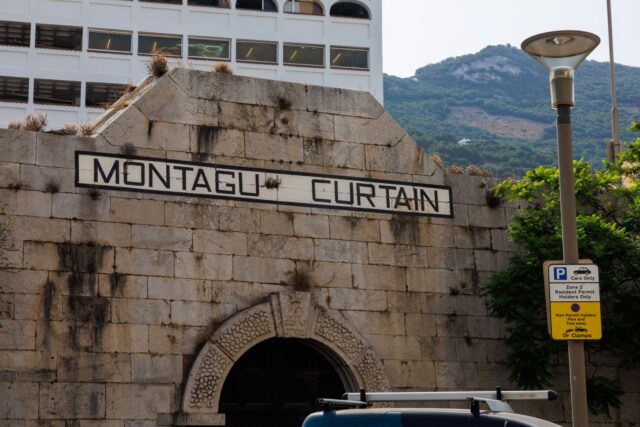
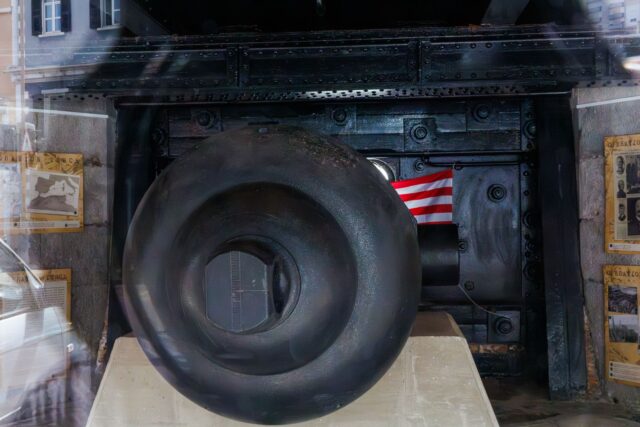
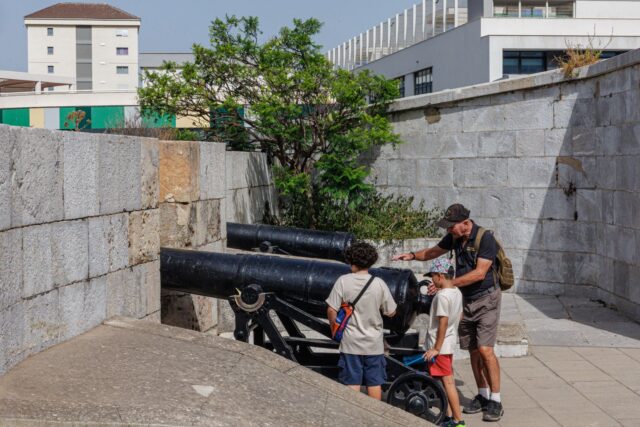
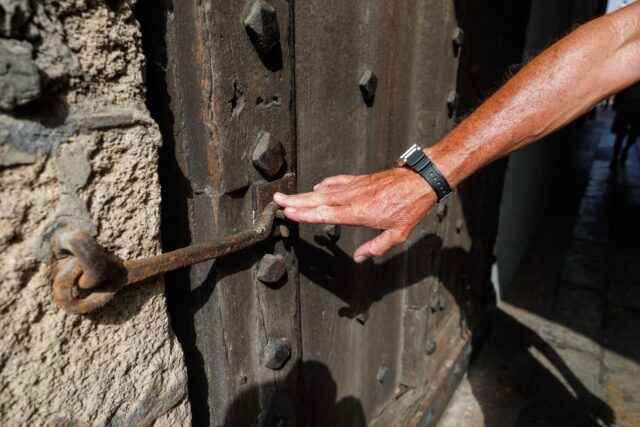
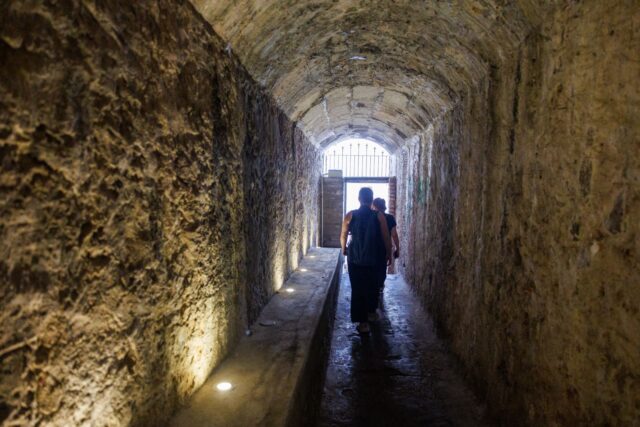
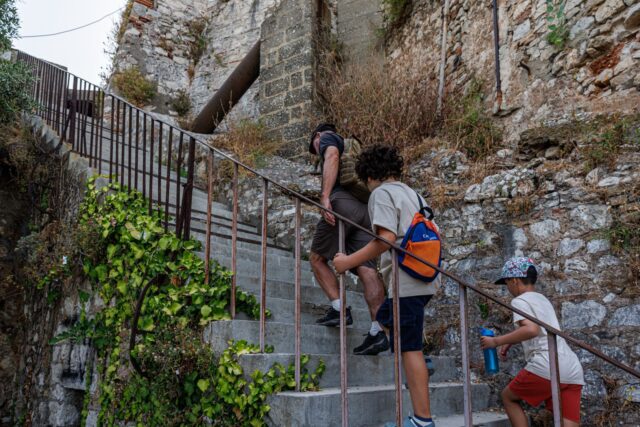
Much of the walk focused on the Great Siege between 1779 and 1783, when Spanish and French forces attempted to recapture Gibraltar by cutting off supplies rather than launching a full-scale assault across the isthmus.
"Between 1779 and 1783, almost four years, during the Great Siege, the Spanish and French soldiers were trying to capture Gibraltar and, here, there were British soldiers and German soldiers trying to defend the Rock," Mr Smith said.
He explained that, despite the prolonged siege, Gibraltar's defenders adapted to increasingly difficult conditions.
"For four years, the Spanish and the French tried to stop anything from coming into Gibraltar, so that they wouldn't have any food or water or medicine or ammunition," he said.
"The people here collected rainwater, grew vegetables and the Navy managed to get some ships in to bring supplies."
After years of blockade and repeated bombardment, the final attempt to capture Gibraltar by sea failed.
"They really at that point said ‘we'll stop trying to capture Gibraltar’," Mr Smith told the children.
Standing near the frontier, Mr Smith invited the group to imagine the landscape as it appeared more than 240 years ago.
"There were no buildings here whatsoever," he said.
"Where the runway is, on that side of the road, was low-lying field. Everything to our left was the sea."
Instead of today's airport, roads and reclaimed land, the children were asked to picture an exposed stretch of coastline where attacking troops would have had little protection.
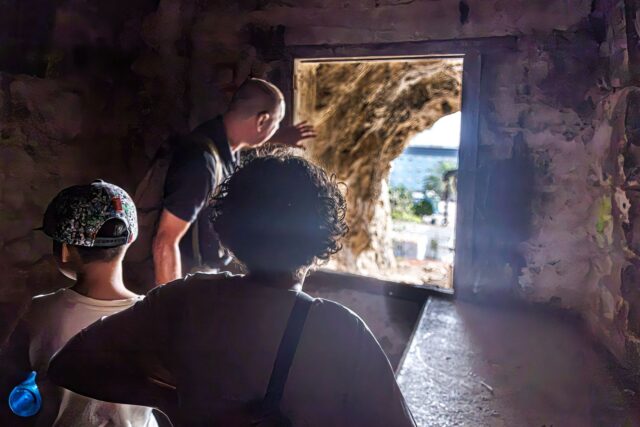
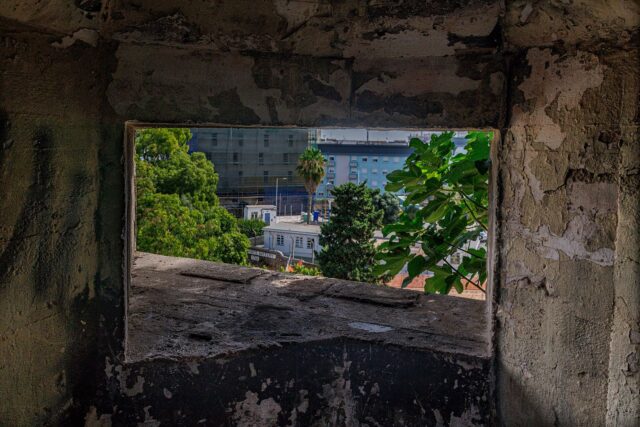
Mr Smith explained that any soldiers attempting to advance towards the town would have crossed open ground under constant fire from cannons positioned along the walls, bastions and the Great Siege Tunnels high above.
"It's coming in from the right, from the front, from the left," he said.
"No buildings here whatsoever."
He also described how defensive obstacles, including wooden barriers fitted with sharpened stakes, would have slowed any assault before soldiers even reached the walls.
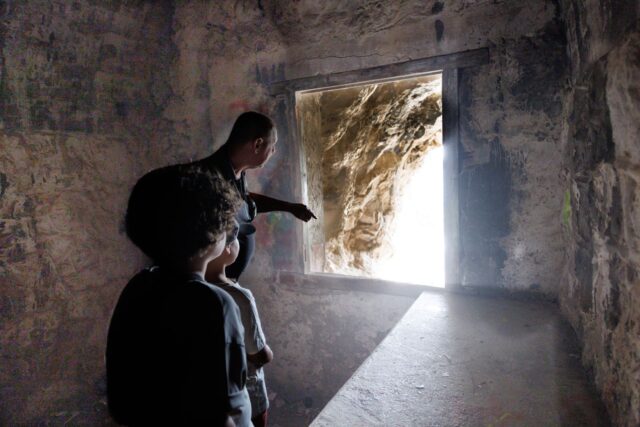
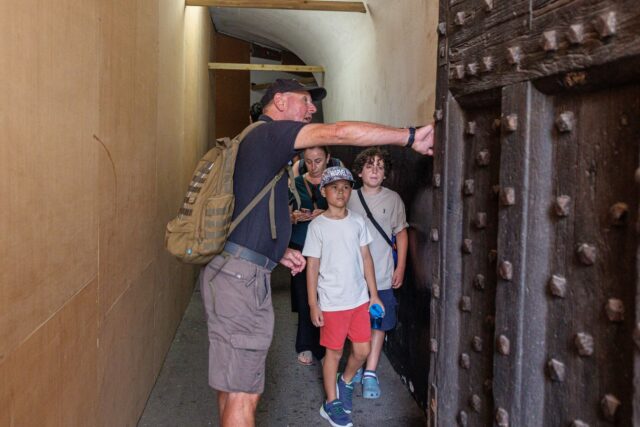
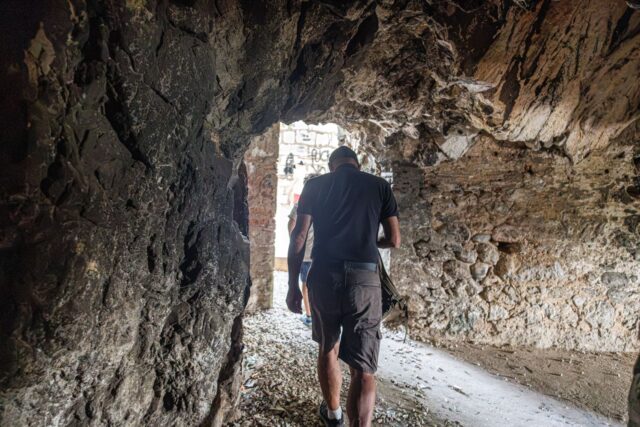
The group then entered the Landport tunnel, where Mr Smith and Ms Fa explained how Gibraltar's layered defences were designed to slow an enemy even if the outer line had been breached.
The drawbridge at Landport formed another obstacle, while the tunnel itself concealed an ingenious defensive feature.
Mr Smith pointed to the gentle curve in the passage, explaining that it was deliberately designed so an enemy cannonball could not travel directly into the heart of the town if fired through the entrance.
Inside Grand Casemates, the children learned how the area formed part of Gibraltar's military infrastructure during the Great Siege, when barracks across the fortress housed tens of thousands of soldiers.
The walk then continued through the upper batteries, where the children saw how cannon positions had evolved over time and how some of the fortifications were adapted again during the Second World War.
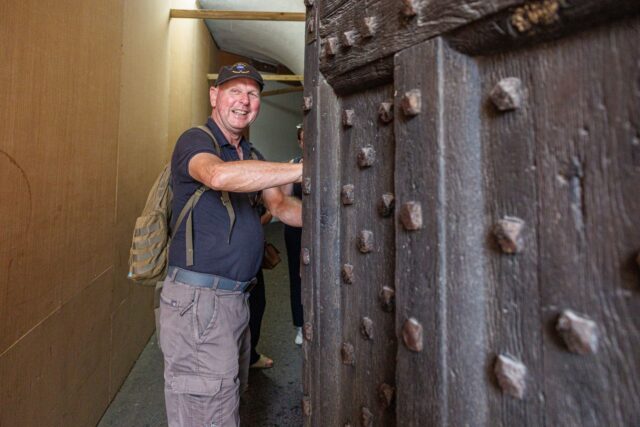
Emerging through the great doors of Grand Casemates, the group explored what was once the defensive ditch surrounding the fortress before making their way along Counterguard Chatham and the line of bastions towards the Orange Bastion.
There, Mr Smith explained how British soldiers loaded and fired their muskets through narrow openings in the walls while remaining protected from enemy fire.
He described the speed with which soldiers had to reload under combat conditions, giving the children an insight into the realities of military life during the siege.
The Orange Bastion itself reflected the changing nature of Gibraltar's defences. Originally built by the Spanish and later rebuilt and enlarged by the British during the Great Siege, it went on to house increasingly powerful artillery, from batteries of smoothbore cannon to 10-inch guns in the Victorian era and a 40mm Bofors anti-aircraft gun during the Second World War.
Throughout the morning, the children peppered the guides with questions about military life, the evolution of weapons and the changing shape of Gibraltar's fortifications, turning the walk into an interactive lesson on the Rock's military past.
The Walks Through History programme runs on Wednesday mornings from 10am to 11.30am until August 26 as part of the Summer Sports and Leisure Programme.
The sessions are open to children aged between nine and 12, with advance registration required.