


Hidden chambers uncovered behind sealed doorway in Landport Tunnel


Ongoing works within the historic Landport Tunnel, as part of the wider Northern Defences project, have led to the discovery of a sealed set of chambers, hidden for decades behind mortar.
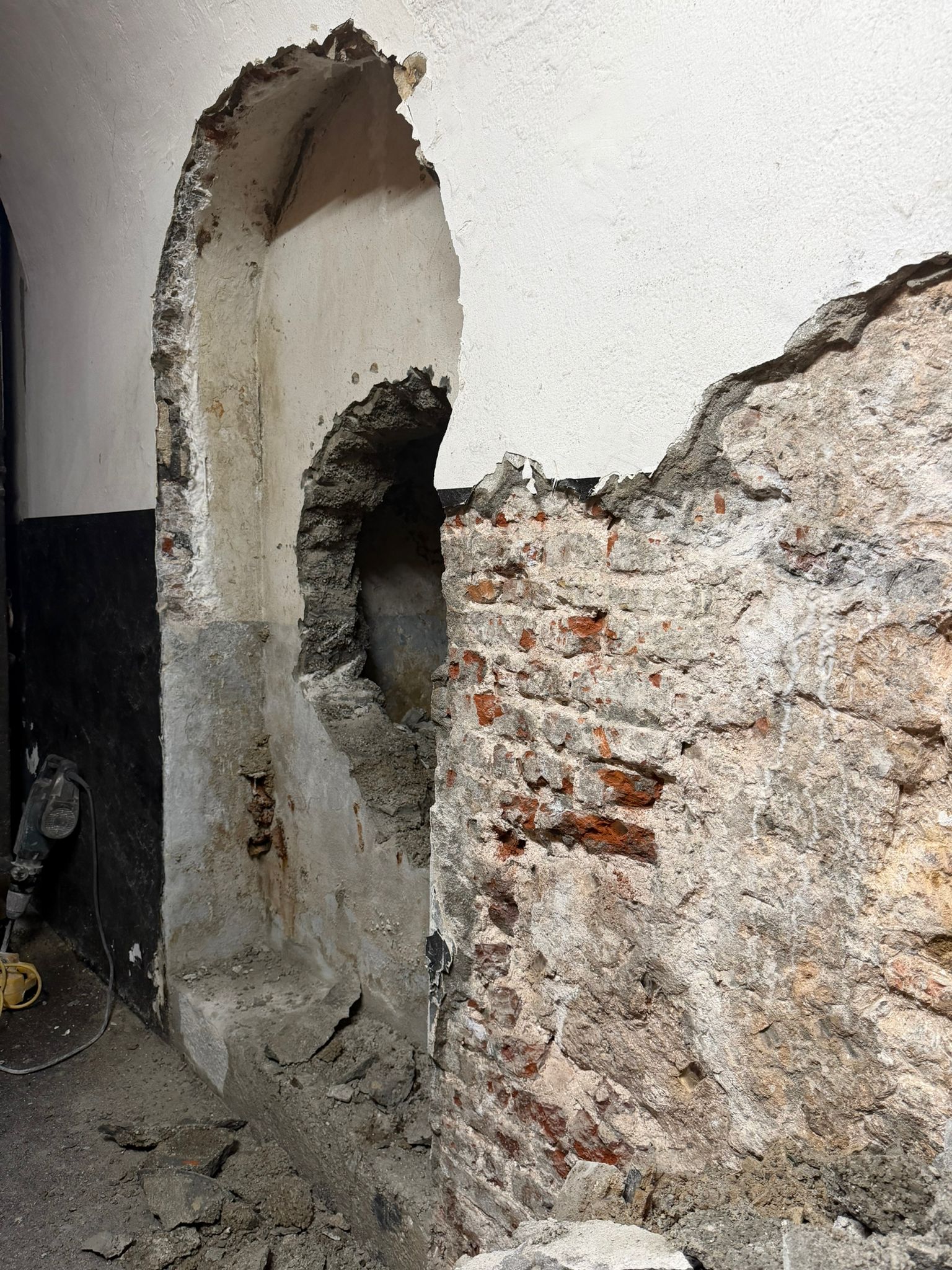
The discovery began when a team removed modern cement and mortar and exposed what appeared to be an historic doorway.
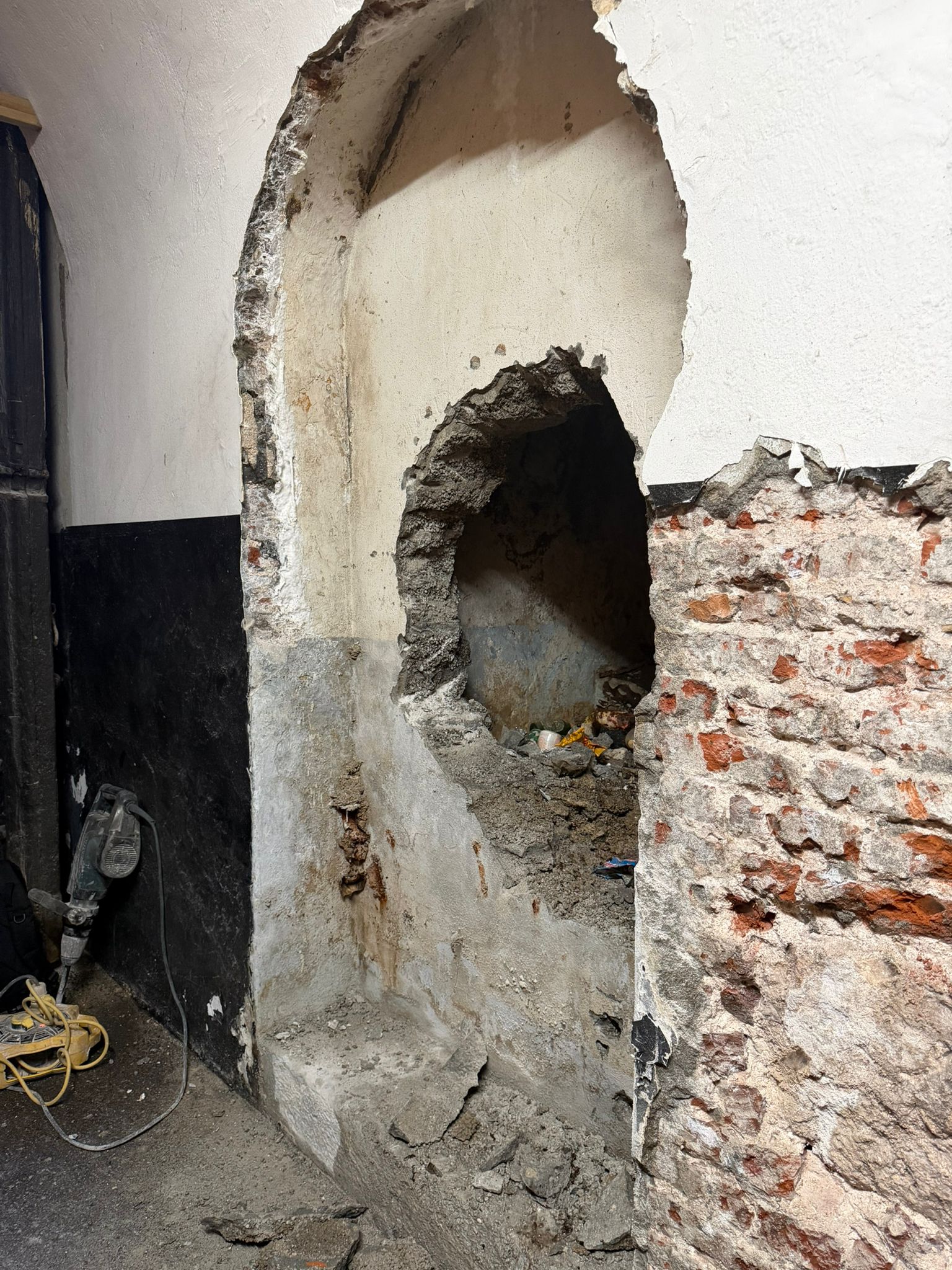
Project manager Carl Viagas described how there are plans dating back to 1627 by Luis Bravo which stated there was a secondary door around that location.
Initial expectations, based on those early 17th-century plans, suggested some internal passageways built to allow troop movements.
Instead, the team found something different.
"What seems to be indicated is a staircase that would have led up to what is Grand Battery and that would make sense to have troops from the upper battery to [be able to quickly] come down and support should the gates be under threat,” Mr Viagas said.
What, however, we have found is not that staircase, but a chamber, a few steps up, leading to a chamber of about five meters by four meters, and then there's a secondary chamber behind them, which is much deeper. It goes probably another 10 meters.”
“These are casemates, which could have been used as a guard room."
The space, a barrel‑vaulted chamber with an additional deeper chamber beyond, fits within a wider system of casemated structures associated with Gibraltar’s later defensive architecture.
For Mr Viagas, the discovery is also a physical illustration of how military architecture in Gibraltar shifted over time.
"In medieval times, you had tall, relatively slender walls with battlements designed to deal with the main threat - ladders,” he said.
“The taller you go, the better, basically. And you have your crossbow men or archers on top. Once we have cannons, these walls work against themselves.”
With the arrival of gunpowder, fortifications had to be re‑engineered.
"What we had to do is reduce their height, make them less of a target, but at the same time, make them much wider to house their own cannon and take any impact. We have the birth of batteries and bastions,” he said.
“Within these thick walls, we create these series of arches and storage space, or barracks, and these are the casemates.”
The newly uncovered space, he added, belongs to this later phase.
What truly sets this discovery apart is not only the architecture, but the contents.
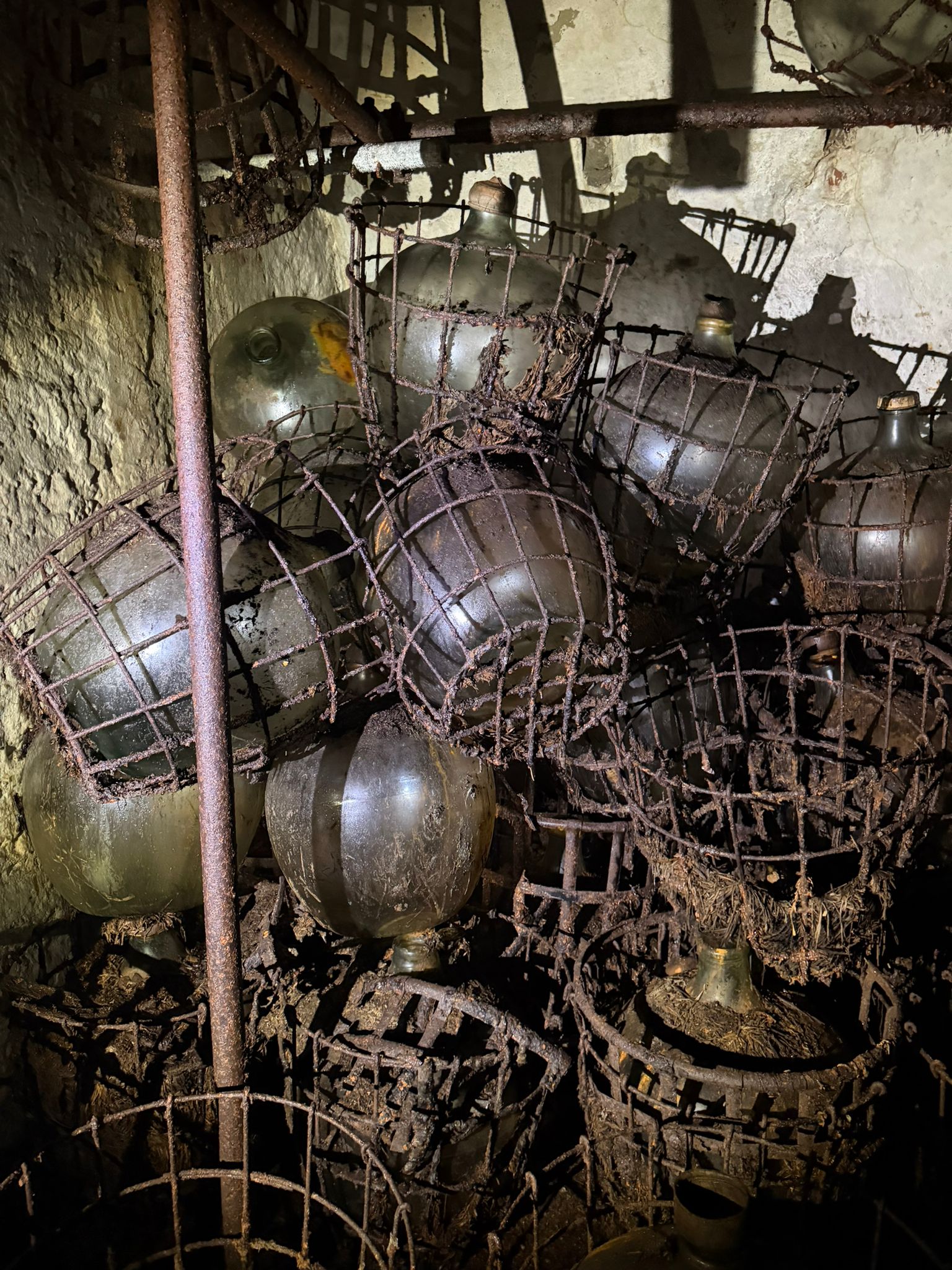
Inside the chamber, workers encountered numerous large glass vessels, likely demijohns or carboys, many still held in protective iron cages and arranged in clusters.
Early observations suggest the space was clearly used, not abandoned, and that the containers were deliberately stored rather than discarded.
Mr Viagas said the team has not yet fully entered the deeper chamber.
"We haven't gone in because we need to do a health and safety check,” he said.
“We want to know what has been stored there. Is there asbestos? What was the content of such containers?”
“There could be anaerobic activity because it's been sealed for so long, and there are, interesting enough, a number of glass containers that would have been stored in metal cages. It either shows that they was valuable, or they wanted to remove the risk of breakage.”
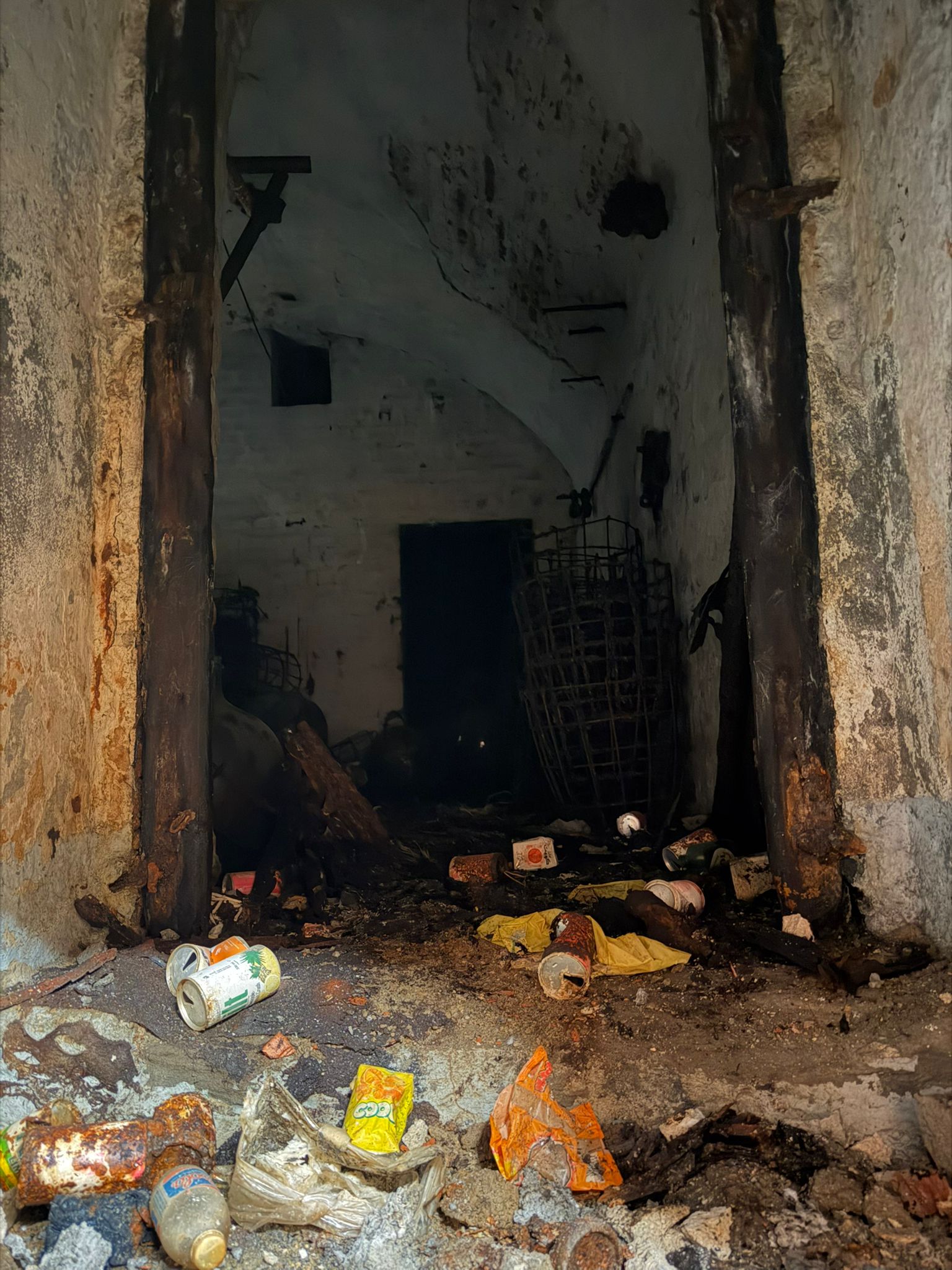
Preliminary interpretations suggest the chamber was in use before being deliberately sealed, likely quite recently, as debris found at the entrance included items such as an old Lilt can.
"This seems to have been sealed in the 1980s, because of the debris that we have found, there could be somebody out there that probably remembers when he sealed it up, or what was the use of the glass bottles themselves? Is it linked to the AquaGib operations there?”
“Could it be oil that maybe was being used."
Regardless of their contents, he feels it would be good to possibly display them as it is “a fantastic story to tell”.
He stressed that the chamber will be treated as a sensitive site. Before any further works, specialists will carry out detailed recording and risk assessment of both the chamber and its contents.
Only once this phase is complete will the team proceed to systematic investigation, documentation and conservation of the chambers and their contents.
For Mr Viagas, the discovery is not just about a single chamber, but about urban archaeology.
"This is an example of urban archaeology, which I think there's a need for because it tells the story of our city from looking into its origins and its development, which is something which I'm fascinated about."
He believes the work in the Northern Defences is already challenging long‑held assumptions about its purpose, how the area was accessed and how it was defended.
"I think the Northern Defences have, perhaps, exposed a few chinks in the armour,” he said.
“What have been, perhaps, previous narratives in terms of where our urban nucleus start, and how were the Northern Defences accessed to what was the primary gate into our city?”
“I think the research which is coming about, and the archaeology which is adding support to it, shows that the Landport has always been our primary, very defended gate, with the defences above being able to enfilade and cover this area, a masterpiece of military engineering."
“The Landport Tunnel, long seen primarily as an 18th‑century feature adapted over time, is emerging as part of a more complex and earlier defensive system whose functions shifted repeatedly across the centuries.”
"Every single week, we're discovering something which will be added to our record.”
“And all these findings will be put online, together with technical documents and sources, for any of those who wishes to carry out any research.”
“Should our findings be questionable, we welcome the debate and corrections, because, as we know, history is a story to be told.”
“It is too often the case that what we thought about the past does not mean it's still accurate today as new technologies can provide us with new insights.”
Most Read
Royal Navy surveillance ship sails into Gib, as Lyme Bay set for mine countermeasure refit
Sun 29th Mar, 2026
European ambassadors poised to ‘politically greenlight’ Gib treaty as EU-only agreement
Tue 31st Mar, 2026

Today's Paper
2nd April 2026
Read our latest newspaper by downloading our app from the link below.


