


Planning application filed for boutique hotel at The Mount
Images courtesy of Arc Design Ltd


A planning application has been filed with the Town Planner for a proposed boutique hotel at the Mount on Europa Road.
The Government has invited expressions of interest for the site and the application, filed by Government Project Manager Carl Viagas, will give potential developers an indication as to what the historic buildings and its grounds could be used for.
This reduces the risk for potential operators by showing what the Government and DPC consider acceptable.
Clear design guidelines are seen as useful to avoid wasted time and repeated redesigns, providing potential investors with a reliable framework of what will be accepted.
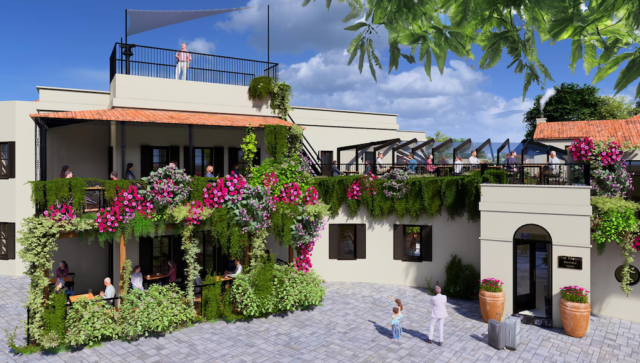
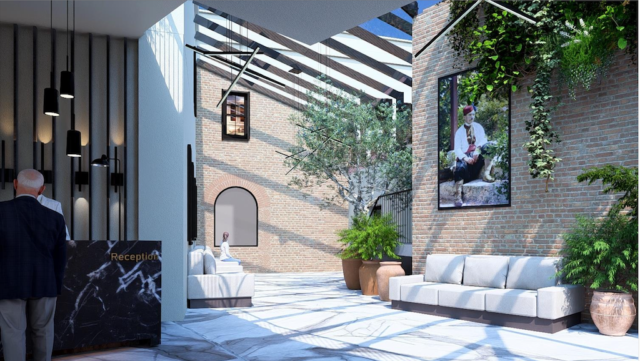
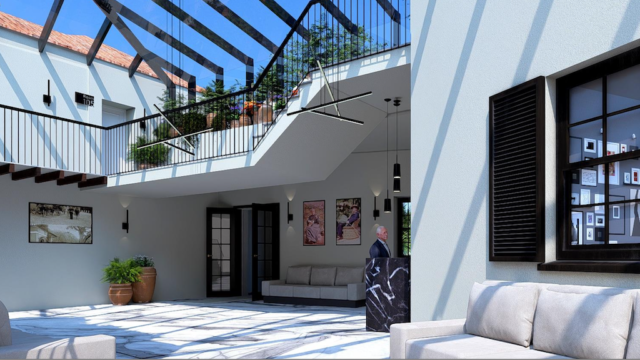
The building has been largely unused in recent years and has suffered deterioration due to limited upkeep.
The proposed design includes 10 bedrooms, maintained grounds and an event hall.
The event hall, which was funded by the Ruth Parasol Foundation, is already in place and opened last summer.
The application filed by Mr Viagas, who has overseen works at the Mount for a number of years, is accompanied by a planning statement and drawings prepared by Arc Design Architects.
According to the planning statement, the scheme is not intended to alter the historic nature of the residence, but rather to restore and celebrate it.
The proposals focus on sensitive conservation works, reinstating traditional features and materials while ensuring the building can operate effectively in a modern context, especially with regards to accessibility.
The Mount served for decades as the residence of senior naval officers and is with Major (later Colonel) William Green (1725–1811), Chief Engineer during the Great Siege (1779–1783). In 1775, Green was granted land in the South District, where he constructed a private residence known as Mount Pleasant.
“Following the destruction of Engineer House in 1781, the Green family occupied the property permanently until Green’s departure from Gibraltar in 1783,” the planning statement said, in setting out the building’s history.
Since then, some 74 senior naval officers occupied the property over its period of Admiralty use.
The grounds of The Mount are of considerable environmental and heritage value and are home to trees that have been planted by visiting dignitaries, including King George V in 1912 and the Princess Royal Anne in 2004.
According to the planning statement, the primary objective of the proposed intervention is the establishment of a boutique hotel within The Mount Main Residence.
“The development is intended to offer a distinctive hospitality experience, providing high-quality accommodation in a unique setting characterised by its natural landscape and panoramic views across the Bay,” said the statement.
“The proposal has been carefully conceived to ensure a strong and coherent relationship with the wider masterplan for The Mount.”
“By accommodating a limited number of guests, the boutique hotel will operate at an appropriate scale that respects the character and heritage significance of the site, while enhancing its functionality and long-term sustainability.”
“The provision of overnight accommodation will directly support the operation of the adjacent Events Hall pavilion, allowing the site to host events, cultural activities, and private functions more effectively by offering on-site lodging for attendees and organisers.”
Alongside the Events Hall, a few associated renovations have already been completed, including the refurbishment of the Porter’s Lodge for administrative purposes.
The statement also noted that further phases of the masterplan are proposed, such as the delivery of the Children’s Playgrounds Park and additional landscaped areas.
“This holistic approach to development is intended to significantly enhance the overall usability, accessibility, and appeal of The Mount, ensuring that the site functions as a vibrant, multifunctional destination while maintaining sensitivity to its historical and environmental context,” said the statement.
During last week’s DPC meeting on an unrelated debate on a historic building it was noted by Mr Viagas, as a Commission member, that renovating historic buildings requires significant investment of millions, mainly because existing electrical systems and other services will likely need full replacement, and that there are unknowns and risks typical of historic structures with issues such as asbestos.


