


Tito Benady: A friend so steeped in local history, his legacy will live on


Gibraltar this week mourns the loss of one of our chief historians – an elder statesman who championed local history for most of his life. For many years he wrote in this newspaper mostly on historical matters making sure it reached a wider readership and ensuring Gibraltarians learnt and got to know about their history.
Tito Benady had been a constant historical envoy taking Gibraltar’s history far and wide but especially into Spain – and was present at many conferences across the border for many years. He was always keen that the facts be known and the myths be dispelled. His work on local history published through his publishing house Gibraltar Books Ltd was a vital part of his wanting to keep history alive as was his contribution to the Gibraltar Heritage Trust journals which he co-founded and became its first editor for over 10 years. His contribution should not be dismissed but recognised as an integral part of our community life and history over a good chunk of time. For this he was awarded several times including an MBE, Gibraltar Heritage Trust awards and the Ministry of Culture Lifetime Achievement Award – for his dedication and research of Gibraltar’s history. But perhaps more importantly for keeping our history alive and encouraging others to do the same.
When Chronicle Editor Brian Reyes rang me on Tuesday to inform him of his passing asking me to dig out Alice’s Table from April 2019 (Alice’s Table Book One) in which we featured Tito over two weeks – he always had a lot to say – I was already thinking of putting aside this week’s column and in my own way pay tribute to this always interesting, knowledgeable, remarkable and well-respected man – who even into his 90s encouraged my own work on local history.
Knowing my interest in the history of theatre on the Rock our conversations on many occasions revolved around another bit of information he may have come across, set me on a new path I had not envisaged or provided me with new material which had recently been published – on many occasions bringing articles and even books to the table.
When I started looking more deeply into the Gibraltar Directories, local historical facts and photographs, he always encouraged me to keep it up, so that our history reached every one of you. For his enthusiasm, encouragement and passion especially, I will always be grateful – but more so because he underlined the value of knowing our past to understand our future.
So, it is right that this week in Alice’s Table we pay our own tribute to someone who was passionate about our history and pushed so many – me included – to never forget our past and to learn and explore where we have come from. As I began to research and look back on my own notes – I suddenly realised how often I had written about Tito in the past – and how often he had emailed me with bits of information. Until very recently, his commitment and passion remained intact.
I guess I first got to know him when I joined this newspaper back in 1997 – I had always known of him – and had, certainly on several occasions, interviewed him in my time at Radio Gibraltar. But it was on my joining the Chronicle that our conversations began, and I began reading more local stuff from the great universe of local history. Did he influence me? Most definitely. But most importantly, he encouraged me to carry out more research into what I liked and what I wanted to write about.
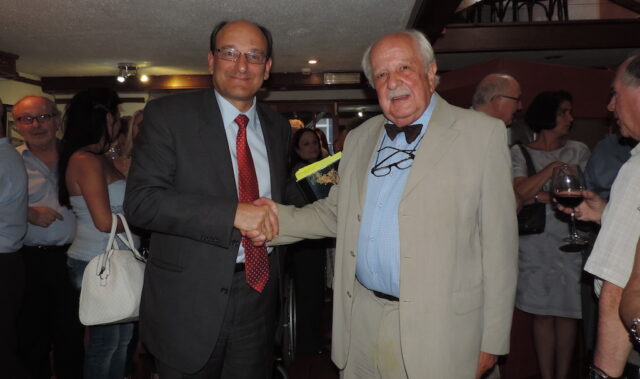
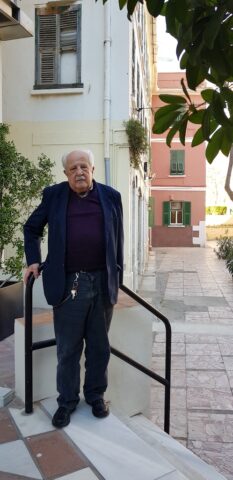
Perhaps Tito - who was a powerhouse of information - taught me my first lesson in sharing information, the importance of sharing and the importance of encouraging others. All too often we all hold on to our work – and I am sure Tito did at one time or another – but he always shared that information – and eventually published a good number of works – both his and those written by others which he likewise greatly valued.
The Gibraltar Heritage Trust is certainly indebted to him – and I’ll use the word again – for championing new writings on local history over a very long period of time and it continues.
Growing up I can remember the pleasure it always gave me when going into the Gibraltar Bookshop opposite the Gibraltar courts – funny how I was always attracted to the Gibraltar section of books.
Back then there were only a few shelves – today (and in some way because of Tito who began his own Gibraltar Books publishing company) we can fill a shop (just look at all the local books at the Gibraltar Heritage Trust). But in my teens, it was always a thrill to drop into his shop – look at the classics and our history – and chat to his sister Anita. Often, she would put books aside for me.
So, imagine when I began to look back on some of my material from the past and I came across an article – semi-opinion piece - when the bookshop closed reinforcing how important it was to this community. Let me share some of it.
The headline read ‘Saying goodbye is not always easy’. It reads: How sad to hear we have lost our one and only general bookshop on the Rock. The Gibraltar BookShop this week closed its doors for the very last time. How should we react to this? Should we be concerned that this has happened? Should we ask ourselves, why? Should we be troubled by this? The Gibraltar BookShop was first opened in the mid-1970s by Tito Benady. It has served many generations of Gibraltarians. I can remember back in the seventies, in my O’Level year (like many of us) purchasing the exam book aids. Browsing through the art books where the works were revealed in colour. I was particularly taken by the local bookshelf and often popped in to see if there was something new. The book shop was for many years run by Mr Benady’s sister Anita.
The expectation of waiting for that book to arrive and finally having it in your hands is something I will definitely miss. There’s nothing like the feel of a real book in your hands... the smell, the flicking of the pages... I remember the change from records and cassettes to CDs, the typewriter to the electric typewriter and then computers. There were those who resisted the change, but change came, nonetheless
So, am I sad? Yes. Do we need a book shop? We will always need one... again there’s nothing quite like walking into a book shop with hundreds of books... It’s a feel-good factor. But digital, I have to admit... that’s the future even though for some of us it will take longer.
My goodness how times have changed – but you know what? I still write my notes with pen and paper. I had completely forgotten about this piece – but in a roundabout way it was Tito who had made it happen.
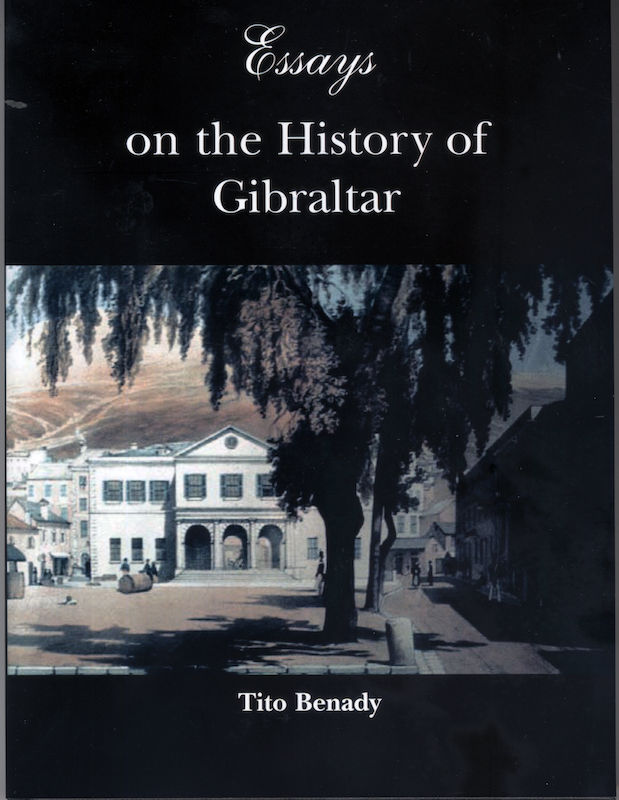
I also came across the time he released his book ‘Essays on the history of Gibraltar’. The piece I wrote then - in question-and-answer form - gives us some insight into the man himself. I wrote: ‘Local historian Tito Benady is about to place a new book on the growing Gibraltar bookshelf. Gibraltar in the early years, British Gibraltar and its people is the basis of this book. Mr Benady is captivated by history in all its many facets. So, what is it about history and Gibraltar that fascinates him so much?’
Here are some of his responses to my questions: Where does your interest in history begin? It started when I was very young. I was fascinated by the walls and gates of Gibraltar and marvelled at my hometown’s world-wide fame. My grandfather used to take the National Geographic magazine which always had an advertisement for the Prudential of New York with the slogan - As strong as the Rock of Gibraltar.
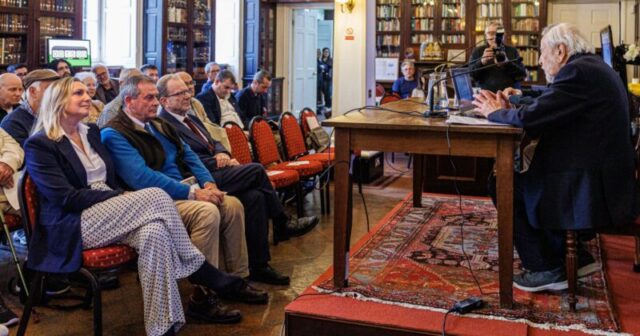
What does the history of Gibraltar mean to you? When I moved to England in 1949, my attention turned on the origins of the civilian population of Gibraltar and our culture. I suppose it was an attempt to establish my own roots.
During the research I discovered in the official file’s information on some of the remarkable experiences of my ancestors. I was educated at home and in school to be proud of being a child of the Empire and what I found in the archives strengthened it, and yet my culture was rooted in part in the Iberian Peninsula. This was a wonderful and inspiring combination.
About the book - tell what you have included and why? The purpose of the first section was to counter the myths that have arisen over the years and have no basis in historical facts and the surviving chronicles of the period. Tarik did not build the Moorish castle. The second part relates to the military. Gibraltar was retained to assist the navy but it was the army which was permanently ashore that exercised a great influence on the development of the place and the civilian population.
In the 18th century, communications with England took three weeks or more, each way, so the governor or officer in command at Gibraltar had a free hand and the character of the person concerned was of great importance in understanding the events that took place here. At the beginning I was hampered by the lack of a full and reliable list of governors and officers in command, so my first task was to establish such a list, which I was able to compile from a variety of sources including the correspondence that has survived in the Public Record Office in the National Archives at Kew.
Spanish historian, Ayala, remarked that Gibraltar was an orderly place, where people of very different backgrounds lived peacefully together, better than in any comparable Spanish city, and that this was due to the strict and impartial military discipline imposed by the governors. This was the basis of our present tolerant society.
You must be pleased to see that there are many books published not just on history. What are your thoughts on this? I welcome that as our society matures; we are expressing ourselves in print. We should aim for quality as well as quantity.
And so back to Alice’s Table when back in 2019 Tito gave us an opportunity to look into his own history… and in his own words as a businessman, historian and publisher. I recall sitting with him when nearing 90 several times – there was always so much to talk about – and his historical knowledge was so vast – and I remember thinking ‘where do I begin and end?’ I listened to him.
Already at age 13 he had acquired an early edition of ‘The Great Siege1779 to 1783’ by John Drinkwater at Beanland’s Stationery in Main Street. In the 1970s when he returned home, he began to research the Rock’s history, discovering how for a long time it had generally been presented as a series of myths. Gibraltar’s Governors soon became the subject of a series of articles published in the Gibraltar Chronicle. He co-founded the Gibraltar Heritage Journal and was its editor from 1993 to 2007.
In the 1990s he set up the publishing house Gibraltar Books which only published books about Gibraltar. His essays and books include guidebooks on Gibraltar: ‘The Streets of Gibraltar’, ‘The Royal Navy at Gibraltar’ and ‘Essays on the History of Gibraltar’. He also published ‘The Fortress Came First’ by Tommy Finlayson and ‘The Royal Gibraltar Police 1830-2005’ which he co-wrote with Cecilia Baldachino.
In his childhood he recalled how history had always been a favourite subject of his. He said: “Of course I learnt numerous historical dates and battles, about the Egyptians, the Romans and so on but nothing related to local history. Much of what I know today is through my many interviews on local history or from reading books published.”
Tito was born in 1930 in Governor’s Parade in the building next to where the Elliott stands today (where I conducted the interview) on the first floor. His bedroom window is still there. On the opposite side lived his grandfather, and where the hotel sits today was the old Paymasters Office overlooking the parade.
One of his earliest recollections was listening to bagpipes when the Scottish regiment, at the time on tour in Gibraltar, marched onto Governor’s Parade.
So, he grew up in the golden age of the Theatre Royal – just next door. He recalled: “As well as opera, Spanish zarzuela and theatrical companies, local groups like the Agrupacion Artistica Calpense and the schools staged many productions and concerts. I really only remember seeing films as a boy: Shirley Temple and the popular cowboy films. The area was busy. Outside the theatre there was always something happening.”
As a boy he recalled goats being brought to the square and providing fresh milk which was sold. They were not allowed on the Main Street and would be driven into the town every morning stopping at Cornwall’s Parade and Governor’s Street. He painted a picture of the area: “Many vendors set up their stalls here because people knew where to find them. The goats were milked here, and the women would rush out with their dairy jugs and got the milk straight from the goats. But my father had cow’s milk sent to the home from Shorthorn Farm which was delivered every afternoon in bottles. We never had goats’ milk because my family felt it was dangerous.”
He held on to his memories of Señor Paco who would arrive with his donkey cart and set up his vegetable stall in the square. In the lane leading to the square from Main Street he told me of the restaurant owned by Mr Balloqui. Next to him (where Netgear is today) was Señor Juan, a Spanish grocer who sold “bacalao” - salted cod. Where the water fountain is (on the corner) he spoke of the “aguadores” (water sellers) with their wheelbarrows – “they all took water from there. We had running water at home but not everybody did”.
And everyone’s favourite was Piruli – the calentita man. Tito could still picture him in the square – “he would carry the calentita on his head on a pie man’s hat and would sell a piece for ‘one perra’ because up until 1936 most transactions locally were in Spanish money. He would go to the ‘horno de Wahnon’ (Wahnon’s oven) to pick up more calentita to sell in the area of Sacred Heart Church.”
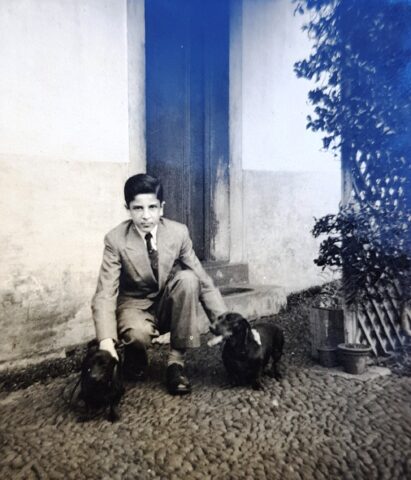
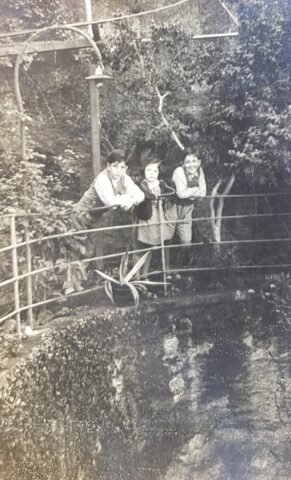
Tito was born into a Jewish family and hence was schooled at the Hebrew School which also saw the attendance of many Christian boys at the time. With real warmth, Tito spoke of his teacher Miss Undery. In WWII, aged 10, he was evacuated to Madeira with his family.
“I enjoyed Madeira. As there was not a great deal to do after school I read a lot. There was an English lending library and a local Municipal Library which had the 1929 edition of the Encyclopaedia Britannica which I read several times over – back to front. After the war at 15 years of age, like most of the evacuees I came back to the life I had left behind. People wanted to get back to normality as they knew it.”
He then entered the Grammar School and would carry out his military service with the Gibraltar Defence Force. He married and began his working life in insurance as a Third-Class Clerk at The Prudential insurance company in London, and eventually set up his own company as an insurance underwriter which he sold to return to the Rock in 1974.
In all his research and travel the nearest thing he found to Gibraltarian society, he told Alice’s Table, was Argentinean society because of the very similar mixture in influences from – the Italian, Spanish and English. The column then moves into ‘calentita’ where Tito pointed out “we always had calentita but nobody knew what its real name was because it had been lost. The Genoese who had settled here had generally married Spanish wives, so the tradition of Genoa was watered down a lot. In Buenos Aires, on business, I saw something known as ‘faina’ and tried it. I discovered it was calentita. Now, ‘faina’ is a Genoese term. Genoese is a cockney-style Italian, and the Italian term is ‘farinata’. The Genoese when pronouncing it leave out the ‘r’ and the ‘t’.”
As to the origins of Gibraltarian culture, Tito was clear that we can trace it back to the 18th century. By the end of this century the civilian population was 50% Genoese, including very few Spaniards, 30% Jewish and 20% British but they did not stay for very long because as he described it “at the time it was a terrible place to live in”.
Tito was always proud of the work he published through his Gibraltar Books, and the Gibraltar Heritage Journals, and the many articles he wrote because he felt they had fostered research into all aspects of Gibraltarian society.
And there is no denying this was what he had wanted all along: “people talking about things that concern us and are close to us”, and he felt strongly that through all the writings we could begin to look at ourselves “in a mirror of writing and establish the truth about ourselves”.
A truth which as he always pointed out and as he discovered over the years was “a very complex truth” but one well worth researching and writing about. And now, just as always, I can still hear him encouraging us to continue to look into that mirror and continue with our writings of all things local.
I will miss you Tito.
But I will never forget your words of encouragement in discovering new episodes from our past or finding new material in research of well-known episodes as we continue to document these and keep on writing and always adding to our history.
A story worth telling.
My dear friend, your legacy lives on.


